Author: Josh (MTC)

  • 180 ESL Conversation Starters and Questions (from Beginner to Pro)

    180 ESL Conversation Starters and Questions (from Beginner to Pro)

    Do you ever run out of ideas to keep your students speaking in English?
    These ESL conversation starters and ESL conversation questions will help you inspire fun, natural, and engaging discussions in class—no matter your students’ level.

    This list of 180 English conversation topics covers everything from everyday situations to creative “what if” questions, so you’ll always have something interesting to talk about. Use them as warm-ups, group activities, or full lessons to build fluency, confidence, and real-world communication skills.

    Whether you teach beginners or advanced learners, these speaking prompts will make your lessons more interactive and enjoyable—for both you and your students.

    Tip: Looking for more speaking practice? These pair perfectly with this list: our 120 Would You Rather questions for quick warm-ups, 12 fun speaking activities to get quieter classes talking, and conversation questions using conditionals if you want to work grammar into the discussion.

    Conversation Topics for Adults and Teens

    Adults and teens usually know more about advanced topics than children (politics, religion, etc.) That being said, knowing more on these topics doesn’t necessarily translate to being able to speak about these things easily so don’t assume they can do everything. Be aware of your student’s level and be prepared to reframe a question if they are struggling to understand. 

    Work

    • Where do you work?
    • Do you enjoy your job?
    • Do you use English for your job?
    • Tell me about your last job.
    • What do you think is the most difficult job in the world?
    • What do you think is the easiest job in the world?
    • Where would you work if you could pick any job?
    • Would you still work if you won the lottery?
    • Do you think robots will replace all the jobs in the future?
    • What kind of job should have the highest salary?

    In this post, you’ll get 20 topics and activities for Business English lessons.

    Music

    • Do you listen to music?
    • When did you start listening to music?
    • Do you play a musical instrument?
    • What do you think the future of music will be like?
    • If you could meet any musician, who would it be?
    • Why do people like music?
    • If you could erase a musical genre, which would it be?
    • Do you think musical success comes from working hard or luck?
    • What was the first album you bought?
    • Have you ever downloaded music illegally?

    Holidays

    • What is a holiday?
    • Do you often go on holiday?
    • Where did you last go on holiday?
    • Where would you like to go on holiday next?
    • Do you prefer relaxing or having an adventure on your holiday?
    • Is it weird to go on holiday by yourself?
    • What is the best food you’ve eaten while on holiday?
    • Can you imagine what holidays 500 years ago were like?
    • Would you like to go on holiday to space?
    • What do you think the future of the holidays will be like?

    Technology

    • What is technology?
    • What do you think of when you hear the word ‘technology’?
    • How has technology changed in the past?
    • How has technology changed your life?
    • Could you live without technology?
    • Find the full list of technology questions here

    Conversation Topics for Kids

    To engage a child in conversation, you have to enter their world. What is fun for them? What do they like to do? Using words/phrases like “wow”, “That sounds tasty”, “Awesome” can show you are listening to them and make things more fun which will get them saying more!

    Pets

    • Do you have a pet?
    • What do you think pets do in the day?
    • What do pets eat?
    • Are cats better or dogs?
    • What is the best name for a pet?
    • Would you like a pet spider?
    • Would you like to be an animal? Which one?
    • Why do we have pets?
    • Do you prefer cute or fun pets?
    • What is the best present for a pet?

    School

    • Do you like school?
    • What is your favorite subject?
    • What is your least favorite subject?
    • Who is your favorite teacher?
    • Why do people have to go to school?
    • Do you like homework?
    • What would you do if you were the headteacher?
    • How could schools be more fun?
    • How long are the summer holidays?
    • Can you learn and have fun at the same time?

    Movies

    • What is your favorite movie?
    • Who is your favorite character?
    • Who is your least favorite character?
    • Do you like Disney movies?
    • What was the last movie you saw at the cinema?
    • How often do you watch movies?
    • Do you wish you could live in a movie?
    • Why do you watch movies?
    • Do you prefer reading books or movies?
    • Do you watch any movies in English?

    Conversation Topics for Beginners

    Keeping the topics simple for beginners is a must at the start. Talking about their hobbies and family can help, as these are areas they may have already experience in talking about. If a student is really struggling, then giving them phrases to use such as “I like …” can help get the ball rolling.

    Food

    • What is your favorite food? Why do you like it?
    • Do you like to cook? What dishes can you make?
    • What foods are popular in your country?
    • Do you prefer eating at home or at restaurants? Why?
    • What is a typical breakfast in your home?
    • Have you ever tried food from another country? Did you like it?
    • Do you like spicy food? What spicy dishes have you tried?
    • What foods do you dislike? Why don’t you like them?
    • What is a traditional holiday food in your culture?
    • If you could only eat one food for the rest of your life, what would it be?

    Hobbies

    • What do you like to do?
    • Do you do any sports?
    • What types of movie do you like?
    • Do you play video games?
    • What do you usually do with friends?
    • Is learning English a hobby or work?
    • Do you have any unusual hobbies?
    • Do you have enough time for your hobbies?
    • What is a common hobby?
    • What do you think is a boring hobby?

    Family

    • Do you live with your family?
    • How many people are in your family?
    • Are you close with your family?
    • How often do you see your family?
    • What do you do with your family when you see them?
    • Is your family important to you?
    • Which is more important, friends or family?
    • Who is the weirdest person in your family?
    • Are families less important nowadays than in the past?
    • What would happen if we didn’t have families?

    Home

    • Where do you live?
    • What is there to do in your city?
    • What is your place like?
    • What is your neighbourhood like?
    • Are there any parks near where you live?
    • Have you ever lived elsewhere?
    • How many rooms does your place have?
    • If you moved, where would you like to live?
    • Would you prefer to live in the city or country?
    • Would you like to live abroad?

    Use information gap activities to help your students practice speaking: read our guide.

    Weird and Funny Conversation Starters

    Nobody wants to speak about the same mundane topics, especially if they’re an advanced student. Being able to mix it up is a great attribute to have as a teacher. Not only will you have memorable lessons with these conversation starters, but it will really test the ability of the students to think about topics they aren’t used to (instead of rolling off easy answers about familiar topics.)

    Fails

    • What’s the most epic fail you’ve ever witnessed in person?
    • Have you ever had a funny cooking fail? What happened, and how did it turn out?
    • What’s the most hilarious fashion fail you’ve ever seen or experienced?
    • Have you ever had a technology fail at the worst possible moment? What was the situation, and how did you handle it?
    • What’s the funniest sports fail you’ve ever seen, either in person or online?
    • Have you ever had a humorous translation fail when trying to communicate in a foreign language? What did you say, and what did you mean to say?
    • What’s the most amusing autocorrect fail you’ve ever experienced or seen?
    • Have you ever had a funny fail while trying to impress someone you liked? What happened, and how did they react?
    • What’s the most comical pet fail you’ve ever witnessed or heard about?
    • Have you ever had a hilarious DIY or home improvement fail? What went wrong, and how did you fix it?

    Zombie Apocalypse Plan

    • What is your zombie apocalypse plan?
    • Who would you take with you?
    • What would be your weapon of choice?
    • What would you do if a friend got bitten by a zombie?
    • What would you do if you got bitten by a zombie?
    • What food would you take with you?
    • Do you think governments should have a zombie apocalypse plan?
    • Do you think everyone should have a zombie apocalypse plan?
    • Is a zombie outbreak a likely scenario?
    • Why do you think there are so many movies and TV series based on zombies?

    Superpowers

    • If you could have a superpower, what would it be?
    • What do you think is the weirdest superpower in comic books?
    • Are some superpowers too powerful?
    • Would you like a superpower where you could turn things into gold by touching them?
    • What is the weakest superpower in a comic book?
    • Have we already seen every kind of superpower possible in a comic book?
    • Are there some people in the real world that have superpowers? (doctors etc)
    • Would you like a superpower where you could turn things into chocolate?
    • Would it be better to be super strong or super smart?
    • Would you like the power to travel through time?

    Magic Lamp

    • If you were granted 3 wishes, what would they be?
    • Is wishing for more wishes cheating?
    • Should there be any other rules for people granted wishes?
    • Have you seen any movies with a magic lamp?
    • Do you think there is a better object that could house a genie?
    • Why are we interested in stories of people having wishes?
    • Have any of your wishes come true in real life?
    • Do you make a wish when you blow out the candles on a cake?
    • Is it bad luck to tell someone what your wish is when blowing out the candles?
    • What other ways do people make wishes?

    Controversial Conversations Topics

    These are topics that you need to be careful with and use your judgement based on the student’s background. You need to wait until you know a student to find out what material is appropriate for them. That being said, If used correctly, then these can be really interesting and get the student thinking about “real issues”. 

    Technology and Society

    • Do you think social media has had a positive or negative impact on society? Why?
    • Should governments have the right to monitor citizens’ online activities for security purposes?
    • Is technology making people less social or more connected?
    • Do you believe that artificial intelligence will eventually take over many human jobs?
    • Should parents limit their children’s screen time and use of technology?
    • Is online privacy a fundamental human right, or should people accept less privacy in the digital age?
    • Do you think technology is making people smarter or more dependent on devices?
    • Should schools incorporate more technology in the classroom, or focus on traditional teaching methods?
    • Is the rise of fake news and misinformation on the internet a serious threat to democracy?
    • Do the benefits of technological advancement outweigh the potential negative consequences for society?

    Find more questions about social media and questions about technology here.

    Death Penalty

    • What do you think about the death penalty?
    • Do you know which countries still use the death penalty?
    • Why do you think some countries use the death penalty?
    • Do you know of any famous executions?
    • Should the death penalty be outlawed?
    • If we removed the death penalty then what punishment should replace it?
    • What is the most humane form of execution?
    • What would your “last meal” be?
    • Does the fear of the death penalty reduce crime?
    • How has execution changed over the years?

    Abortion

    • What is abortion?
    • Should abortion be legal?
    • Why do you think some people are “pro choice”?
    • Why do you think some people are “pro life”?
    • What do you think of abortion in cases where the baby was conceived due to rape?
    • What do you think of abortion in cases where the Mother’s life is in danger (due to being pregnant)?
    • Should the father “get a say” in the matter of abortion?
    • What advice would you give to a family member who was thinking of getting an abortion?
    • Should people be allowed to protest against abortion?
    • What do you think the future laws on abortion will be?

    Corruption

    • What is corruption?
    • Is there corruption in your country?
    • Why does corruption exist?
    • Would you consider taking a bribe?
    • Would you consider offering a bribe?
    • Are some types of corruption better than others?
    • Which countries have the most corruption?
    • Which countries have the least corruption?
    • Are there any stories of corruption that you can remember?
    • Is it possible to get rid of corruption entirely?

    Get a list of 110 “Would you rather” questions for your conversation lessons.

    Why Every Teacher Needs a List of Starters

    If you want to improve your student’s speaking ability, you need to master the art of conversation. You have to know how to get your students speaking, move the conversation forward, provide feedback and make it all feel natural. You also need engaging topics, and that is where this guide comes in.

    One of the problems that can face a teacher is knowing what to talk about. What do you do when you’ve finished talking about work, the weather and then realize that only 5 minutes have passed!

    This guide has everything you need to make sure you never run out of topics and most importantly, you always have something interesting to say.

    It is a good idea to pick a particular topic for a class (or even have your student pick if you want more engagement from them). Once you have that topic, then move through the questions, trying to get as much from each one as possible. 

    Browse our ESL teacher resources section for more tips and printable lesson materials.

    Additional Tips for Your Conversation Lessons

    Here are some additional tips to make sure your students are getting the most out of their conversation lessons and will be excited about coming back for more. Some of these will take time to internalize and get right but be aware of them and experiment to get them just right.

    Don’t feel like you have to stick rigidly to the list of conversation starters. If a question takes you down a different conversational thread then go with it. The important thing is that the student is talking, you can always return to “the script” later.

    Correcting a student immediately can often be useful, but in conversation, it can really kill the flow as well as a student’s confidence if done too often. A good idea is to make notes of any major problems and then mention them after a particular section instead. On top of this, try not to interrupt a student once they are speaking. For each answer, try to milk everything out of them that you can before you have “your turn to speak”.

    As well as the frequency of correction, consider the amount being corrected. Don’t feel like you have to correct EVERYTHING. Especially if a student is starting out and is a bit nervous. Pick a few problems areas and focus on that, if you mention too many things at once it can be overwhelming and can really lower a student’s confidence.

    Be strict when a student gives you short answers. If a student gives you an answer like “yes” then force more out of them with “yes… because” or “no… but”. The idea is to get them using the language more.

    Try to inject some personality when using these ESL conversation topics. It should feel more like a conversation rather than a robot giving an interview.

    Some students will struggle with certain subjects as they just don’t know enough about the topic. If it’s a bit of a challenge then push through but if they can’t even talk about a topic in their native language then it may be an idea to move on to another subject.

    Allowing a student to pick a topic can be a great way of engaging them more. This also has the added benefit of helping a younger student (such as a teenager) feel more empowered as they can make their own decisions.

    Get 18 statesman tips on giving great conversation for teens and adults in this post.

    Final Thoughts

    There you have it!

    All you need to make sure you never run out of things to say. Get these printed out as your go-to cheat sheets and bookmark this page so you can easily come back to them for future classes.

    Hopefully, these ESL conversation starters and questions will spark your own ideas for topics you can use in class. If you are teaching one-to-one, you could even write niche topics especially for that student’s interests (e.g skateboarding, knitting or chess).

    Remember, match the topics to the student’s level, keep it fun and once they start talking don’t get in the way!

  • How to Use ManyCam for Teaching (ESL) Online

    How to Use ManyCam for Teaching (ESL) Online

    Are you looking for ways to create highly engaging and enjoyable online English language lessons for your online students? Then you want to check out ManyCam. ManyCam is a virtual webcam and video effects app that allows you to manipulate your webcam by adding various effects into your video frame. You can use ManyCam’s virtual webcam as a video source within other apps (such as your online teaching platform), or you can live stream directly from ManyCam.

    This can be a great addition to your online teaching experience, helping you increase student interaction and engagement, as well as save you money and time by replacing some of your physical props with special effects that come with ManyCam.

    We’re going to show you how to use ManyCam for your online classes, so you can up your online teaching game.

    Why Use ManyCam for Online Teaching?

    One of the keys to creating a rich online learning experience is to ensure a high level of student engagement. And one way you can build engagement into your lesson delivery is by improving the visual and auditory experience through video, imagery, music, and social media. 

    With ManyCam, you can accomplish this through its broad range of features:

    • Live stream or record using multiple video sources
    • Select video source from multiple webcams, including your mobile device’s camera
    • Set up audio playlists and share audio during a live stream or recording
    • Add picture in picture video or images into your video framein
    • Draw and add text
    • Display a clock, timer, or stopwatch
    • Replace your background with an image or video (with or without a green screen)
    • Insert lower third titles to distinctly display your name and other text
    • Add effects like images, borders, emojis
    • Change how you look on camera with virtual face masks
    • Add custom watermarks to your videos (Windows)

    That’s a pretty impressive list of things you can do. Before we go deeper into how to use ManyCam for your online classes, let’s take a moment to understand the significance of this feature set and how online English teachers use them to create higher student interaction.

    Many online teachers use a myriad of physical props during their lessons. But, how many props can you reasonably have readily available in your teaching workspace? Even if you did have the space, how much would it cost to buy all of it?

    ManyCam unlocks the real potential of your lesson delivery by offering you countless ways to introduce imagery, text, and other effects without taking up any physical space. All of these features are at the tip of your fingers, right within the app itself.

    With over 10,000 digital effects and assets included in ManyCam, there’s no need to fuss around looking for play food, soft toys, flashcards, or other teaching aids. Of course, you can use these alongside ManyCam, too.

    ManyCam lets you conveniently display any image, video, text, or effect to your screen on the fly. What this means to you, the online teacher, is that you are able to teach, discuss, or review any topic using any type of visual or audible media (that you are permitted to use) and create a fun learning experience for your students.

    Watch a video summary of this article

    How Good is ManyCam?

    ManyCam is in a class of its own. Most of ManyCam’s competitors have concentrated on live video streaming and recording functionality. But ManyCam includes a wide array of features that make this webcam software particularly useful to online English teachers and the higher level of interaction they can gain by using it.

    Certainly, ManyCam isn’t without its drawbacks. For one, it could improve on its usability and design (which  has gradually gotten significantly better). As well, ManyCam is heavy on your computer’s processor due to how it manipulates video from your webcam and other video sources.

    However, if you have a modern computer that meets the system requirements, and a little patience to learn how to use ManyCam, there’s little not to like about it. It also helps to have an external HD webcam which will typically give you higher resolution video streaming and recording, more control over your webcam’s position, and workspace lighting than a built-in webcam.

    ManyCam is an online teacher favorite, and many online English teachers have made it an integral part of their online teaching to build trust with students. Some online ESL companies even encourage their teachers to use ManyCam.

    While ManyCam has a long list of features, we are going to take a closer look at the key features that are useful for most online teaching situations.

    Feature: Virtual Backgrounds

    One of ManyCam’s most useful features is its ability to replace your background with an image or video.

    This feature is not unique to ManyCam, as virtual backgrounds have recently gained popularity in videoconferencing apps like Zoom. One key distinction with ManyCam is that you can use its virtual background feature in other apps via ManyCam’s virtual webcam. The virtual webcam makes it possible for online teachers to use ManyCam’s virtual webcam as the video source within Skype or the virtual classroom platform(s) they use to teach.

    This is an excellent way to engage your students, as you can use an image or video that is relevant to the lesson theme for your background, and improve interaction with your students.

    The Virtual Background feature has three modes:

    • Blur
    • Replace
    • Chroma Key

    Blur: Selecting Blur will digitally blur your background, so your students will only see you in focus. This may be useful when teaching online while traveling and staying in a hotel, particularly if the hotel room is dimly lit.

    Replace: Selecting Replace will replace your background with any image or video you select. ManyCam comes with several preset backgrounds you can use, or you can use your own image or video. A green screen is not needed to use the Replace feature. To make good use of the Replace feature, you should have a well-lit workspace and good lighting. Certainly, this makes it possible for online teachers to work from anywhere and replace their background without having to lug around a green screen.

    Chroma Key: Similar to Replace mode, selecting Chroma Key will replace your background with any image or video. However, to use the Chroma Key mode, you will need to have a green screen as well as excellent lighting. Chroma Key will produce a better virtual background than Replace, if you have set up your workspace for it.

    I recommend using a green screen to get the best use out of ManyCam’s Chroma Key feature. If you’re new to green screening, you’ll notice there are several screen colors available. For most uses cases, including online teaching, green is the optimal screen color. You can learn more about how to use ManyCan with a green screen in our green screen set up tutorial.

    To get going with the Chroma Key feature in ManyCam, navigate to the Virtual Backgrounds section of ManyCam from the right side of your ManyCam menu. Next, enable the Virtual Background using the toggle as shown in the image above. Then select the Chroma Key option to allow ManyCam to detect your green screen.

    You can use the Color Picker tool to calibrate ManyCam to your green screen, or you can use the Auto feature, which will attempt to detect and calibrate ManyCam to your green screen on its own. I recommend using the Color Picker option, because it allows you to calibrate the Chroma Key to your green screen shade.

    Here are some tips to ensure your experience with ManyCam’s Chroma Key feature goes as smoothly as possible:

    • Avoid shadows and shades appearing in your green screen. Make sure your green screen fabric doesn’t have any creases or folds (see our guide for setting up a green screen)
    • Use the color picker tool to calibrate the shade of your green screen more granularly. The auto-detect feature can sometimes be a hit or miss due to variations in lighting, webcam resolution, and computer processing power.
    • Keep your area well-lit to ensure all the green screen material is detected by ManyCam.
    • Use LED lights instead of incandescent soft white bulbs to illuminate your workspace more brightly and evenly. LED lights are also more energy-efficient and cost-effective over the long term.

    Using ManyCam’s Chroma Key feature in your online classes can make the atmosphere fun and exciting for your students in many ways. Here are some ways you can engage your students using ChromaKey:

    • Take students to on virtual field trips such as a farm, a grocery store, or a park
    • Use relevant photos for your virtual background for vocabulary building and reinforcement activities. You can teach and practice talking about rooms in the home, areas at a school and in the classroom, restaurants, names of continents, countries, cities, oceans, and famous landmarks. You can also talk about transportation and various types of vehicles.
    • Practice telling the time using a clock as your virtual background
    • Talk about food and drink, and describe flavors and tastes
    • Practice math and spelling activities using letters, numbers and mathematical symbols

    The learning and engagement opportunities ManyCam’s ChromaKey feature adds to your online teaching and learning experience are endless.

    Feature: Borders and Stickers

    You can add borders to your video to liven up your screen. To apply different effects to your video frame, click on the Effects button in the ManyCam feature panel. The available effects can be chosen from a list of available effects sorted into folders.

    Click on the borders folder where you can download various border effects to use in your video frame. Here are some ways you can use borders in your online classroom:

    • Use a birthday border to help celebrate a students’ birthday
    • Use borders to highlight holidays and seasons
    • Change up borders based for different student age groups

    Similarly, you can find a large variety of stickers categorized in folders in the Effects menu. You can insert them into your video frame and position them where you want. Stickers can be used in a few ways:

    • Display shapes such as stars as a reward for a job well done in class
    • Use stickers as a replacement for physical props; this is a good option if you’re traveling and don’t want to carry physical props with you

    Feature: Drawing and Text

    ManyCam’s Draw feature lets you draw, write, and type and display these over your webcam in real-time.

    You can find the drawing and text tools within the ManyCam Draw panel. To use the drawing function, switch the toggle button to “on”, select the pen and start drawing anywhere inside your video frame.

    Here are some options of activities that can help your students stay engaged during lessons:

    • Play a game of drawing and guessing; you can draw a picture and elicit responses from students to guess what the drawing is. This is an excellent activity for both vocabulary building and retention, as well as for adding some fun and competition.
    • Play Hangman; you can easily draw a stick figure for this fun game to build vocabulary and spelling skills.

    Feature: Virtual Face Masks

    Face Mask effects are one of ManyCam’s coolest features because with it, you can wear a mask – or more than one mask – without having to buy costumes at the store. The Face Mask feature can be found in the Effects panel together with stickers and borders. Click on the face mask icon and choose the mask you want. ManyCam has a decent variety of face masks you can download from its media library.

    The greatest benefit of this feature is it gets your students laughing and gazing at you in amazement that you have transformed yourself into a cat, witch, or princess.

    Here are some suggested activities to improve student engagement using ManyCam’s face masks:

    • A game of charades: put on a cat mask or other various animal masks and ask students to guess the animal
    • Dress the part! Pick a mask that’s relevant to vocabulary being studied; apply a nurse mask or a construction hat, virtually!
    • Wear a costume for festivals or holidays, to get your students into the festive spirit

    The face mask feature is a game-changer, but don’t overuse it to avoid the novelty from wearing off!

    Feature: Picture in Picture Media

    ManyCam is capable of displaying visual media from multiple sources like YouTube, PowerPoint, or even your mobile device. This is a mighty and useful feature because it allows you to quickly share visual content within your video frame.

    You can set preset sources and switch between presets, or you can add content on-the-fly – whichever suits your situation. You can then add layers to your frame to display media using the ManyCam picture in picture mode, or quickly swap between video sources.

    This is a great option for online teachers who want to share videos, images, presentations or other media that is relevant to the lesson. It’s also an excellent way to improve interaction in your online classroom, as you can blend in a range of media to increase engagement and facilitate learning.

    Other Features

    ManyCam has a whole host of features, many of which we haven’t discussed in this post. Indeed, we’ve only scratched the surface regarding features. Some other things you can do with ManyCam include:

    • Stream to Facebook or YouTube live
    • Use ManyCam in videoconferencing and social apps using its virtual webcam feature
    • Set up a video playlist with customizable durations

    System Requirements to Use ManyCam

    The awesomeness that ManyCam brings to your online lessons means you need to have a computer that can handle its processing demands, and a webcam that is capable of recording at 720p. While you can use a built-in webcam on a laptop computer, I recommend using an external webcam for better video capture. I also recommend using a headset with a microphone.

    ManyCam is available for both Windows and macOS operating systems, but you will need to have a modern CPU, adequate RAM, and a graphics processor. See the full system requirements for ManyCam here.

    Here’s our comprehensive list of online teaching equipment.

    Pricing

    ManyCam does have a free version, as well as a paid Standard license, but to get all of the features we have covered in this post, you need either a ManyCam Studio or ManyCam Premium license. Additionally, the free version has a blatantly obvious watermark, and records and streams video at a lower resolution.

    Here’s a breakdown of the current plans and pricing:

    • ManyCam Standard: $49 per year (1 device, 4 video sources, Full HD resolution, limited features)
    • ManyCam Studio: $79 per year (2 devices, 50 video sources, 4k resolution, all features)
    • ManyCam Premium: $99 per year (3 devices, 200 video sources, 4k resolution, all features, priority support)

    Wrapping It Up

    If you incorporate ManyCam into your online teaching approaches effectively, you’ll have few challenges improving student interaction. It’s not a perfect software, and like any software, it does require some upfront effort, has a bit of a learning curve, and does have some of its own quirks.

    But online ESL teachers from all walks of life use it and sing its praises, not to mention notable ManyCam clients like Apple, Google, Intel, and Apple. I use ManyCam regularly in my online classroom, and using it has greatly improved how my students engage with me during lessons.

  • The TEFL Academy Review: 168-Hours Level 5 TEFL Certification

    The TEFL Academy Review: 168-Hours Level 5 TEFL Certification

    The TEFL Academy is one of the best TEFL course providers in the industry. If you are seeking a recognized TEFL certification at an affordable price, that will prepare and qualify you to teach English as a foreign language, The TEFL Academy is hard to beat. The TEFL Academy’s (Ofqual) Level 5 TEFL certification will satisfy most job requirements to teach English online or abroad.

    According to their own statement, The TEFL Academy is the most awarded TEFL provider! They have won the Go Overseas and GoAbroad Top TEFL Awards for five years (2019, 2020, 2021, 2022 & 2023) in a row!

    The TEFL Academy review we have performed here is based on an actual assessment of the Level 5 course.

    Pros

    • Accredited UK Ofqual Level 5 qualification
    • Accredited in the USA by DEAC
    • Includes 168 hours of online instruction (20 hours of online practicum can be purchased as a separate course)
    • Can be completed online through self-study or as a combined learning course
    • Each enrollee is assigned and given direct access to a qualified and experienced ESL Professional
    • Enrollees have 6 months to complete the online course

    Cons

    • Receiving assignment assessments from course instructors can sometimes take time – prepare ahead of any employment abroad and visa applications

    Acreddited TEFL Course

    The TEFL Academy (not to be confused with International TEFL Academy) was founded in 2012 in the UK, and while it is one of the newer TEFL certification providers on the scene, it enjoys a special place among the few providers currently offering Ofqual Level 5 TEFL certifications.

    What this means is that its TEFL certification courses are put through a rigorous audit to ensure they comply with Ofqual, a UK Government department which regulates qualifications, examinations and assessments.

    Here is what Ofqual states as its responsibilities:

    We’re responsible for making sure that:

    • regulated qualifications reliably indicate the knowledge, skills and understanding students have demonstrated
    • assessments and exams show what a student has achieved
    • people have confidence in the qualifications that we regulate
    • students and teachers have information on the full range of qualifications that we regulate

    As such, The TEFL Academy’s Level 5 TEFL certification is an officially recognized qualification, so anyone planning to embark on a career in TEFL can do no wrong by earning this certification. To put things into perspective, the Cambridge CELTA is a Level 5 qualification. So, in essence, The TEFL Academy’s TEFL certification is an equivalent to the CELTA in terms of its Level 5 qualification.

    The TEFL Academy has also taken the additional step of gaining accreditation by the Distance Education Accrediting Commission (DEAC), an accreditation body recognized by the US Department of Education.

    Courses Offered by The TEFL Academy

    What sets The TEFL Academy apart from its competitors is that it offers only two courses, which can be completed entirely online: a Level 3 (120 hours) and a Level 5 (168 hours) course. In this article, we focus on the Level 5 course.

    Many providers offer a wide range of courses, which can get confusing for prospective students who don’t know which course is right for them. The fact of the matter is that the ESL industry generally regards 120 hours as the minimum study hours for a valid TEFL certification. Most quality employers will be looking at this when examining your TEFL qualifications.

    Any course which can be completed in fewer than 100 hours is insufficient on its own, while courses which require more than 200 hours to complete are usually unnecessary. You should be well-equipped to teach English to ESL learners by completing a course within 200 hours.

    Level 5 TEFL qualifications include at least 150 hours of course study. While the number of study hours itself does not define the quality of a TEFL course, a course must have enough depth of content to adequately impart knowledge, skills, and understanding required for the qualification to have any true value.

    Therefore, the 168-hour Level 5 TEFL Certification course offered by The TEFL Academy is more than adequate for gaining qualifications to teach English to ESL learners.

    That said, when you enroll in the Level 5 TEFL Certification course, you will also receive one of The TEFL Academy’s top-up courses free of charge. Many other providers charge extra tuition for their extension courses, so this is a nice bonus for completing your TEFL certification with The TEFL Academy.

    Let’s take a look at the courses on offer: 

    Diploma/Certificate Courses

    Practicum

    Top-up Courses (free when enrolling in the Level 5 TEFL course)

    Diving Into The TEFL Academy Level 5 Online TEFL Certification

    The Dashboard

    The TEFL Academy has neatly organized its online certification course into 10 units, providing a complete set of skills designed to prepare you to get started as ESL teachers. Each unit focuses on specific aspects of teaching English to ESL learners.

    When you log in to the training portal, you are immediately taken to a dashboard where you have access to the course and a TEFL glossary for common lingo used in the industry.

    There is also a notification reminding you that submitted assignments will be assessed by a qualified tutor, usually within 5 business days. This gives you a sense of comfort and encouragement that you are not merely going through an automated online course, but that your enrollment in the course involves being assessed by a qualified ESL professional.

    Within your dashboard, you can navigate from one unit to the next as you go through the course. You can also navigate to other key sections of the course. For example, in the Competencies section, you can track your progress through the course and the competencies you have developed along the way. In the Grades section, you can see your unit test grades, assignment grades, and overall course grade.

    The Course

    Each unit has specific outcomes defining what you competencies you will have gained by the end of the unit. The content in the units are organized into “Steps”. You must complete Step 1 before gaining access to Step 2, and so on.

    This keeps you from getting distracted and wandering around the course while not ever completing it. Completing the course step-by-step makes it easy for you to stay focused on the task at hand.

    Towards the end of each unit, there is a Further Reading section where you can find additional references to enhance your understanding of the theme and concepts covered in the unit.

    Finally, before completing the unit, you will have to pass a test before you can proceed to the next unit.

    In-depth Content and Solid Delivery

    The course covers every core aspect of being a quality ESL teacher that both employers and students expect. Here’s a breakdown of the topics covered:

    • Lesson Planning
    • Teaching English Vocabulary
    • Teaching Pronunciation
    • Understanding English Grammar
    • Teaching Receptive Skills: Listening and Reading
    • Teaching Productive Skills: Speaking and Writing
    • Teaching English Grammar
    • Principles of Teaching English as a Foreign Language
    • Materials and Aids for Teaching English/Classroom Management Strategies
    • Using Resources Effectively when Teaching English as a Foreign Language
    • Case Study, CV and Cover Letter, Job Sites and Resources

    Actionable Information and Advice

    Enrollees are assigned to specific course tutors who will monitor their progress, grade their assignments, and provide constructive feedback and support as needed.

    In fact, The TEFL Academy has set up an Online Course Tutor Support website where you can submit support tickets and track every support request with a complete archive of the communication you’ve had with your assigned tutor.

    There are three assignments to complete during the course. The first one is assigned after you have finished the first five units. Detailed instructions and templates are provided for you to complete the assignments, and, as mentioned, students can seek help from their tutors via the support website.

    The assignments are not a cakewalk. That’s not actually a bad thing, as it’s proof positive that you must actually study and make the effort to successfully complete assignments to earn your TEFL qualification. After all, if you’re paying for a legitimate, government-regulated qualification, you would not expect to complete it without any difficulty.

    The assignments are designed to aid you in developing key skill sets needed for planning and delivering lessons, and supporting the development of your students.

    Naturally, we can’t reveal any information about assignments because they are intended only for students enrolled in the course. Spilling that information to the public would be a disservice to those who pay for the course and to The TEFL Academy itself.

    Examples of assignments you can expect: creating specific lesson plans for teaching various English language skills and in different contexts, and writing an essay, which will likely require you to conduct some research. 

    Anyone graduating from the 168-hour Level 5 TEFL course will gain valuable knowledge and a genuine appreciation for teaching English to ESL learners.

    The course itself can be completed within 4 – 5 weeks if you are committed, though you have up to 6 months to complete the course. This should be ample time to complete the course and gain your TEFL certification.

    Beyond the core course content, The TEFL Academy also includes a module for preparing a CV (résumé) and cover letter. This is invaluable for anyone who finds writing a resume or cover letter on their own difficult.

    What Can Be Improved?

    While there is always room for improvement, it’s really hard to find fault with this course. The TEFL Academy has arguably put together the most complete and well-structured TEFL certification course we have reviewed, and it’s no small compliment to say that the course has been designed to prepare ESL teachers for real-life teaching.

    A few course graduates have commented that the turnaround for assessing assignments is a bit slow. Any experienced ESL teacher will attest that assessing students’ assignments is not fast work, and it requires intense concentration and patience to review essays, lesson plans and other assignments.

    Having said that, people who have paid for the course may need to have a TEFL certificate in time for employment and work visas, and the time to wait could impact getting these sorted out in time.

    Still, this is not entirely the responsibility of The TEFL Academy. If you are planning on a career abroad as an ESL teacher, you really should be planning to earn your TEFL qualification. This is one of the key qualifications needed to secure a legitimate job and work visa in most countries.

    Why travel abroad without the qualifications in hand? As it is, many countries now require that your documents (including your TEFL certificate) be apostilled prior to granting you a visa.

    After all, the course can be completed within one month of committed study, and you have up to six months of access to complete the course.

    So, yes, perhaps The TEFL Academy could do better with their turnaround for grading and providing feedback for assignments, but they do provide fair warning to students to allow 5 business days for their tutors to assess assignments and provide feedback.

    Who Is This Course For?

    This course is ideal for practically anyone aspiring to become a qualified ESL teacher. As an Ofqual-regulated and accredited qualification, The TEFL Academy’s Level 5 TEFL Certification is a fantastic option for both online ESL teachers and anyone planning a career teaching English abroad.

    Considering that one top-up course is offered free of charge to enrollees in the Level 5 TEFL Certification course, you will acquire more than enough skills to back up your paper qualifications as an ESL teacher.

    Can Non-Native English Speakers Enroll in this Course?

    The short answer is YES. Non-native English speakers can enroll in the course; however, if you are a non-native English speaker, you should have at least a C1 (Advanced) level of English proficiency. According to The TEFL Academy, about 20% of their course enrollees are non-native English speakers.

    Top-up Courses

    The TEFL Academy offers top-up courses designed to help you specialize your teaching skills for:

    • Young learners
    • Business English
    • Online and 1-to-1 teaching

    If you successfully complete the Level 5 course, you will be eligible to enroll in one top-up course of your choice for free. Top-up courses are 30 hours, and completing the top-up course earns you a specialized TEFL certificate.

    While the top-up courses don’t carry much weight with employers, these courses will help you understand various aspects of how to teach English in a foreign country or online, whichever of these applies to your situation.

    The TEFL Academy also offers a 40-hour Teaching Practice Course, designed to help new TEFL teachers can practice teaching skills in a group session. Enrolling in this course involves group work and tasks, and enrollees will work together in smaller groups to plan and deliver mock lessons to each other.

    This is not equivalent to an onsite teaching practicum, in which TEFL teachers would gain practical experience with real ESL learners. But the Teaching Practice Course does cover various methods of lesson delivery and practical teaching material you can use once you complete the course.

    Job Placement Assistance

    The TEFL Academy review would not be complete without discussing job placement assistance. Typically, TEFL course providers have included at least basic assistance with job placement, ranging from resume planning and crafting to connecting graduates with partner schools and online ESL companies.

    As online teaching continues to grow, The TEFL Academy has chosen the path of helping their graduates find teaching jobs via their job board, and referring them to other popular job boards such as this site.

    Watch our interview with Sabrina Moris from The TEFL Academy

    The TEFL Academy Internships

    Like other TEFL course providers, The TEFL Academy offers internship programs. Most internship programs are in Asia, though some internship opportunities are available in Europe and Latin America.

    Pricing

    The 168-hour Level 5 Online TEFL Certification tuition fee is regularly priced at around $530. This is significantly less expensive than many other Level 5 TEFL qualifications.

    Bottom Line

    We hope our The TEFL Academy review has helped you decide if getting TEFL qualified with their Level 5 certification is for you.

    You’ll be hard-pressed to find a course provider as friendly, approachable, and transformative as The TEFL Academy. This is a legitimate TEFL certification, and completing the course should equip you with the skills and confidence to teach English.

    Enroll here for the course.

  • The ESL Industry and the Different Types of Employers

    The ESL Industry and the Different Types of Employers

    There are several different types of employers in the ESL industry. As a teacher, you may find yourself working at a private language school, university, public school or any of the many other types of schools and programs that teach English to non-native students.

    But, when hunting for a job, it can be a bit confusing understanding the difference between each type of school and program and knowing whether it will be the right job for you. So, I will go through each school type and list some characteristics of each, as well as providing some insight into who is a good candidate for each type of employer.

    The Best Employers to Teach ESL

    Why Is It Important to Know the Difference?

    You must understand the difference between each type of school for a few different reasons. At the top of that list is the fact that you don’t want to end up working at one type of school when you were beyond qualified to work at another type that would have paid much better.

    Private language schools, for example, are great places for new teachers to get their foot in the door but will not pay as well as universities which are looking for teachers with experience and higher levels of qualifications.

    If you have the level of experience the universities are looking for, you wouldn’t want to end up in a contract with a private language school for a year and potentially miss out on tens of thousands of dollars out of ignorance.

    A second reason for you to understand the different types of ESL employers in the industry is so that you can find one that is better suited to your lifestyle and your level of experience. Though private language schools may not pay as well, they are often great places for beginners to get some experience, as many will have a curriculum already developed that you will work from.

    This can help new ESL teachers who don’t have as much experience creating lessons and managing classes, as it will take some stress away. On the opposite side of that, private language schools often hold classes in the evenings, so if it is important for you to work during the daytime and have evenings off then this may not be the best option.

    Not all schools are created equal, just as not all teachers will be suited to teach equally at every school.

    What are the Different Types of ESL Employers?

    Let’s take a look at some different options available to you as an ESL teacher.

    Private Language Schools

    These are mostly privately owned schools that can be found throughout the world which cater to students who are looking for extra instruction outside of their normal schooling. These schools usually have a focus such as on conversation or grammar or test preparation and cater to an extremely wide range of students.

    Some schools, for example, will cater to adult professionals who are attempting to expand their level of business English for the boardroom. Others, however, may focus on high school students attempting to prepare for the IELTS to secure a place at a prestigious university.

    The focus of each of these schools will be extremely diverse, and the type of teacher they will want to hire and the requirements they will have of that teacher is going to vary greatly.

    Though private language schools can be found all over the world, they are especially prominent in East Asia including in Japan where they are known as Eikaiwa, South Korea where they are known as Hagwons, and China where they are referred to as enrichment schools. In the Middle East, primarily in Saudi Arabia and the United Arab Emirates, they are especially popular for working with foreign business professionals who are working in the country.

    The hours’ teachers will be required to work will vary greatly with these schools, depending on who the main clientele is. For students who are in regular school, classes will be primarily in the evening after the normal school hours and on the weekends. For business professionals, classes will be more on the weekends all throughout the day.

    It is important to understand that there can be less stability and security at these types of schools due to the fact they are private companies. There are several stories of companies such as NOVA (an Eikaiwa school in Japan) which shut down due to bankruptcy, leaving thousands of teachers with no job, no place to live, and no route for renewing their visas.

    There are also many stories coming out of China of recruiters for enrichment schools lying to teachers about the legality of working without a visa among other things and teachers getting into trouble with the law. While these are not the norm, you should always make sure you are informed about the visa laws and other laws governing working as a foreign employee in the country you are in.

    Pay at these types of schools will often be less than at a public school or at a university. This is one of the reasons that the requirements for working at these schools are often less than at others, and one of the reasons that competition for these positions is often less. This doesn’t imply that there aren’t private language schools that pay well, simply that universities and, in some countries, public schools will often pay better.

    Public Schools

    The governments of many countries around the world have instituted mandatory English classes in the public school systems, and therefore the demand for native English teachers is great. Countries throughout Latin America, Asia, and the Middle East have instituted policy attempting to make their population more competitive in the global marketplace.

    Working for the public school system in any country is going to provide more stability than working at a private language school. Since you will be working for the government, in essence, taking care of your visa and work permit will be a much simpler task oftentimes.

    Salaries at public schools will usually be greater than at a private language school, though this is not always true and will depend largely on the country. Many people find working at public schools to be preferable due to the stable hours (regular school hours) as well as the generous amount of time you receive off for winter and summer breaks in most countries.

    Benefits at public schools will usually be more generous than at private language schools and can include pay bonuses, flight reimbursement, provided housing or reimbursement, travel per diems, health insurance, and more. Benefits will depend on the country you are working in, with some countries such as the United Arab Emirates offering a wide range of benefits and others such as Thailand offering few if any.

    Requirements for working in the public school system will vary in each country, however, generally speaking, a bachelor’s degree and at least a year or two of experience will be required. Some countries, such as China and the United Arab Emirates, will require tutors to have a 120-hour TEFL certification (either blended learning or onsite). Some countries, such as the United Arab Emirates and Saudi Arabia, may also require public school teachers to have a teaching license and prior experience in the area they are being hired for.

    These kinds of positions are largely going to be more suitable for people looking to move abroad long-term, as contracts can sometimes range 2 to 3 years. If you are just looking to live in a place for a year and want to work a minimum number of hours, so you have more time to travel, then a public school job may not be the best option.

    Though it should be stated once more that because you will be on the public school schedule, you will usually receive generous time off for summer and winter breaks on top of any government holidays.

    Colleges and Universities

    Colleges and universities are a great place for teachers with prior teaching experience or professionals in various fields such as business, aeronautics, engineering, and more to find jobs. The need for university-level ESL teachers is high in many countries around the world as the demand in various fields for professionals with English-speaking abilities has risen.

    Universities tend to have the highest-paying jobs for foreign teachers, depending on the country. Because of this, the competition for many positions can be quite high.

    An added benefit of working for a university is that you will work significantly fewer hours, and unlike at a public school when you are not teaching a class you do not have to be at the university. Also, you will receive significant time off for summer and winter breaks on top of any public holidays.

    The benefits that are offered by universities in many countries also tend to be quite good when compared to private language schools. Depending on which country and which school you are working with, you may receive salary bonuses, flight reimbursement, housing allowances or provided accommodations, health insurance, and potentially more.

    Along with this, you will have a lot more freedom with the content and how it is presented than at a lower level public school or at a private language school, where the material will be more clearly defined.

    Universities will usually have much stricter requirements for whom they will hire. Teachers will generally need to have prior experience teaching and will need to have a 120-hour TEFL certification (either blended or onsite). Also, universities in many countries such as Japan may have requirements that teachers actively work to get published in journals and will even set aside one day off during the school week for teachers to conduct research and write.

    You will need to check the requirements to make sure you will be able to meet and keep up with what will be expected.

    Online English Companies

    These will be companies that hire native (and for some companies, non-native but fluent) English teachers to conduct 25-to-50-minute classes. There are hundreds of different companies, with the largest concentration of them being in China due to the massive number of students and the extreme demand for native English teachers.

    The barrier for entry into these online ESL companies is quite low for most, with a few who cater to adults or more prestigious schools having stricter requirements. Most companies will hire anyone who has a bachelor’s degree, and many will even hire current university students. Some may require a TEFL certification but very few.

    A typical class at one of these companies involves using pre-designed curriculum, usually set up in a course with various activities to engage the students. Though there are companies that work with adults in subjects such as business English, the vast majority of these online ESL companies work with students between the ages of 4 and 16.

    Payment at these online companies will be much lower when compared to many of the above-listed types of employers and typically, no benefits beyond incentive bonuses will be offered. These companies are good for people who are attempting to supplement their income or for current teachers that are looking for extra work.

    It may not be the option for providing your total income. Hours and classes may or may not be stable depending on the time of the year and the individual company. Larger companies with more students will usually be able to provide more stability to tutors than smaller and newer companies with fewer students.

    If you are interested in finding out more about teaching for an online ESL company, you can read this to find information about hiring practices and what online teaching is like.

    Some Extra Tips When Looking at Schools

    Regardless of which school you are looking at or how reputable they seem to be, the burden will always be on you to figure out if you meet the qualifications to work legally in the country you are interested in. Also, you should make sure that before you sign any contracts with any of these types of schools that you ensure everything that was promised to you is in writing and that a contract is legitimate.

    This may be difficult: depending on the country you are in, as the contract may be written in the native language of that country, so you will need to hire an independent translator to go through and tell you exactly what is stated.

    Remember that, while most recruiters and employers are legitimate and will not try to weasel out of paying benefits, there are many that will. The internet is full of stories from ESL teachers who were promised many things that weren’t delivered on.

    Look at each school type and the pros and cons to see if you are picking the right place for you. Again, private language schools are great for beginners trying to get their foot in the door. If you already have teaching experience, you may want to be on the lookout for public school or even university jobs that will pay much better and offer more stability and security.

    At the end of the day, there is a high demand around the world for native English speakers, especially in emerging markets, so you should have no trouble finding a job. Armed with the above knowledge of what the different types of schools are, finding the right job for you should be a bit easier.

  • How to Choose a Quality TEFL Course (and Avoid Fake Reviews)

    How to Choose a Quality TEFL Course (and Avoid Fake Reviews)

    Whether we want to buy socks, a new laptop or TEFL courses, we always look for customer reviews online before.

    For choosing a quality TEFL course, you rely on sources like:

    • “Trusted” review sites
    • Review sections on the providers’ website
    • Blogs (like this one) with review articles, obviously ;)
    • Reddit
    • YouTube

    Reviews can be a reliable source for making purchasing decisions, but you must also keep in mind that not all reviews can be trusted, and you should be equipped to distinguish between legitimate and fake reviews.

    In this post, we walk you through the various sources to identify and choose a great TEFL course and tell you what to consider.

    Which TEFL Reviews Can You Trust?

    TEFL Course Accreditation

    Accreditation is a form of review, whereby an independent accrediting body has audited the TEFL certification course and awarded an accreditation based on satisfying specific criteria.

    However, as mentioned earlier, there is no industry-wide accrediting body, and thus, a TEFL course does not need to be accredited to be offered. At the same time, any TEFL provider can gain accreditation via an agency that is willing to award one. This muddies the water supremely, making it difficult to choose a TEFL course to enroll in.

    You’ll notice that many TEFL providers are or claim to be accredited. However, having an accreditation alone is not a guarantee of the quality and legitimacy of a TEFL course. It’s essential to consider who is providing the accreditation, what credibility the accrediting body has, and if the accrediting body is, in fact, independent.

    Unfortunately, some TEFL providers have questionable accreditations. Some of these accrediting bodies have little to no history, nor are they government-recognized or regulated. Some are even owned by the same company that offers the TEFL certification, meaning they are hardly independent.

    Some TEFL providers apply the term accredited to their courses using very loose definitions. They state an affiliation or membership in an organization, and claim to adhere to that organization’s standards. However, membership in an organization does not necessarily mean the course is formally accredited.

    One of the first steps you should take when deciding on a TEFL certification is to determine the reputation and credibility of the accrediting body itself.

    In the absence of an industry-wide accreditation body, government recognition and regulation becomes an important factor. Having a government-regulated accreditation means the TEFL certification meets acceptable criteria for an academic qualification according to a government framework for qualifications.

    In the UK, The Office for Qualifications and Examinations Regulation (Ofqual) is an independent government agency that is responsible for regulating qualifications.

    CELTA is a UK Level 5 qualification and its accreditation is regulated by Ofqual. What this means is that CELTA must undergo continuous, rigorous audits to demonstrate that the qualification accurately reflects the knowledge and skills acquired by who have completed and earned the CELTA certification, according to the UK government’s qualifications framework.

    Presently, only a handful of TEFL providers offer Ofqual Level 5 certifications, which are equivalent to the CELTA, but offered at a much lower cost:

    Regardless of participant reviews about the quality of these TEFL certification courses, you can be certain each is accredited by an independent body that is regulated by the UK government, and meets the requirements for a Level 5 qualification.

    In the U.S., accredit bodies such as The Accrediting Council of Continuing Education and Training (ACCET) and the Commission on English Language Accreditation (CEA) are officially recognized by the U.S. Department of Education as reliable authorities. In other words, TEFL certifications that are ACCET or CEA accredited satisfy the requirements of a qualification as defined by the U.S. Department of Education.

    The following U.S. based TEFL certifications are ACCET accredited:

    • BridgeTEFL (whose courses are also recommended for undergraduate and graduate college credits)

    When selecting a TEFL certification, look beyond the accreditation. Investigate who is the accrediting body, and what makes this body a reliable and recognized authority. We only recommend UK Level 5 TEFL certifications and U.S. Department of Education recognized accreditations.

    Any of the above recommended TEFL course providers will provide you with a TEFL certification that is legitimized through a government-recognized and regulated accrediting body, and each of them will be able to offer proof of their accreditation. Don’t succumb to companies which plaster logos all over their websites. Ask for evidence of the accreditation.

    Consumer Review Sites

    The fundamental challenge with consumer review sites such as TrustPilot is that they are not as independent as they may appear to be Here’s why:

    1. They offer paid services to businesses to gain reviews and charge anywhere between $80 – $800 per month, or more.
    2. Because they rely on paid subscriptions from businesses, their services are designed to favor the success of their clients, rather than providing an objective platform for consumers to review a business.
    3. There is no clear and stated vetting process to ensure that publish reviews are indeed from real customers. Indeed, many review sites are plagued with fake consumer reviews.

    Can you see the problem here? If the business is not benefiting from the service, they will stop paying for the subscription. Additionally, it is not uncommon for businesses to pay for reviews (including TEFL reviews), or to incentivize their customers to leave positive reviews.

    Some companies also engage in campaigns to leave negative reviews for their competitors, making the entire consumer review site business a questionable one.

    That doesn’t mean consumer reviews are devoid of value. However, if you are using review sites to decide about a TEFL certification course (or any product or service for that matter), you need to strengthen your BS meter and separate the wheat from the chaff.

    Let’s look at two examples of actual reviews published for two different TEFL providers (names removed) on review sites, and decide which one you think is a meaningful review and which one isn’t:

    Example 1:

    ⭐️⭐️⭐️⭐️⭐️ (5/5) – [TEFL Provider] is great and offers quality qualifications. The experience was really great and I encourage anyone who’s looking for a good company to join and experience it for themselves.

    Happy Customer 1 (Unverified)

    Example 2:

    ⭐️⭐️⭐️⭐️ (4/5) – I really enjoyed the [TEFL Provider] 168 hour course. The content was thorough, well organised and included a multitude of interesting and suitably challenging assignments. [TEFL Provider] provided me with a depth of resources which I will use throughout the beginning stages (and maybe later) of my teaching career. I am thankful to the creators of the course and those individuals who provided extensive feedback on my assignments. *** were a joy to be taught by.

    Happy Customer (Verified)

    Which of these two reviews is actually meaningful to helping you decide if the TEFL certification course is worthwhile enrolling in? We think it’s pretty obvious.

    Unfortunately, many people overlook the sheer amount of meaningless (and potentially fake) reviews and just focus on the overall rating. In our experience, while a high rating is important, there’s more to the rating than meets the eye.

    Here’s what we recommend:

    • Look at both positive and negative reviews and determine if the review is actually meaningful, or if the reviewer is simply dropping pleasantries along with a five-star rating. Same thing with overly negative ratings – check to see if the negative feedback is actually relevant to the course. Some negative ratings have nothing to do with the course itself, and more to do with gripes or misunderstandings the enrollee had.
    • Pay attention to how the TEFL provider responds to negative reviews. Is the provider offering constructive explanations and solutions to address the reviewer’s concerns, or is it on the defensive?
    • People are more likely to leave reviews when they are not happy, than when they are. So, scrutinize positive reviews more than you would negative reviews.

    Coupon/Deal Sites

    Many accredited TEFL courses appear on coupon/deal sites, and are offered at rock-bottom prices, sometimes as low as $20. Now, think about this carefully for a moment. Do you honestly believe that for $20 – $50, you could learn the knowledge and skills needed to be an effective English teacher?

    Proper accreditation costs significant investment of time and money, so if the course is being offered at an unbelievably low price, then it’s probably too good to be true. Would you pay someone to teach you a language for $20? Probably not.

    Aside from lack of proper accreditation, TEFL courses offered on coupon/deal sites almost always won’t have a qualified and experienced ESL professional on-hand to evaluate assignments (and probably won’t have assignments to begin with). Why is this important?

    The whole point of even taking a course is to learn a skill. Because teaching English to ESL learners is a hands-on skill, you want someone with experience to provide you feedback that can help you start your career on the right track, to let you know what aspects of your teaching skills are strong and which ones you need to improve.

    In our experience, we’ve found the low-end TEFL courses you see on coupon/deal sites to be disingenuous about their pricing. Many of them sell their courses at $20 – $50, with a 60-day window to complete the course. Then they attempt to upsell you with offers to extend your time to complete the course for $99. If you go down this route, you will have paid up to $150 for a TEFL certification. Ultimately, this is not the $20 deal you thought you got.

    Can you get a job with a low end TEFL certification? Sure. Can you get one anywhere, particularly with high-paying employers? Unlikely.

    Affiliate Sites and Blog Reviews

    Many sites and blogs exist to earn commissions for products and services they promote, and one of the ways a site or blog can promote a product or service is by publishing a review. (We’re no exception here.)

    So the question begs: how can someone who earns a referral commission from a product or service write an unbiased review? To answer that question, let’s make two assumptions:

    • There is no such thing as an unbiased review.
    • The only reviews actually worth trusting are ones in which the blogger has actually trialed the product or service.

    Unfortunately, not everyone who publishes reviews online has tested the product or service they are reviewing. So, the real consideration you should be making is not whether the reviewer earns a commission for referring you to a product or service through a review; instead, whether the reviewer has actually used the product or service, and is recommending it because after trialing it, the blogger believes in it.

    There isn’t anything inherently wrong with recommending something you get paid to recommend. If you worked in an Apple Store and earn money recommending Apple products, that makes you biased towards Apple products, of course. But if you also use and like Apple products, is there something wrong with also recommending them and earning an income as well? We don’t think so.

    What we do think is wrong is people publishing bogus reviews for the sake of earning an income from a product or service they have never used, and will never purchase.

    Here at JimmyESL, we audited every TEFL certification ourselves before we recommend it. We are TEFL certified and experienced ESL teachers, so we feel we are more than adequately qualified to assess the quality of a TEFL course.

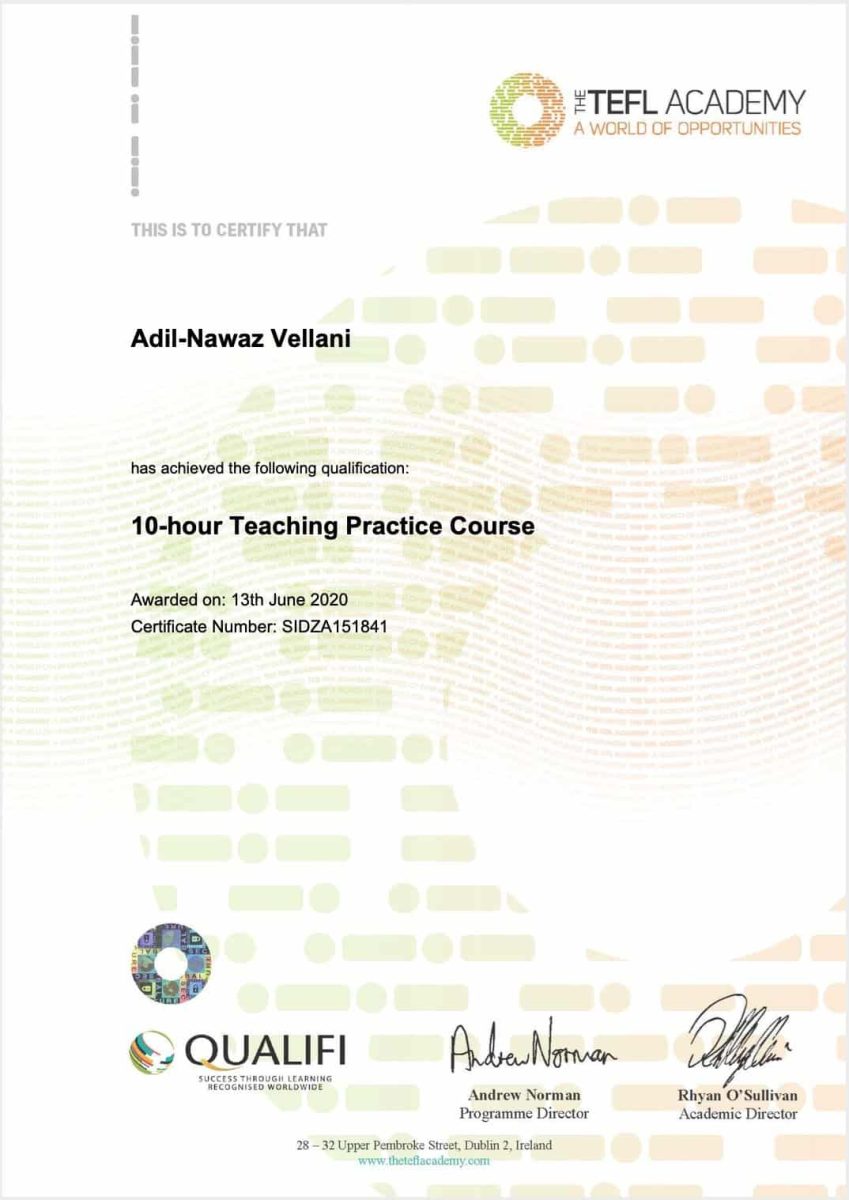
    TEFL Academy Certificate
    My Certificate of Completion for the TEFL Academy course.

    More importantly, our emphasis is and will always be on reviewing and recommending TEFL courses that have earned legitimacy through a government-regulated accreditation. As long as there is no industry-wide accrediting body for TEFL qualifications, we are only interested in reviewing and recommending accredited TEFL providers with government-regulated accreditations.

    So if you are searching for and checking TEFL course reviews on blogs, you should be skeptical of TEFL reviews (including ones we publish). Check that the reviewer has personally audited the TEFL course.

    Because you can’t be 100% sure someone who claims to have audited a course has actually done so, you can also request TEFL providers you are considering to give you restricted access to the course, or to speak to graduates about their experience.

    Wrapping Up: Beware Fake TEFL Reviews

    The world of e-commerce and online marketing is highly competitive, and online reviews are one of several ways companies try to gain an edge to earn credibility with consumers.

    This is true for TEFL certification courses, too. Unfortunately, there is no shortage of fake TEFL reviews online, so it is important to know how to separate the wheat from the chaff.

    Fortunately, we’ve already done the heavy lifting for you. We only recommend TEFL certification providers with UK and US government-regulated accreditations, whose courses we’ve actually reviewed and tested ourselves.

  • Interactive Whiteboards in the Classroom: The Starter Guide

    Interactive Whiteboards in the Classroom: The Starter Guide

    With the rapid expansion of new technology, today’s schooling may seem easier than ever yet never more challenging. 

    On one hand, teachers and students can teach and study online anywhere and the progress of digital learning devices is skyrocketing. On the other hand, most teachers would agree that keeping students’ attention has never been harder. 

    The truth is, there’s no more room to connect with students if you insist on old-fashioned chalkboards and paper-based study materials. 

    Students nowadays live in a smart, connected world and receive information fast through digital services. Therefore, they expect to receive knowledge at school in the same way. Otherwise, they easily lose interest.

    You can use technology in multiple ways to simplify and improve your teaching methods while engaging students in fun, interactive lessons. Among the top and most practical ways to do this is using an interactive whiteboard in your classroom that will upgrade your standard text-based teaching.

    What Is an Interactive Whiteboard?

    The interactive whiteboard is also known as “smart whiteboard” or “electronic whiteboard”. It is a learning tool in the classroom that displays multimedia content from a computer onto a classroom board, so teachers and students can interact with the content on the screen using tools, digital pens or even fingers.

    You simply connect the computer to the internet, and you can access any information and use it while teaching. Interactive whiteboards also enable teachers to store data used in previous lessons and search through it when needed. All in all, these smartboards are a teacher’s treasure case.

    Both teachers and students can benefit from the interactive whiteboard in the classroom. The content can be shared and used during lessons, which simplify teachers’ work and motivates students to collaborate and interact.

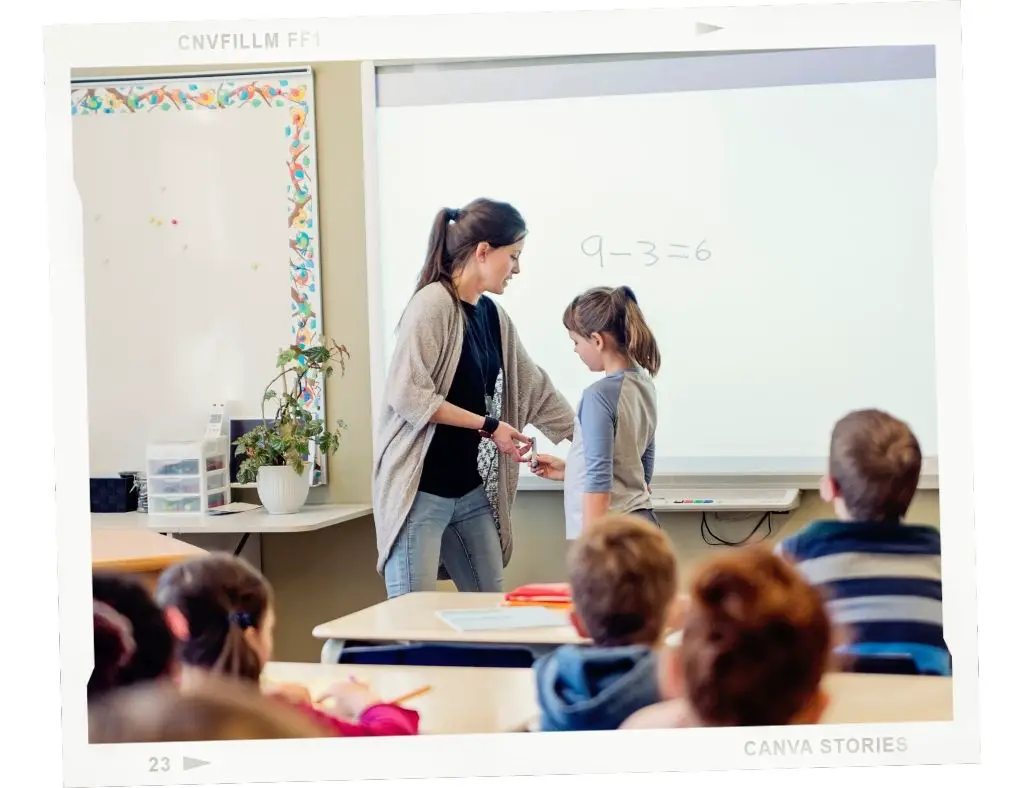
    A teacher and a student using an electronic whiteboard during a lesson.

    Also read: 7 easy tips on how to establish a hybrid classroom

    How Can Teachers Use Interactive Whiteboards In the Classroom

    The majority of teachers have reported seeing improvement in their students engagement and a more positive and livelier atmosphere since using this digital learning too. Nevertheless, many educators of different ages and levels of tech-savviness may find switching or frequently using the interactive smart whiteboard a bit tricky. 

    Although we’ve been using technology for over two decades, its exponential growth in the past several years might seem like a big leap when one needs to implement it daily in the classroom. According to my experience, the sooner, the better. 

    When they first brought me an interactive whiteboard in my classroom, I felt a bit unready to do a full switch. I instantly changed my mind when I saw the smiles on my students’ faces and when I saw just how simple and fun this tool was for me too. 

    There are so many ESL activities you can do using an interactive whiteboard. Games, quizzes, charades, karaoke shows, drawing… 

    Top 5 Activities for the Interactive Whiteboard in the Classroom

    These are my favorite activities:

    Disappearing Text 

    Write a sentence on the board, then instruct the students to say the whole sentence together out loud. 

    Then, erase a couple of words at the beginning and tell them to say the full sentence again.

    Keep on erasing words until the sentence is gone, but encourage students to say the complete sentence correctly.

    Walking/Running dictation

    Divide the class into 2 teams.

    Next, one student from each team approaches the teacher, who tells them a word or sentence from the lesson. Then, the students go back to the team and tell the word or sentence, and they have to write it on the board as quickly as possible.

    The first team who writes the correct word or sentence wins and gets a point.

    Read the full instructions on running dictations.

    Tic Tac Toe

    Divide students into two teams. Choose a grammar tense you want to practice.

    Draw a 4 x 4 grid on the interactive boards. Write a sentence in every square and leave a blank space for the verb. On the side write 13 verbs (one of them is extra).

    Instruct students to complete the sentence with the correct form of the verb. The first team who answers correctly gets a Tic Tac Toe.

    Pictionary

    Divide students into small teams.

    Make a list of vocabulary words you want to practice, and that are familiar to students. List the words separately on cards turned upside down and present the on the board.

    Invite a student to “draw” one word and show it to his team that has only 5 seconds to guess the word.

    Continue with the next teams, then pick a winner according to the number of points that each team has won. (1 correct guess = 1 point)

    Mixed-Up Sentences

    Divide students into two teams or more small teams.

    Make two separate columns on the board. Write jumbled sentences in the first column and leave the second column empty. Instruct students to race to make a correct sentence in a limited timeframe.

    Each team gets a point for each correct and fast answer. You can also do this activity as a test review to practice syntax.

    Find more activities here:

    Advantages and Disadvantages of Interactive Whiteboards for the Students

    Student involvement in the classroom would surely progress when students realize that teachers speak their language, i.e., fast and interactive information input. Therefore, interactive whiteboards contribute to building positive student experience in the classroom, however, just like any learning tool they have certain disadvantages when it comes to student learning.

    Let’s take a look at both the advantages and disadvantages of interactive whiteboards for the students:

    Advantages

    Students learn in different learning styles

    With the interactive whiteboard, teachers can support and encourage different styles of learning, i.e., visual, kinesthetic, and auditory.

    Students who are keen on visual learning would be able to draw, manipulate and present on the board, while the auditory learners will enjoy videos, songs and sound effects. The kinesthetic students can have physical interaction with the board that allows them to touch and move objects on the display.

    Enhances language learning

    The interactive smart board is especially effective for language classes. Language teachers usually combine the digital format of their teaching materials with the textbooks, so students can get multiple interaction with the language they are learning.

    Students can work with new vocabulary or grammar content by clicking, highlighting, watching dialogue videos, listening to pronunciation of words related to images and much more.

    Direct-from-source information remains available

    Another important benefit of interactive whiteboards in the classroom is that presentations during lessons can be recorded, saved, shared and used at any time when needed.

    Students can thus plan when to revise study material and be sure that they rely on correct information. This way, students feel more self-confident, motivated and focused.

    Storytelling

    According to research of educators, ESL students exposed to digital storytelling develop their English skills and progress fast. For young learners, for example, teachers can use comics and cartoons to introduce new vocabulary and grammar structures.

    Another practical and fun way to use storytelling in the classroom is with predictable storybooks or picture books with no text that you can change, adapt or upgrade together with your students’ ideas.

    More experienced students can write words or sentences and add to a story to finish it, or create a new one from scratch together with their classmates.

    Enhanced interaction in the classroom

    Smart interactive boards have a touchscreen that can be used by many students simultaneously. Teachers would be happy to see that their students turn into active participants in the lessons, communicating and enjoying the hands-on experience of learning.

    Disadvantages

    Negative impact on eye health

    No need to go any deeper, as it is clear that staring at any screen for a long time may have a negative impact on the eyesight. One of the best ways to avoid this is to limit the time of use of the interactive board and combine it parallelly with other activities that do not involve screen time.

    Risky when remote access by students is permitted

    To increase students’ engagement, many teachers allow their students to interact on the board through their personal computers. In one way, this can have a positive outcome, as students can share relevant data related to the curriculum.

    However, students often use their access to share inappropriate and irrelevant information on screen that may disrupt learning time.

    Technical problems

    Both teachers and students can use these boards only when the lighting in the classroom is appropriate. Inadequate lighting can make students’ reading experience unpleasant.

    Also, if the power goes out, or the computer collapses, the lesson material might disappear and it is likely that this will interrupt students focus and break the learning atmosphere.

    The Best Whiteboards for the Classroom? 

    Teachers can enhance their lessons by using the interactive whiteboards in various ways, incorporating a wide range of audiovisual material to have more motivated and engaged students. However, choosing an interactive whiteboard can be a bit challenging if you don’t know where to start from.

    Here are my top 2 suggestions:

    Samsung Flip 65 Inch 

    [amazon-button link=”https://www.amazon.com/Samsung-WM65R-Flipchart-Business-LH65WMRWBGCXZA/dp/B07WXZDCC9?crid=60QK5R3QTLFM&keywords=samsung%2Bflip%2B65%2Binch&qid=1653912076&refresh=1&sbo=RZvfv%2F%2FHxDF%2BO5021pAnSA%3D%3D&sprefix=Samsung%2BFlip%2B65%2Binch%2Caps%2C128&sr=8-3&th=1&linkCode=ll1&tag=jimmyeslus1-20&linkId=51c2c08a09706a2648a824431b6f5a02&language=en_US&ref_=as_li_ss_tl”]

    With its digital flip chart and screen size of 65 inches (1.65 m), this interactive whiteboard makes any room turn into a classroom.

    Samsung Flip 65 Inch includes a built-in Wi-Fi module and a built-in speaker that will enhance your presentations of various audiovisual teaching materials within your lessons.

    It has a rather large display, a temperature sensor and time and date memory which are practical for steady control of this learning tool and the data you want to save and classify.

    This interactive smartboard comes with two passive digital pens, a power cable and a touch out USB cable that you can use to connect to your computer or smartphone.

    Plus, you get a 3-year warranty with on-site pickup service during the warranty period.

    VIBE All-in-One Computer Interactive Whiteboard

    [amazon-button link=”https://www.amazon.com/Vibe-Interactive-Touchscreen-Collaboration-Whiteboard/dp/B081LPL772?crid=21GPPMOHWCPW8&keywords=Vibe+All-in-One+Computer+Interactive+Whiteboard&qid=1653912258&sprefix=vibe+all-in-one+computer+interactive+whiteboard%2Caps%2C145&sr=8-1-spons&psc=1&spLa=ZW5jcnlwdGVkUXVhbGlmaWVyPUEyOUZDMzY1R1MxWlI5JmVuY3J5cHRlZElkPUEwMzIyMzMyMzZZVzdEOUtXREhTNSZlbmNyeXB0ZWRBZElkPUEwMjcxNjQ4U0NIQTZLQUo3VU04JndpZGdldE5hbWU9c3BfYXRmJmFjdGlvbj1jbGlja1JlZGlyZWN0JmRvTm90TG9nQ2xpY2s9dHJ1ZQ%3D%3D&linkCode=ll1&tag=jimmyeslus1-20&linkId=346770ead3f3c082c6d6f2e649403f76&language=en_US&ref_=as_li_ss_tl”]

    This exceptional interactive board is designed to make teaching and learning experience a breeze. One of its main pros is the pen that you can use on the touchscreen, which looks natural and feels familiar like a marker on a regular whiteboard.

    Next, you can edit and share information with many people at the same time, either face-to-face in the classroom or while working remotely (ping, offline-online teachers!). 

    The size of the screen of the VIBE smart board is 55 inches (1.4 m). You can use various apps for teaching, as the board works with almost any of the teaching tools.

    Plus, you can store all of your necessary data in the VIBE Cloud in real time. So, you don’t have to worry about the whereabouts of your notes – they will all be stored and ready to use back and forth during lessons. Then, you can export the content to your cloud drive like Dropbox, Google Drive etc.

    The VIBE Smart Digital Whiteboard can be easily installed and has a thin and compact size that makes it convenient for any classroom.

    Also read: The 10 best laptops for teachers

    To Sum Up

    Using an interactive whiteboard in the classroom is beneficial for both teachers and students. This learning digital tool is rapidly taking over, so the sooner you catch up with the multiple ways to use it, the better the attention and motivation of your students.

  • ESL Job Interview Questions & Answers: Top 6

    ESL Job Interview Questions & Answers: Top 6

    Applying for ESL teaching jobs abroad isn’t very difficult. In fact, due to the high demand for ESL teachers around the world, it’s relatively easy to apply for jobs to teach English abroad – and get hired. So, why even bother preparing for an ESL teaching job interview?

    Well, as with anything in life, the initial time and effort you put into researching schools or organizations you want to work for, and preparing well to present yourself in a professional light can make a huge difference in your results.

    In this industry, you will need to separate the wheat from the chaff, so to speak. Once you’ve done that, you’ll realize that getting hired into top schools that pay the best salaries and benefits in the industry is competitive. Do you want to be hired by a bottom of the barrel employer, or a highly rewarding one?

    If you answered wisely, then you’ve probably figured out that you need to ace the interview with a top employer. In this guide, we discuss the top 6 ESL job interview questions and answers and other factors to consider.

    ESL Job Interview: The Top Questions & Answers

    How to Meet the TEFL Employers’ Expectations in the Job Interview

    Hiring practices in the ESL industry vary from one country to the next. Firstly, there are the basic qualifications teachers must have to be considered by employers.

    Next, there are the more nuanced aspects of being selected, such as how well your résumé is crafted, and the impression you give to prospective employers during the job interview, which can be as much about cultural expectations as it will be about your professional demeanor.

    So, while thinking about the types of questions you’ll be asked during the interview, also take some time to consider what are the cultural norms of the specific country and culture where you’re applying to work, when presenting yourself as the ideal candidate. This will help you tailor your responses and mannerisms during the interview to the expectations of those interviewing you.

    The majority of organizations that hire ESL teachers from abroad now conduct online video interviews. What that means is you can sit right at home and complete the interview in your favorite chair.

    What that doesn’t mean is you should show up to your interview wearing pajamas. Please do shower, shave, groom, and dress appropriately. Most cultures view teachers as carrying a certain amount of social responsibility, and that’s the type of person organizations want to hire.

    As well, the opportunity to teach English abroad is likely to be one that fills your mind with excitement about a new life experience in a foreign country. The organizations interviewing you, however, will almost always have an entirely different priority to yours.

    When preparing for an ESL teaching job interview, consider the organization’s priorities and why a foreign teacher is required. Whether the organization profits from offering English language lessons, the priority will almost always be to hire teachers who conduct themselves professionally, diplomatically, and respectfully.

    Although submitting your résumé is the first point of contact, and thus the first impression hiring organizations will receive from you, much of their decision to hire you will be the result of how you perform in the job interview.

    It isn’t just important to say the right things about yourself. It’s even more important to help organizations see that their goals in hiring a foreign ESL teacher can be accomplished by selecting you.

    Top 5 Questions Asked in ESL Teacher Job Interviews (and How to Answer them)

    Of course, questions asked during job interviews can differ from one organization to another, depending on each organization’s unique goals, needs, and expectations. What we’re going to do here is get you primed for the most important questions to prepare for, and how to answer them like a professional. These questions will almost certainly be among the questions you’ll be asked, and how you respond can make or break your chances of getting hired. 

    1. “Why do you want to teach English abroad in [name of country]?”

    This question (and variations of it) is your opportunity to demonstrate that you have made the effort to learn some important aspects of the country and its culture.

    Your response should be focused on demonstrating a genuine interest and appreciation for the country and culture, rather than be from a point of showing off your knowledge. If you can drill this genuine interest down to the actual city where you will be working in, your efforts should pay off.

    Most citizens of any country are proud of their heritage, and deeply appreciate when others show an authentic interest and desire to partake in it. Now, perhaps you’ve chosen to teach in a particular country or city because of the climate, beautiful beaches, or awesome nightlife. Maybe you’re motivated to save money or pay off your student loans. Keep these aspirations on the side, and remember: this is a job interview. It’s a job which pays a salary for work performed.

    Instead, to answer this question effectively, focus on:

    • What inspires you most about this country and its culture.
    • Its recent achievements as well as its opportunities to lead or excel in specific areas.
    • Unique challenges faced by ESL learners in this country or city and why it’s important for you to be a part of their journey to becoming more proficient in English.

    2. “Tell us about your teaching qualifications and experience.”

    To answer this question well, you first need to think about why the interviewer is asking it. The question seems obvious and straightforward enough, but there will potentially be other underlying reasons the interviewer will be listening for. Let’s examine what the interviewer will be listening for:

    • Are you a new or experienced ESL teacher?
    • Do your qualifications and experience relate closely to the type of students you will be teaching (e.g., age level, proficiency level, type of school, and teaching methodologies adopted by the school)?
    • Do you have the necessary skills and experience to manage a class of ESL learners effectively?
    • Can you be legally employed as a foreign teacher in the country, based on your qualifications?
    • Is your verbal and body language consistent with your qualifications and experience?

    You might be thinking: ‘Why doesn’t the interviewer just look at my résumé?‘ Here’s why: ESL teaching is a soft skill. You might have excellent qualifications, and you might have several years of teaching experience under your belt, but the interviewer is more interested in seeing the goods (you) than the packaging (your résumé).

    There may be other factors as well. Unfortunately, the ESL industry has been rife with people holding fake degrees and qualifications. There are TEFL certification courses sold online for $20 that you simply cannot fail. Think about this for a moment.

    If you were an administrator at a top paying school, is this the type of person you would want to hire? If you were a parent, is the type of teacher you would want your child learning from?

    Indeed, interviewers ask this question because they’re aware that they cannot rely on a candidate’s résumé alone. They need to see that your demeanor matches your stated qualifications and experience.

    So, how do you respond to this question in a way that is convincing?

    First, know who you will be teaching:

    • What is the age range of the students?
    • What is the general English proficiency level among students at this particular school? In this city? In the country?
    • What are unique challenges ESL learners experience in this country?
    • What is the school’s philosophy on learning, and what methodologies does it expect teachers to use in the classroom?
    • Is the curriculum provided by the school, or are you expected to develop and deliver tailored lessons?
    • Will you be the sole ESL teacher for your students, or is there a local ESL teacher/teaching assistant who will be teaching the students with you?

    Having this prior knowledge will require some upfront work on your part, but if the reward is worth the effort, then the upfront effort is necessary. Having a clear idea and picture of the environment you will be expected to teach in will also help you formulate your responses to this question in a manner that matches the school’s expectations.

    If you are an experienced ESL teacher, you can talk about your qualifications and experience in very specific contexts to how they are relevant to the school and the role.

    Rather than talking about having 5 years of ESL teaching experience, you can talk about your 3 years of experience teaching secondary school ESL learners using inquiry-based learning to engage them in English through questions and expressing their points of view about themes relevant to their lives or to society.

    If your students will be preparing to study in university, and need to prepare to take IELTS, you can talk about your 5 years of experience teaching IELTS speaking and writing and how you’ve helped your students improve their fluency as well as accomplish their academic or career goals. 

    What if you’ve just completed your TEFL certification and have no actual ESL teaching experience abroad?

    If this is you, then firstly, you can look at ESL teaching positions where experience isn’t necessary. But why not leverage the knowledge you gained through your TEFL certification?

    If you have earned a legitimate TEFL certification, you know that the course was difficult because you learned how to teach English to ESL learners. You can draw on this knowledge to formulate your response. You can elaborate on how your TEFL qualification has prepared you to teach young learners using a range of methodologies, including ones espoused by the school. You can also talk about your teaching practicum and what you learned during these practice hours.

    Chances are, you live in a country where people you know speak English as a second language, and you can talk about your experience living, studying, or working in diverse environments.

    3. “How will you motivate your students to learn English?”

    This is a broad question aimed at assessing your personality as an ESL teacher, how you manage a class, and how you interact with students. In simple English, the interviewer wants to know if you are a good teacher, and a good fit for the school and the students.

    What is a good teacher? By most descriptions, a good teacher is someone who can encourage a high level of student interaction and enjoyment. Learning English should be fun, students should be productive, and the teacher should be able to facilitate discussion or elicit responses from students.

    Of course, this is going to also be relevant to the age group of the students you will be teaching. Different approaches to motivation will be required for preschool learners and university students.

    Schools hiring ESL teachers want to be confident that you will be able to create and maintain student motivation for learning English. This is especially the case for ESL teachers working abroad, where it’s easy for student motivation to drop and for students to slip back into the comfort zone of their native language.

    Schools have a strong desire to see teachers who find creative ways to motivate students with their English, and help them become more fluent and confident with it.

    So, how can you answer this question like a boss? There are two very effective ways to give a convincing response:

    Firstly, if you are an experienced teacher, you can give distinct examples of how you have been able to create a fun and exciting atmosphere for learning English. For example, you can talk about a particular student who achieved an academic or career goal in large part due to elevating their English communication skills.

    If you’re just starting out as an ESL teacher, you can explain how you would motivate your students using specific methodologies you’ve learned and practiced as part of your TEFL training. You can also talk about your awareness of specific challenges ESL learners experience in that specific country and how you would work with students to overcome them.

    As an ESL teacher with no experience teaching abroad, it’s important to realize that many countries and cultures place a high level of importance on creating a fun environment, and sometimes more on the fun aspect than on learning English itself.

    So, in this context, interviewers want to know if you’re a fun teacher. The last thing they want is for students to say is that learning English isn’t fun. Make sure you incorporate the fun element into your response to this question if it’s expected.

    4. “How would you handle students who misbehave or distract other students?”

    This question does not always have a straightforward answer. Culture, student age, and the type of school will all influence how you manage classroom discipline, and therefore, how you should respond to this question.

    Cultural norms can be a big factor in how you deal with misbehaving students. In some countries, a local teaching assistant is present to help the foreign ESL teacher with classroom management, whereas in others, foreign teachers have considerable autonomy to manage student behavior during class time.

    Answer this in the context of cultural norms and expectations, and considering what’s appropriate for disciplining students of different age groups. It’s vital that you learn about cultural sensitivities, and prepare your response to this question to align with them.

    We often look at a situation from our own cultural perspective and experience, and think that we can address situations in ways that are familiar to us. This has caused many ESL teachers abroad to struggle in their jobs.

    Thus, it’s not only important to study culturally appropriate methods of disciplining students, but to also make a genuine effort to accept these differences, even if they may cause you some discomfort.

    Perhaps the best general response to this question is to demonstrate that you are positive and have a high level of patience, and if you are unable to handle a misbehaving student after some attempts, you would request a local teacher to help defuse the situation. As well, you can assure the interviewer that you would familiarize yourself with the school’s policies and procedures.

    5. “What are your salary expectations?”

    Talking about money can get uncomfortable and awkward, and in some cultures, it can be considered inappropriate. However, salaries and benefits in the ESL industry tend to follow common trends in each job market.

    So, we recommend you arm yourself with the right knowledge about how much ESL teachers earn in the countries you are applying to work in, and work out your response to this question from a knowledgeable standpoint.

    Each job market has its nuances, but common factors that influence pay are:

    • Type of school
    • Reputation of school
    • Teaching qualifications
    • Years of teaching experience
    • Relevant teaching experience
    • Location and proximity to urban center (schools in larger cities tend to pay higher salaries)

    We also suggest that you avoid mentioning a salary amount you have in mind, and instead ask the interviewer about the salary range of their current teachers based on qualifications and experience:

    “Can you give me an indication of the salaries your current teachers are earning based on their qualifications and experience?“

    Framing the question in this manner should move the interviewer in the direction of talking about salary ranges. It’s also more comfortable for people to talk in ranges, and that gives you some room to negotiate at a later point in the hiring process.

    Keep in mind that not all schools pay ESL teachers based on qualifications and experience. Many schools pay an hourly rate based on the type of class or students being taught. This is common with Business English teaching jobs and with private language schools that often pay different rates for one-to-one and group lessons.

    When discussing salaries, also make sure you are aware of benefits that the school can offer based on trends in that specific job market. Be careful about being fixated on the salary alone. For example, salaries in capital cities and economic hubs are generally higher than in smaller or less important cities, but so is the cost of living.

    Outside of Tier 1 cities, schools are also better positioned to fully cover housing costs. So, it’s possible that you can save more money on a lower salary amount if you choose this path.

    6. “What do you do in your leisure time?”

    Teachers around the world are viewed as having an obligation to be responsible members of society, and this can be even more pronounced in more conservative societies. Many ESL teachers seem to forget that, while it’s fine to have a private and social life outside of work, the lines between one’s private and social life and work life can be blurry.

    Drinking and partying can be a lot of fun in another country, where you get to meet and mingle with both locals and expats. But think about the responsibility you have to the school you work for, and the students you teach.

    Then, think about this from the hiring school’s perspective. What type of ESL teacher do you think the school prefers to hire? One who parties hard, gets drunk, and shows up hungover the next morning – or worse, doesn’t show up at all? Or one who goes to the gym, reads books, and has a healthy relationship with students and colleagues?

    If an interviewer asks what you like to do outside of work, you can safely bet that the interviewer wants to know what type of person you are, and if you have a desirable characteristic.

    The fact of the matter is that the school’s reputation is on the line with parents and students when it makes a poor hiring decision. It not only reflects badly on the teacher who demonstrates undesirable habits, but more so on the school itself, as there can be a certain loss of face or humiliation on the school’s part.

    Answer this question intelligently, and be genuine. If you portray yourself as someone with a respectful private life, make sure that’s who you really are. If you mislead a prospective employer who later discovers aspects of your personal life considered to be unacceptable, the consequences can be hard for you, especially since you’ll be in a foreign country where your stay is permitted through employment with the school.

    Other Considerations for Acing the ESL Job Interview

    Let’s have a look at further factors during the interview which can land you a TEFL job abroad.

    Be Prepared – and Show It

    One common mistake ESL teachers make is that they assume schools need them, because of the massive gap between demand and supply for ESL teachers. Just because there is a high demand for ESL teachers and a supply that cannot meet this demand at present, that doesn’t mean employers have no expectations.

    Sure, there are schools that will hire any ESL teacher with a pulse. But ask yourself honestly – is that the kind of organization you really want to work for?

    Don’t be lazy. Be prepared to look, act, and speak like a professional. Take notes and ask good questions during the interview.

    What are good questions to ask? Ask about:

    • The school and classroom atmosphere
    • The current teachers on staff, their qualifications, experience, and how long they have been teaching there
    • The students, what are their greatest strengths and challenges
    • The school curricula, how it is designed, and how much flexibility teachers have in delivering their lessons
    • How the interviewer would describe the ideal candidate for this job
    • Ways the school administrators support teachers both in the workplace as well as in their private affairs while living in the country

    Don’t assume you’ll get hired just because the school is desperate for teachers. Regardless of the need for ESL teachers, reputable schools will pass on a candidate they think might not be a good fit. Any school worth its salt will want to hire the best possible candidate who will value the role and be dependable. 

    Pause and Reflect Before Responding to Questions

    It’s normal for people to be nervous during job interviews, but two of the most common mistakes candidates make are to respond too quickly with a clichéd response, or to freeze up altogether.

    Firstly, you should prepare well for any job interview, anticipating questions the interviewer might want to ask, and how you would respond to these questions. During the interview, though, we recommend taking a few seconds to absorb the question being asked and compose your thoughts before providing a response.

    The best way to do this is by asking for a moment to think about the question:

    “That’s a great question. Let me think of some examples from my teaching experience before responding to it.“

    “That’s an excellent question. Do you mind if I think about my response for a moment?“

    Now, rather than looking unprepared, you appear genuinely interested in the question itself, and formulating a genuine response.

    Don’t Badmouth Previous Employers or Colleagues

    We all have good and not-so-good experiences in our careers. However, one of the biggest mistakes ESL teachers can make during an interview is to talk negatively about a former employer or colleague.

    Even if your gripes are valid, listening to gripes about your previous experiences is not the reason you’re being interviewed, and making the interviewer do so makes you look bad.

    If you’re asked why you left your previous place of work, or how your relationship was with your previous supervisors, focus on the positives. Express your desire for new opportunities and challenges. Talk about shared successes between you and your previous employer while working there.

    On a broader note, constantly try to maintain a positive, professional relationship with organizations and people you work with so that you can use them as references when necessary. Don’t be that slash and burn character who no one wants to support.

    Finally, it’s good practice to obtain a reference letter from every employer you’ve worked for, if possible. This not only serves as a record of proof to validate your résumé details, but also can be helpful when applying to new jobs.

    To Sum Up: Be a Person that Others Want to Hire and Work With

    When preparing for a job interview to teach ESL abroad, don’t just think about the country you want to travel to, the type of school you want to work for, or the salary you want to earn.

    Also think about what makes you a desirable person to hire by considering the needs and expectations of the school you are applying to work with.

    The opportunities are there for people who bring as much to the table as they expect to receive.

  • How to Create a Welcoming Classroom for ESL Students from All Over the World

    How to Create a Welcoming Classroom for ESL Students from All Over the World

    Our classrooms have more English as a Second Language (ESL) students than ever. ESL students come from all over the world, leaving countries they know and love behind, often with little choice. 

    Imagine being a child adjusting to new surroundings, new friends, a completely different culture, and, to top it off, a new language! 

    Since communication is the foundation for all learning and an essential life skill, it’s imperative as educators we support ESL children with sensitivity and care during this challenging transition in their lives by making them feel as welcomed as possible. 

    In this article, you will read about ways to create a welcoming classroom for ESL students; to help them academically and emotionally, whether you’re a teacher, administrator, or support staff.  

    Creating a Welcoming Classroom for International Students

    Focussing on the Academic Side of ESL Teaching Isn’t Enough

    As educators, we intend to best help every child, no matter their unique learning challenges. But working with ESL students new to the country may be something we have never dealt with before. Or maybe, you need some helpful tips to serve your ESL population in your school better. 

    You may have heard about the acquisition of English as a second language in an academic sense, but what about the emotional and psychological support required for ESL students to be successful? 

    For many of our international ESL students, it can be downright scary. But, let’s face it, the only way a student can be successful is to have the support they need. 

    It is challenging to meet the emotional needs of each child. Still, there are many things you could do to facilitate the transition international ESL students face, alleviating the stress caused by this traumatic change in their lives. 

    Here are some helpful tips to ensure you can be the guiding light ESL students need to not only survive but to thrive in the new world that awaits them. 

    Make Culture a Classroom Priority

    A unique activity that I always did with new ESL students was to create a flag from their native country. I gave the students construction paper, scissors, glue, and markers to use at their desks to make the flag. Students may need to use the computer to look up a picture, which I always encouraged. 

    After the student finished, I would hang the flag next to other flags students had made for all to see. I could tell that it gave students a sense of pride and was a great way to first welcome students to your class by showing support for their culture and homeland. 

    Become a Cultural Expert, Not a Multi-Linguistic Expert

    I remember my second year of teaching when I taught international students from five different countries in one classroom. My students came from Germany, Pakistan, Puerto Rico, Bangladesh, Ecuador, and Mexico. Can you imagine all those varying languages and dialects in one room? 

    The common misconception among teachers is that they need to be an expert in a language to teach ESL students. Not true. It would be best if you were an expert in English to teach ESL students, and most importantly, provide emotional support by demonstrating a genuine interest in their native culture. 

    A simple project where ESL students can showcase pictures from their country can help students feel welcomed and valued. Hang the projects up in the room for all to see! Also, consider the customs of students’ cultures. 

    I can remember a time when I was having difficulty with a student, and I could not figure out how to get his behavior under control. Finally, my paraprofessional approached me and suspiciously asked, “What do you know about Latin machismo?” As ashamed as I was to admit, the answer was, well, nothing. 

    I was thankful when she explained the traditional gender roles in my student’s household based on his native countries culture. The insight I needed to change my approach with my student resulted in a much more harmonious exchange from then on. 

    Later, he became so successful academically that he was given an award from the principal for receiving the highest gains in literacy of any ESL student in the school.

    I attribute his success to having the cultural support he needed to feel comfortable and confident. If my paraprofessional did not explain his cultural uniqueness or if I was not open to learning about it, my students’ performance could have gone in an entirely different direction. 

    Also read: Culturally responsive teaching – strategies for an inclusive classroom.

    Encourage Students to Speak in their Native Language 

    Classrooms are not just for reading and writing; they are for speaking and listening too. Research suggests the more children become proficient in their native language, the more efficiently they will acquire academic language in English (Collier & Thomas, 1989). With that said, support your ESL student to practice their native language, not just English. 

    And never, ever stifle a student’s confidence by telling them, “Speak in English!” while conversing in their native language. It is good practice for them to speak their language, and we want always to show respect for their culture at all times. 

    Pair Students to Other Native Speakers

    As educators of ESL students, we should not only allow time for collaboration, but we should also actively encourage peer interaction by creating opportunities for group work – and the way you arrange your classroom can make or break that dynamic.

    A lesson idea that works phenomenally well is replicating real-life social seniors such as a restaurant, movie theater, or sports event. So, I transformed my classroom into a real-life restaurant complete with menus, welcome signs, decor, and table settings that I helped the students create.

    The plan ultimately was to collaborate with my colleague’s Spanish class to allow both groups the opportunity to teach and learn varying language skills.  Each student would play the role of patron and server, practicing their “lines” for weeks. The Spanish class did the same. Finally, we invited the Spanish class to our “restaurant.”

    The lesson provided an excellent opportunity for ESL students to showcase their native language skills by helping the Spanish class with their second language acquisition, empowering confidence boost. In addition, the English speakers allowed my ESL students to practice their skills outside the typical confines of their usual class environment. Plus, the students had a blast! 

    Get more ideas for community-building activities in this post.

    Bring in Members from the Community

    Students need to know they are part of a community with people of the same culture. I don’t know about you, but we had limited access to individuals who speak German, Bengali, or Urdu when I taught my ESL students.

    Luckily for my Spanish-speaking students, the ESL paraprofessional was a fluent speaker who would stop in to visit with the students weekly. She also allowed students to see her in her office every morning while waiting for the first bell. What a fantastic way to provide much-needed support and love to students who may otherwise feel entirely alone. But what about the other students?! 

    To ensure the other ESL students had the same camaraderie, I looked to the community for help. I reached out to a local Islamic temple and Jewish synagogue. I was lucky to find two community members willing to volunteer their time to join our class and visit with our students who spoke the same language! All felt the fellowship, and it was a great way to show support for ESL students. 

    Celebrate Student’s Unique Cultures

    American holidays are a great time to showcase our international ESL student’s cultural holidays by facilitating a molding of the two. For example, one year, we celebrated an international thanksgiving where students were encouraged to bring in traditional food items from their native culture. 

    During our “multicultural thanksgiving,” we invited administrators and support staff with creatively designed invitations that featured symbols of all the fall holidays celebrated by students. For example, the Muslim festival Eid, the Jewish holidays Rosh Hashanah and Yom Kippur, and the Catholic advent were all featured on the cover of our special invite. 

    Students brought in their cultural food items; we pushed all the desks together and had a family feast to ring in our multicultural thanksgiving. In addition, each student had a turn to play cultural music of their choice during class for all to hear. It was a heartwarming, enlightened, and highly educational experience for all. 

    Read this article to learn great icebreaker activities for the first day of school.

    Hopefully, these tips will help you welcome international ESL students from all over the world.

  • Mental Health Activities for Students: 6 Tips for the Classroom

    Mental Health Activities for Students: 6 Tips for the Classroom

    Did you know that including health-related activities in your classroom makes teaching and learning easier and more effective? And that your student’s emotional health has an impact on their academic performance?

    Addressing your student’s mental health is essential to helping them live a healthy life, connect with their peers, and improve their grades. Emotionally healthy students can control their emotions, thoughts, feelings, and behavior, even as they progress through life stages.

    In this post, you’ll find tips how you as the teacher can recognize mental health issues of your students, as well as what mental health activities you can incorporate in your lessons.

    Mental Health Activities  for the Classroom

    What is Mental Health?

    Mental health refers to the psychological and social well-being of a person. Mental health affects how we cope with life, manage stress, relate with others, concentrate and make decisions.

    Research shows that nearly half of all mental health issues start at 14, and 75% start at 24. And, mental health issues cause 64% of students to drop out of school.

    Here are some factors that affect mental health:

    • Biological factors such as genes
    • Life experiences like childhood abuse, sickness, and discrimination
    • Cultural beliefs
    • Family history
    • Lifestyle such as hanging out with the wrong crowd
    • Substance abuse

    Can Poor Mental Health Lead to Mental Illness?

    The most prevalent mental health issue that students struggle with is stress because of pressures from their education, relationships, socializing, and finances.

    Positive stress, also known as eustress, is not bad for your students since it motivates them to work hard and perform better. Negative pressure, also referred to as distress, can lead to energy loss, interest, and poor performance.

    When negative stress is long term, it can be harmful and, if not addressed early, can lead to the following mental disorders:

    • Depression
    • Anxiety
    • Eating disorders
    • Self-harm or suicidal thoughts
    • Addiction

    How a Teacher can Recognize a Student is Struggling with Mental Health

    Reports show that one in five students is struggling with mental health issues. And since teachers see a student every day, they may be one of the first to notice their struggle. 

    Here are a few ways you can identify the change of behavior in your student.

    • Sleeping often during class lessons
    • Anxiety
    • Frequent crying.
    • Lack of concentration in class
    • Reduced activity
    • Not socializing (withdrawn or isolated)
    • A drop in performance
    • Change in their attitude
    • Skipping school
    • Hyperactivity
    • Weight loss/gain 

    Mental Health Activities for Students in a Classroom

    Teachers can help their students deal with and eliminate mental health issues by including healthy activities in their lessons. Here are some ways of reducing poor mental health in your students:

    1. Playing fun games together

    Playing entertaining games with your students can help them relax and socialize, while also reducing stress. Playing with them will strengthen your bond with them and help you understand them better.

    When you play any game (even if it’s just a simple puzzle), your brain releases chemicals like dopamine. Dopamine is in charge of how we feel pleasure, such as when we win a game.

    Browse our directory of fun ideas for ESL lesson activities and games.

    2. Conduct class meetings

    You can start by setting aside a few minutes and having a small meeting. Because many things happen on weekends, you can choose to have the meetings on Mondays. There is no need for the conversation to be serious or formal.

    Simply ask a few questions, like how do you feel today? How was your weekend? What is your goal for the week? And so on. Encourage your learners to speak openly about matters that concern them, and reassure them that your doors are always open if they need to chat with you. Simple conversations can help you identify early signs of mental health disorders.

    3. Integrate technology into your lessons 

    Children today are growing up surrounded by technology. So, why not integrate this technology into your lessons?  Try using Digital SEL (Social and Emotional Learning) to promote self-awareness, self-management, relationship skills, social awareness, and responsible decision-making.

    Your teaching style and age of the students will determine which SEL program is appropriate for the learners.

    4. Show kindness to others, as well as to your students

    One of the best ways to a better mood is to be nice to others. Try motivating your students to participate in random acts of kindness. It will improve their self-esteem and change their attitudes.

    You can opt to visit the homeless, orphans, or elderly. You can also assist a student whose parents or siblings suffer from a chronic illness by visiting them or contributing funds for their treatment.

    5. Taking short walks and going on class trips

    Research shows that walking helps us relax our minds and improve our spirits. When you walk, your brain releases endorphins, a chemical that helps to reduce pain and tension.

    You can add walking activities in your lessons, even if it’s only for 20 minutes. It can help in the improvement of self-esteem, self-perception, socialization, and depression reduction.

    6. Create opportunities to learn how to prevent stigma associated with mental Illnesses

    Encourage your students to discuss mental health. Assist them in understanding what mental health is, and that mental health issues may affect anyone.

    To raise awareness among students, you can hold a Mental Health Awareness Week or Day with your students. Ensure that all kids are aware of the effects of mental illness and the associated stigma. Make clear that discrimination against persons with mental health issues might hinder their recovery.

    You might also try out different activities and see which ones work best for your students.

    Also read: Tips on how to create a welcoming classroom for international students.

    Sources

  • How to Become an Outdoor Education Instructor Abroad

    How to Become an Outdoor Education Instructor Abroad

    For those of you who are wanderlust, teaching ESL learners has long been a viable way to see and experience the world. But teaching in a classroom environment isn’t everyone’s cup of tea.

    Some people loathe the mundane aspects of being a classroom or online teacher: preparing lesson plans, teaching grammar and pronunciation, reviewing and grading essays and tests – day in, day out – the list could go on.

    If you are seeking different experiences and genuine adventures, you should explore the field of outdoor education. In this post, I’ll explain what this is, what it takes to become an outdoor education instructor abroad, and I’ll introduce one of the most renowned global organizations in the field.

    How to Become an Outdoor Education Instructor Abroad

    What is Outdoor Education?

    Here is a description from Wikipedia:

    Outdoor education is often referred to as synonymous with outdoor learning, outdoor school, forest schools and wilderness education. Outdoor education often uses or draws upon related elements and/or informs related areas.

    The hallmark of outdoor education is its focus on the “outdoor” side of this education; whereas adventure education would focus on the adventure side and environmental education would focus on environmental. Expeditionary education involves expeditions into wilderness “where man is but a visitor.” All of these activities typically involve experiential education.

    If you have a penchant for the outdoors and wilderness, then outdoor education jobs abroad might be the perfect alternative to teaching English. Many people who have worked as outdoor educators declare that the experience was life-changing, and the friendships made have become rich, purposeful relationships.

    Experimental Outdoor Learning Programs of the JUMP! Foundation
    Experimental Outdoor Learning Programs of the JUMP! Foundation

    Where to Find Outdoor Instructor Jobs Abroad

    Outdoor Education jobs abroad will often be available in international schools and outdoor education providers that cater to them. Outdoor Education is not cheap. Camping trips, wilderness excursions, and extensive travel for both educators and participants means Outdoor Education can indeed be expensive and thus unreachable for the typical public school.

    Consequently, most outdoor education jobs abroad deal with engaging international school students, since international schools are equipped with both the financial means and willingness to integrate outdoor education into their curriculum.

    Not all programs happen in the wilderness. There are plenty of programs that take place in school gymnasiums and playgrounds, as well as programs where students get involved in local community work, and often there are programs offering a mixture of these experiences.

    Western Academy of Beijing (WAB), for example, has its own Outdoor Education Department. WAB is one of the most prestigious international schools in China. It is evident that WAB views Outdoor Education as critical to its students’ learning experience. Here is what WAB says on its website:

    In the wild, we challenge students to challenge themselves, and think and reflect on how they interact with the environment, heightening awareness of the global issues facing our planet. Our team structures programs unique to each grade level, gradually increasing in difficulty and steadily building independence. The goal is to meaningfully engage students, and to foster a love of nature and respect for our interconnectedness.

    The Requirements to Become an Outdoor Educator

    Before searching for Outdoor Education jobs abroad, it is important to know if this type of work is suited for you. Even if you are someone who loves the outdoors, that’s not enough. As you will often be dealing with adolescents and working in collaborative and culturally diverse environments, a positive mindset, team spirit, and cultural awareness are all crucial to making this a successful experience.

    Because Outdoor Educators need to be prepared for emergencies in the outdoors, most Outdoor Education jobs abroad will require you to have completed a Wilderness Advanced First Aid (WAFA) certification course.

    As well, there is often a lot of travel, and perhaps several days in the month when you will be away from home and cut off from the comforts of modern urban living. There may be times you will feel homesick, and times when relaxing for you means not being outdoors!

    While Outdoor Education jobs abroad often attract people of all age ranges, they are likely to appeal most to people in their late 20s to mid-30s. Many people at this age range tend to be in a transitional phase in life before settling down or pursuing other goals and interests, and have very few commitments and dependents, if any.

    Meet Steffen: An Outdoor Education Enthusiast Living Abroad

    Steffen Lohrmann is a Dutch-American expat who has lived and worked in Asia for several years. In fact, Steffen grew up and went to school in Asia. Steffen’s father was an expat who worked primarily in Asia’s hospitality industry, so Steffen and his brother have been living the expat life from a young age.

    Naturally, due to his father’s line of work, Steffen first found work in the hospitality industry. It wasn’t long after working in the corporate world, though, that Steffen realized his true calling as an outdoor educator. Steffen has been working as an outdoor educator since 2013, and has embraced it not merely as a career, but as a lifestyle choice.

    Steffen took some time to connect with us and share his wealth of experience in Outdoor Education. In this interview, he talks about outdoor education jobs abroad, and how international schools and companies have recognized the value of incorporating it into their culture. He also talks about topics such as how much outdoor educators can make living abroad, what type of person is suitable for this field, and where this career choice can take you.

    Because Steffen has been a long-time resident of China, he also shares his insight about how much ESL teachers can earn living in China.

    (Steffen was in a remote area of Chiang Mai, Thailand, during the interview, so his internet connection dropped off towards the end.)

    If you think Outdoor Education and Experiential Learning is something that resonates with you, the JUMP! Foundation should be at the top of your list.

    Getting to Know the JUMP! Foundation

    JUMP! Foundation is a leading provider of outdoor education and experiential learning programs, and it is a global leader in this field. JUMP! is also a social enterprise, in that it allocates a portion of its human, educational and financial resources towards leadership programs that target underserved communities around the world.

    The organization’s community outreach is undoubtedly what makes it a life-altering experience for its employees, local NGOs it partners with, and the communities it serves.

    JUMP! is all about equipping today’s youth with the skills needed to be leaders tomorrow. It designs and delivers a broad spectrum of impactful experiential education programs, and has, over several years, developed an extensive global network of partnerships in the field of education.

    JUMP! Foundation was founded in 2006 to accomplish three goals:

    • Inspire individuals through transformational experiences
    • Empower individuals with skills and resources to create positive impact
    • Engage individuals with local and global communities

    JUMP! was started by its founders responding to what they saw as a missing piece in the puzzle of a person’s educational development.

    Concepts such as global citizenship, leadership, engaging in local cultures, and developing creative solutions to challenges faced by local communities are some examples of how JUMP! has stepped into the arena of the traditional education model and helped evolve the model by integrating experiential learning.

    Since many of these learning experiences happen outside the classroom space, students who participate in JUMP! programs learn through hands-on experience rather than simply learning concepts and theories alone.  

    Currently, JUMP! maintains offices in Bangkok, Beijing, and Canada, and has satellite offices in other locations around the world.

    Interview

    Watch the 30-minute interview with Erick Van Til, Program Director, and Shannon Fox, Manager of the Facilitator Network of the JUMP! Foundation.

    JUMP! Programs

    The organization has on-site programs for educators, students and schools (JUMP! Schools), as well as off-site programs in various parts of the world (JUMP! Experiences). JUMP! also offers virtual programs (JUMP! Connected) to expand its reach and make its programs more accessible on a global scale.

    JUMP! delivers its experiential learning programs mainly for youth who are enrolled in prestigious international schools, and works with these schools to bring the programs in-house as part of the school’s wider education mandate.

    The purpose of these programs is to introduce learning opportunities through trips, nature excursions, community involvement, and engagement with local cultures.

    As a social enterprise, JUMP! is also deeply committed to making its resources and programs accessible to youth from all backgrounds. It provides support to underserved communities across the globe through its Impact programs, which we will discuss a bit later.

    Career Opportunities with JUMP!

    JUMP! has opportunities to work as a full-time member of staff, as well as a contract program facilitator. Full-time job openings occur throughout the year, and it is thus a good idea to follow JUMP! and look out for openings as they are advertised.

    Contract program facilitator opportunities are more fluid, meaning you could join JUMP! as a member of its global facilitator network, practically wherever you are located. Contract facilitators work on a per-project basis, so if you are looking for non-committal opportunities to work in outdoor education and experiential education, getting on board the JUMP! Facilitator team might be the right path for you.

    A team of program facilitators at the JUMP! Foundation

    Qualifications to Work with JUMP!

    Teachers, especially those who have genuine educational backgrounds and experience working within international school environments, can do well working with an organization like JUMP!

    Additionally, those who have a passion for outdoor activities such as camping, hiking, trekking, or rock climbing might find themselves at home working with JUMP! If you have a Wilderness Advanced First Aid (WAFA) or Wilderness First Responder (WFR) certification, this would be an added bonus.

    Anyone who has been involved with humanitarian assistance or relief efforts, such as UN peace corps, would be considered to be an asset to JUMP! in helping students learn these values and skill sets.

    The team at JUMP! works in an extremely collaborative way, so being a team player is essential to making a career at JUMP! successful. People who are good problem-solvers, are good at presenting and speaking to large audiences, able to motivate and inspire participants in group activities, and have a high level of empathy.

    How to Apply for an Outdoor Educator Job

    JUMP! regularly posts job openings on its site, and you can also get in touch with the JUMP! by email or phone to find out what’s down the pipeline.

    Also read: The best career opportunities after quitting teaching English abroad.

  • 10 Great Information Gap Activities for ESL Lessons

    10 Great Information Gap Activities for ESL Lessons

    ESL teachers are often in a quest of activities that will target a specific language skill and make the students’ experience more interactive and, thus, fun and meaningful.

    I often find myself struggling to select and implement convenient speaking exercises. On the one hand, I want these to work and enhance my students’ speaking skills, but I also care if students feel motivated and comfortable doing the exercises.

    Considering that fluency in speaking relies on communication, which is the most important part of speaking, it is vital to provide exercises through which students can communicate as naturally as possible.

    One of the most effective speaking exercises in ESL lessons are the information gap activities. These rely on asking questions and investigating which is among the best ways to obtain, interpret and use information while communicating.

    Information Gap Activities for ESL Lessons

    What Is an Information Gap Activity?

    In a nutshell, information gap activities are drills that are commonly used in task-based learning and are most often performed in pairs, although more students can participate. In the basic pair format, one of the students looks at one information compilation while their partner looks at another one. 

    Both information clusters are related, and students miss the information they need to complete a task or solve a problem, so they have to talk and exchange the information given.

    Information gap activities are beneficial as they make students ask questions and provide answers in an authentic, real-life fashion while talking about a cinema program that they want to attend in the evening or scheduling a tennis match or a coffee meeting together.

    Information gaps can help your students become successful as speakers, as they would be able to collect and give information in different contexts, used in everyday situations. 

    I like most about this type of activity because it involves students only, while teachers only give instructions, demonstrate and monitor if the activity is done correctly. 

    This way, there is a higher interaction between students, and they become active participators in the learning process, which is a big step toward becoming confident, successful speakers of English.

    Next to the effective information gap activities in task-based learning and teaching, which focuses on having students communicate and use language as a tool for information exchange and problem-solving, are the opinion gap activities.

    Also read: 15 tips to limit teacher talk time during lessons.

    What Is an Opinion Gap Activity?

    When doing opinion gap activities, students are asked to express their personal ideas, feelings, or preferences in a given context, i.e. real-life situation.

    The opinion gap activities for elementary to intermediate ESL students are usually made in the “complete the story” format, however, higher-level students can practice this type of activity by participating in a debate or discussion on a certain topic.

    It is worth noting that opinion gap activities don’t have an objective assessment method, meaning there is no right or wrong answer to what students express as opinions or ideas.

    As a teacher, however, you can instruct students to use specific grammar constructions and assign them a certain time frame that they should stick to while taking turns speaking.

    10 Great Information Gap Activities for ESL Lessons

    Now, let’s take a look at my list of the 10 Great Information Gap Activities for ESL Lessons that you can use in your classroom.

    1. 20 Questions 

    Level: Intermediate and above

    Divide students into pairs or small groups of 3-4 students. Pick a topic on which you will base your questions, like animals, food, famous people from history, etc.

    Write these on paper slips and close them. One student picks a slip of paper and keeps it a secret. The other students ask a maximum of 20 “yes” or “no” questions until they guess what the secret paper slip holds.

    2. Drawing Dictation 

    Level: Intermediate and above

    Divide students into pairs. Instruct students that their task is to draw a simple image; e.g., their “dream beach house” or “tree house” without their partner looking at the drawing.

    Next, tell them to describe the image to their partner, who should follow the description and ask questions until they reproduce the image of the first student in the pair.

    Instruct students to include shape, sizes, colors, exterior parts of the beach house and the area.

    Another fun writing activity: Running dictation

    3. Role Play

    Level: Intermediate and above

    Divide students into pairs and create a situation.

    For this activity, you have to “create a problem” that students will need to solve. For example: One of the students is a waiter at a luxury restaurant, while the other one is a guest.

    The first role-play card should contain a description like, “You are a guest at a luxury restaurant, but the dish you ordered looks a bit and feels lukewarm, plus the glass is stained… (add more problems). You want to get a new dish and don’t want to pay for the first one. Talk to the waiter to solve the problem.”

    The other student gets a role-play card that says, “You are a waiter at a luxury restaurant. You have a guest who complains about their plate, although the meal is fresh and shouldn’t be served hot. You can bring them another dish from the menu, but they will have to pay 50% for the first one. Talk to the guest and solve the problem.”

    4. Find Your Partner

    Level: Upper-Elementary and above

    This is an activity where the entire class participates. Prepare cards, two each with the same image printed on it (according to the topic of your lesson).

    Each student gets a card, and they must go around the classroom with their cards face down and find the person with the same image by asking “yes” or “no” questions.

    Mind to instruct students not to ask directly, “Are you a…?” but tell them to ask descriptive questions.

    5. Mingle Activity 

    Level: Upper-Elementary and above

    This activity includes the entire class. Pick your thematic content from covered units for the activity, like classroom items, cartoon characters, cities, etc.

    Create a list of items that answer questions like “Where am I?”, “Who am I?”, and “What am I?.” Each student gets a different card (if you have a large class, you can divide them into larger groups). Stick the card on each student’s forehead and tell them that each of them has received a person/object they need to guess.

    Next, tell students that they must ask their classmates questions (that you will write on the board to keep things under control) about their person/object until they discover who they are. They aren’t allowed to ask questions which can be answered with “yes“ or “no“.

    Example: What does … eat? Where does … sleep? Does it … (verb)? What color is …? Does it have …? How much/many…?

    6. Get to Know You

    Level: Upper-Elementary and above

    You can do this activity by dividing students into pairs or working with the whole class. Prepare lists of questions that refer to a daily schedule but put them in a jumbled order.

    Each student should question their partner about their schedule, then order the questions-answers in the right order. Next, students should compare their daily routines and describe the differences and similarities in their routines in front of their class.

    Find more icebreaker activities for the first day of school here.

    7. Picture Difference

    Level: Upper-Elementary and above

    Prepare two different pictures on the same thematic content. Divide students into pairs.

    The first student describes their picture to their partner. The second student listens to the description carefully and tries to find 4-5 differences in on their picture. Then, the second student describes the differences and the first student should confirm if they are correct.

    8. Information Exchange

    Level: Intermediate and above

    Prepare film or theater programs with 4 pieces each. Include information like date, time, duration, genre, age limit and price of ticket. Make one full copy of the program and one with missing information.

    Divide students into pairs. Each student gets a program. The first student looks at the information about the films or plays and uses them to answer the questions by their partner who wants to know more about the films. 

    9. Same-Different

    Level: Upper-Elementary and above

    Divide students into pairs. Prepare two samples of different tourist offers for one destination. Tell students that they are friends or a couple who want to go on a vacation at the same place.

    They have found different offers, and now each tries to persuade the other that the offer they found is the right one. Include price of the offer, accommodation, air tickets, excursions, and extra activities etc.

    10. End-of-School Party

    Level: Upper-Elementary and above

    This activity is for the entire class. Create a shopping list for an end-of-school party and make a stack of cards that will contain things that students will “need to buy,” like drinks, food, decorations etc.

    Give a list and a card to each student. Tell your students to mingle with their classmates and ask them what they bring to the party. Next, divide students into groups and present questions on the board that your students will need to use

    What time does the party start? What food, drinks is best to bring? What music should be played? What activities should be planned, like karaoke, etc.?

    Instruct students to ask these questions within the group and write a plan for the party. Finally, each student presents their plan, and you can choose the best ones.

    Wrapping Up

    I hope that this article inspired you to incorporate some information gap activities on my list and make your ESL classroom an interactive environment where students exchange knowledge and enjoy learning.

  • How to Develop Patience as a Teacher? 7 Practical Strategies

    How to Develop Patience as a Teacher? 7 Practical Strategies

    We are discussing and trying out various teaching tools all the time but fail to remember the most powerful tool that teachers have: patience.

    Pressured by the overwhelming day-to-day tasks and obligations, let alone disobedient students and demanding multitasking, did we lose this magic, yet almost endemic trait?

    Personally, I usually find it hard to stay patient at work while living in a world where “fast” means “effective”. 

    Sometimes I remember that progress takes time, but often I feel impatient and frustrated when I see that some students are lagging behind despite my efforts.

    So lately, I’ve implemented 7 techniques that helped me to develop my patience as a teacher and approach teaching from a different angle. Read on and try them yourself!

    How to Be a  Patient Teacher: 7 Strategies

    Why Is Patience Important In Teaching?

    Patience in teaching means dedicating the necessary time and effort to help students learn something, with the intention to explain, contextualize and build on their prior knowledge.

    Patience also refers to developing and maintaining trust in the student-teacher relationship. 

    Both the teacher and the student need to believe that their actions will eventually bear fruit, though they may face many obstacles on the way.

    Despite the common misconception, being patient as a teacher doesn’t simply mean “waiting for students to become better”. In fact, using patience as a tool reflects in all aspects of your work: like being patient with peers and their requests but also with yourself when you’re approaching the end of a term, and you have a pile of stuff to get done.

    Being patient when working with students requires higher emotional control and awareness on the side of the supportive teacher, allows learners to make mistakes but also encourages students to analyze them and create new solutions.

    This, on the other hand, turns students into critical thinkers instead of marathon runners for the “best” results — a very pragmatic quality for their future.

    In other words, neither teaching nor learning can be effective if there’s no patience which makes it fundamental in all educational processes.

    The college science professor and educational expert Leslie Schwab highlights patience as the top trait of any effective educator, along with concern for students, knowledge of the subject being taught and willingness to adapt.

    Schwab writes that patience is important as teachers cannot expect all students to progress at the same pace, so their task is to provide more extensive explanations in several times. According to her, the counter tactic, i.e., “go home and practice more” usually triggers anxiety and insecurity in students that would eventually reflect on the work of the teacher.

    Nevertheless, we can’t just put a blind eye on the fact that teachers are only humans, and they can simply lose patience and snap. Some of us are triggered by the noise, others by the scratching of chairs on the floor, or by the constant “forgetting” of homework…

    After all, research has shown that during their career, teachers have more stress and frustrations than workers in other fields, and show a bad temper.

    On the surface, patience may seem complicated to master, yet there are many small steps that you can make to see it grow within you and resonate in your working place.

    Also read: How to become a good and effective ESL teacher.

    7 Strategies for Teachers to Be More Patient 

    Follow these strategies to develop patience and stay calm in stressful environments or situations.

    1. Take Care of Yourself

    Yes, this is my number one, top tip as there’s no way to stay calm, focused and productive at work without providing basic personal care for your physical and mental health.

    Despite what mainstream culture of work preaches, burnouts are not a sign of professional success but of a low-quality life.

    Going to the spa once a week or weekend getaways in Tuscany sound fantastic, but I’ll stick to simple self-care strategies that any teacher can try on a daily level:

    Get enough sleep

    Make sure you sleep enough hours every night. Believe me when I say that NOTHING can soothe your nervous system better than regular slots of quality sleep. Make it a priority.

    Make routines and stick to them

    I already wrote about establishing routines as great stress-relievers when it comes to task management and feeling calm on a daily level.

    Wake up a bit earlier, start the day with a cup of coffee and NO extra stimulants like news, music, or Instagram stories.

    Relax, breathe and get ready for the new day. Then make a list and note down your tasks for the day and the day after — no need to plan further, just stick to this simple practice on a daily level to feel more organized and ready.

    Pull the breaks when needed

    You start working early in the morning and finish late in the afternoon, or sometimes even continue working at home — no wonder if you feel constant fatigue throughout the working week. I recommend 3-4 breaks in the day to balance this out.

    Just isolate yourself for 10-20 minutes, lean your body on the chair, take a few deep breaths, or do a short meditation to relax (link below). Occasionally, I need a short pick-me-up, so I go for a quick run and listen to my fav music or podcast.

    Mind your nutrition and caffeine intake

    Our mood is closely related to our nutrition patterns, meaning, what we eat when we’re busy can have a big impact on how sluggy or motivated we feel.

    Try to eat moderate, balanced meals and stick to 2-3 coffee cups maximum per day.

    Stay hydrated while in class, and always have some sugar booster at hand when your energy bars start going down. Personally, I run on pralines, dates or bananas, but you can also have dry fruits and nuts, protein bars etc.

    Make leisure time mandatory

    At a certain point of the day, you have to stop working if you want to continue working productively.

    Leave some time in the day for other activities like sport, reading, watching films, hanging out with friends… Whatever makes you feel happy and relaxed.

    Also read: The extensive stress management guide for teachers.

    2. Examine Your Impatience

    Analyze what causes your impatience while in class, and try to recall and identify situations when you lost your tolerance.

    Think about the consequences of losing your cool and project possible alternative reactions on your side.

    Once per week, I imagine a situation, like a student spilling water on my computer for example, and let myself think about 3 possible reactions, then I choose the most and the least appropriate and I write it down. 

    At the end of the month, I analyze all responses in my diary, check my progress, and see if I have implemented positive solutions in my classroom.

    If you know your triggers, you can choose how to react in similar situations in the future.

    3. Learn to listen to others

    Listening to others at work before reacting, may seem like an easy-peasy thing to do, but actually, it requires conscious effort and can clearly show how patient you are.

    Try practicing this at home or with your friends. Don’t interrupt them while speaking, nor when they make short breaks between sentences. Let them finish their thoughts, think about what they said, and THEN reply. 

    Do the same at work with your students and colleagues. You will notice that your responses become more clear and measured, as you get more time to understand the other person and think about what you’re going to say instead of bursting out in the very minute.

    4. Practice being the person you want your students to be

    Students mirror your energy and behavior. Or let me put it this way: when I had a bad day and I enter class feeling anxious, angry or sad, students can feel my uneasiness and respond by reacting in a disturbing manner.

    Try to count to ten before you open the door of your classroom and leave personal burdens behind. Remember that you are there to share time together and collaborate for a good cause.

    If you give instructions with a calm voice and approach them with kindness, they will identify this atmosphere with their behavior in class.

    Remember the good old “Show, not tell”?

    5. Be responsive, not reactive

    When you behave just reactively, it means you react immediately and without conscious thought, i.e., impatiently.

    Example: Students are texting under the desk, you expel them from class.

    You can practice replacing this behavior with responsiveness, a thoughtful action that considers the short and long-term consequences of the immediate situation.

    Example: Students are texting under the desk, you take their cell phones away and ask them to stay after class for a short talk.

    Here are some ways to help you achieve this:

    Take a deep breath — this is the fastest way to interrupt stress. Signal the mind and the body that you noticed the signal, and now you’re preparing to go from reactive to responsive.

    Pause — when you feel the trigger to snap, freeze and slow down. Think before speaking. It’s okay if students are waiting for your response. 

    Mark your triggers — most signs of reactive behavior include shallow breathing, muscle contraction in the chest, neck, belly, feeling to push or shut something down, lack of focus, anxiety, sudden wave of warmth in the head etc. Notice these signs, so you can recognize and learn how to deal with them.

    These 6 activities will help you to promote mental health of your students as well.

    Motivational Quotes about Patience for Teachers

    Need Some Motivational Patience Quotes for Your Board?

    I’ve Got You Covered!

    Patience is bitter, but its fruits are sweet.

    Aristotle

    I have only three things to teach: simplicity, patience, compassion. These are your greatest treasures.

    Lao Tze

    Patience is not the ability to wait, but the ability to keep a good attitude while waiting.

    Unknown

    You can learn many things from children. How much patience you have, for instance.

    Franklin P. Jones

    Time is the Best of critics, and patience the best of teachers.

    Frederic Chopin

    Conclusion

    There’s no magic wand that will help a teacher be more patient over night. However, you can practice these simple strategies and see what works best for you.

    Take it slow, trust yourself and most importantly, accept that you cannot control everything at all times and find joy in riding the storms in our noble work.

  • Equipment Needed for Teaching Online: The Buying Guide

    Equipment Needed for Teaching Online: The Buying Guide

    So, you’ve decided that you want the freedom to teach online, from anywhere, great!

    But what supplies exactly do you need to get started? How much do you need to invest? There is so much equipment and different brands to sift through, what a potential headache!

    Luckily, we’ve put together the essential list of what you need to get up and running, from hardware to software and everything in between.

    Let’s get started with our list of the equipment you really need for teaching online.

    Equipment for Teaching Online: all You Need

    Interview: What Equipment do you Need to Teach Online?

    First, say hello to Harold. Owing to his IT skills and background, he was hired in 2018 by ALO7 to provide IT support to its many online ESL teachers based in USA. This is a secondary role he is tasked with in addition to teaching online for the company.

    Harold has troubleshooted hundreds, if not thousands, of technical issues with online ESL teachers and their equipment. This gives him a unique perspective into what type of equipment online teachers use, what works well, and what to avoid.

    In this 25-minute video interview, Harold talks about everything you need to teach online. He covers a range of equipment and other technical aspects, including: computer, internet requirements, headsets, webcams, green screen… and some others aspects of his life as an ESL teacher.

    Desktop Computer

    It goes without saying that you will need a computer to teach online. While many online teachers use laptops, we recommend investing in a desktop computer instead.

    Desktops are not only more cost-effective than laptops, but they are far more easily upgradeable, and thus have a longer lifespan. The temptation to buy a laptop to teach online will be high, but the cost of owning a laptop will be much higher, over time.

    There may be other reasons to own a laptop, though. So, be crystal clear about your specific goals with online teaching, and decide what’s perfect for your use case.

    You need to make sure the computer you buy ticks certain boxes. Let’s look at those minimum requirements:

    Computer Requirements

    • Hard drive: 128 GB or more, to store lesson plans, files, videos, etc.
    • Memory: 8 GB or more
    • CPU: Intel i5 or higher

    Don’t save at the wrong end. Live video conferencing eats up a lot of memory and processor power, so having a powerful computer is vital.

    Read our guide on the best computers for online teaching.

    Laptop Computer

    Laptops are extremely convenient as they don’t require much space and are portable, so you could theoretically teach from anywhere!

    If these advantages outweigh the cost advantages of a desktop computer, a laptop is right for you.

    However, if you want to save some time and mental energy then no worries, we’ve rounded up a list of the best computers for teaching below:

    Budget Laptop

    Don’t let this low price tag fool you, the Acer Aspire 5 is powerful and solid enough to give you the performance you need in your online lessons. Not only that, the widescreen will make it easy to arrange your windows mid-class, keeping you stress-free and in control.

    2021 Newest Acer Aspire 5 Slim Laptop

    [asa tpl=”flat_box_horizontal”]B08WX9M8GP[/asa]

    Premium, Ultra-portable Laptop

    This is the laptop for those who are on the go. It’s thin and light, versatile (can be used as a laptop or tablet) and it comes with LTE, meaning you don’t need to worry about getting disconnected from the Wi-Fi mid-lesson!

    Microsoft Surface Pro 8

    [asa tpl=”flat_box_horizontal”]B09DJSF748[/asa]

    Read our in-depth guide to selecting a laptop for online teaching if you want to dig deeper.

    Headset

    Most online ESL companies require their teachers to wear a headset, and many of these companies expect their online teachers to wear a headset that has a boom mic.

    This is partly due to the expectation that wearing a headset with a boom mic provides better audio quality; but also partly because wearing one makes you look like a professional online teacher in the eyes of the company and students.

    Fortunately, a good wired headset with boom mic should not cost you more than $50, and there are many options to choose from. High-quality Bluetooth headsets will cost you more, somewhat above $100.

    Don’t buy cheap ones: They’ll easily break, or they have poor sound quality which is a no-go for online teachers.

    We’ve again done the research for you already, and rounded up the top 3 headsets used when teaching English online. So relax, pick the one that feels right for you and get teaching!

    Wired Headset

    Plantronics Blackwire 3320 Wired Headset with Boom Mic

    [asa tpl=”flat_box_horizontal”]B085D7KPFT[/asa]

    Bluetooth Headset

    Jabra Evolve 65 MS Wireless Headset

    [asa tpl=”flat_box_horizontal”]B00ODRSN0A[/asa]

    For a broader selection, check our guides on buying headsets for online teaching, as well as microphones for online teaching.

    Fast and Reliable Internet

    A fast and reliable Internet connection is a must for online teaching. Your Internet connection largely depends on the service quality in the area where you live, but for the majority of online teachers working from home, this will not be too difficult a requirement to meet.

    Still, a few things you need to ensure about your Internet connection is that it meets the online ESL company’s minimum upload and download speeds, but also has a low ping rate (latency). Generally, you should be aiming for upload and download speeds of 10Mbs or higher, and a ping rate less than 100ms.

    Some online ESL companies also require their online teachers to use a wired connection, because connecting to the Internet with an Ethernet cable generally means a faster, more stable connection.

    Read our complete guide to meeting Internet requirements for online teaching here.

    Webcam

    Modern laptops include a built-in webcam which saves you a lot of hassle in this area, phew!

    But… what if you are using a desktop computer which doesn’t have one? What if your employer requests a separate, external webcam (I’ve had it happen before), or maybe you just want to provide extra quality videos to your students. What then?

    No need to make many words here: We’ve been using this Logitech webcam for years, and it flawlessly does its job.

    Logitech C920x Full-HD Pro Webcam

    [asa tpl=”flat_box_horizontal”]B085TFF7M1[/asa]

    Online Teaching Software

    Ok, now you’re set up with all the hardware needed to teach, but what do we need software wise?

    If you teaching company does not provide an own teaching platform, you will need to use one of these video conferencing tools:

    Good Lighting

    Because you are teaching online, lighting plays an important part at your workstation. Some online ESL teachers go overboard with their lighting setup, but in truth, your lighting setup does not need to be elaborate or expensive.

    At a very basic level, you can do well with one or two inexpensive LED desk lamps and position them to get the best illumination on your face and body. Your aim is not to glow in the dark here, but rather to ensure your students can see you clearly.

    The positioning of your lights is just as important as the brightness of your room. We recommend LED lights for most online teaching setups because they don’t emit as much heat, last longer, and are generally brighter than other types of lights.

    Some LED lights also give you the ability to adjust the light temperature between cool and warm colors; this is especially useful if you intend to use a green screen while teaching online, but also not a bad feature to have for just about anyone teaching online.

    See our recommended LED lights for online teachers here.

    Chairs

    You’re all set for technology now but what about your office?

    Maybe you already have a comfortable set-up which you can use; if so, then this is the area you can save a bit of money.

    However, bear in mind that you will sit in your office chair for (hopefully) many hours of the day. It needs to be comfortable and appropriate for your teaching style.

    Your chair should provide exceptional support for your back and neck, meaning that an investment in this chair now will result in not paying out to a chiropractor 6 months from now!

    Once again, we’ve selected a recommendable mid-range priced option for your, saving you the hassle!

    Komene Ergonomic Office Chair

    [asa tpl=”flat_box_horizontal”]B091MS2XMC[/asa]

    Read the full guide about comfortable chairs for teachers.

    Props and Teaching Aids

    Once you have the essentials out of the way, don’t be afraid to spruce up your teaching space. These things, while cheap, offer a massive boost in presentation which your students will certainly appreciate.

    Your props should be relevant to the age group of the ESL learners you teach, and should provide opportunities to elicit responses and encourage interaction from your students. They can also be excellent for warm-up activities, showing and telling activities, and games.

    Online ESL teachers should be equipped with props and teaching aids, including:

    • Puppets
    • Soft toys
    • Play food
    • Flash cards

    We’ve put together a helpful list of the best teaching props.

    Green Screen

    Although a green screen is not a necessary piece of equipment for teaching online, having one can make a huge difference to your virtual classroom as well as student engagement.

    With advances in technology, software is getting better at layering your background with images and videos, without having to use a green screen. But it’s not yet perfect, and a green screen still gets you better results for the time being. Besides, they are an inexpensive investment for the value they bring to your online classroom professionalism.

    Read our guide to learn how to buy and use a green screen in an online classroom here, and how to use ManyCam.

    Conclusion

    Now you have everything you need to teach online!

    Hopefully, you should already have some of these things on hand which leaves you with only a few things to pick up. After that it’s a case of gaining experience and establishing yourself as an online guru!

    The next step is to check out this guide on creating your first lesson plan.

    Good luck and happy teaching!

  • The Best ESL Teaching Props: For Online Teaching & Classroom

    The Best ESL Teaching Props: For Online Teaching & Classroom

    Repeat after me: “You can’t use props too much in the classroom.“

    Do you agree?

    Props – or visual teaching aids – make the learning process fun and effective for the students as well as the teacher. That’s why successful ESL teachers build their stock of props over time and use them in every lesson.

    If you are looking for inspiration, what to try out next, here is our list of the best ESL teaching props, together with tips on how and when to use them.

    The Best Teaching Props: Classroom & Online

    Why Using Props in the ESL Classroom is Important

    When young learners begin acquiring their first language, they are essentially like sponges, absorbing everything they see, hear, smell, touch, and taste.

    Toys, books, games, and activities can help to make the experience more fun, particularly if they are used in a manner that enables young learners to be physically involved in the learning process. Of course, there’s also the show and tell aspect of using these child-centered resources as part of the learning experience.

    For ESL students, especially young learners, acquiring a non-native language poses different challenges. As an ESL teacher, you will likely be using props and other teaching aids, not only to make the learning experience more fun and engaging, but also to elicit responses from students to develop their English fluency.

    For online teaching, props can even more help to focus the student’s attention. In an online lesson, you have less control of the learning environment and potential distractions.

    But you can make use of the fact that the students are used to watching videos or playing online games at home with lots of action happening on the screen. With many props (and high teacher activity), you can deliver an experience close to watching a cartoon movie and draw full attention.

    Read 8 more tips on teaching English to little children.

    What Makes a Prop Good for ESL Instruction?

    In truth, anything can be used as a prop for teaching any subject, if it is used purposefully. As ESL teachers – whether in the classroom or online – we want to get down to business quickly using ready-to-go teaching props and aids.

    We teach many students and classes throughout the day, so having a core set of props and aids can be a major time and lifesaver.

    Good props for teaching ESL are those which can be used across a broad spectrum of classes, students, and contexts. There simply isn’t enough room to fill your home or office with props for every single context.

    That’s why you want to build up an inventory of props that can cover a wide range of ESL age groups, topics, themes, and proficiency levels.

    A prop is evidently a meaningful prop, when you can you it to:

    • develop vocabulary
    • practice spelling
    • learn phonics and improve pronunciation
    • practice describing items
    • compare and contrast
    • explain cause and effect
    • role-play
    • learn and sing songs

    That said, not all props need to be multi-textual to serve a purpose. Very young learners may be more challenging to keep on point, as they have short attention spans. For these situations, noisemakers and clappers will come in handy.

    So, let’s get you set up with the right props for ESL teachers and how you can use them in the classroom.

    Recommended Props for ESL Teachers

    Let’s look into various categories of teaching props, most of them suitable for in-classroom teaching and online teaching as well.

    Hand and Finger Puppets

    Hand or finger puppets make excellent props for ESL classroom instruction. Use them to captivate your students through conversation, role-play, and other forms of engagement.

    Because they slip onto your hand or fingers, puppets can magically transform into make-believe characters your students will connect with and grow to love.

    In this video, Karen Frazier, co-author of the Let’s Go series, gives us an excellent model of how to use puppets in the ESL classroom to introduce conversation:

    As you can see, puppets are great props for ESL instruction. For young ESL learners, you can breathe some life into your puppets – and your lesson – and completely transform the learning experience for your students.

    Buy hand and finger puppets on Amazon:

    Melissa & Doug Hand Puppets: Safari Buddies

    Set of 6: Elephant, Tiger, Parrot, Giraffe, Monkey, ZebraStuffed Animals

    [amazon-button link=”https://www.amazon.com/dp/B07J6TJR2G?th=1&psc=1&linkCode=ll1&tag=jimmyeslus1-20&linkId=f8a39058e1a43c659efc75cecc205e89&language=en_US&ref_=as_li_ss_tl”]

    Melissa & Doug Animal Hand Puppets: Zoo & Farm Friends

    Set of 2, 4 animals in each: Zoo and farm animals

    [amazon-button link=”https://www.amazon.com/dp/B01CQTWNN4?th=1&psc=1&linkCode=ll1&tag=jimmyeslus1-20&linkId=90a7cb8d3909990133b21e612be2b86c&language=en_US&ref_=as_li_ss_tl”]

    Hand Puppet Set – 6 Family Members

    9” Inch Soft Plush Hand Puppets: Mother, Father, Son, Daughter and Grandparents

    [amazon-button link=”https://www.amazon.com/Hand-Puppet-Set-Storytelling-Preschool/dp/B073YKD6T8?keywords=finger+puppets&qid=1638198181&s=toys-and-games&sr=1-31-spons&psc=1&spLa=ZW5jcnlwdGVkUXVhbGlmaWVyPUEyT1hJRllJS1pENVg0JmVuY3J5cHRlZElkPUEwNTc3NjM2MVJGQzQxQjlSNUxMUyZlbmNyeXB0ZWRBZElkPUEwNjM1NzA2MTE3MEU5V0g4UFJPUyZ3aWRnZXROYW1lPXNwX2J0ZiZhY3Rpb249Y2xpY2tSZWRpcmVjdCZkb05vdExvZ0NsaWNrPXRydWU%3D&linkCode=ll1&tag=jimmyeslus1-20&linkId=066a03fd35685d1eb5024f2d5b2eccf1&language=en_US&ref_=as_li_ss_tl”]

    32 Pieces Finger Puppets: Zoo Theme

    32 pieces of zoo animal finger puppets in different styles, 2.76 inches (ca. 7 cm) in height

    [amazon-button link=”https://www.amazon.com/Puppets-Toddlers-Cartoon-Children-Stuffed/dp/B09JSJFNT4?keywords=finger+puppets&qid=1638198181&qsid=146-9466911-0352763&s=toys-and-games&sr=1-17&sres=B08KWP2BX2%2CB00VU5R8JA%2CB06XRK92KC%2CB075FRT75T%2CB08KWMLD3L%2CB08KWNN4NH%2CB07Q69S2DQ%2CB018SWAAOW%2CB08KWLG3ZZ%2CB09DVFYR7S%2CB09JSJFNT4%2CB08PV59Z22%2CB08KWLRC3V%2CB08PB33SK8%2CB01KNDFD78%2CB07PPC48FV%2CB08Z3RHWMS%2CB086XGYNP5%2CB08H843Z18%2CB09CKNXQ59&srpt=PUPPET&linkCode=ll1&tag=jimmyeslus1-20&linkId=cb06e5a72039fe4408295653586bf565&language=en_US&ref_=as_li_ss_tl”]

    Stuffed Animals

    Stuffed animals are a favorite with young ESL learners, and like puppets, they can be used in various learning contexts. Indeed, you can use puppets and stuffed toys interchangeably.

    The main difference between them is that stuffed toys are a little more challenging to bring to life, as you can’t move their parts with your hand like you would with a puppet. Still, there are many types of stuffed toys, that you’re more than likely to find a specific toy you’re looking for.

    You can set them on a table or shelf, or hold them in your hands while teaching. Most of all, stuffed animals are soft, cute, and cuddly, and kids love them.

    Use stuffed toys during warm-up activities, storytelling, or even creating an imaginary zoo, farm, or aquarium.

    Buy stuffed animals on Amazon:

    Stuffed Animals Bundle of Forest Animal Toys

    7 inches (ca. 18 cm); Lion/Elephant/Zebra/Giraffe/Tiger/Leopard

    [amazon-button link=”https://www.amazon.com/My-OLi-Stuffed-Animals-Elephant/dp/B088WGHXLV?keywords=stuffed+animal&qid=1638198933&s=toys-and-games&sr=1-13-spons&psc=1&spLa=ZW5jcnlwdGVkUXVhbGlmaWVyPUEzQzJGNUxDVzA3Ulg2JmVuY3J5cHRlZElkPUEwMjA3Njg4Tk0yMERDM0Q1S1dBJmVuY3J5cHRlZEFkSWQ9QTAyMjU2ODIxOUdXQkJaSDFLMzdQJndpZGdldE5hbWU9c3BfbXRmJmFjdGlvbj1jbGlja1JlZGlyZWN0JmRvTm90TG9nQ2xpY2s9dHJ1ZQ%3D%3D&linkCode=ll1&tag=jimmyeslus1-20&linkId=5f12314b113a9e8caabd977a53244ae6&language=en_US&ref_=as_li_ss_tl”]

    Pink Rainbow Unicorn Stuffed Animal

    8 inches (ca. 20 cm)

    [amazon-button link=”https://www.amazon.com/Stuffed-Unicorn-Plush-Unicornio-Birthday/dp/B08NTBPHZ6?keywords=unicorn+stuffed+animal&qid=1638198756&qsid=146-9466911-0352763&s=toys-and-games&sr=1-18&sres=B088DFWWTZ%2CB08YP73M1B%2CB089F7YR1T%2CB07J6B7BZ4%2CB01BVTKFOO%2CB01MUANJGE%2CB07595QXGP%2CB08C21LJBF%2CB078SW1HFS%2CB08Y1L5H7F%2CB07SG779SB%2CB08NTBPHZ6%2CB095KCMF79%2CB076FB1679%2CB08RHH1LGX%2CB012507Q8Q%2CB08PNXLSBJ%2CB0921WC73M%2CB07M5CB2FQ%2CB07465WWNX&srpt=TOY_FIGURE&linkCode=ll1&tag=jimmyeslus1-20&linkId=bff50b222a50d467e0437c56654a5a9a&language=en_US&ref_=as_li_ss_tl”]

    DOLDOA 5 Packs Soft Stuffed Animals Plush

    Cute Teddy Bear/Monkey/Panda/Rabbit; 12.5 inches (ca. 32 cm)

    [amazon-button link=”https://www.amazon.com/dp/B082NYBBLP?_encoding=UTF8&aaxitk=b1acd80216f4c2b4f36540d6bc8a5945&hsa_cr_id=8394661820601&pd_rd_plhdr=t&pd_rd_r=1cf76db0-dbad-4ce2-a109-bfe1bc44387b&pd_rd_w=TSAux&pd_rd_wg=o4ZMx&linkCode=ll1&tag=jimmyeslus1-20&linkId=06532f6a1a0dda1b8c7e5b47342ee3c5&language=en_US&ref_=as_li_ss_tl”]

    T-Rex Dinosaur Stuffed Animal, Filled with 5 Cute Little Baby Dinosaur Hatchlings Inside

    15 inches (ca. 38 cm); with 5 Cute Little Baby Dinosaur Hatchlings Inside its Zippered Tummy

    [amazon-button link=”https://www.amazon.com/Prextex-Dinosaur-Carrier-Hatchlings-Zippered/dp/B081263TJM?keywords=stuffed+animal+dinosaur&qid=1638198950&qsid=146-9466911-0352763&s=toys-and-games&sr=1-5&sres=B08WTCT7SM%2CB081263TJM%2CB08WTJSNVH%2CB073ZLVWW5%2CB08SWNJ35M%2CB01M0GX0M3%2CB07GBKD38R%2CB097R757YJ%2CB077PR8DX6%2CB07BMJ2BSP%2CB08S9GTRRY%2CB08C7BNF5V%2CB095NR94Y5%2CB08J87LJG3%2CB08Y8CNW9V%2CB07N369ZCR%2CB093GFT24P%2CB00021HB9K%2CB08N679FGC%2CB08GSS945H&srpt=TOY_FIGURE&linkCode=ll1&tag=jimmyeslus1-20&linkId=cc779930574f9fabfa86288c37dccb2a&language=en_US&ref_=as_li_ss_tl”]

    Or just search for “stuffed animals“ on Amazon and look for other options.

    Play Food

    Food is a popular topic with ESL students, and play food is a great way to get students talking about food.

    Use play food to describe food groups, colors, shapes, and tastes. You can also use play food to talk about more complex topics like healthy vs unhealthy food, popular food around the world, or meals of the day.

    So, go ahead and use play food to engage your students in fun, interactive activities. Make a picnic. Have lunch. Cook dinner. Order a meal. Dig in!

    You can find lots of play food on Amazon:

    axoJoy 122-Piece Deluxe Pretend Play Food Set

    BPA-free plastic; bold colors, realistic design

    [amazon-button link=”https://www.amazon.com/dp/B073SDKTL5?th=1&psc=1&linkCode=ll1&tag=jimmyeslus1-20&linkId=fab0bda18d497314e1cb3cf3b0fd77f0&language=en_US&ref_=as_li_ss_tl”]

    70 PCS Cutting Play Food Toy

    Including a toy grocery basket, 2 cutting boards, 2 kitchen knives, and 4 dinner plates. Foods are put together with Velcro and can be repeatedly “cut and sliced“

    [amazon-button link=”“]

    Melissa & Doug Wooden Snacks and Sweets Food Cart

    40+ Play Food pcs; durable, wooden construction

    [amazon-button link=”https://www.amazon.com/dp/B00P4CF59U?th=1&linkCode=ll1&tag=jimmyeslus1-20&linkId=8e5c3dd90885996f4e7166e4a36e2855&language=en_US&ref_=as_li_ss_tl”]

    Balls

    Which child doesn’t love to hit, kick, throw, or catch a ball? We can’t think of one.

    If you’ve never used balls for props in the ESL classroom, you’ll soon realize how much fun they can inject. Use a ball to assign student turns during any activity. There are no limits to the kind of activities you can do in the ESL classroom with a ball.

    Here’s an example of Jenny White using a ball to effectively engage her students in a vocabulary game:

    What’s remarkable about using a ball while teaching is that you can get your students on their feet and physically active during the activity. And if you’re already rethinking how students move in your classroom, it’s worth considering how the layout itself affects participation — here’s how seating arrangement shapes ESL learning.That not only improves their concentration and participation, but also adds elements of competitiveness, teamwork, and coordination between thoughts and actions.

    If you teach ESL online, you can use a ball for talking about sports, colors, and shapes.

    Your ESL students will have a ball learning English – seriously!

    Needless to say, you can find many balls on Amazon:

    beetoy Inflatable Sport Toddler Balls Set

    6 balls: Football, Basketball, Volleyball, Baseball, Rugby, Spike ball; includes bag and pump

    [amazon-button link=”https://www.amazon.com/dp/B08NSQWP27?th=1&psc=1&linkCode=ll1&tag=jimmyeslus1-20&linkId=cd0269aa3c7c0b844f8ade056abc5010&language=en_US&ref_=as_li_ss_tl”]

    Toysmith Get Outside GO! Pro-Ball Set

    Pack of 3 (5-inch soccer ball,6.5-inch football and 5-inch basketball)

    [amazon-button link=”https://www.amazon.com/dp/B000PXP3DQ?th=1&linkCode=ll1&tag=jimmyeslus1-20&linkId=ded9716cd2bd93bcffa84b1b2d1af6fe&language=en_US&ref_=as_li_ss_tl”]

    KLT Sensory Stress Ball Set

    12 Pack Stress Relief Fidget Balls/Squishy Balls, 2.5 inches (6.35 cm)

    [amazon-button link=”https://www.amazon.com/KLT-Sensory-Autistic-Children-Stretchy/dp/B08HN1QPW1?keywords=balls&qid=1638200246&s=toys-and-games&sr=1-42&linkCode=ll1&tag=jimmyeslus1-20&linkId=cdd91eb590202257be12bfabfdaf71db&language=en_US&ref_=as_li_ss_tl”]

    Flash Cards

    Every ESL teacher should be equipped with flash cards for all occasions. Whether teaching in the classroom or online, flash cards are nifty because you can use them in so many contexts to enhance the learning experience.

    Use them for activities and games, drilling vocabulary, pronunciation, conversation, and role-plays. Though most stock flash cards are geared towards young learners, you’ll find a wide variety of flash cards that cover more complex concepts such as nouns and prepositions, and themes such as emotions.

    Flash cards are also easy to pack and carry, they make an excellent teaching aid for traveling ESL teachers. So, if you’re planning a family vacation but plan to teach ESL online during your travels, flash cards will fit neatly into your suitcase.

    Here are some ideas for using flash cards for teaching primary children, by Carol Read of Macmillan Spain:

    These flashcards are available on Amazon:

    Star Right Numbers & Sight Words Flash Cards Set of 4

    144 Sight Words Flash Cards: Numbers, First Words, Colors, Shapes, and Alphabet; with binder rings

    [amazon-button link=”https://www.amazon.com/dp/B073GBDFWN?th=1&psc=1&linkCode=ll1&tag=jimmyeslus1-20&linkId=db6b872eafda21eb0e8817a986fa6478&language=en_US&ref_=as_li_ss_tl”]

    GAMENOTE Dry Erase Alphabet and Number Flash Cards

    Write and Wipe Laminated ABC Letter Tracing Practice Card for Kindergarten (47 Flashcards with 2 Rings and Marker)

    [amazon-button link=”https://www.amazon.com/dp/B08LCZ4THX?psc=1&pd_rd_i=B08LCZ4THX&pd_rd_w=f42XC&pf_rd_p=54ed5474-54a8-4c7f-a88a-45f748d18166&pd_rd_wg=0meHE&pf_rd_r=RT4GE5JSX25DFVEE2H5Q&pd_rd_r=d0dab414-e1ac-4cbe-a54d-4220d5552fe6&spLa=ZW5jcnlwdGVkUXVhbGlmaWVyPUFRMDkySzRGSlMxUk8mZW5jcnlwdGVkSWQ9QTA5MzA4NzgzRFY2WDRSSVNVS1BMJmVuY3J5cHRlZEFkSWQ9QTA0NzAxNTNLQjRFSTZKTTdTSVkmd2lkZ2V0TmFtZT1zcF9kZXRhaWxfdGhlbWF0aWMmYWN0aW9uPWNsaWNrUmVkaXJlY3QmZG9Ob3RMb2dDbGljaz10cnVl&linkCode=ll1&tag=jimmyeslus1-20&linkId=fb5b543be27ec1c21e6d7f963c295355&language=en_US&ref_=as_li_ss_tl”]

    Teacher Rachel’s Educational Flash Cards for Toddlers – Set Of 5

    182 Cards Pre K-K Mega Flashcards Set with First Words, Alphabet, Colors, Shapes, Numbers, Manners, Greetings, Feelings, and Weather

    [amazon-button link=”https://www.amazon.com/dp/B08WJ1XP2L?psc=1&pd_rd_i=B08WJ1XP2L&pd_rd_w=f42XC&pf_rd_p=54ed5474-54a8-4c7f-a88a-45f748d18166&pd_rd_wg=0meHE&pf_rd_r=RT4GE5JSX25DFVEE2H5Q&pd_rd_r=d0dab414-e1ac-4cbe-a54d-4220d5552fe6&spLa=ZW5jcnlwdGVkUXVhbGlmaWVyPUFRMDkySzRGSlMxUk8mZW5jcnlwdGVkSWQ9QTA5MzA4NzgzRFY2WDRSSVNVS1BMJmVuY3J5cHRlZEFkSWQ9QTA2NzYxMTcyUElMOFZJMENTSUxTJndpZGdldE5hbWU9c3BfZGV0YWlsX3RoZW1hdGljJmFjdGlvbj1jbGlja1JlZGlyZWN0JmRvTm90TG9nQ2xpY2s9dHJ1ZQ%3D%3D&linkCode=ll1&tag=jimmyeslus1-20&linkId=522fe985181720989cd8c4e941d3e120&language=en_US&ref_=as_li_ss_tl”]

    Dry-Erase Boards

    There isn’t much we could say about dry-erase boards that ESL teachers don’t already know. Dry-erase boards are an English teacher’s biggest asset in the classroom.

    But what many ESL teachers may not realize is that smaller dry-erase boards (primarily designed for children) are compact enough to hold in your hands. This makes them useful teaching aids for demonstrating grammar, vocabulary, assessments, or keeping scores during a class activity.

    Get a magnetic dry-erase board and use it with magnetic letters and numbers!

    These are great options on Amazon:

    U Brands Contempo Magnetic 11″ x 14″ Dry Erase Board

    Magnet, marker, and double-sided Velcro mounting strips included

    [amazon-button link=”https://www.amazon.com/dp/B00PRYQQES?th=1&psc=1&linkCode=ll1&tag=jimmyeslus1-20&linkId=77fcf815b8996619686a87ddcbc0af17&language=en_US&ref_=as_li_ss_tl”]

    GMAOPHY Dry Erase White Board, 16″ x12″ Large Magnetic Desktop Whiteboard with Stand

    Including 10 Markers, 4 Magnets, 1 Eraser, Portable Double-Sided White Board Easel (12″ x 12″ also available)

    [amazon-button link=”https://www.amazon.com/dp/B08R3V1YTB?th=1&linkCode=ll1&tag=jimmyeslus1-20&linkId=c2e1ccd8a2a3b7dc845b60e94019139c&language=en_US&ref_=as_li_ss_tl”]

    Dry Erase Lapboards (30 Pack) DOUBLE SIDED, 9″ x 12″

    Mini White Dry Erase Boards for Students, including markers and erasers

    [amazon-button link=”https://www.amazon.com/Classroom-ClearWipe-Coating-Lapboards-Whiteboard/dp/B075NQR45W?keywords=small+whiteboard&qid=1638202458&s=office-products&sr=1-13-spons&psc=1&spLa=ZW5jcnlwdGVkUXVhbGlmaWVyPUFIVEMwRTU5NjJOVUImZW5jcnlwdGVkSWQ9QTA2OTkxNTgxVFdFVUVUUEpVRFRaJmVuY3J5cHRlZEFkSWQ9QTAwNDczNDMyQTA2TzFJOENKSDFGJndpZGdldE5hbWU9c3BfbXRmJmFjdGlvbj1jbGlja1JlZGlyZWN0JmRvTm90TG9nQ2xpY2s9dHJ1ZQ%3D%3D&linkCode=ll1&tag=jimmyeslus1-20&linkId=3cee9bcf6fcb61826ea8c907ecd369eb&language=en_US&ref_=as_li_ss_tl”]

    Also read: How to use interactive whiteboards in the classroom

    Magnetic Letters and Numbers

    Magnetic letters and numbers are extremely useful for teaching ESL to young learners, and go well with a magnetic dry-erase board. They can be used in numerous ways, especially for learning the alphabet, counting numbers, spelling, practice phonics, and do math.

    You can also use scrabble letters in place of magnetic ones, though scrabble letters would be better suited for the classroom than online instruction.

    This set has all you need:

    253 pieces Magnetic Foam Letters and Numbers Kit, with Double-Sided Magnetic Board and Storage Box

    52 uppercase letters,156 lowercase letters, 20 numbers, 14 math symbols, 5 cartoon refrigerator magnets, 1 double-sided magnetic writing board, 3 marker, 1 eraser and 1 sturdy storage box

    [amazon-button link=”https://www.amazon.com/Magnetic-Alphabet-Refrigerator-Educational-Children/dp/B07SKFNCYV?__mk_de_DE=%C3%85M%C3%85%C5%BD%C3%95%C3%91&keywords=253+PCS+Magnetic+Letters&qid=1638541715&refresh=1&sr=8-5&linkCode=ll1&tag=jimmyeslus1-20&linkId=2c1316a2bed3f706902642e1ff31ec14&language=en_US&ref_=as_li_ss_tl”]

    Hand Clappers/Noisemakers

    Though hand clappers are not so useful for instruction, they can be useful teaching aids during activities, or simply to keep young learners attentive and focused. You can even use them to celebrate student birthdays during class.

    If you teach online, you probably just need one hand clapper; since they usually come in inexpensive packs, you may as well have an assortment of hand clappers on hand, and use them to practice language skills such as identifying colors.

    Other options to hand clappers are maracas and squeaky rubber chickens.

    Let’s make some noooooise with these hand clappers:

    Kicko Hand Clapper Noisemakers, 12 pieces

    7.5 inches (ca. 19 cm); different colors

    [amazon-button link=”https://www.amazon.com/Kidsco-7-5-Hand-Clappers-Accessories/dp/B06VV91FNJ?crid=3LQIB2FZBWMSK&keywords=kicko+hand+clapper+noisemakers&qid=1638541975&sprefix=Kicko+Hand+Clapper+Noisemakers+%2Caps%2C269&sr=8-2&linkCode=ll1&tag=jimmyeslus1-20&linkId=ae9015a22ff0753a3b8e9bafd4ba9988&language=en_US&ref_=as_li_ss_tl”]

    Giant Hand Shaped Clapper

    1 piece; available in 4 colors; 18.5 inches (ca. 47 cm)

    [amazon-button link=”https://www.amazon.com/dp/B001EIBTJS?th=1&linkCode=ll1&tag=jimmyeslus1-20&linkId=de34ab21aab4f5e1782b04ae82883098&language=en_US&ref_=as_li_ss_tl”]

    24 Mini Wooden Fiesta Maracas

    6 colorful designs; 10.2 inches (ca. 26 cm)

    [amazon-button link=”https://www.amazon.com/Maracas-Designs-Noisemaker-Birthday-Carnivals/dp/B08TMJPYYV?keywords=maracas&qid=1638542163&s=home-garden&sr=1-5&linkCode=ll1&tag=jimmyeslus1-20&linkId=cb81afcf3df57f9ca49569874984707a&language=en_US&ref_=as_li_ss_tl”]

    Wrapping Up

    Our focus in this post was to reach both teachers who teach in the classroom as well those who teach online. We’ve given you some pretty awesome examples of props you can use in the ESL classroom.

    There are undoubtedly more teaching aids than we could possibly cover here. You can use everyday items and almost anything as a prop or teaching aid, as long as you use it in ways that are meaningful to learning and the learning experience.

    Just be creative!

    Many online ESL teachers use green screening as a teaching aid, which is great because you can easily share images, animations, and do other neat stuff on-screen.

  • Can You Be a Teacher With A Criminal Record? (Felonies & Misdemeanors)

    Can You Be a Teacher With A Criminal Record? (Felonies & Misdemeanors)

    You have a criminal record. We aren’t here to judge.

    But, if you are interested in teaching domestically or abroad, you’ve probably figured out that your record may be a major obstacle. So, what you are probably wondering is if it is even possible for you to become a teacher.

    The short answer is that it depends.

    There are a few factors which must be taken into consideration before you completely discount the possibility. So, let’s take a look at what those factors are so that you can be better informed when it comes time to apply for teaching jobs having a criminal record.

    Becoming a Teacher With a Criminal Record: Is it posssible?

    Felonies: Crimes Which Disqualify You to Be a Teacher

    If your criminal record includes serious, violent crimes or crimes against children of any form, you will not find a job teaching, neither in your home country nor abroad.

    Any country where a criminal background check is a requirement for securing employment will not issue you a work visa. If a school requires a background check before being hired, this will be a major red flag and your application will certainly be denied.

    These crimes, in the US laws, are classified as felonies: “crimes punishable by a term of imprisonment of one year or more“. (Definition: britannica.com)

    These include (not limited to):

    • murder
    • rape, serious sexual assault
    • kidnapping, extortion
    • robbery with violence
    • dealing with class A drugs
    • domestic violence, violence against children or vulnerable person
    • and more

    Although the laws of each state and country or the hiring guidelines of schools vary, these crimes will definitely disqualify you from getting a teaching job anywhere.

    As a teacher, you have to take care of young ones – and with a serious criminal background, you won’t be considered qualified to take this kind of responsibility.

    Misdemeanors: Crimes Which Do Not Necessarily Disqualify You

    On the other hand, there are minor crimes, which aren’t an imperative elimination criterion when applying for a teacher job at a school.

    By the US law, these type of convictions are classified as misdemeanors: “offenses punishable only by fines or by short terms of imprisonment in local jails“. (Definition: britannica.com)

    These include (not limited to):

    • drug possession
    • minor burglary, car or store theft
    • affray
    • drunken driving

    The means not that these convictions or misdemeanors doesn’t matter at all. Whether you will be hired as a teacher with that kind of criminal record, is at the discretion of the hiring committee of a school or training center.

    They’ll have to decide whether you pose a threat to the students, colleagues, and school property, or not.

    For the decision, the history and circumstances of the conviction can matter a lot, as well as how long it is ago. If you hurt someone in an act of self-defense or did something idiotic in your youth, people might more easily “forgive“ you and ignore the incident.

    However, this will heavily depend on the specific location and institution where you want to teach, who decides on your application, and how you present yourself.

    When you want to teach abroad, whether you have a chance to land a teaching job with a criminal record, depends mainly on one question: Do you need to provide a background check for the visa application, or only with your job application?

    More on that later. Now, let’s analyze the steps you can take if you have a criminal record and want to become a teacher.

    This article only contains general information, not legal advice. Only a lawyer can advise you, depending on the local laws and your specific situation.

    Request a Background Check

    The first thing to get out of the way is to figure out what is on your criminal record. You might assume that anything you’ve done in your life for which you were arrested will show up. But, that isn’t always the case. 

    For example, if you were arrested for something but never charged or convicted, then there may not be a record. Or, there may be a record for an arrest but not a charge. (Usually, only based on arrests that did not lead to a conviction, employers cannot deny you a job.)

    If you have ever been arrested for anything, whether large or small, it is best to conduct a background check on yourself first so that you know what could potentially show up.

    Be aware, just because you do an online background check, doesn’t mean you are seeing the full story. To secure a visa in many countries or a job at a school, you will be required to submit a background check from the appropriate government authority, which is typically the national police bureau. 

    In the United States, for example, this will be the FBI. These checks will be much more thorough than an online background check. However, they may not include everything such as local misdemeanors. 

    It is a good idea to go right to the source instead of using an online check. Figure out which agency in your country you will be required to apply to for your background check, and go ahead and get a copy for yourself first.

    If nothing comes up, then obviously you are in the clear, as nothing will show on the copy you send to the immigration office or employer. However, if something does show up, you will have to look at your unique circumstances to see what can be done.

    Try to Get Your Record Expunged

    Don’t give up hope on teaching abroad just yet. Depending on what it is on your record, you may still have a number of options for clearing it and getting your criminal record cleaned up. 

    The first thing that you need to do is to talk to an attorney. Depending on what shows up on your criminal record, you may be eligible to have these records expunged. Only an attorney will be able to advise you on this matter so don’t just rely on online information. (That’s why I won’t go into details here.)

    Expungement is not an option in all countries, so you will need to first determine how local laws apply to your circumstances. If you are in the United States, or a country where it is possible to expunge your criminal record, make sure and consult an attorney who specializes in this process to improve your odds of success.

    You should know that this process will not be cheap. The total cost for expunging criminal charges can run multiple thousands of dollars per charge. So, if you have multiple charges, it can get costly. It is important you weigh these costs against your long-term plans and potential earnings.

    If, for example, you only want to go abroad for a year and your expected salary is only $800 per month, then this may not be worth it. However, if you are a skilled teacher, and you intend to make a long-term teaching career with expectations that you can earn a good salary, the time and expenses of expunging your record may be worth it. 

    Teaching in Your Home Country With a Criminal Record

    As being said, with minor convictions (misdemeanors) in your criminal record, you can still land a teaching job in a school.

    First, inform yourself about the laws applicable in your country or state, and the hiring guidelines and procedures of schools. Check the websites of the department/board of education or the responsible authorities of the local school district.

    For example, for the state of New York, USA, the BAR association writes the following in a brochure about employment rights:

    New York law makes it illegal for both public and private employers to deny you a job (or fire you from an existing job), […] based solely on your criminal record unless 1) there is a direct relationship between your past conviction(s) and the job you want; or 2) hiring you would involve an unreasonable risk to property or to the safety of others.

    BAR association, New York, USA

    In this case, a school will have to decide, whether a past conviction of yours is related to a job as a teacher and involves risk to your surrounding. So, if you have been charged for drunken driving once, years ago, there might be a good chance that this won’t lock you out from getting a teacher’s job.

    To keep this chance, be open about your past and never lie during the whole application and interview process. When the truth comes out later, you can and will be instantly fired for that reason.

    Teaching Abroad With a Criminal Record

    Same here: All hope isn’t lost yet, you can’t get your criminal record “cleaned”. Depending on what your charges are, you may still be able to find a job teaching English abroad in certain countries.

    Most likely, you will be required to submit a criminal background check at some point in the process of securing employment abroad. 

    The differences will be in who is looking at that criminal background check and what it’s for.

    If it is a background check to secure a visa, then there is likely to be very little leeway given by the government of that country if something shows up. To be clear: A criminal record will lock out from teaching abroad in all the higher-paying countries, no matter how minor the recorded convictions are.

    On the other hand, if it is a background check being requested only by the school, they may give more leniency depending on what the charge is.

    So, if you have a charge for drunken driving, and you are applying for a job in a country that does not require you to submit a criminal background check to secure a visa, you may be okay. The school may choose to overlook the charge and provide you with a job depending on how desperate they are to hire teachers. 

    It should be noted that countries that do not require a criminal background check to secure a work visa will usually be at the lower end of the pay scale for ESL teaching. These include, for example: Mexico, Costa Rica, Colombia, or Cambodia.

  • Is Teaching English Online Worth It? The Pros & Cons

    Is Teaching English Online Worth It? The Pros & Cons

    Teaching English online from home sounds great: Making money without leaving your home, deciding on your schedule, meeting new people and engaging them in conversations… too good to be true?

    On the other hand, I’ve almost never heard of a teacher who became rich, and many complain about being stressed or even burnt-out.

    So, if you consider stepping into an online ESL career, the question is legitimate: Is teaching English online worth It?

    In this post, I am going to weigh the pros and cons of four aspects of this career – the final verdict is up to you then.

    Is Teaching ESL Online Worth It? Pros & Cons

    Is Teaching English Online Even Legit?

    Perhaps before we even delve into the pros and cons of teaching English online, we should clear up any doubts about it:

    Teaching English online is a legitimate, viable way to earn an income. People are teaching English online, both part-time and full-time.

    We don’t suggest anyone to quit their current job to pursue a career as an online ESL teacher, but we can recommend it as a way to supplement or diversify your income streams. That’s not to say it can’t develop into something more. Indeed, some online ESL teachers found their way into full-time careers in online ESL.

    Teaching English online is a good option for people who have seasonal jobs, are freelancers, or bootstrapping a startup. Even for those who don’t need the additional income, teaching English online can be a great way to bring more fulfillment and joy into your life.

    The online ESL industry is populated with school teachers who have made the transition to online teaching: stay at home parents, musicians, artists, career ESL teachers, and world nomads who have discovered they can enjoy a decent lifestyle in countries where the cost of living is relatively low.

    So now that we have cast any doubts about whether teaching English online is legit, let’s examine the opportunity from different angles and determine if teaching English online is worthwhile for you.

    Video Interview: “Teaching ESL Online is the Best Job I’ve Ever Had“

    Michael Wasserstein is an online ESL teacher who lives in Florida. Prior to starting his career as an online ESL teacher, Michael worked as a computer training consultant. But as the market forces in his career changed, Michael found himself at a crossroads that would eventually lead him to the world of online ESL education.

    Michael only works with one company, and he is one of the most popular online teachers in the company. He is also a member of the company’s academic team, enabling him to enjoy a near full-time schedule in online ESL.

    Making Money as an Online ESL Teacher

    People who enter the online ESL industry don’t do it to get rich. You probably won’t get rich teaching English online, either. However, not everyone has the opportunity or fortune to earn fantastic salaries or launch a successful, multimillion-dollar startup.

    The fact of the matter is, for many people, searching for an online teaching job is a means to making ends meet, or paying down debts. So, let’s be crystal clear that if you’re looking at teaching English online from a monetary perspective, it’s likely because you need to make money.

    Let’s look at the pros and cons and see if teaching English online is worth the money:

    Pros

    The money is real, and you can get hired and start earning in as little as one month. The income can be fairly steady, depending on your popularity and availability.

    Some companies reward top performers with additional work such as recruiting, training, and content development.

    There’s a very low startup cost; you probably have the most expensive cost (i.e., a computer) already covered.

    Because you can do this from home, there are no commuting costs.

    Because most online ESL jobs are offered on an independent contractor basis, some of your expenses may be tax-deductible.

    If you have to travel, you can still teach English online. You don’t have to take days off (unless you really want or need to). So, in essence, you can still make money while traveling.

    Cons

    Though some companies offer rates as high as $50 per hour, most fall in the lowly range of $10 – $20 per hour. Remember, this is pre-tax income, too.

    There’s no fixed income; you get paid per completed lesson, which means you have to be good at maximizing your teaching opportunities by optimizing your work schedule

    While some companies offer 24/7 online classes, most work tends to fall within the early morning and evening hours, mainly due to time zone differences. This somewhat limits your potential to earn more.

    The work can get extremely sparse during holiday and festival periods.

    Your online teaching income is somewhat at the mercy of the Internet gods and freaks of nature. If you lose your Internet, electricity, or your computer crashes, so does your income. Tough luck.

    How Much Can You Expect to Make?

    How much money you earn as an online ESL teacher is going to depend on some factors, but primarily your earning potential will be tightly correlated to your availability to work.

    Some people have a high availability to teach English, and thus have more earning potential. Others look at online ESL teaching as a side hustle, and fit it in or around other work.

    So even though you could potentially make $75,000 per year teaching English online with a company like VIPKid, in reality, the earnings for most online ESL teachers will be lower. Below is a table we have designed to help you estimate your potential monthly earnings based on a $20 per hour rate and 4 weeks per month. Note that these amounts are before taxes:

    Teaching 3 days a week:

    Hours per dayHourly RateMonthly earnings (4 weeks per month)
    2USD 20USD 480
    4USD 20USD 960
    6USD 20USD 1,440

    Teaching 4 days a week:

    Hours per dayHourly RateMonthly earnings (4 weeks per month)
    2USD 20USD 640
    4USD 20USD 1,280
    6USD 20USD 1,920

    Teaching 5 days a week:

    Hours per dayHourly RateMonthly earnings (4 weeks per month)
    2USD 20USD 800
    4USD 20USD 1,600
    6USD 20USD 2,400

    Read our guide on how to make a monthly salary of $4,000 with VIPKid.

    Job Satisfaction

    When it comes to teaching ESL online, the adage “money isn’t everything“ holds true. What you will discover from the broad range of online ESL teachers is that many find the work enjoyable and personally rewarding – and, thus, absolutely worth doing.

    Many could not imagine doing anything else.

    Much of it comes down to being passionate about the work and the difference you make in the lives of your students, but beyond passion, most of it boils down to whether you have the right personality for this job. 

    It isn’t everyone’s cup of tea, and for some, the job may actually feel unrewarding at times. Particularly, if you are introverted and find it uncomfortable engaging with others, this may not be the ideal opportunity for you.

    Let’s have a look at the pros and cons in terms of job satisfaction:

    Pros

    This job is fun if you enjoy interacting with others, and especially if you feel comfortable engaging with young children.

    Though many people feel nervous when getting started with teaching online, teaching online for the most part is not stressful.

    As most lessons are scheduled in the early mornings and evenings, and on weekends, there is a lot of spare time during non-teaching hours to focus on other personal or work priorities.

    Many companies offer incentives and rewards for outstanding performance. For example, some Chinese online ESL companies will invite their top teachers to visit China, all expenses paid.

    Though online teachers work independently of their homes, there isn’t a sense of feeling isolated. You are always interacting with students, and there are numerous channels for online teachers to interact with each other. Some companies have been quite effective at building vibrant communities for their online teachers.

    Because online teachers are essentially independent contractors, that enables them to choose how much they work, work with one or more companies, or split their work between online teaching and other types of freelance work.

    Cons

    If you don’t enjoy interacting with children, this job will not be enjoyable for you. Though there are online classes for adult ESL learners, the largest segment consists of learners between the ages of 6 – 12.

    A lot of the work happens in the early mornings and evenings, so depending on your location, you could be working during hours when most people are still sleeping. Most online ESL classes with Chinese students are scheduled between 6pm – 9pm (China Standard Time), which is 5am – 8am (EDT). If you like sleeping late or sleeping in, this job is not for you.

    Online teaching often involves having a high level of energy and enthusiasm. If you are introverted and have difficulty stepping outside your comfort zone, it may not be a good fit.

    Online teaching is essentially sedentary work. If you have a hard time sitting in one place for several hours, you might feel uncomfortable at times. A standing desk may be a good option in this case.

    Some online ESL companies levy penalties for last-minute cancellations, missed classes, or complaints. For some people, this can be a bitter pill to swallow and detract from the satisfaction that comes with teaching English.

    Some online ESL companies have been known to operate unpredictably or unethically. For example, some companies have changed their terms with short notice, while others have expected teachers to attend training sessions or other work-related sessions without pay.

    Read our guide on how to start your independent English online teaching business.

    Teacher Molly givong an online English lesson about feelings.
    Teacher Molly giving an online English lesson about feelings. (Photo: Molly Oberstein-Allen)

    Challenges

    Most experienced online ESL teachers will agree that the job itself is not difficult.

    If you are fluent English, enthusiastic and engaging, and genuinely passionate about teaching and helping your students improve their English fluency, there isn’t anything complex about teaching ESL online.

    However, as with anything, some aspects of being an online ESL teacher can be difficult to cope with. There will be times when you feel frustrated, feeling like it isn’t worth it, and throwing in the towel.

    Based on my experience, though, the pros far outweigh the cons. As long as you have carefully selected who you want to work with, and selected well, the negatives will be a once in a blue moon thing.

    However, decide for yourself; here are the pros and cons again:

    Pros

    If you know English, you can teach English online. Most online ESL jobs are not actually about teaching grammar, verb tenses, or other mechanics of the English language.

    Except for advanced classes such as IELTS preparation, most online ESL classes are about engaging your students in conversational English. This is one job anyone who speaks English can do.

    Most online ESL companies have their own teaching platforms and courseware, so, beyond reviewing the lesson content beforehand, there is practically little to no preparation required to do the job. You basically show up, teach your lessons, teach them well, and finish up.

    Some companies may also require you to complete post-lesson evaluations of your students. Most of these can be completed within minutes, and many companies pay you an additional fee to complete the reports for each lesson

    If you have a computer and a stable internet connection (which you probably do if you are reading this), you can teach English online. Some companies will require you to install some software to perform the lessons, while other companies have developed their courseware to run in a web browser, with nothing to install on your computer.

    Cons

    You will get complaints. There isn’t a person on this planet who can perform at a level of perfection. And even if you deliver what you thought was the perfect lesson, there will be times when a student (or parent) disagrees. You’re going to get complaints just because the student (or parent) does not like you.

    It is a fact of life you need to accept. It is not something isolated to teaching English online, of course. But, as you will be teaching hundreds, if not thousands of online classes over time, you will have to come to grips with it.

    It is never comfortable to get complaints from students or parents, and that’s one of the things that make this job more difficult. If you struggle with receiving complaints, this job may not be for you

    There are going to be times when the staff of the online ESL company will baffle, anger, confuse or disappoint you in some way. Part of this is routine in any type of employment, but another part of it will be rooted in cultural differences in workplace ethics. People in different parts of the world view work obligations differently, interpret and resolve conflicts differently, and have different priorities.

    Beyond the cultural differences, you will likely also experience misunderstandings due to language barriers. There is a good chance that some staff members you have to deal with inside the company don’t have a high level of English fluency. It is ironic, indeed. But it is true. For these situations, you need to be patient and keep your cool.

    Getting Hired to Teach English Online

    As with many things, getting hired into online ESL teaching used to be super easy. If you spoke English, looked like someone who ought to speak English, and had a pulse, you were hired.

    It is still relatively easy, but, as the industry evolves, requirements for hiring online ESL teachers are becoming more stringent. You will need a university degree as well as a TEFL certification for most dependable online ESL teaching positions today.

    Due to new legislation of the Chinese government, since summer 2021, Chinese companies aren’t allowed to offer online lessons given by foreign teachers to Chinese students (residing in China). Before, China was by far the biggest ESL market; as a result, the demand for online teachers tanked.

    However, people are learning English as a second language in almost every country of the world, so there are still enough opportunities.

    If you are a native speaker who is a visible minority, don’t feel dismayed. Things continue to improve on that front. It is difficult to say discrimination in ESL will vanish completely, but take comfort knowing that many visible minorities are teaching English online with a great deal of success. And, some online ESL companies are equal opportunity employers.

    Here are the pros and cons of getting hired into online ESL teaching:

    Pros

    If you speak English fluently and have a university degree, chances are good you will be hired quickly, especially if you are a native English speaker from the US, Canada, UK, Australia, or New Zealand. In most cases, you will need to have a TEFL certification as well.

    If you demonstrate enthusiasm and a high degree of passion when interviewing and performing your demo lesson, there is really no reason why you would not be hired.

    If one online ESL company isn’t hiring, another one is. There are plenty of choices when it comes to whom to work for at the moment. We anticipate some consolidation as the market matures, but for now, you have the pick of the litter, and can even stack up your calendar with lessons from multiple companies.

    Cons

    Native English speakers without a university degree will be challenged to find ongoing work. For those with degrees, this might not be seen as a con, but for those without, it is an unfortunate reality.

    It is harder to get hired if you are a non-native English speaker. Many companies prefer a native speaker to a non-native, and some companies will only hire natives speakers.

    Though it is gradually improving, native English speakers who are visible minorities still face discrimination, not only when applying for jobs, but also from students and parents after they have been hired.

    Wrapping Up: Is Teaching English Online Worth It?

    If you are adaptable, open-minded, and enthusiastic when interacting with people, then teaching English online is entirely worth it.

    It offers you a lot of flexibility that other types of work don’t, and for many people, it is one of the most enjoyable parts of their day.

    You probably won’t get rich teaching English online, but it might open the door to new opportunities you never imagined.

  • Japanese Teacher Dress Code: Outfit Dos & Don’ts

    Japanese Teacher Dress Code: Outfit Dos & Don’ts

    Clothes make the man, the saying goes. (And the women, of course.) That’s especially true when you are a teacher in a very formal and conservative country like Japan.

    Are you going to teach English (ESL) or another subject in a Japanese school and want to know what to wear? Do you need to dress in a full business suite (or even uniform)? And what about long hair or tattoos?

    In this post, I’ll explain the Japanese teacher dress code and touch upon the various Dos and Don’ts.

    Japanese Teacher Dress Code: Outfit, Hair, Tattoos?

    Dress Code for Teachers in Japan

    The dress code for ESL teachers in Japan is “business professional” to “business casual.”

    There are a few different options for where you can teach English in Japan. They are:

    • Public Schools
    • Private Language Schools
    • Corporate Training Schools

    In Japan, the expectations for a teacher’s attire is very conservative. The private language and corporate training schools have a business professional dress code, while public schools can range from business professional to business casual.

    Outfits for Female Teachers

    When there is some flexibility with other types of clothing, female teachers should avoid wearing sleeveless shirts or anything low cut that shows cleavage. Shirts that button high up at the neck are the best.

    Japanese culture requires that you bow, so showing even a hint of cleavage in these moments would not be culturally acceptable. The shoulders should be covered. Pants or knee-length or longer dresses are suitable, though jeans are not. Your clothes should not be tight-fitting. Blazers can be worn on top of your outfit to give you a professional appearance.

    All clothing should be in subtle tones without being too vibrant.

    Outfits for Male Teachers

    It is quite common that your school will require you to wear a suit and tie. Otherwise, men can wear trousers, button-up dress shirts or collared shirts, either short or long-sleeved.

    Examples of appropriate teacher outfits in Japan
    Examples of appropriate teacher outfits in Japan (Photos: Getty Images, RyanKing999 (left), LordHenriVoton (right)

    Prints on Clothes

    Be mindful of images and messages printed on your clothes, especially when it comes to politics, religion, profanity, and sex. You should be respectful of Japanese culture and norms as well as command respect from your students, parents, and school administrators.

    Shoes

    You will need a pair of indoor shoes or slippers to wear while you are at school, which should not be open-toed, sandals, or sneakers.

    Everyday Dresses vs. Special Occasions

    When thinking about what to wear, also think about your comfort. You will likely be animated when teaching, so you’ll want to wear clothing that allows you to move around comfortably.

    You will also want to have more formal attire for business luncheons or ceremonial functions.

    Clothes for the Different Seasons

    Japan’s weather and climate feature four distinct seasons:

    • Spring, from March to May, is pleasantly warm with little rain.
    • In summer, from June to August, there is heavy rainfall and extreme humidity. Northern regions tend to be a bit cooler.
    • Autumn, from September to November, is commonly fair.
    • Winter from December to February can be snowy and quite cold.

    Japan also experiences a typhoon season, which occurs from May to October, peaking in August and September. Typhoons bring strong winds, torrential rain, and hazardous winds.

    So, you should plan for the seasons when shopping for clothes.

    Hair

    Men’s hair should be nicely styled and cut short. Some schools may allow men to have long hair provided it is clean and tidy.

    For women, the length of hair isn’t an issue. You can have it long or short, worn up or down, although it should be clean and tidy no matter which style you choose.

    Dyed hair, other than your natural color, is not likely to be allowed.

    Facial hair

    Facial hair is acceptable in most schools in Japan; however, make sure you keep it neat and trimmed to maintain a professional look.

    Makeup

    It is generally not appropriate for women to wear makeup except for just the lightest mascara, lip gloss, or pale lipstick. Perfume and nail polish are not acceptable. Men should not wear makeup or perfume.

    Tattoos

    Tattoos are generally taboo at any Japanese school, and if visible, should be covered up at all times, either by clothing or makeup.

    Jewelry

    In general, earrings and piercings are acceptable in most schools; however, large or excessive jewelry may be considered inappropriate.

    Buying XXL clothing in Japan

    It may be hard to find extra-large sized clothing or footwear, so it’s best to carry some with you if you have difficulty finding these once you are there.

    Dress Conservatively at the Beginning

    Every workplace is different, so it’s best to dress conservatively during the first few days, paying attention to what other teachers are wearing and then adjusting accordingly. Maybe, it will be okay to “downgrade“ slowly over time.

    Read our dress code guide for teachers in Korea.

    Why Do Teachers Wear Tracksuits in Japan?

    After reading this article, this question might seem totally out of place.

    But yes, it’s true, especially in public primary schools you see teachers wearing full tracksuits. The reason is, that they have more physical work, taking care of the children, having outside activities or giving gym classes, for example.

    In her blog, a teacher reports that she even spotted a “terribly attractive combo of button-up shirt and tie with track pants on a vice-principal“. Many young students wear tracksuits, too.

    However, in any other type of school or training center in Japan (above primary), the teacher dress code is formal, like explained above.

  • Korean Teacher Dress Code: Outfit Dos & Don’ts

    Korean Teacher Dress Code: Outfit Dos & Don’ts

    When you are a teacher, you have to earn the respect of your students. Appropriate dressing therefore is crucial, especially when you teach ESL or another subject in a country with a very different culture, like Korea.

    You might already know, that the dress code for teachers in Korea is more formal than in the western countries. But, in concrete terms, what does an appropriate outfit look like? What about hair, make-up and tattoos?

    In this post, I’ll explain the Korean teacher dress code and touch upon the various Dos and Don’ts.

    Korean Teacher Dress Code: Outfit, Hair, Tattoos?

    Dress Code for Teachers in South Korea

    Teachers are highly regarded in South Korea and admired as authority figures. An ESL teacher (in Korean, 선생님 or Seon-sa-eng), should dress respectably and maturely.

    Every school will establish its dress code for teachers, based not solely on culture, but also on other aspects. You’ll need to adapt to your specific school’s dress requirements.

    There are different school types where ESL teachers work. These include:

    • Public Schools
    • Private English Schools (Hagwons)
    • Universities

    Public schools generally require a semi-professional look while hagwons and universities offer more flexibility.

    Outfits for Female Teachers

    For women, knee-length skirts or dresses, collared blouses, or sweaters with a pair of slacks are suitable. When teaching, it is not proper to reveal a lot of skin, so do avoid tank tops, sleeveless or low-cut tops and mini-skirts.

    Women can wear shorts as long as the material is trouser style and not denim.

    Outfits for Male Teachers

    Men should wear collared shirts, dress shirts, or sweaters with a neat pair of slacks. They are discouraged from wearing shorts due to adverse feelings about visible body hair.

    Examples of appropriate teacher outfits in Korea
    Examples of appropriate teacher outfits in Korea (Photos: Monkey Business Images (left); Getty Images, RyanKing999 (right)

    Prints on Clothes

    Be mindful of images and messages printed on your clothes, especially when it comes to politics, religion, profanity, and sex. While they may be acceptable in your country, it’s wise to be respectful of South Korean culture and norms. Besides showing respect, you also want your students, parents, and school administrators to respect you, too.

    Shoes

    When entering someone’s home in South Korea, you’ll be expected to remove your shoes. This practice applies to schools as well.

    You’ll put your outdoor shoes in cabinets when you enter the school building and wear slippers (in Korean, 실내화, or “sil-nae-hwa”). You can bring a pair of basic slippers with you from home.

    When you meet with the school administrators, they will advise you if the ones you have are acceptable and, if not, where you can purchase appropriate ones.

    Special Occassions

    When thinking about what to wear, also think about your comfort. As a teacher, you will likely be animated. You want to wear clothing that allows you to move around comfortably.

    There are times when teachers will be required to dress more formally, such as business luncheons or ceremonial functions. It’s a smart idea to have some formal attire handy for such occasions.

    Clothes for the Different Seasons

    There are four distinct seasons in South Korea, so you’ll need to bring suitable clothing to accommodate the weather changes. Additionally, you will need to bring work clothes that are acceptable to your school. Refer to your School Dress Code page for details.

    In winter, the climate of South Korea is cold but sunny. In summer, it’s hot and humid with abundant rain. The spring and autumn seasons are short but pleasant.

    South Korea can be affected by typhoons from July to early October and bring large amounts of rainfall and strong winds, most commonly on the south coast.

    For winter, bring warm clothes, such as a down jacket, gloves, a scarf, and a hat.

    Summer clothes should be light and made of natural fibers. A light raincoat or umbrella is recommended, as well as a light sweatshirt for air-conditioned places.

    Hair Dressing

    Your hair should be well-groomed and at an appropriate length. You can dye your hair, but be careful not to be too outrageous with your color choices.

    Excessive facial hair is usually considered unacceptable. It’s best to be clean-shaven, but if you do prefer facial hair, make sure it is well-groomed and trimmed.

    Jewelry and Accessories

    South Korea is conservative when it comes to jewelry on men. It’s almost certainly going to be the case that schools prefer men not to wear any earrings or piercings.

    Excessive jewelry and piercings are not appropriate for female teachers. To be safe, stick to modest jewelry.

    Head coverings, such as hats, should not be worn in the classroom. If you have religious needs to have a head covering, it is best to clarify this with the school where you will be teaching beforehand.

    Can You Teach in Korea with tattoos?

    South Korea, like nearby neighbors Japan and China, still frown upon tattoos. However, they are increasingly becoming de-stigmatized, especially in younger generations. Tattoos tend to be less of a concern in urban centers, such as Seoul, where people are more accustomed to seeing them.

    As you move out of urban areas, people tend to be more conservative, and tattoos still perceived negatively. Facial and neck tattoos will not be acceptable, and you may need to cover any tattoos on your arms.

    You may be asked if you have tattoos, especially visible ones, on your school application or during your interview, so make sure you are honest about it to avoid issues that may arise in the future.

    So, if you want to teach ESL in Korea, tattoos should not be an issue, as long as you can cover them, i.e., through long sleeves.

    Buying XXL clothing in Korea

    There is a saying in South Korea that “one size fits all, and that size is small.”

    The larger cities carry most sizes of clothing, though, in non-urban areas, they are generally small. It may be hard to find extra-large sized clothing or footwear, so it’s best to carry some with you if you have difficulty finding these once you are there.

    Dress a Little Better than You’re Expected

    You will have many comfortable clothing options when teaching in South Korea, but always keep in mind that looks and appearance are paramount in how you are perceived professionally by your school, your students, and their parents. It’s still best to keep yourself looking clean, well-groomed, and smart, even when you’re dressed casually.

    Dressing more conservatively may seem like an infringement on your style from back home, but it’s a small price to pay for a well-paid job and the chance to live overseas.

    Learn how to pass your teacher job interview in Korea here.