Tag: worksheets_beginner

  • Listening Comprehension Worksheet:  The Pet Competition (Elementary)

    Listening Comprehension Worksheet: The Pet Competition (Elementary)

    In this listening reading comprehension worksheet about pets, you are going to find a short video and exercises that will help students improve their listening skills, learn pets vocabulary, use context clues and answer questions about the story “The Pet Competition” in the video. The exercises are tailored to young elementary (A1-A2) students.

    Preparation Notes for the Teachers

    Required time: 45 min

    To prepare:

    Prepare flashcards with pets, including the animals in Exercise A below: puppy, parrot, snake, guinea pig, kitten, hamster, budgie, hedgehog.

    As a warm-up, discuss with your students about pets – Do you have a pet? What have you got? Who looks after your pet?

    List the flashcards and encourage students to name the pets. 

    Ask students if they are familiar with the “Peppa Pig” cartoon and if they know the characters.

    Use flashcards to present the characters of the story “The Pet Competition” in the video: Madame Gazelle, Peppa Pig, Gabriella Goat, Zoe Zebra, Edmond Elephant, Pedro Pony, Dr. Hamster.

    Explain to your students what is a pet competition, then play the video.


    The Pet Competition

    In this ESL Pets listening comprehension worksheet, you will answer questions about the story “The Pet Competition”, and learn more about the pets of Peppa Pig and her friends. 

    Do you have a pet? What have you got? Do your friends have pets? Discuss briefly with your teacher and the class, then answer the questions in Exercise A, B, C, D and E.

    Read the questions before answering to make sure you understand them.

    A. Pet Names 

    1. Match the images (a – h) with the correct words (1 – 8).
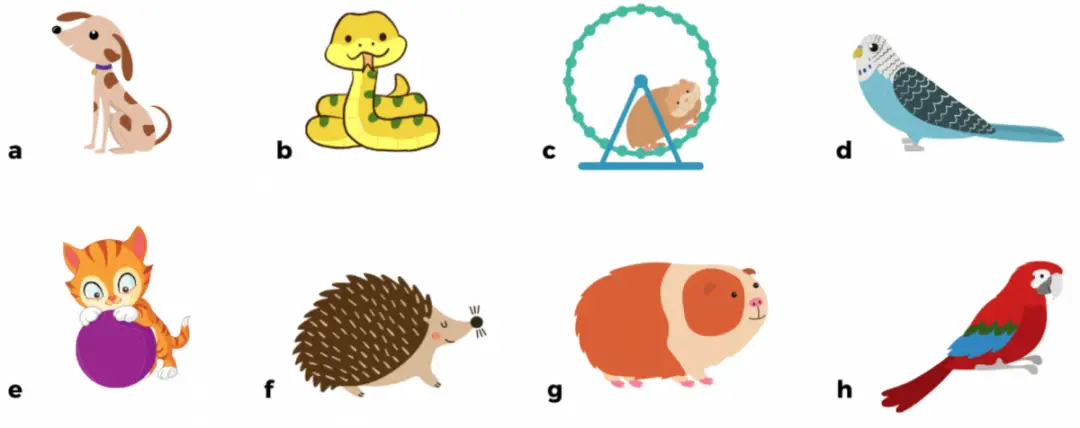
    1. snake: ______

    2. hedgehog: ______

    3. parrot: ______

    4. guinea pig: ______

    5. kitten: ______

    6. puppy: ______

    7. hamster: ______

    8. budgie: ______

    B. True or False

    2. Read the sentences below, then circle “True” (T) or “False” (F) for the correct answer.

    a) The best pet at the “Pet Competition” will get a box of chocolates. T / F

    b) Zoe Zebra’s pet is a toy donkey. T / F

    c) Peppa’s pet lives in a bowl. T / F

    d) A stick insect is an insect that looks like a stick. T / F

    e) Edmond Elephant is a “clever clogs.” T / F

    f) Zoe Zebra’s toy pet is sleeping upside-down. T / F

    g) Dr. Hamster’s pet is the winner in the pet competition. T / F

    C. Questions & Answers

    3. Read and answer the questions.

    a) Who will decide what pet is the best?

    Answer:  _____________________________________________.

    b) What does Goldie like doing?

    Answer:  _____________________________________________.

    c) What’s the name of the stick insect?

    Answer:  _____________________________________________.

    d) What kind of animal is Edmond Elephant’s pet?

    Answer:  _____________________________________________.

    e) What kind of pet does Dr. Hamster have?

    Answer:  _____________________________________________.

    f) Whose pet got the prize for the best gecko?

    Answer:  _____________________________________________.

    g) Which pet is the best pet of all?

    Answer:  _____________________________________________.

    D. Fill in the Blanks

    4. Read the sentences and fill in the blanks with the correct answers.

    a) “Don’t be a ________________ monkey!” tells Zoe Zebra to her monkey.

    b) Goldie has got a very ________________ bowl.

    c) Edmond Elephant’s gecko is a green ________________.

    d) Dr. Hamster’s pet like climbing ________________.

    e) Zoe Zebra’s pet is not a  ________________ monkey.

    f) Dr. Hamster says that all pets are happy, healthy and ________________.

    D. Draw & Present

    5. Do you have a pet? What have you got? Draw your pet below, then present it to the class and describe it: How old is it? What color is it? What does it like to eat and do? Who looks after it?

    If you don’t have a pet, draw a toy pet or your friend’s pet.

    (Draw your pet here.)


    This is ________________________. (name)

    It is ________________________. (animal)

    It is ________________________.(color)

    It is ________________________ years old. (age)

    ________________________ likes ________________________. (do)

    ________________________ likes to eat ________________________.


  • ESL Vocabulary Worksheet: Weather Report & Forecast (Elementary-Intermediate)

    ESL Vocabulary Worksheet: Weather Report & Forecast (Elementary-Intermediate)

    In this weather vocabulary worksheet, you are going to find ESL vocabulary exercises that will help students expand their weather vocabulary and talk and answer questions about seasons, weather, and temperature. The worksheet includes vocabulary exercises on these topics, tailored to elementary – intermediate (A1-B1) students, plus an interactive “Weather Forecast” game/ presentation.

    Preparation Notes for the Teachers

    Required time: 45 – 60 min

    To prepare:

    To warm up, ask your students “What’s the weather like today?” and “What season is it”. Check if they understand the difference between these two and explain it.

    Next, see if they can use more weather adjectives (chilly, cloudy, sunny etc.) by asking “Is it…(chilly, cloudy, sunny etc.)”.

    List flashcards which show different type of weather and weather verbs like “snowing, raining, the sun is shining…”. Give examples: “Today is sunny. The sun is shining. Yesterday was cloud. It was raining.” Encourage students to repeat after you. 

    For Exercise E, play the video to the class, then help them to prepare their weather forecasts and present them in front of the class. Encourage students to use as much of weather vocabulary.


    Weather Report & Forecast

    In this worksheet, you will learn to talk about the weather, the seasons, and the temperature, and then prepare a weather report/weather forecast yourself.

    What’s the weather like today? What season is it? What’s your favorite weather? What do you enjoy doing then? Do you read the weather forecast every day? Discuss briefly with your teacher and the class, then answer the questions in Exercise A, B, C, D. Present your weather forecast to the class.

    Read the questions before answering to make sure you understand them.

    A. Vocabulary (Opposites) 

    1. Choose the words from the table to describe the seasons and write them in the correct column. Some words can be used more than once.

    warm  cold  windy  foggy  icy  sunny  wet  dry  hot  cloudy  snowy  rainy  frosty  clear calm  lovely  terrible  fine  bad
    SPRINGSUMMERAUTUMNWINTER


    2. Write the correct opposite word of the words (a-h) below:

    a) warm – 

    b) hot –

    c) cold – 

    d) foggy –

    e) wet –

    f) windy –

    g) rainy –

    h) clear –

    i) calm –

    j) lovely –

    B. Use of Weather Vocabulary

    3. Read and complete the sentences (a-j) with the words from the table in Exercise A (1).

    a) Let’s go to the beach. It is ___________________ today.

    b) The weather is___________________ today. Put on your raincoat.

    c) The plane can’t fly because it is too ___________________.

    d) I love the winter. It is  ___________________  and  ___________________ and we can ski.

    e) I don’t like the summer. It is too  ___________________ !

    f) The weather is ___________________ . Let’s go to the park!

    g) In autumn, the weather is usually  ___________________ and  ___________________.

    h) My dog likes the spring because it is  ___________________ and we can stay outside and play.

    C. Weather Report (Talking about the Temperature)

    4. Read and answer the questions (a-c).

    NOTE: When we talk about the temperature, we can say:

    • Present: “It is warm today. It is 20°(twenty degrees).”
    • Past: “It was cold yesterday in Canada. It was – 11° (minus eleven degrees).”
    • Future: “It will be hot on Monday. It will be 40° (fourty degrees).”

    a) What was the weather like yesterday?


    b) What’s the temperature today?


    c) What will the weather be like tomorrow?


    Exercise D. Weather Report (Talking about the Temperature)

    5. Now answer the questions about the weather and the temperature in the cities below. 

    LONDON TODAY (WEDNESDAY): 10° SUN 

    TuesdayThursdayFriday
    5° RAIN CLOUDS12° CLOUDS8° SNOW

    a) What is the weather like today?


    b) What will the weather be like tomorrow? What will the temperature be like on Thursday?


    c) What was the weather like yesterday?


    LISBON TODAY (THURSDAY): 35° HOT SUN

    Tuesday ThursdayFriday
    5° (RAIN CLOUDS)12° (CLOUDS WIND)8° (SNOW SUN)

    d) What is the weather like today? What’s the temperature today?


    e) What was the temperature yesterday?


    f) What will the weather be like on Friday?


    Exercise E. Game (Weather Forecast)

    5. Watch this video: https://www.youtube.com/watch?v=gzPA-YKJmVk&t=8s

    Make a weather forecast similar to the one in the video and present it to the class.


  • ESL Vocabulary Worksheet: Sports Activities, Action Words (Elementary)

    ESL Vocabulary Worksheet: Sports Activities, Action Words (Elementary)

    Sports Activities & Action Words
    ESL Vocabulary Worksheet (Elementary, A1–A2)

    In this sports vocabulary worksheet, you are going to find ESL vocabulary exercises that will help students expand their vocabulary of sports action words and talk and answer questions about sports, sports activities, and the benefits of practicing sports. The worksheet includes vocabulary exercises on these topics, tailored to elementary (A1-A2) students.

    Preparation Notes for the Teacher

    Required time: 45-60 mins

    To warm up, ask your students “What’s your favorite sport?”, then list two activities each that you can “do”, “play” or “go”. Check if they understand the difference between these three and explain it with practical examples, like “I like to play tennis.”,“I do yoga”, “I go swimming on the weekends.” 

    Ask students if they do any of these sports activities, and encourage them to say full sentences with the correct verbs that accompany a specific sport or activity. Next, ask students to explain why playing sports is good. Give an example: Sports is good because it makes us healthy and strong.


    Sports Activities

    In this worksheet, you will learn to talk about sports and action words that describe sports activities. 

    You will also learn how to talk and answer questions about sports and sports activities, why people like sports, and why sports are good. 

    What’s your favorite sport? Do you like swimming? Do you play tennis? Why do you like sports? Why is sports good for you? Give an example.

    Discuss the questions briefly with your teacher and the class, then answer the questions in Exercise A, B, C, and D. 

    Read the questions before answering to make sure you understand them.

    A. Vocabulary: Various Activities

    1. Use the words in the table to fill in the columns below. (There are 25 words in total.)

    tennis  swimming  gymnastics  jogging  football  ice-skating  judo  cycling  skiing  surfing  karate  badminton  skateboarding  fishing  hiking  volleyball  yoga  diving  dancing  snowboarding  hockey  horse riding  taekwondo  soccer  weightlifting

    PLAYGODO


    B. Use of Sports Action Words

    2. Read and complete the sentences (a-j) with the correct words from the table in Exercise A. Some sentences can have more than one correct answer.

    a) Do you want to go___________________ with me?

    b) Let’s do ___________________ together in the park!

    c) I can’t go ___________________ in the lake. It is too cold today!

    d) I love the winter because I can go ___________________ and ___________________.

    e) My sister plays ___________________ every Monday and Friday.

    f) My brother never ___________________ hiking when it is raining.

    g) Jenny and I ___________________ gymnastics on Thursday.

    h) My mother and her friend Molly ___________________ badminton every weekend.

    C. Reading: Talking About Sports

    Read the text, then answer the questions in exercises 3 and 4.

    WHY I LIKE SPORTS

    Hi!

    My name is Agatha and I love sports. My favorite sports are skateboarding and volleyball. 

    I go skateboarding with my friend Liz every Friday and Sunday in the skate park near our homes. My sister Carrie taught me how to skateboard when I was 6 years old. I love skateboarding because it is fast and fun, and you can do many tricks! 

    I like to play volleyball, too because I can play together with my classmates at school. We have a volleyball team called “Volleybees” and every year we go to competitions with teams from other schools.

    I love to do sports with my friends and I think that it is good because I feel happy and healthy.

    3. Use the words to make correct questions, then answer the questions.

    a) Question: are/Agatha’s/sports/What/favorite/? _______________________________________________

    Answer: _______________________________________________

    b) Question: ?/name/of/friend/Agatha’s/is/What _______________________________________________

    Answer:  _______________________________________________

    c) Question: Where/skateboarding/go/Agatha/does/? _______________________________________________

    Answer:  _______________________________________________

    4. Read and answer the questions.

    a) What is your favorite sport?

    Answer:  _______________________________________________

    b) Where do you play your favorite sport?

    Answer:  _______________________________________________

    c) Do you like to do yoga?

    Answer:  _______________________________________________

    d) Does your best friend like to play volleyball?

    Answer:  _______________________________________________

    D. Interview: Talking about Sports

    5. Now interview one of your classmates with the questions below. Write down his/ her answers, then read them in class.

    a) What is your favorite sport?

    Answer:  _______________________________________________

    b) How often do you play your favorite sports?

    Answer:  _______________________________________________

    c) Where do you usually play sports?

    Answer:  _______________________________________________

    d) Why do you like sports?

    Answer:  _______________________________________________

  • ESL Reading Comprehension Worksheet: The World of Dinosaurs (Elementary)

    ESL Reading Comprehension Worksheet: The World of Dinosaurs (Elementary)

    In this reading comprehension worksheet about the world of the dinosaurs, you are going to find ESL reading exercises that will help elementary (A2) students improve their reading skills, use context clues and answer questions about the text they are reading. (Free Download available here)

    Preparation Notes for the Teacher

    Required time: 45 min

    To prepare: Flashcards game “Cross the River”

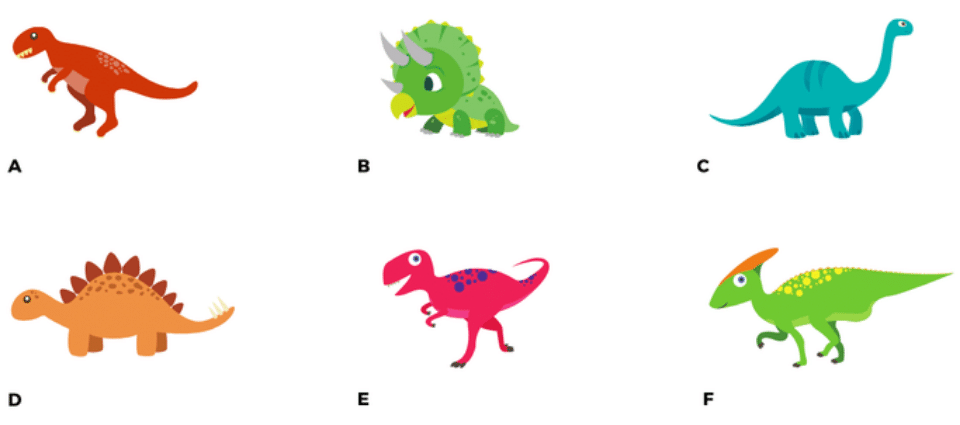
    Prepare flashcards with the names of the 6 dinosaurs presented in Exercise A below: Brachiosaurus, Giganotosaurus, Stegosaurus, Triceratops, T-Rex, and Velociraptor. Use these for the flashcards game in Exercise C.

    Place the flashcards on the floor in a winding manner. Each flashcard, i.e, a dinosaur, is a stepping stone. A student steps on the flashcard and must say 1-2 facts about the dinosaur that they have memorized from the lesson.to cross the river. You can also print out a double set of flashcards, divide students into 2 groups and make a competition on who will cross the river first.


    The World of Dinosaurs

    In this ESL Dinosaur reading comprehension worksheet, you will read about 6 types of dinosaurs and learn where and when did they live on Earth, how they looked like, and what kind of food they ate. 

    What do you know about dinosaurs? Can you name a few? Discuss briefly with your teacher and the class, then answer the questions in Exercise A and Exercise B.

    Read the questions before answering to make sure you understand them.

    EXERCISE A. Reading Comprehension 

    1. Read the text carefully, then answer the questions in Exercise A and Exercise B.

    The World of Dinosaurs

    Dinosaurs lived on planet Earth millions of years ago in the Era of the Dinosaurs. They were the biggest animals in the world. Some of them were huge, like school buses, and others were small, like baby elephants. Some dinosaurs ate only meat and others were vegetarians and ate only plants. There were 700 different kinds of dinosaurs in the world. Dinosaurs lived on all continents. Now let’s read and learn more about these 6 kinds of dinosaurs!


    1. BRACHIOSAURUS – The name of this dinosaur means “arm lizard”. It lived 145 million years ago in North America and Tanzania. It was 13 meters tall and ate only plants.

    2. GIGANOTOSAURUS – The name of this dinosaur means “giant reptile”. It lived 100 million years ago in Argentina. It was 14 meters tall and ate only meat.

    3. STEGOSAURUS – The name of this dinosaur means “roof lizard” because it has tiny roofs on the back. It lived 140 million years ago in the USA, India, Mongolia, Europe, and Africa. It was 3 meters tall and ate only plants.

    4. TRICERATOPS – The name of this dinosaur means “three-horned face” because it had 3 horns. It lived 72 million years ago in the USA and Canada. It was 3 meters tall and ate only plants.

    5. T-REX – The name of this dinosaur means “tyrant lizard king” because it was the most dangerous and deadly dinosaur! It lived 85 million years ago in the USA, Mongolia, and Canada. It was 6 meters tall, and could eat 230 kg of meat in one bite!

    6. VELOCIRAPTOR – The name of this dinosaur means “speedy thief” because it was very fast and could run up to 60 km per hour! It lived 80 million years ago in Mongolia, China, and Russia. It was 1 meter tall and ate only meat.

    2. Match the images (A-F) with the correct descriptions in the text (1-6). Write the name of each dinosaur (1-6) under the correct image.

    EXERCISE B. Have got (affirmative, negative, questions) 

    3. Complete the blanks with ‘have got’-‘has got’/ ‘haven’t got’-‘hasn’t got’. Check your answers in the text in Exercise A.

    a) The “arm lizard” ___________________ wings.

    b) The Giganotosaurus and the T-Rex  ___________________ a big body, and they are strong.

    c) The Stegosaurus  ___________________ tiny roofs on the back.

    d) The Triceratops  ___________________ 2 horns.

    e) The “speedy thief”  ___________________ short legs, but it can run very fast.

    f) All the dinosaurs  ___________________ tails.

    4. Make questions with the “have got” form, then answer them correctly. Check your answers in the text in Exercise A.

    a) _______________ the Triceratops  _______________ three horns?

    Answer:  _____________________________________________.

    b) _______________ the T-Rex and the Velociraptor  _______________  tails?

    Answer:  _____________________________________________.

    c) ______________ the Brachiosaurus _______________ a long tail?

    Answer:  _____________________________________________.

    d)______________ the Stegosaurus  _______________ horns on the back?

    Answer:  _____________________________________________.

    C. Game: Cross the River

    Place the flashcards on the floor in a winding manner. Each flashcard, i.e, a dinosaur, is a stepping stone. 

    A student steps on the flashcard and must say 1-2 facts about the dinosaur that they have memorized from the lesson to cross the river. 

    You can also use a double set of flashcards, divide into 2 groups and make a competition on who will cross the river first.


  • ESL Lesson Plan: Animals (Beginner Exercises)

    ESL Lesson Plan: Animals (Beginner Exercises)

    This comprehensive animal worksheet is designed for beginner ESL students (A1-A2 level). Students will learn essential animal vocabulary, practice reading comprehension with an informative text about seals, and engage in interactive activities including gap-fill exercises and a fun drawing dictation game.

    Perfect for: Young learners and elementary students discovering English animal names
    Recommended for: Ages 6-12, CEFR Level A1-A2
    Time needed: 45-60 minutes
    Skills practiced: Vocabulary, reading, listening, speaking

    A. Vocabulary 

    1. Match pictures (A-F) with the correct words (1-6).

    1. horse ____   
    2. lion ____ 
    3. fish ____ 
    4. cow ____ 
    5. dog   ____ 
    6. elephant ____ 

    2. Sort the animals in the picture. Add 2 more animals in each column.

    FARM (farm animals)HOUSE (pets)WILD (wild animals)

    B. Reading Comprehension 

    Read the text, then answer the questions in exercises 1 and 2.

    Seals 

    Seals live in the Arctic and in Antarctica.

    They are mammals just like people, whales, and bats!

    Seals are very good swimmers and they swim with four flippers.

    Seals eat a lot of meat, fish, shellfish, squid, and sea birds.

    They have whiskers that help them find food.

    Seals have fur coats so they can glide through the water and swim fast.

    They have blubber under their skin. Blubber is the fat that keeps them warm when the weather is cold. Seals can sleep underwater.

    1. Complete the sentence

    1. Seals live in Antartica and in the _____________________________.
    2. Bats and whales are _____________________________.
    3. Seals find food with their _____________________________.
    4. The fat under their skin is called _____________________________.
    5. Seals can sleep _____________________________.
    6. Seals swim with their _____________________________.

    2. Answer the questions

    1. What is seals’ favorite food? 

    ________________________________________________________________

    1. Are seals good swimmers?

    ________________________________________________________________

    1. Is your teacher a mammal?

    ________________________________________________________________

    1. What have seals got to glide through water?

    ________________________________________________________________

    1. Can seals find food with their whiskers?

    ________________________________________________________________

    1. What keeps them warm when the weather is cold?

    ________________________________________________________________

    C. Gap Text

    Put the correct word from the table in the gaps (1-6) 

    homekind
    dogs or catsTarantula spiders
    timesnakes

    Pets are animals that live in people’s (1) ____________________. There are many kinds of pets. People usually have (2) ____________________ as pets, but some people keep wild animals like (3) _________ or (4) ___________!  Many people don’t have a pet because they don’t have (5) ____________ to take care of them. Pets have need and emotions, just like people, so you have to be (6) ____________ to them and treat them like friends.

    D. Drawing dictation (Guess the Arctic animal)

    Listen to your teacher’s dictation and draw the Arctic animal. Then pick an Artic animal and dictate it to your class (describe it with the sentences below but keep it secret). The winner is the one who will guess the animal before they finish the drawing.

    • It has got four flippers…
    • It has got a big head and fur…
    • It can’t swim…
    • It can fly…
    ARCTIC ANIMALS
    polar bear
    walrus
    reindeer
    penguin
    Arctic hare
    seal
    Arctic fox

    Download the Complete Lesson Plan

    Includes answer key and printable activities (4-page PDF)

  • ESL Vocabulary Worksheet: Let’s Go Shopping (Elementary-Intermediate)

    ESL Vocabulary Worksheet: Let’s Go Shopping (Elementary-Intermediate)

    You are going to learn about the types of shops and how to communicate when you go shopping.

    Think about the last time you entered a shop and the things you bought. What shop was it? What did you buy? Share briefly with the class, then do exercises A, B, and C.

    A. Exercise: Vocabulary

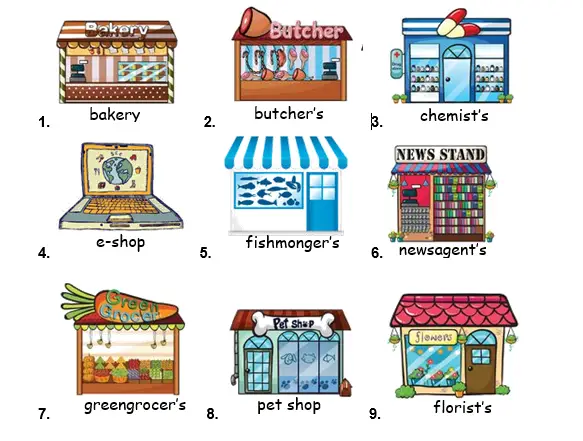
    Match images (1-9) with the correct words (A-I), then fill in the gaps.

    A.croissant___            B.acquarium___         C.aspirin___       D.internet___ E.bouquet___ F. watermelon___       G.tuna fillet___           H.meatballs___           I.magazine___                    

    Fill in the gaps of the sentences with the correct words from the above exercise.

    1. If you want to buy ____________, you have to go to the florist’s.
    2. We don’t have that dress in the shop, but you can order it from our ____________.
    3. Let’s buy a croissant with apricot jam from the  ____________.
    4. There are fresh tomatoes at the  ____________.
    5. The fishmonger’s in my village doesn’t have  ____________.

    B. Exercise: Dialogue

    Match the phrases (A-H) with the phrases (1-8) to create a dialogue between a customer and a shop assistant.

    1. You’re welcome. Will that be all?  ____                  
    2. Yes, it is right next to the tomato sauce. ____
    3. How can I help you? ____
    4. Yes, we do. Here you are.  ____
    5. That’s £ 12. You pay in cash or by card?  ____
    6. Do you need a bag, maybe?  ____
    7. Alright. Thank you! Goodbye!  ____
    8.  Fresh or dry?  ____  
    1. I’m looking for pasta.
    2. Yes. How much is that in total? 
    3. Excellent! I’ll take one jar. 
    4. Fresh, please. Do you have any linguini?
    5. Thanks! One more thing… Do you have any red pesto?
    6. Okay. By card, please. 
    7. No, thanks, I have my own bag.
    8. Thanks! Bye! 

    Rewrite the dialogue from Exercise 1 in the right order, then act it out with your partner.

    __________________________________________________________________________________________________________________________________________________________________________________________________________________________________________________________________________________________________________________________________________________________________________________________________________________________________________________________________________________________________________________________________________________________

    C. Exercise: Shopping Game

    Play a game in which you will be the shop assistant in the shops and your partner will be the customer who is trying to save money and buy all the products they need. Take a shopping card from your teacher and revise the shops and the products with prices on the card.

    Write a shopping list for your partner. List 3-5 items and the total budget they can use while shopping.  Act out the shopping scene in front of the class, then swap roles.

  • ESL Grammar Worksheet: Using Articles (Elementary-Intermediate) (PDF)

    ESL Grammar Worksheet: Using Articles (Elementary-Intermediate) (PDF)

    Title image for articles worksheet

    Free worksheet to practice the correct use of articles for ESL teachers and students. (Free download available here.)

    Articles Exercise: Fill the Gaps

    Directions: Fill in the blank with the appropriate article, a, an, or the, or leave the space blank if no article is needed.

    1. I want ____ apple from that basket.

    2. ____ church on the corner is progressive.

    3. Miss Lin speaks ____ Chinese.

    4. I borrowed ____ pencil from your pile of pencils and pens.

    5. One of the students said, “____ professor is late today.”

    6 Eli likes to play ____ volleyball.

    7. I bought ____ umbrella to go out in the rain.

    8. My daughter is learning to play ____ violin at her school.

    9. Please give me ____ cake that is on the counter.

    10. I lived on ____ Main Street when I first came to town.

    11. Albany is the capital of ____ New York State.

    12. My husband’s family speaks ____ Polish.

    13. ____ apple a day keeps the doctor away.

    14. ____ ink in my pen is red.

    15. Our neighbors have ____ cat and ____ dog.

    Articles Exercise: Writing

    Directions: Write the following paragraphs, inserting “a“, “an“, and “the“ where needed.

    1. I have horse of my own. I call her Pretty Girl. She is intelligent animal, but she is not thoroughbred horse. I could never enter her in race, even if I wanted to. But I do not want to. She is companion, for my own pleasure. I took her swimming day or two ago.

    2. Horse knows when he is going to race. How does he know? His breakfast was scanty. (He is angry about that.) He does not have saddle on his back. He is being led, not ridden, to grandstand. He is led under grandstand into unusual, special stall. Horse is nervous. Sometimes he does not know what to do when starting gate flies open and track is before him. If he does not begin to run instantly, other horses are already ahead of him.

    During race, when he sees another horse just ahead of him, he will try to pass him. Sometimes jockey holds him back to save his energy for last stretch. Eventually horse gets to run as fast as he can. Exercise boy, watching owner’s favorite jockey riding horse he has exercised day after day, says nothing. Secretly, he is planning for day when he will be jockey himself, and his horse will be first to cross finish line.

    3. Most people have fewer hours to give to time-consuming activities of clubs than they used to have, but most people in small town belong to club or two. One of clubs is likely to be social and benevolent organization, such as Rotary or Elks.

    Business people are likely to belong, also to either Kiwanis Club or Lions. Such business people’s organizations may meet as often as once a week in one of private dining rooms of town’s leading hotel for lunch. They have good lunch, hear good program, and continue their fundraising program for worthy organization, such as local hospital.

  • ESL Grammar Worksheet: -ed & -ing Adjectives: Describing Feelings & Situations (Elementary-Intermediate)

    ESL Grammar Worksheet: -ed & -ing Adjectives: Describing Feelings & Situations (Elementary-Intermediate)

    Title image for ed and ing ending adjectives

    Free worksheet to learn about adjectives end with “-ed” and “-ing” for ESL teachers and students. (Free download here)

    ‘My holiday was relaxing. I felt really relaxed.’

    Few, but common, adjectives end in either -ed or -ing:

    worried/worrying, interested/interesting, excited/exciting

    -ed Adjectives

    Adjectives that end in -ed are used to describe how people feel:
    ‘He was surprised to find that he had been upgraded to first class.’
    ‘I was confused by the findings of the report.’
    ‘She felt tired after working hard all day.’

    -ing Adjectives

    Adjectives that end in -ing are used to describe things and situations. Compare these example sentences to the ones above:
    ‘Being upgraded to first class is surprising.’
    The findings of this report are confusing.’
    ‘Working hard all day is tiring.’

    Example Table

    Feeling: “-ed“Description: “-ing”
    annoyedannoying
    boredboring
    confusedconfusing
    challengedchallenging
    depresseddepressing
    excitedexciting
    frustratedfrustrating
    frightenedfrightening
    satisfiedsatisfying
    shockedshocking
    Scaredscary

    Exercise one: Use the Correct Adjective

    Now complete the sentences below using the correct adjective

    Dogs often feel ___ during fireworks.

    frightening
    frightened

    The software program can be ___ the first time you use it.

    confusing
    confused

    Satoru was ___ to hear about the earthquake.

    shocked
    shocking

    • I think that rainy days in winter are ___.
    • depressing
    • depressed
    • She’s ___ of doing the same thing every day.
    • boring
    • bored
    • I was so___________ to go on vacation. 
    • exciting
    • excited
    • The meals at Cheesecake Factory  are ___. 
    • satisfied
    • satisfying

    Exercise two: Writing: My First Day Essay

    I want you to describe your first day doing something challenging. You could write about your first day in the United States, your first day at school, your first day at university or high school or your first day at a new job.

    How did you feel? Where you excited, frightened or bored?

  • ESL Reading Comprehension Worksheet: In the Restaurant (Beginner-Elementary)

    ESL Reading Comprehension Worksheet: In the Restaurant (Beginner-Elementary)

    ESL reading comprehension related to restaurants for beginners

    A worksheet relating to the topic restaurant to practice reading, for beginners and kids. (Free download available here.)

    Visiting a restaurant

    Hi, I’m Tim and my favorite food is pizza. I went to a restaurant yesterday, and ate so much food! I went with my friend Mary. She is currently working at that restaurant, so we didn’t have to pay! It was my first time in this restaurant and I really enjoyed it. Afterwards, we got a drink and then went home.

    I. Exercise one – Fill in the blanks

    1. Hi, I’m  __________________________________

                a. Tom

                b. Dave

                c. Tim

                d. Dom

    2. I went to a __________________________________ yesterday

                a. cafe

                b. cinema

                c. shop

                d. restaurant

    3. I went with my __________________________________ Mary.

                a. mum

                b. friend

                c. sister

                d. dad

    II. Exercise two – Answer the questions

    1. What is Tim’s favourite food?

    ________________________________________________________________

    2. Where did Tim go yesterday?

    ________________________________________________________________

    3. Who did Tim go with?

    ________________________________________________________________

    4. What is Mary’s job?

    ________________________________________________________________

    5. What did they do after the restaurant?

    ________________________________________________________________

    III. Exercise three – Talk about yourself

    1. What’s your favorite restaurant?

    ____________________________________________________________________________

    ____________________________________________________________________________

    2. Would you like to work in a restaurant?

         ____________________________________________________________________________

    ____________________________________________________________________________

    3. What’s your favorite food?

    ____________________________________________________________________________

    ____________________________________________________________________________

  • ESL Reading Comprehension Worksheet: France (Beginner-Elementary)

    ESL Reading Comprehension Worksheet: France (Beginner-Elementary)

    Reading Comprehension for Kids and Beginners - Topic: France

    A worksheet about moving to France for kids and beginners. (Free download available here.)

    Moving to France

    John is an actor, but when he was younger, he wanted to be a pilot. He grew up with his parents and sister in America. Later, he moved to France and went to a popular drama school. His favorite hobbies include singing, running and playing the guitar. When he’s working, he also reads a lot to help with his character.

    I. Exercise one – Fill in the blanks

    1. John is an __________________________________.

                a. pilot

                b. singer

                c. actor

                d. doctor

    2. When he was younger, he wanted to be a ________________________.

                a. pilot

                b. singer

                c. actor

                d. doctor

    3. Later, he moved to __________________________________.

                a. France

                b. America

                c. England

                d. Germany

    II. Exercise two – Answer the questions

    1. What did John want to be when he was younger?

    ________________________________________________________________

    2. Where did John grow up?

    ________________________________________________________________

    3. What did John do in France?

    ________________________________________________________________

    4. What are John’s hobbies?

    ________________________________________________________________

    5. What does John do while he’s working?

    ________________________________________________________________

    III. Exercise three – Talk about yourself

    1. Say something about your hobbies.

    ____________________________________________________________________________

    ____________________________________________________________________________

    2. What do / did you want to be?

    ____________________________________________________________________________

    ____________________________________________________________________________

    3. Have you been to France?

    ____________________________________________________________________________

    ____________________________________________________________________________

  • ESL Vocabulary Worksheet: Describing People (Elementary-Intermediate)

    ESL Vocabulary Worksheet: Describing People (Elementary-Intermediate)

    Describing People Vocabulary Worksheet

    A worksheet to practice vocabulary in the context of describing people for beginner to intermediate ESL students. (Free download available here.)

    Woman Who Changed the World

    You are going to learn and talk about 6 women heroes who had important roles in world history:

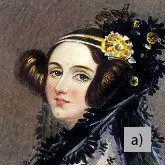
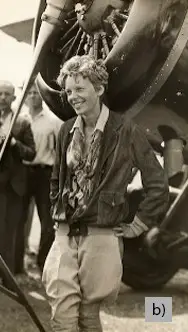
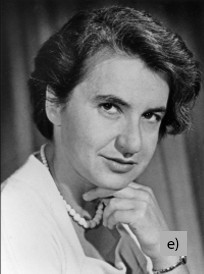
    Ada Lovelace, Amelia Earhart, Frida Khalo, Sacagawea, Rosalind Franklin, and Rosa Parks. Do you know why these women are important?

    Read and circle the correct adjectives that describe each women hero on the photos a-f.

    Look at the photos and discuss them briefly with your teacher. Answer the questions in exercises A, B, and C below.

    A. Activity: Multiple Choice Questions

    • Ada Lovelace was the world’s first computer programmer/ astronaut. She is young/ old.  She has got dark/ light hair and fair/ dark skin. She is wearing glasses/ flowers.
    • Amelia Earhart was the first pilot/ sailor who went across the Pacific. She is short/ tall and chubby/ slim. She is wearing casual/ formal clothes.
    • Frida Khalo is a Mexican poet/ painter. She has beautiful thick/ thin eyebrows. Her style is ordinary/ unique, and she is wearing a crown/ flowers in her hair.
    • Sacagawea was a nurse/ explorer on an expedition. Her hair is curly/ straight and her nose is short/ long. She is wearing modern/ traditional Native American clothes.
    • Rosalind Franklin was an architect/ a scientist. Her eyes are light/ dark, and she has long/ short hair. She is smiling/ frowning, and she is wearing gold/ pearls.
    • Rosa Parks was a lawyer/ an activist who fought for equal rights for African-Americans. She is middle-aged/ young. Her hair is blonde/ gray, and she is wearing a scarf/ sunglasses.

    B. Activity: Presentation – My Woman Hero

    Stick a photo of a woman hero that inspires you. Describe her in the blank lines below the photos, then present your work to the class and share why this woman is important to you.

    Students can place their image here

    This is ___________________________________________.
    She is ___________________________________________________________

    ________________________________________________________________.
    ________________________________________________________________

    ________________________________________________________________.

    She inspires me because ___________________________________________

    ________________________________________________________________.

    C. Activity: Guess Who?

    This game has 4 attempts in total and 10 seconds per attempt. Tell your partner to secretly pick one of the 6 women heroes. Ask your partner the questions below until you guess their women hero. They may answer only with “YES” or “NO”.  

    1. Is your woman hero …. (young, slim, tall, etc.)?
    2. Has your women hero got… (short hair, long nose, etc.)?
    3. Is your women hero wearing… (glasses, pearls, casual clothes)?
    4. Is your women hero… (a scientist, an artist)?

    Write down your and your partner’s score. The winner is the one who will answer the 4 attempts most quickly.

  • ESL Reading Comprehension Worksheet: Zoo Animals (Beginner-Elementary)

    ESL Reading Comprehension Worksheet: Zoo Animals (Beginner-Elementary)

    Animal worksheet for kids - reading comprehension

    An animal-related worksheet to practice reading, for beginners. (Free download available here.)

    Sarah goes to the zoo

    Sarah is David’s friend. They went to the zoo and saw a monkey and a lion. The weather was sunny. David bought ice cream for Sarah. Later, it rained, so they went home. Then, they ate chips.

    Animals_Zoo_ESL_worksheet_kids_beginners

    I. Exercise one – Fill in the blanks

    1. Sarah is David’s __________________________________.
                a. mum

                b. friend

                c. sister

                d. dad

    2. They went to the  __________________________________

                a. zoo

                b. cinema

                c. park

                d. library

    3. David bought  __________________________________ for Sarah.

                a. chocolate

                b. flowers

                C. ice cream

                d. crisps

    II. Exercise two – Answer the questions

    1. Who is Sarah?

    ________________________________________________________________

    2. Where did Sarah and David go?

    ________________________________________________________________

    3. What did they see?

    ________________________________________________________________

    4. What was the weather like?

    ________________________________________________________________

    5. What did David buy?

    ________________________________________________________________

    III. Exercise three – Talk about yourself

    1. What is your favourite animal?

    ________________________________________________________________

    ________________________________________________________________

    2. Do you like zoos?

    ________________________________________________________________

    ________________________________________________________________

    3. What other animals are at a zoo?

    ________________________________________________________________

    ________________________________________________________________

  • ESL Reading Comprehension Worksheet: Playing Football (Beginner-Elementary)

    ESL Reading Comprehension Worksheet: Playing Football (Beginner-Elementary)

    A football-related worksheet to practice reading, for beginners. (Free download available here.)

    Ben loves to play football

    Hello, my name is Ben. I am 10 and I have a brother. I like bread and milk.
    Today, I played football in the park. I have a dog, its name is Tony. Tony
    sometimes plays football with me. It was sunny and I like sunny weather.
    Later, I was tired, so I went home.

    Football worksheet for kids and beginners - reading comprehension

    I. Exercise one – Fill in the blanks

    1. Hello, my name is __________________________________.

                a. Ben

                b. Bill

                c. Bob

                d. Brendan

    2. Today, I played __________________________________ in the park.

                a. tennis

                b. rugby

                c. football

                d. cricket

    3. Later, I was tired, so I went __________________________________.

                a. to sleep

                b. to the park

                c. to the shop

                d. home

    II. Exercise two – Answer the questions

    1. How old is Ben?

    ________________________________________________________________

    2. Does Ben have a brother or a sister?

    ________________________________________________________________

    3. What food does Ben like?

    ________________________________________________________________

    4. What did Ben do at the park?

    ________________________________________________________________

    5. What is Ben’s Dog called?

    ________________________________________________________________

    III. Exercise three – Talk about yourself

    1. Do you like to play football?

    ________________________________________________________________

    2. Say which food you like.

    ________________________________________________________________

    3. Do you have a pet?

    ________________________________________________________________