I’ve come across countless students who have a decent understanding of English grammar, writing, and vocabulary.
However, many of these same students continue to struggle with speaking and have difficulty being understood by native English speakers.
What is the reason?
They have not taken the time to tackle word stress. What exactly is the concept of word stress in English language, and why is it so important to master?
Brief: What does word stress mean?
Word stress is crucial to properly pronounce words in the English language. It means, that in multisyllabic words, some syllables are spoken with greater emphasis than others.
If you get word stress wrong, it might be difficult to understand you, as there are several words which sound similar and can only be distinguished by word stress (in spoken language).
What Is Word Stress?
English is not a flat language, but one of stresses and varying intonations. And here’s how it works:
Each word in English is broken into a number of syllables.
Short words like dog, car, box and so on are one syllable words. Meaning each of these words only has one sound.
Words such as pretty [pret-ty], quiet [qui-et] and export [ex-port] are broken up into two syllables.
Then there are words with three, four and even five or more syllables. Think of the words important [im-por-tant], realistic [real-is-tic] and communication [com-mun-i-ca-tion].
Each syllable needs to be pronounced, but some syllables are stressedor emphasized on more than others, depending on the word.
Examples:
In the word ‘important’, the second syllable is stressed, so it is pronounced stronger and should read imPORtant.
The syllables which are not stressed are called the weak or quiet ones.
This is not only a difficult concept to grasp for Asian speakers studying English, but generally for all English as a second language students.
Even if one understands that importance of word stress, knowing exactly where to emphasize stress is no easy task.
General Rules and Patterns for Word Stress
This video lesson provides an introduction into syllable and word stress rules:
English is a very inconsistent language when it comes to rules. Since it is littered with exceptions, you should always keep in mind that there are no definite rules to English, but general rules and patterns that can be followed.
First, only one syllable can be stressed in an English word regardless if it has two, three, or even four or more syllables.
Two-Syllable Words
In most two-syllable nouns and adjectives, the stress comes in the firs syllable of the word.
Rule: stress on first syllable
Example
Nouns
PRESent, TABle, DOCtor
Adjectives
GIant, UGly, WASTEful
For most two-syllable verbs, the stress is in the second syllable.
Rule: stress on second syllable
Example
Verbs
exPORT, reGRET, proNOUNCE
Adjectives
GIant, UGly, WASTEful
Three- or More-Syllable Words
For words that have three or more syllables, understanding where to place the stress becomes a little more tricky, but there are some general patterns that can be followed.
The stress comes in the second to last syllable in any word that ends in -ic, -sion or -tion.
Rule: stress on second to last syllable
Example
Words ending in -ic
GRAPHic, geoGRAPHic, geoLOGic
Words ending in -sion and -tion
teleVIsion, reveLAtion
For any word ending in the suffixes -cy, -gy, -phy, -ty or -al, the stress comes in the THIRD syllable from the LAST.
Rule: stress on third to last syllable
Example
Words ending in -cy, -ty, -phy and -gy
deMOcracy, dependaBIlity, phoTOgraphy, geOLogy
Words ending in -al
CRItical, geoLOGical, histORical
Example: Here’s a tricky one!
Photograph – PHOtograph (3 syllables, first one is stressed)
Photography – phoTOgraphy (4 syllables, third to last one is stressed)
Photographic – photoGRAPHic (4 syllables, second to last one is stressed)
Why Word Stress Is So Important
Why exactly is correct word stress so important when it comes to conversing in the English language?
Here are some reasons:
Word stress heavily affects the sounds of the vowels in a word. Different word stress can make a word sound completely different.
Native speakers rely on word stress to identify words. Thus, incorrect word stress patterns can lead to miscommunication between non-native speakers and native speakers.
Overall, the skill to stress words correctly will help ESL learners more to converse more confidently in English and enjoy it!
While some languages have little or limited stress – like Mandarin –, English is a heavily stress-based language.
Unfortunately, the majority of ESL teachers and students ignore the necessity to practice word stress.
Word stress is not something extra that students should study if they have time. It is an essential part of learning English because it is a major component of the English language.
If I had two dollars for every student I’ve met who was frustrated that his or her speaking skills weren’t improving despite significant gains in the areas of grammar, writing, and vocabulary, I would have a decent amount of savings.
If you are a student out there, then you need to be studying word stress.
If you are a teacher, then you should take time each week to practice it with your students.
How to Practice Word Stress
I wish I could tell something else, but besides the few rules students just have to memorize the correct stress for each word in English language.
They should listen to native speakers – watch movies, listen to podcasts, etc. –, and then repeat the words they’ve heard, imitating their pronunciation. Or they can use the read-aloud function in language learning apps.
The demand for ESL teachers throughout the world increases each year and teaching ESL – online or in a classroom – has become a popular career among English speakers.
The good news is: It’s not difficult to become an ESL teacher.
However, being a great ESL teacher certainly is.
How do you know that YOU are a great teacher – and make your students wanting to never stop learning?
In this post, you’ll learn the 13 rules which help you to teach ESL effectively, together with info on how to become an ESL teacher in no time.
Teaching Is Not Just a Job!
Learning English empowers people from all over the world to pursue a successful career and to connect with other people and cultures internationally.
That’s why teaching ESL is such an attractive job: As a native English speaker, you can find employment nearly anywhere, travel the world, finance yourself and make a difference in other peoples’ lives.
Teaching ESL is not just a job. It’s not about you, it’s about your students.
Once you decided to become an ESL teacher, you should strive for constant improvement and not settle for anything less than providing great ESL classes to your students.
Besides mastering the language and teaching techniques, what really makes a good ESL teacher?
Before we dive into the 13 rules on how to be a good ESL teacher, let’s talk about what teaching ESL is and what the basic requirements to become an ESL teacher are.
What is Teaching ESL?
Teaching ESL (TESL) means “Teaching English as a second language”. Others use the term “Teaching English as a foreign language” (TEFL).
Both terms are more or less interchangeably.
ESL teachers teach English to people whose mother tongue is any other than English.
The highest demand exists in China and the rest of East and Southeast Asia, the Middle East and Latin America. You can teach ESL to immigrants in native English countries like the US or Canada as well.
Due to the recent travel restrictions, many teachers and student moved online and conduct their lessons through video, instead of meeting in person.
The majority of jobs are to teach English to children and teens in Kindergartens, private or public schools. If you want to teach adults, language training centers, community schools or business classes are the options to find teaching jobs.
On online teaching platforms, you can find any type of jobs, from teaching little students to professional business people who want to hone their negotiation skills.
Teaching ESL is different than teaching English. It is more than merely teaching grammar, writing, or vocabulary.
First of all, English language learners want to get the possibility to talk with a native, learn to imitate their way of pronunciation and accent and learn about the culture in Western countries, too.
That’s why conversation and speaking practice are the most important parts of ESL classes by far.
How to Become an ESL Teacher?
Teaching ESL is a responsible profession, so you should be well-prepared and -educated before you teach your first ESL class.
But worry not, the requirements to become an ESL teacher are not too high.
Teach ESL in Your Home Country
If you want to become an ESL teacher domestically, inform yourself about the requirements of the country or state you live in.
Most likely, they don’t differ too much from the requirements set forth for teaching other subjects in schools.
You may have to acquire certain degrees and get certified by the responsible authority.
Of course, you can freelance and offer private ESL lessons without teacher certification, too.
Teach ESL Abroad
To teach abroad, the requirements heavily depend on the country you want to teach in.
However, the requirements you must meet are quite similar anywhere in the “hotspots” in Asia or Latin America.
To get an ESL teaching job abroad a candidate must:
Have a passport from a native English-speaking country
If you teach ESL online on your own and find your own students, everything is up to you.
If you want to teach via an online tutoring platform or a become a contractor of an online ESL teaching company, have a look at their requirements; they vary.
13 Rules on How to Be a Good and Effective ESL Teacher
Enough of the introduction now – the reason you came here is that you wanted to know what qualities actually make a good ESL teacher.
Or, in other words, how you can become an effective ESL teacher, wow your students during your ESL classes and help them to achieve a proficient English level quickly.
Here are the 13 rules on how to be a great ESL teacher:
1. Don’t Be a Dictator When Teaching ESL
As a teacher, the classroom is never about you, but only the students. This is not to imply that you should let students walk over you or that they shouldn’t conduct themselves respectfully.
What it means is that you should create a classroom environment where the students feel comfortable to speak, ask questions, be creative and engage not only with you but with their fellow classmates.
It is not your job to get up there and lecture and talk down to the students. If you are a person with control issues, then you ought not to be teaching ESL or any subject for that matter.
If you are teaching adults, remember that your students are adults and never treat them like children. Just because they speak English at a low-level doesn’t mean they aren’t well-educated and dignified in their own language.
If you are teaching adults at a private language school, the reality is that if they can afford to take your course, then they are probably a hell of a lot more successful in life then you are, so give them their respect.
2. Maximize Your Students’ Talk Time
This one is somewhat related to the first tip. If you are a dictator in the classroom, then your students aren’t talking enough.
Whether it’s English, Spanish, Chinese or any language, class time is for the students to talk as much as possible and not for you to carry on about some nonsense.
Remember that if you are teaching at a private institute, the students are also paying customers who are eager to practice the language. If the language learners aren’t talking, then they should demand a full refund or complain to management.
I’ve walked by many classrooms where the students sat in complete boredom as the teacher kept droning on about some minute grammar point.
Obviously, a good instructor has to have a firm understanding of grammar and writing structure, but the bottom line is that the ESL students have to speak during the class.
In an ESL class or any language class for that matter, the students should be talking at least 60% of the time and the best teachers get their students to speak 75% of the time. In other words, if the class is sixty minutes, the teacher roughly speaks for twenty minutes and the students speak for forty minutes.
Learn to Be Quiet and Let the Students Do the Work
So how does a teacher get his or her students to talk for the majority duration of the class?
The first thing that teachers should remember is to learn to be quiet and stop talking! If you are new to teaching or just a teacher that talks too much, learn to talk less and listen more.
If you are teaching grammar, show them a few examples on the board, check their understanding and then have them engage with each other in pairs or find other activities.
Every opportunity to speak in the classroom should be afforded to the students. If someone asks a question about vocabulary, ask a more advanced student to explain the answer.
Don’t read directions of an assignment, but have a student do it.
In other words, make the students do as much work as possible, which ultimately will make your job easier and provide them with more opportunities to speak.
By the time the class finishes, they should feel slightly exhausted from speaking so much in another language.
Teaching English as a second language or any language is not really about being an instructor in the traditional sense.
You should never be lecturing or have a regimented structure for your class. Instead, your class should be fluid, creative, innovative and open.
While doing so, you have to learn to be a coach. Each student and class has different needs, strong points, and weak points. It is up to you to identify needs and proceed from there.
The mentality in your classroom should not be that they will master English in 60 minutes, but rather that you as the teacher-coach introduce a grammar point, vocabulary or pronunciation patterns and it is up to the students to practice outside of the classroom.
As a coach, you should provide feedback on a weekly or biweekly basis.
Point out positive things that they are doing and remind your students of their weak points. While reminding them of their weak points, do so in a constructive way and offer advice on how to rectify them.
I feel that this is one key component of teaching English that is ignored too often.
There are some Westerners who feel that they must be uptight and on some kind of power trip when instructing a class. But being too serious in the classroom is the worst thing you can do when teaching ESL and such an attitude will antagonize a lot of students.
In reality, teaching ESL is half teaching and half entertaining. This is not to say that you have to be a clown and you should never be a clown. There is a qualitative difference between being a clown and being humorous and funny.
It’s perfectly fine to make jokes, tease students and allow the students to act in a humorous way with each other. One way of creating a class full of humor is to use a lot of activities.
If you are teaching adults, have some interesting, yet funny discussion questions and implement some creative group exercises into the mix. If you are teaching kids, make sure to have plenty of fun ESL games and never be too serious with them.
From my experience, the most successful ESL teachers have always been the ones that are good at injecting tasteful humor into the class.
Most importantly, a good laugh here and there will allow your students to relax, stimulate the creative parts of their brains and feel more comfortable speaking up in front of the class.
A note: Never let your personal problems show in the classroom.
This can be quite difficult at times since teaching does not afford the opportunity to zone out as you can working in an office.
There are days when you don’t want to speak to anyone and don’t feel like joking, yet it is your job to be active and to engage with your students for hours at a time.
It is difficult to keep a smile on your face and to be cheerful when dealing with a personal issue.
However, you will lose credibility quickly with your students if you appear to be irritable, upset or aloof. Sometimes you just need to power through.
5. Be a Creative ESL Teacher and Make Lessons Fun
I have honestly met some teachers who believe that learning should be hard. I’ve also met teachers that believe it should be fun, but don’t always show the evidence of that in class.
Think back to a few boring classes you had in high school or university. Can you remember a class or two where the instructor was painstakingly dry, mundane and seemed to drone on and on for eternity? I’ve taken a few Spanish and Japanese courses in which I felt I was being held hostage for 60 minutes.
Never let your students feel in this way. Your ESL classroom should never resemble this scenario in no shape or form.
Learning should be made fun where possible.
As stated before, you should never be lecturing up there even when teaching grammar. The ESL classroom has to be fluid, fast-paced, engaging and active.
A good time in class is likely to keep students coming back, although naturally, it is equally important that the good time was achieved while some learning was going on.
Traditional teaching methods do not work when it comes to language instruction.
It is your job as the ESL teacher to construct a classroom setting around creative activities, exercises, and discussion questions.
Admittedly some things are inherently less fun than others – English language learners often moan at the mention of writing, and exam classes can feel incredibly dry. Even still, it’s not hard to ensure that at least some moments in the class are fun.
Teaching grammar is no exception. It’s ok to show them a few examples on the board and explain it, but do it quickly and efficiently.
Find creative ways to allow them to practice the language during class time, so they can effectively use it outside of school.
It would be impossible to make every moment the best – peaks and troughs are natural and to be expected – but make sure your lesson isn’t a two-hour trough!
The devil makes work for idle thumbs, so they say.
It’s absolutely true in a young learner class and a sure-fire way to have kids misbehaving. Even in adult classes, the students might tolerate it, but only for a while.
Ensure that students always have something to keep them occupied: whether it’s an extra question, coloring (for kids, I hope that was obvious!) or finding difficult words in a text.
Keep ’em busy.
Equally, don’t allow the strongest students to dominate any whole-class activities. This means that some students are not being involved as much and again these students could cause problems for you.
If students are being quiet, try to include them in the conversation. If their level is low, look for opportunities to build their confidence by asking them questions to which you know they have the right answer.
For new teachers, this isn’t usually a problem as it’s all new!
But teachers do face a danger of slipping into always doing things the same way.
When this happens they become less willing to adapt and perhaps start to get frustrated as they notice the problems in their teaching but simultaneously refuse to change.
There are no perfect teachers, no perfect lessons, students, techniques, approaches or activities. If we’re lucky, something might occasionally work so well it feels perfect, but it’s unrealistic that this will happen all the time.
However, the more we tweak our methods, our lessons, and our set of ESL resources, the more frequently we can enjoy these moments where we seemed to get everything completely spot on. Experimentation is key.
8. Reflect and Seek Feedback
As with the previous point, good teachers reflect on their lessons.
Even after good lessons, it is important (and more pleasant) to reflect on what worked and what didn’t and the reasons why that was. Teaching is a never-ending cycle of improvement, so long as we keep the wheel turning by reflecting.
Reflecting can take many forms. It can be sitting on the bus or metro thinking to yourself, it could be keeping a journal, meditation or recording your thoughts with a digital recorder.
To help with reflection, good teachers seek out feedback from their ESL students and other professionals.
Mediocre and bad teachers are afraid to be told how mediocre and bad they are. Good teachers are not afraid because they will generally be told they are good, or they will turn it into good feedback next time.
There are many ways to collect feedback besides the standard evaluation forms.
Many can be incorporated into classroom routines. Collecting feedback from colleagues and bosses generally tends to involve observations, but could equally come from discussion, sharing resources and lesson plans or perhaps even demonstrating techniques to each other.
9. Look Presentable as an ESL Teacher
This might seem like a no-brainer, but you would be amazed by some of the things I’ve seen over the years.
How you look in the eyes of the student has a significant impact on how they perform in the classroom. If you make an effort to look presentable, the students will be more inclined to work hard.
Think about it. Would you want to take a language class from an instructor with wrinkled clothes, messy hair, who is unshaven and wearing tennis shoes?
I am not saying that you have to dress in business attire. In fact, I am quite opposed to wearing a suit while teaching a language since language teaching requires a fair amount of movement and activity on the part of the teacher.
I actually wear jeans on some days. This is partly because I prefer to work in more casual institutes. However, while I may wear jeans, I wear a nice shirt or sweater and attempt to dress at least with some sense of fashion.
In the morning, I am clean-shaven, fresh, showered and smelling good. Yes, this is another issue with many teachers. That being hygiene.
If you were going out on a date, you would certainly be expected by the other person to arrive smelling good and looking sharp.
There is no exception to this when teaching.
Don’t enter the class with messy hair, sand in your eyes as if you haven’t showered or even washed your face and smell of mildew or alcohol. I’ve caught both male and female teachers that have been guilty of this.
In fact, take a page out of your students’ book as people from non-Western countries tend to make more of an effort in looking presentable for work or school.
10. Don’t Be Sensitive and Uptight
One of the great contradictions of the English-speaking West is that although we champion our individualism, we tend to be quite uptight, bound by political correctness and entirely too sensitive about what others say.
The reality is that Western individualism is often pretentious and most of us are terrified sheep that are desperate to fit in with the crowd.
If you going to teach ESL either abroad or in your home country, then you need to develop a thick skin and realize that political correctness is not widely accepted in other countries.
There also isn’t this underlying friction between the sexes in other cultures as there is in say the United States or the UK. For the most part, people throughout Latin America and Asia are quite flirtatious, playful and enjoy teasing each other.
Nobody wants some uptight Westerner telling them how to think and behave. Although we think we are saving the world via our crusade of political correctness, aren’t we in reality merely espousing our ethnocentric views?
My point is that people of Asia, Latin America, Africa, and even parts of Europe simply do not think like us, and we shouldn’t want them to change.
They are wonderful the way they are. They often say what is on their minds and you have to respect them for that.
Remember that the ESL classroom is not a platform for you to get on your high horse and preach your worldview.
Of course, you can share your opinions and your students will value your views, but you need to accept their perspectives as well.
11. Don’t Be a Racist
This one might seem obvious, but I’ve come across quite a few teachers both in the United States and abroad that seemed a bit racist and xenophobic.
If you are going to spend a significant portion of your day around people of other cultures and colors, then you need to be open-minded and receptive to these differences.
If your only interest to teach English abroad is to save money, then you should reconsider. Sure, saving money is a worthwhile goal, but teaching abroad is also about the experience of living in another country.
If you think that because you are white, people will love you everywhere you go, think again. The world has become hip to reality and knowledgeable on matters of race and culture compared to even twenty years ago.
This rule also applies to how you treat other teachers.
If you are planning on teaching in Asia, you are going to be working with teachers of other colors as the demographics these days of who actually teaches abroad is changing rapidly.
When living abroad, you will be in the same boat as every other foreigner, so learn to get along and put preconceptions about people on the back-burner.
12. Be Knowledgeable of Other Cultures and Countries
This one goes a long way when teaching ESL and it will gain the respect of your students. Whether you are teaching domestically or in a particular country, be knowledgeable about your students’ countries and cultures.
I am not saying that you need a master’s degree in East Asian studies or Latin American politics, but having a general grasp of the history and cultural nuances will make your life a lot easier.
Being well versed in geography, historical cities, ancient capitals and so on will also draw the admiration of your students.
Basically, you don’t want to be the socially awkward, red-faced English teacher, but rather the open-minded one that can have fluid discussions with his or her students about such matters.
Don’t be afraid to use class time as an opportunity to learn about the culture of your students as most students will be eager to share during periods of classroom discussion.
Personally, I encourage all of my adult students to bring in food to the classroom.
A potluck dinner, for example, is a great way to get to know another culture. I also like to do this because I love to eat and have fun during my classes.
13. Forget a Bad Day at the Office
The first piece of advice I got given as a teacher was that it’s not surgery. If we give a bad lesson, no-one is going to die (or it would have to be a very bad lesson!).
When you realize that the worst thing you have done after a bad lesson is waste some peoples’ money and time, it makes it a bit easier to get over it.
Okay so that’s still not great, and it’s a horrible feeling, and one you will hopefully not want to repeat.
However, before you forget the bad lesson, try to reflect on what was bad about it.
What could you change if you did this lesson again?
Then take the learning points and forget the lesson – you can’t change it!
And go into the next lesson as confidently as you can and give the best lesson you know how.
As Samuel Beckett once said,
“Try again, fail again, fail better.”
Conclusion
Teaching can often be a rewarding experience and a chance to make genuine connections with others.
However, different approaches in the classroom are needed according to the subject that is being taught.
Instructing an ESL class needs to be taught in a certain way, since the way in which we learn a language may be quite different than other applications.
In my opinion, being creative, engaging, open, active and encouraging students to speak as much as possible is the best way to teach ESL.
Every teacher is a student at the same time and should never stop learning and improving.
Now that you know how to be a good ESL teacher, it’s up to you to put things into practice.
How do you connect with a large group of younger students, keep them excited, focussed and on your side for the whole lesson?
Let’s look at 8 effective ways of teaching English to children and managing your classroom.
1. Get Down to Their Level
Imagine how you’d feel if you were in a classroom with a giant, twice your height towering over you. I’d imagine you wouldn’t feel that comfortable right? It’s no different for your students.
You need to consider what you look like through their eyes, especially when meeting you for the first time.
Try crouching down.
Try sitting down on a chair, stool etc.
Even try sitting on the floor if you have to!
Anything to bring your height down will help.
You are no longer a scary giant but a friend leading the lesson. You are also closer to their eye level now which helps things even more with connecting!
2. Be Fun And Keep Them Engaged
Imagine the field trips galore! Do you remember how fondly you looked forward to field trips when you were younger?
Now, your students will be looking forward to those same experiences with you. You will have the opportunity to help them solidify fun memories that they will remember for the rest of their lives.
Children are imaginative, creative, and brutally honest – they are an endless source of entertainment and energy. They love games, songs, dancing, and let’s face it, do we as adults ever really grow out of that? I don’t think so.
The big difference now is that you get paid to have fun with some of the coolest human beings on the planet!
3. Promote Their Progress
Kids soak up information swiftly. If you care about results and teaching to make a difference, teaching children may be the perfect option for you.
They don’t see learning a language to an end, but often love school and think of the experience as fun. As a teacher, do not only watch your students grow, but help them to develop intellectually over time and show them ways to use the information they have learned in the classroom outside.
4. Use TPR
TPR (total physical response) is a way of using actions to help learn a language.
For example, if you teach them the word jump then get them to do exactly that… jump! It has been found to be very effective with younger students and best of all, it’s really fun.
Younger children naturally have more energy and can feel stifled and bored sitting silently in one place for too long. Why fight this tendency when you can work with it?
Get them moving around, using actions to learn in class and you’ll be known as the fun teacher that they can’t wait to have lessons with.
https://www.youtube.com/watch?v=Co1orcNxd6Q
5. Always Come Up With New Activities
Young learners respond to a variety of different activities and stimuli. The more creative an activity may be, the kids are likely to enjoy it. Use a variety of approaches while teaching and constantly try something new.
Whether it’s a hands-on activity like making a craft, sharing a funny educational YouTube video, using regalia in the classroom, or including sports activities as part of a lesson, children tend to gravitate toward those activities.
No two students are the same, and that can lead to some interesting situations. Not all students will enjoy learning, though most of them likely will. Some students will be unmotivated, lazy, boisterous, or naughty in the classroom.
As a teacher working with children you will have to be adaptable, patient but firm at the same time, and have to be strongly focused on classroom management to make sure lessons are completed properly and in the proper time frame.
Teaching proper behavior during this stage is just as important as teaching spelling to young learners and can take up a good amount of time in the classroom.
Bonus: Find Jobs to Teach Children
The traditional classroom, one-to-one lessons, and even online lesson options can allow you to supplement your income while doing rewarding work if you know where to look to find those jobs.
As you can see, there is a little something for everyone no matter your teaching style. Whatever environment or age range of children you prefer, an opportunity is waiting for you to grab.
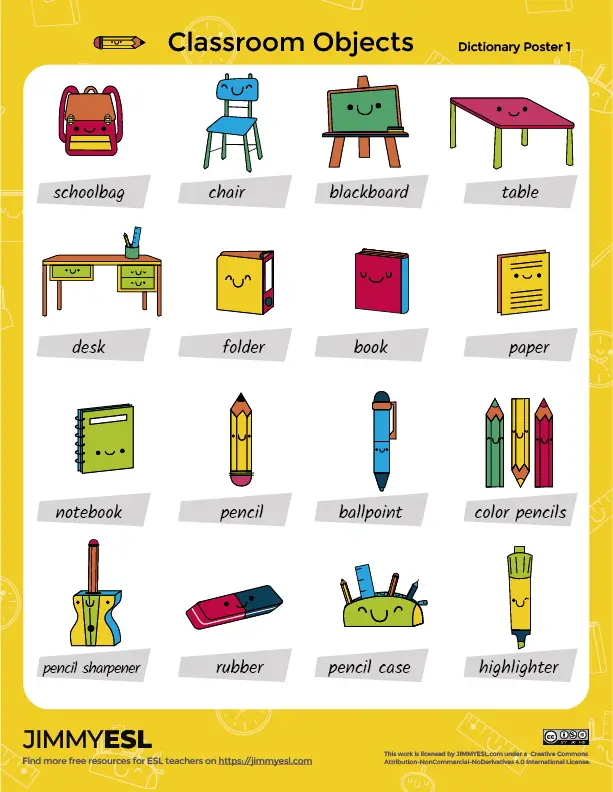
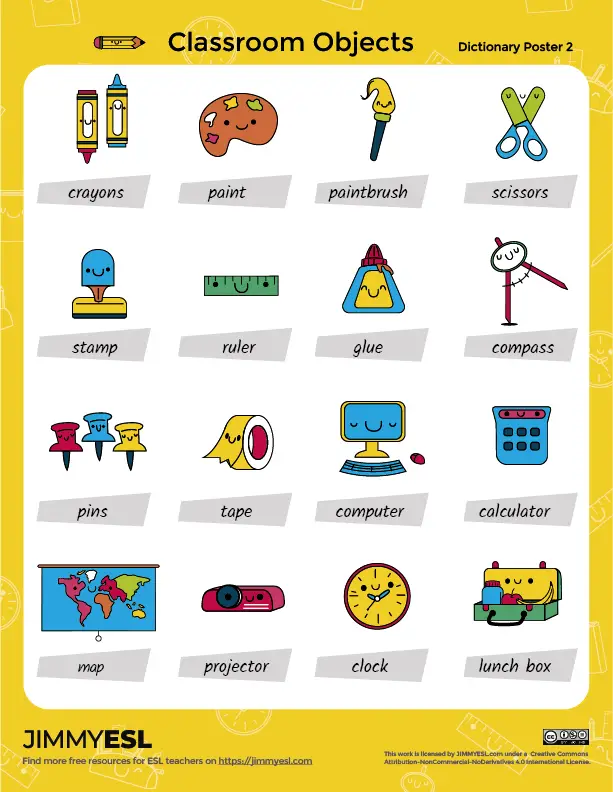
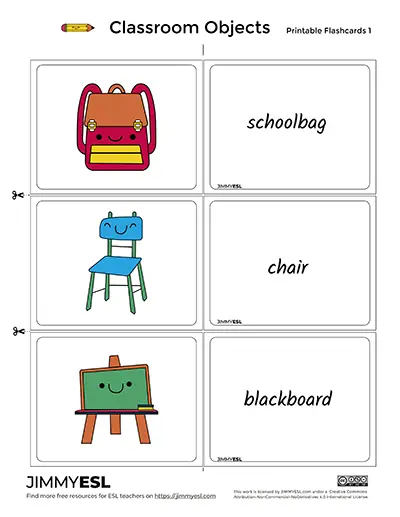
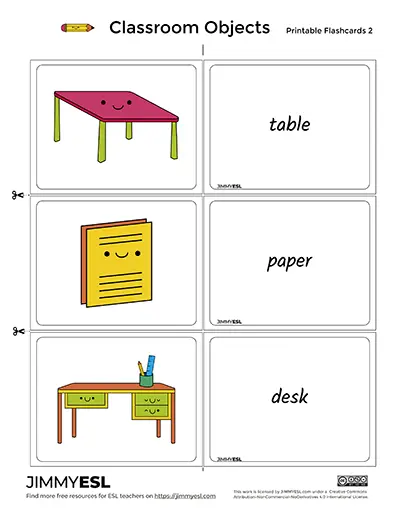
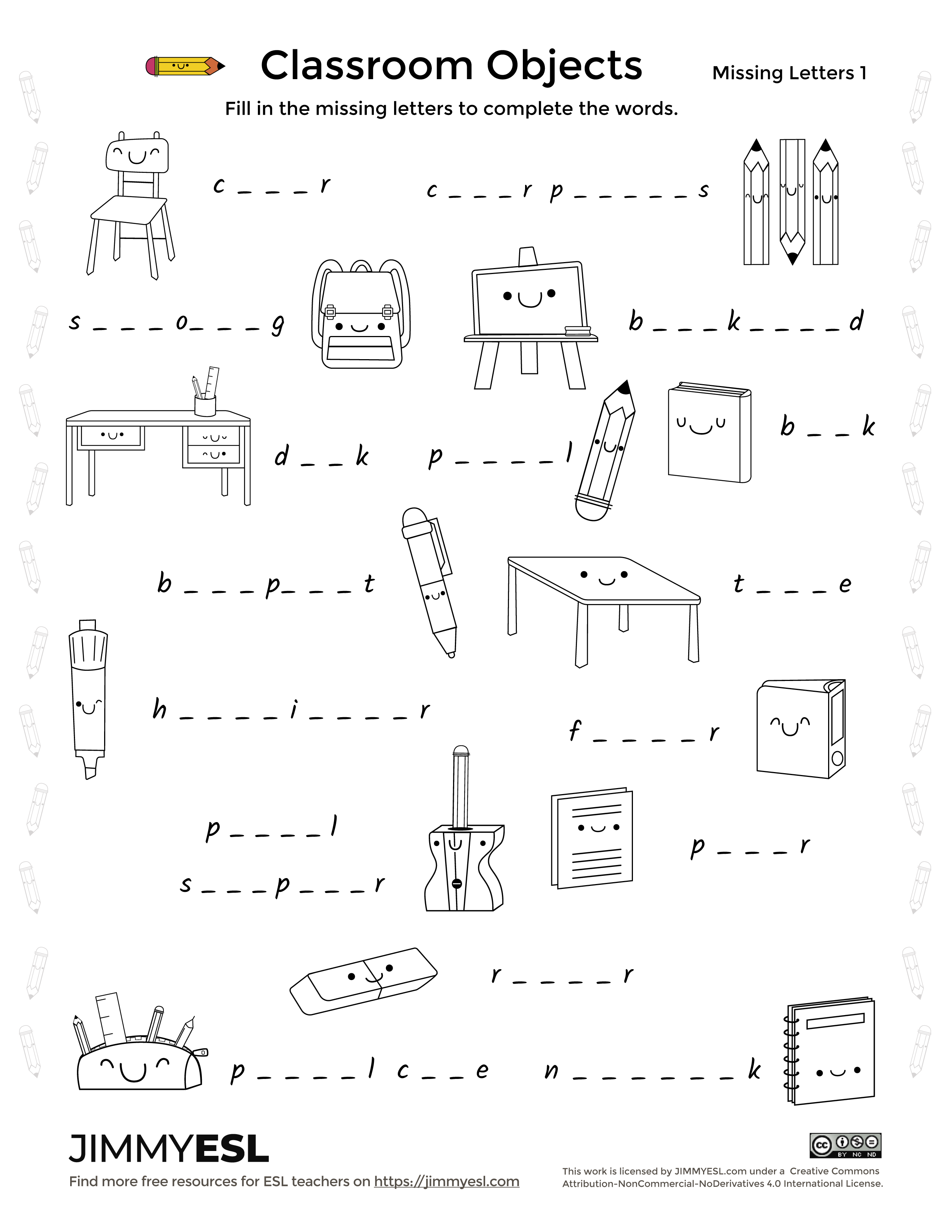
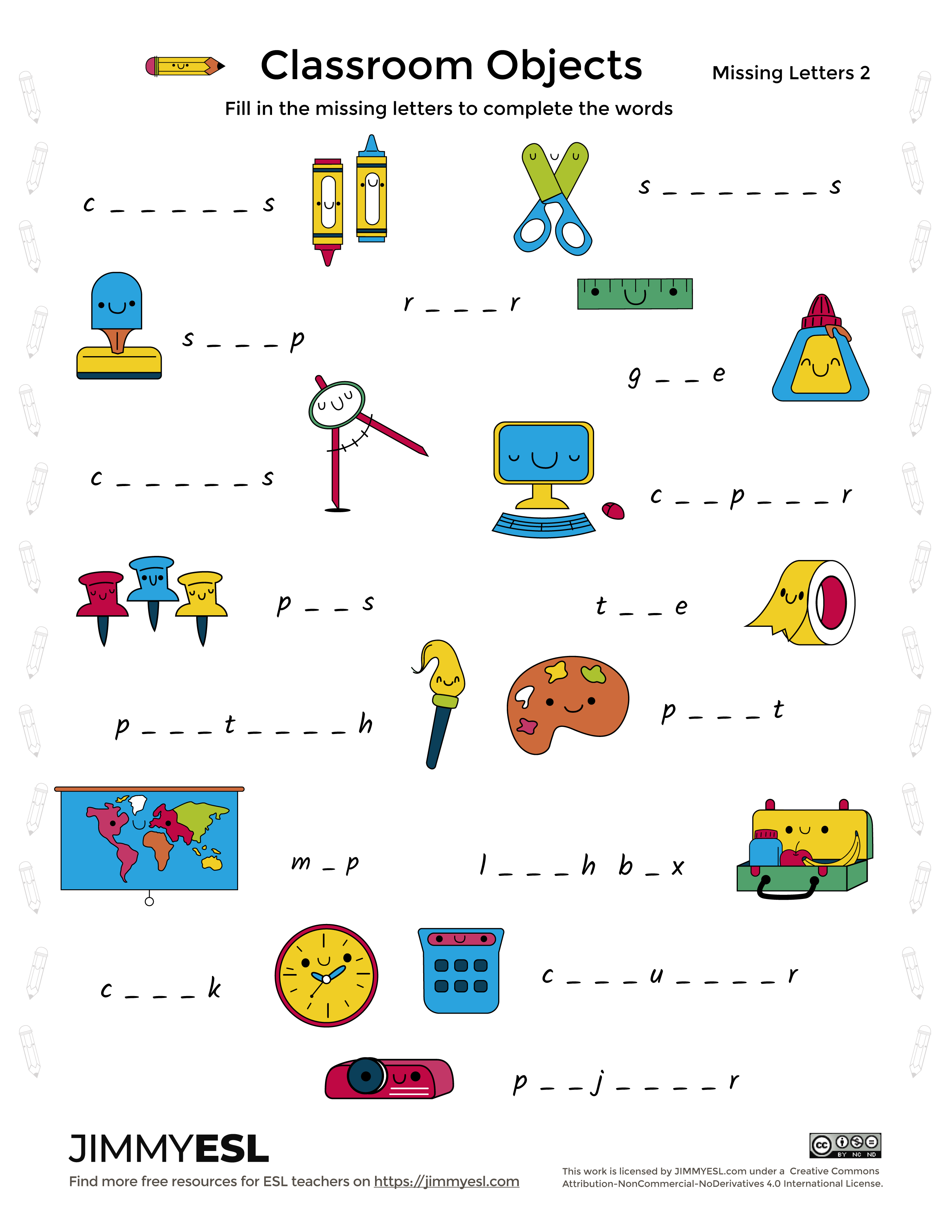
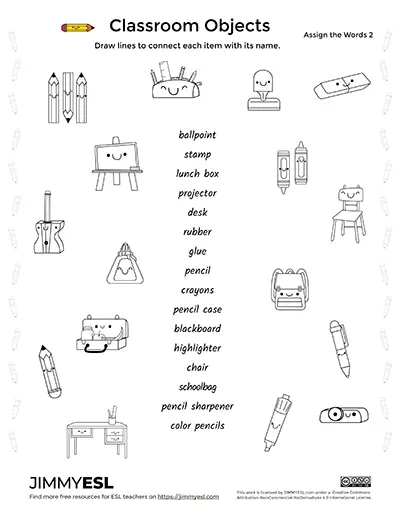
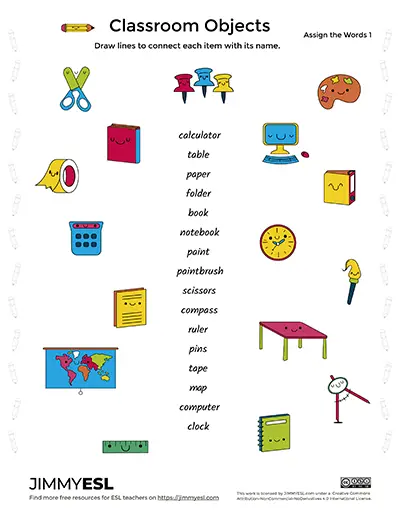
Teach English vocabulary related to school objects or classroom objects to your students – with our lovely illustrated ESL worksheets and flashcards, exclusively from JIMMYESL.
Kids – and likely adults, too – will love the “smiling items” and thus will be highly motivated to learn the new vocabulary and to complete the exercises in the worksheets.
Reward your students with a personal Certification of Achievement after taking the lesson!
The free worksheets include the vocabulary for these 32 classroom objects:
schoolbag
I pack my schoolbag in the morning.
chair
I sit on a chair.
table
I work at the table.
desk
The teacher sits at the desk.
blackboard
The questions are on the blackboard.
book
I read my book.
folder
I keep my work in my folder.
notebook
I take notes in my notebook.
paper
I write on the paper.
pencil
I use my pencil to write.
pencil case
I keep my stationery in my pencil case.
pencil sharpener
I use a pencil sharpener when my pencil is blunt.
rubber
I use a rubber when I make a mistake.
color pencils
It’s fun to use color pencils.
ballpointpen
I sometimes write with a ballpoint pen.
highlighter
A highlighter makes it easy to find parts of a sentence.
crayons
I use crayons to color my pictures.
paint
Paint can be fun but very messy!
paintbrush
I use a paintbrush to paint.
scissors
Scissors help me cut things.
stamp
The teacher stamps my work when it is finished.
ruler
A ruler tells me how long things are.
glue
Glue helps me stick things together.
compass
A compass makes it easy to draw a circle.
pins
We use pins to stick things to the board.
tape
Tape can also be used to stick things together.
computer
I use the computer to search the internet.
calculator
A calculator makes it easier to add big numbers.
projector
We can see big pictures using the projector.
map
A map shows different places.
clock
I use a clock to tell the time.
lunchbox
All of my tasty food is in my lunchbox.
Classroom Objects: The Worksheets
Dictionary Poster
The Dictionary Poster lists all 32 school and classroom objects. Print it and attach it to your classroom wall! – 2 pages
Poster Page 1
Poster Page 2
Printable Flashcards
Teach school & classroom objects vocabulary with flashcards. – 32 flashcards
Printable Flashcards Page 1
Printable Flashcards Page 2
Worksheet: Missing Letters
Let your students fill in the missing letters to complete the item names and color in the illustrations. – 2 pages, colored and black & white to color in
Black & White Worksheet Page 1
Colored Worksheet Page 2
Worksheet: Assign the Items
Let your students assign the items to their names by drawing lines. – – 2 pages, colored and black & white to color in
Black & White Worksheet Page 1
Colored Worksheet Page 2
Certification of Achievement
Reward your students for their effort with a personal printable certification. – 1 page
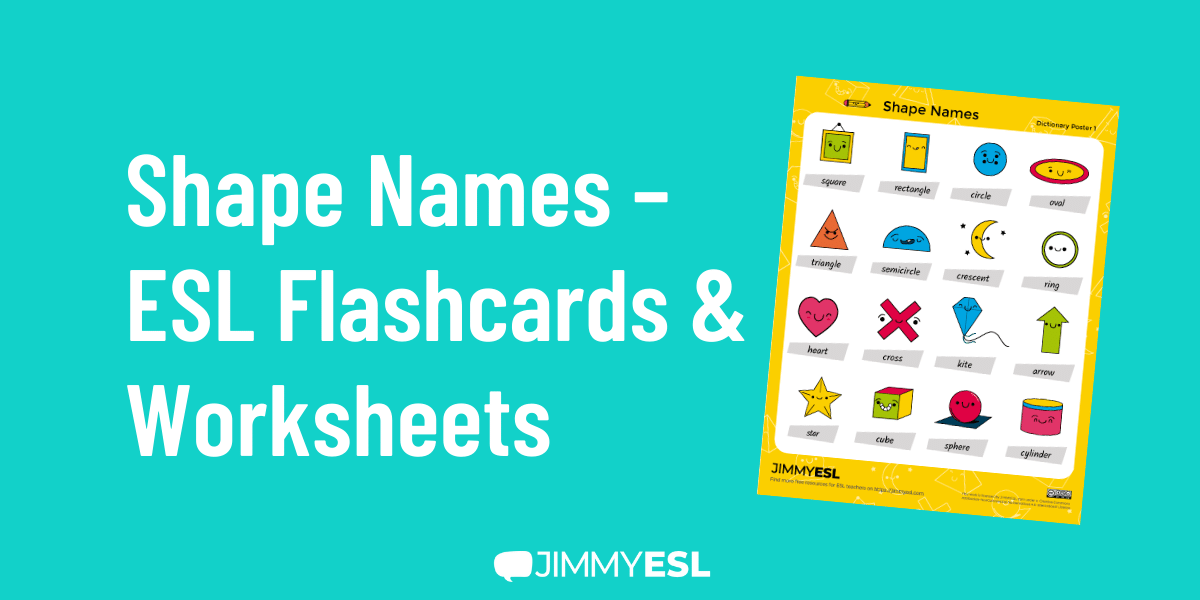
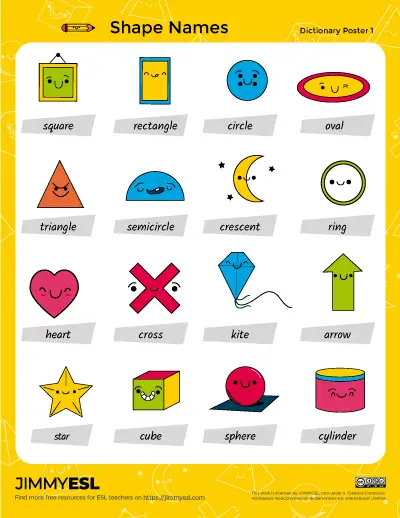
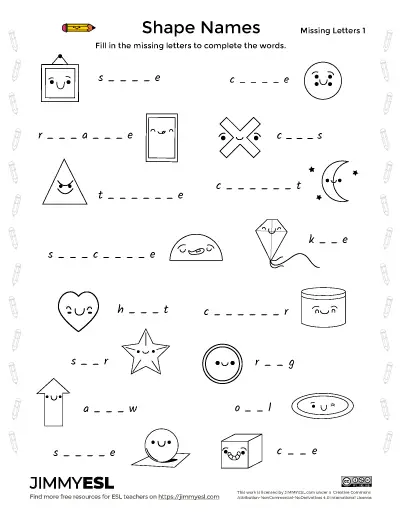
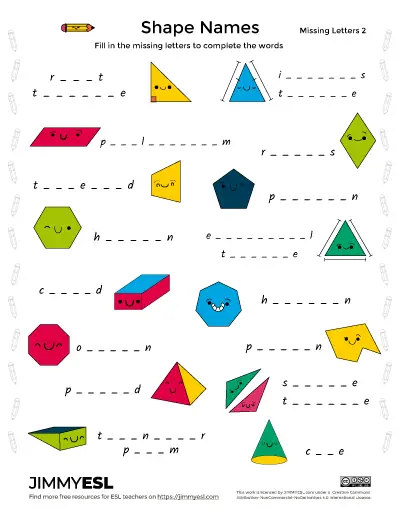
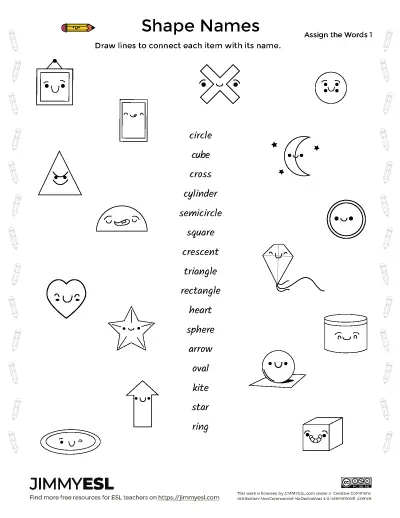
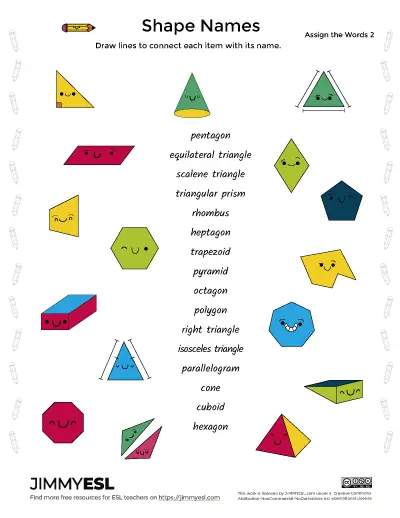
Teach the most common shape names to your learners – with our lovely illustrated ESL worksheets and flashcards, exclusively from JIMMYESL.
Kids – and likely adults, too – will love the “smiling shapes” and thus will be highly motivated to learn the new vocabulary and to complete the exercises in the worksheets.
Reward your students with a personal Certification of Achievement after taking the lesson!
The free worksheets include the vocabulary for these 32 shapes:
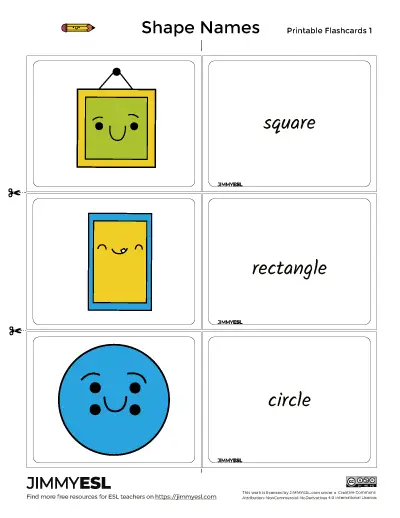
square
This picture frame is a square.
rectangle
My TV is a rectangle.
circle
The clock is a circle.
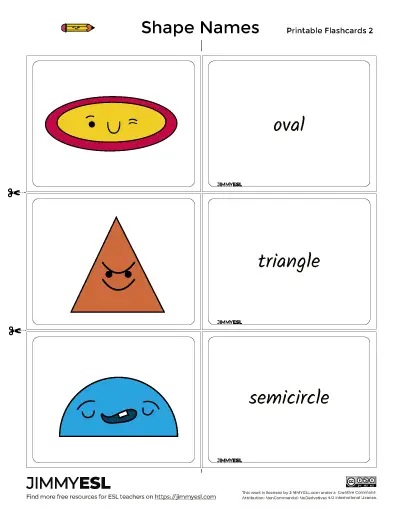
oval
The rug is an oval.
triangle
Tortilla chips are triangles.
semicircle
I use a semicircle ruler in maths class.
crescent
The moon is a crescent.
ring
Rings are… ring shaped!
heart
A heart is the shape of love.
cross
A cross means no.
kite
I like to fly kites.
arrow
Arrows show us the way.
star
Stars are bright.
cube
Boxes are cubes.
sphere
Apples are spheres.
cylinder
Pipes are cylinders.
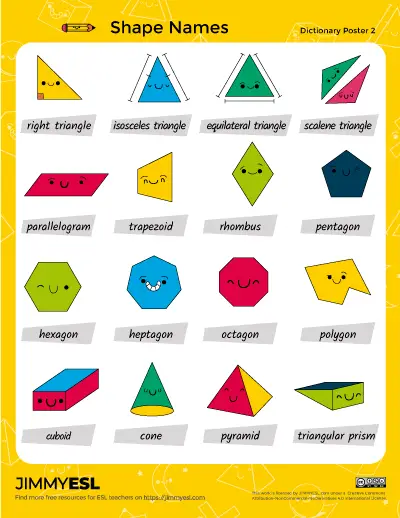
right triangle
A right triangle has a 90 degree angle.
isosceles triangle
An isosceles triangle has 2 equal sides.
equilateral triangle
An equilateral triangle has 3 equal sides.
scalene triangle
A scalene triangle has all 3 sides at different lengths.
parallelogram
My eraser is a parallelogram.
trapezoid
Gold blocks have a trapezoid shape.
rhombus
Rhombuses look like diamonds.
pentagon
The pentagon is an important building in the USA.
hexagon
Honeycombs are hexagons.
heptagon
Heptagons have 7 sides.
octagon
Stop signs are octagons.
polygon
A polygon can have many sides of different sizes.
brick
Bricks are used to make houses.
cone
Cones are great to put ice-cream in!
pyramid
The Egyptians built pyramids a long time ago.
triangular prism
A wedge of cheese is a triangular prism.
Shape Names: The Worksheets
Dictionary Poster
The Dictionary Poster lists all 32 names of the shapes. Print it and attach it to your classroom wall! – 2 pages
Poster Page 1
Poster Page 2
Printable Flashcards
Teach the shape names vocabulary with flashcards. – 32 flashcards
Printable Flashcards Page 1
Printable Flashcards Page 2
Worksheet: Missing Letters
Let your students fill in the missing letters to complete the shape names and color in the illustrations. – 2 pages, colored and black & white to color in
Black & White Worksheet Page 1
Colored Worksheet Page 2
Worksheet: Assign the Items
Let your students assign the shapes to their names by drawing lines. – – 2 pages, colored and black & white to color in
Black & White Worksheet Page 1
Colored Worksheet Page 2
Certification of Achievement
Reward your students for their effort with a personal printable certification. – 1 page
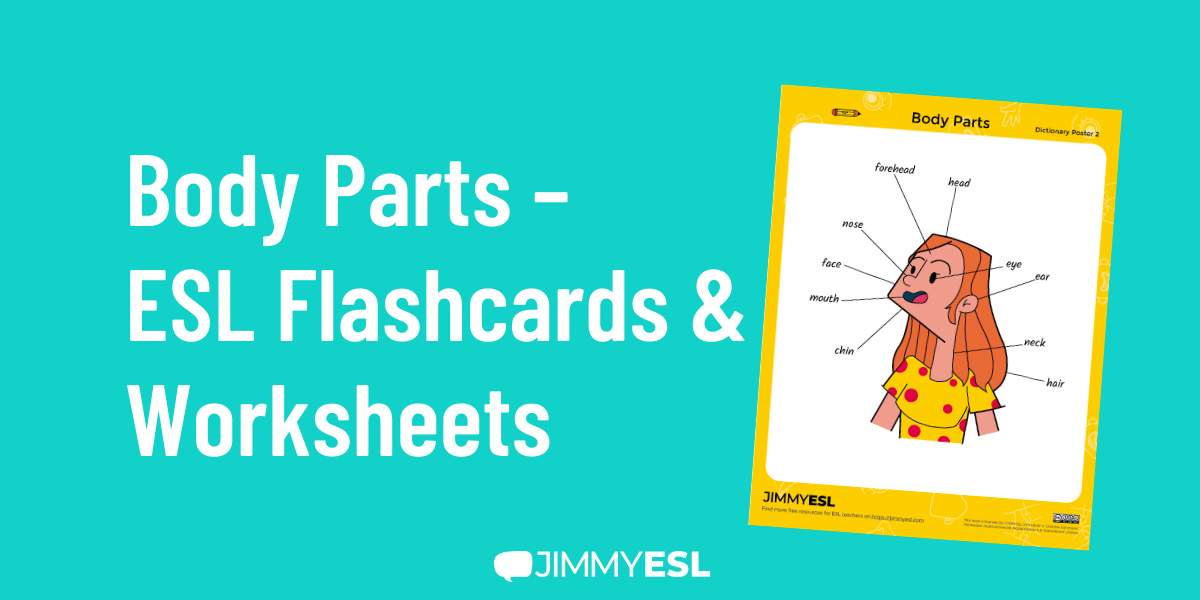
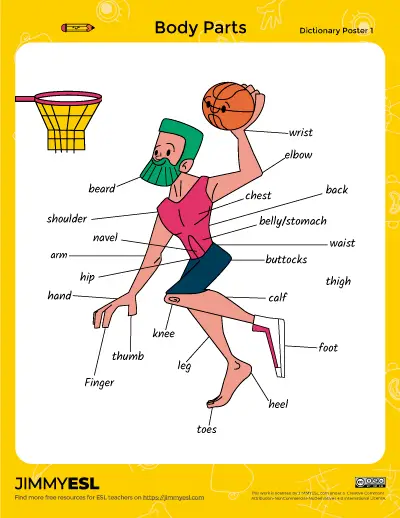
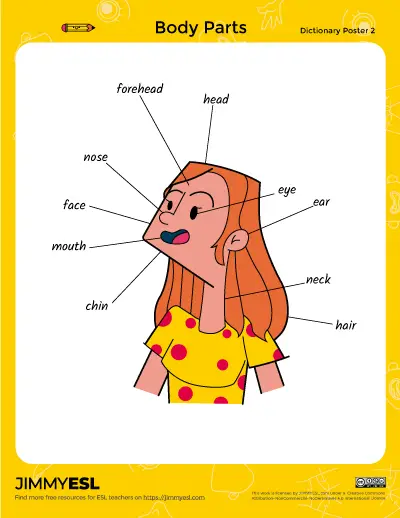
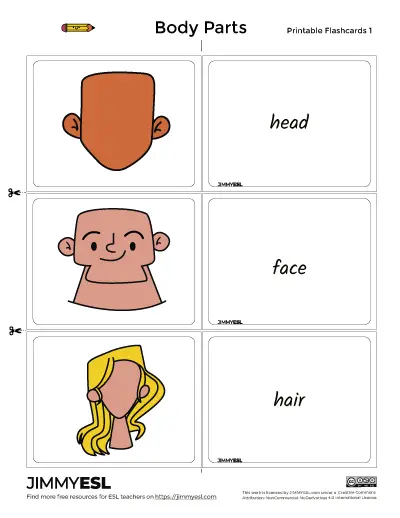
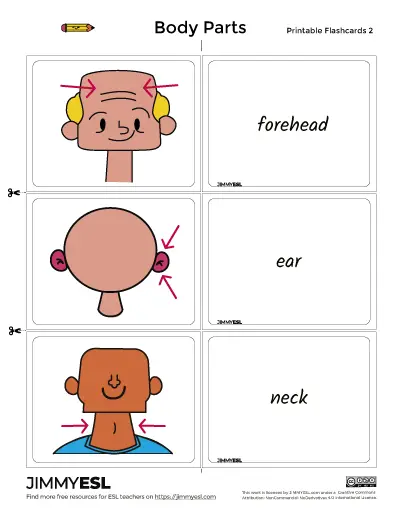
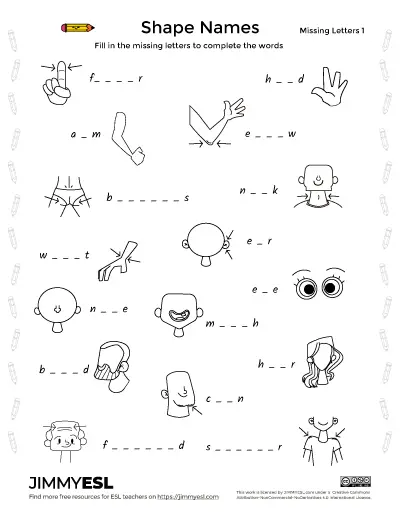
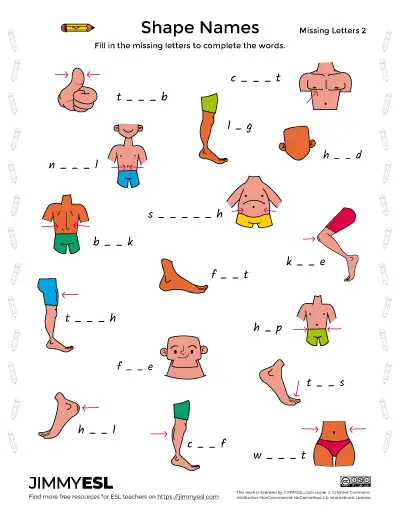
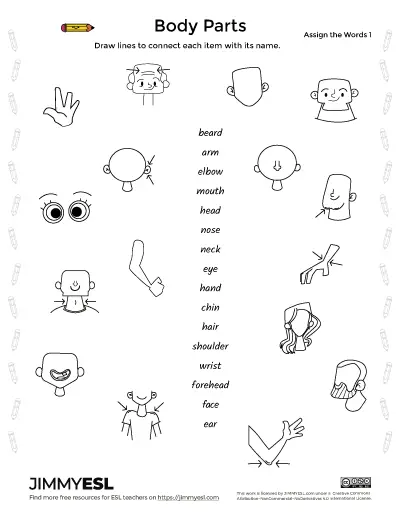
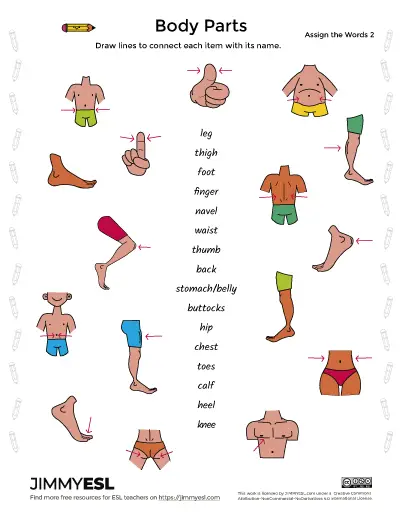
Teach the body part names to your learners – with our lovely illustrated ESL worksheets and flashcards, exclusively from JIMMYESL.
Kids – and likely adults, too – will love the illustrations and thus will be highly motivated to learn the new vocabulary and to complete the exercises in the worksheets.
Reward your students with a personal Certification of Achievement after taking the lesson!
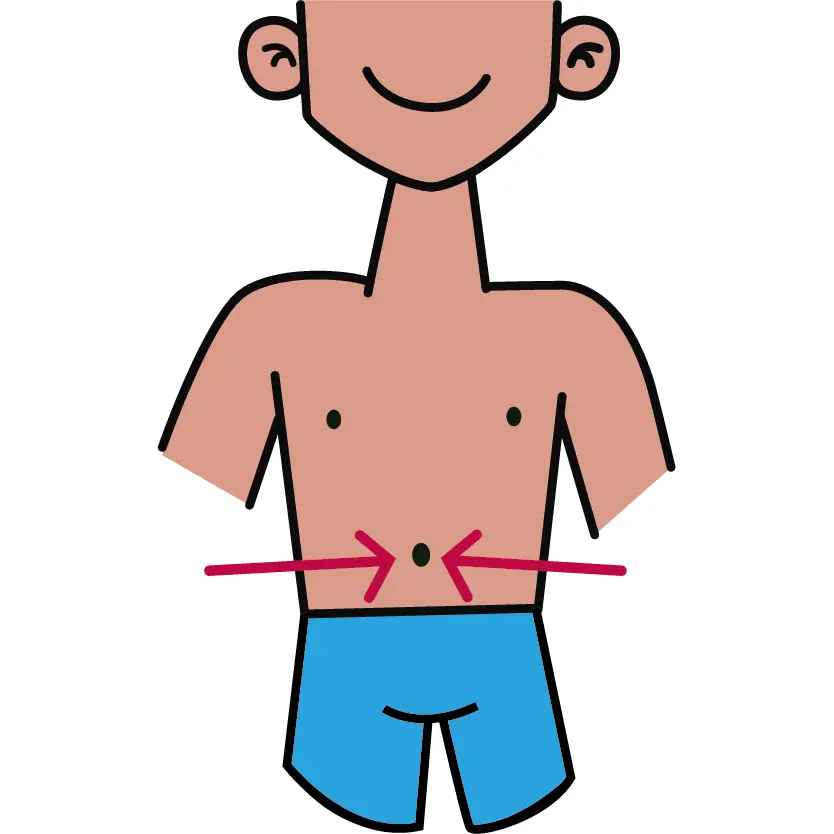
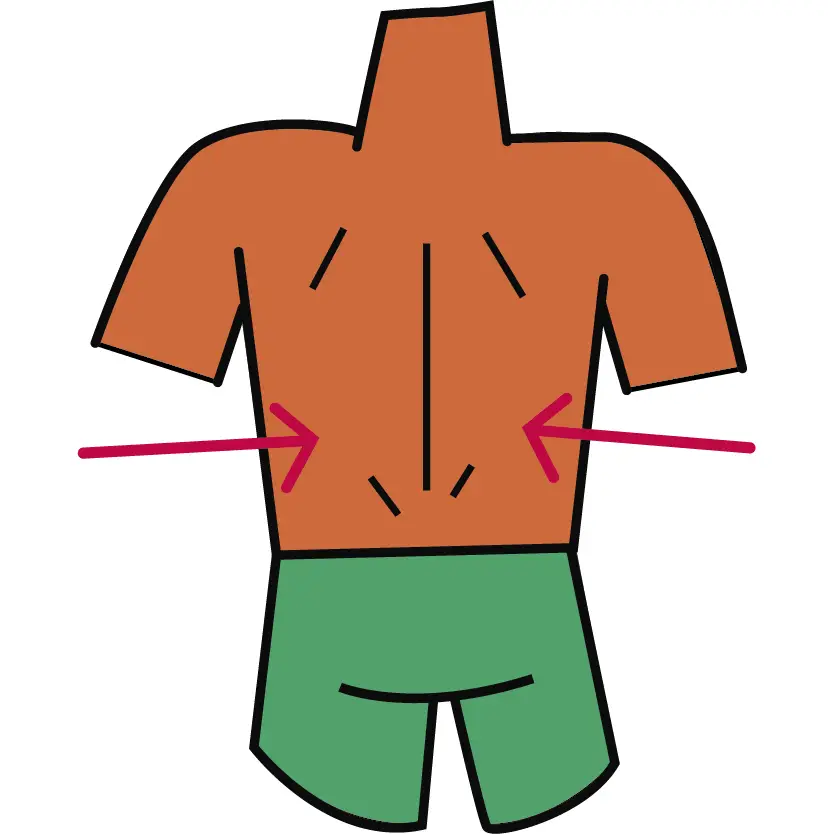
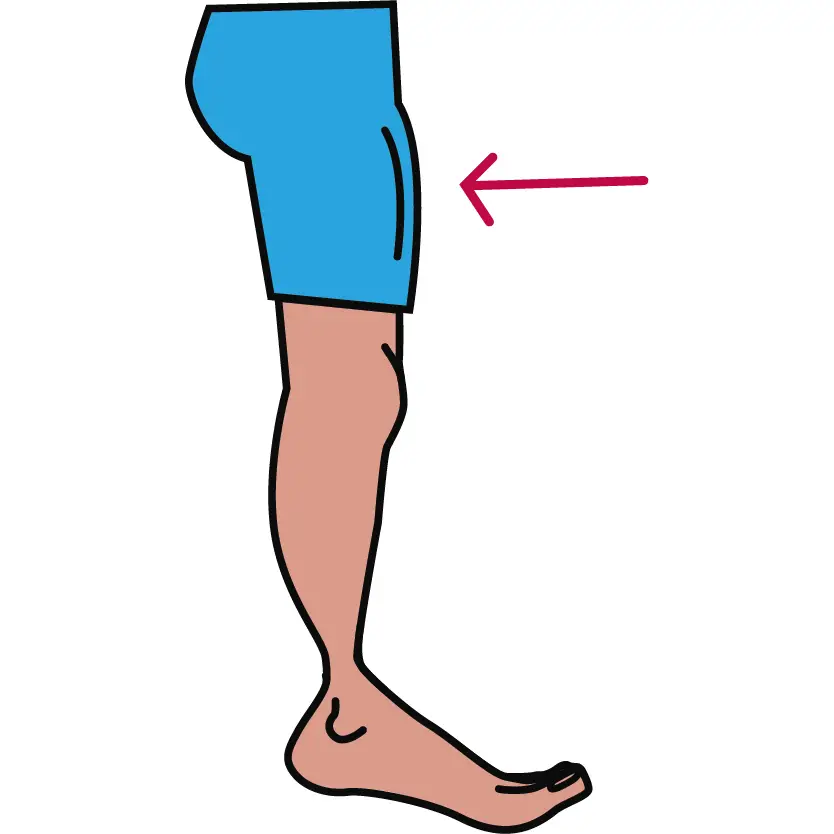
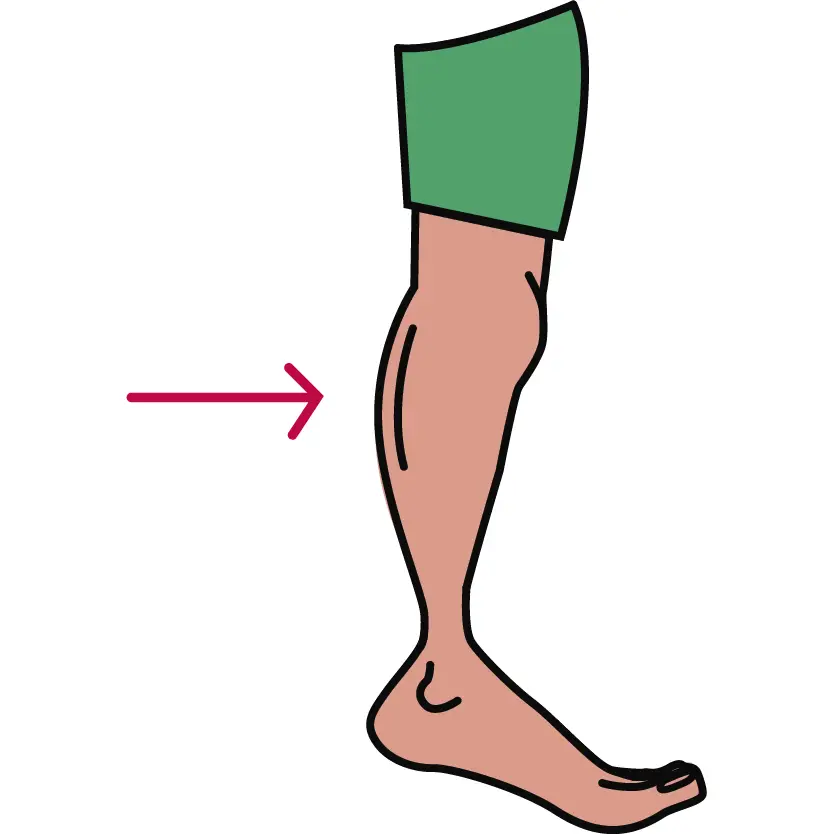
The free worksheets include the vocabulary for these 32 body parts:
Head
I have a big head.
Face
He has a handsome face.
Hair
She has long hair.
Forehead
He tapped his forehead.
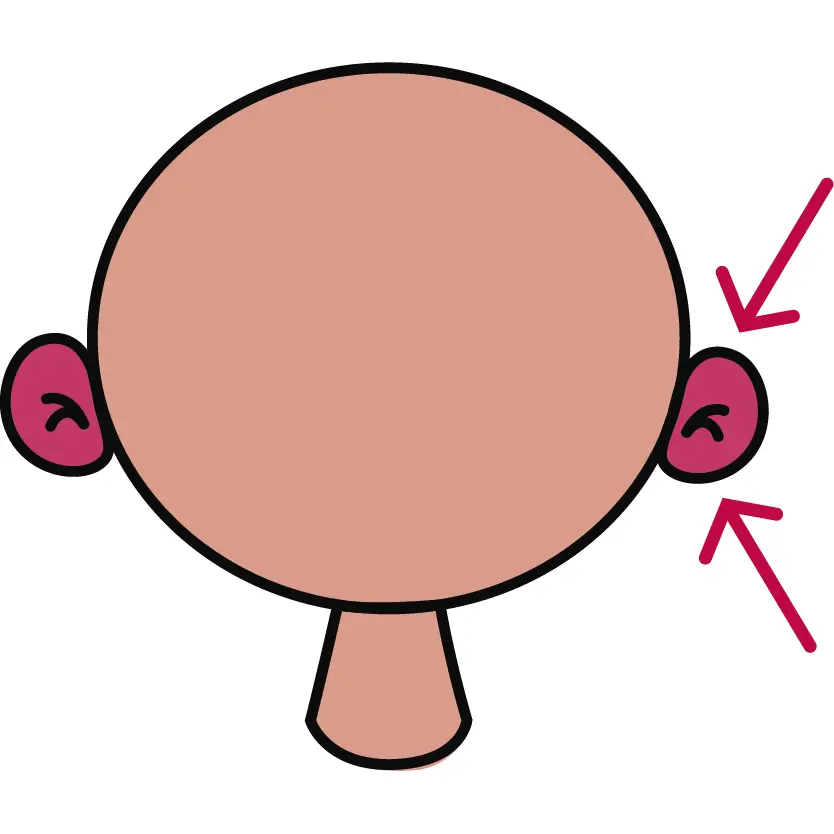
Ear
My ears are cold.
Neck
I have a pain in my neck.
Nose
She has a small nose.
Eye
I have blue eyes.
Mouth
My mouth has one tooth.
Chin
He has a wide chin.
Beard
I have a bushy beard.
Shoulder
He has broad shoulders.
Elbow
I hurt my elbow.
Arm
She has strong arms.
Wrist
My wrist has cramp.
Hand
I have two hands.
Finger
I count using my fingers.
Thumb
She gave a thumbs up.
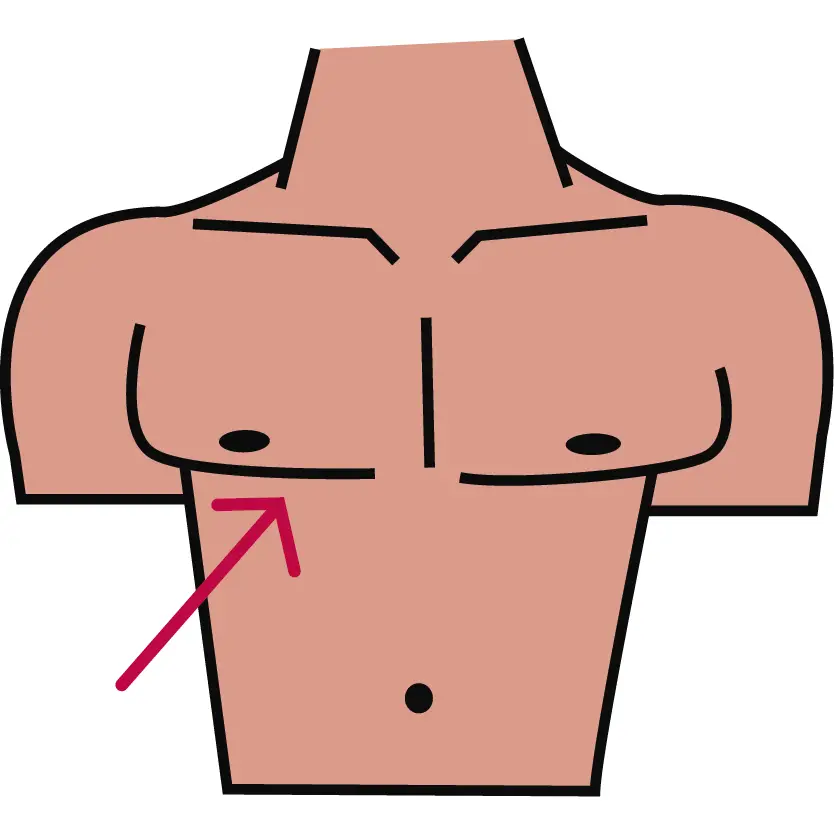
Chest
He has a wide chest.
Navel
My navel is ticklish.
Belly / Stomach
I have a big belly.
Hip
He has wide hips.
Waist
She has a slim waist.
Back
Don’t hurt your back.
Leg
My legs are tired from walking.
Buttocks
I sit on my buttocks.
Thigh
His thighs are toned.
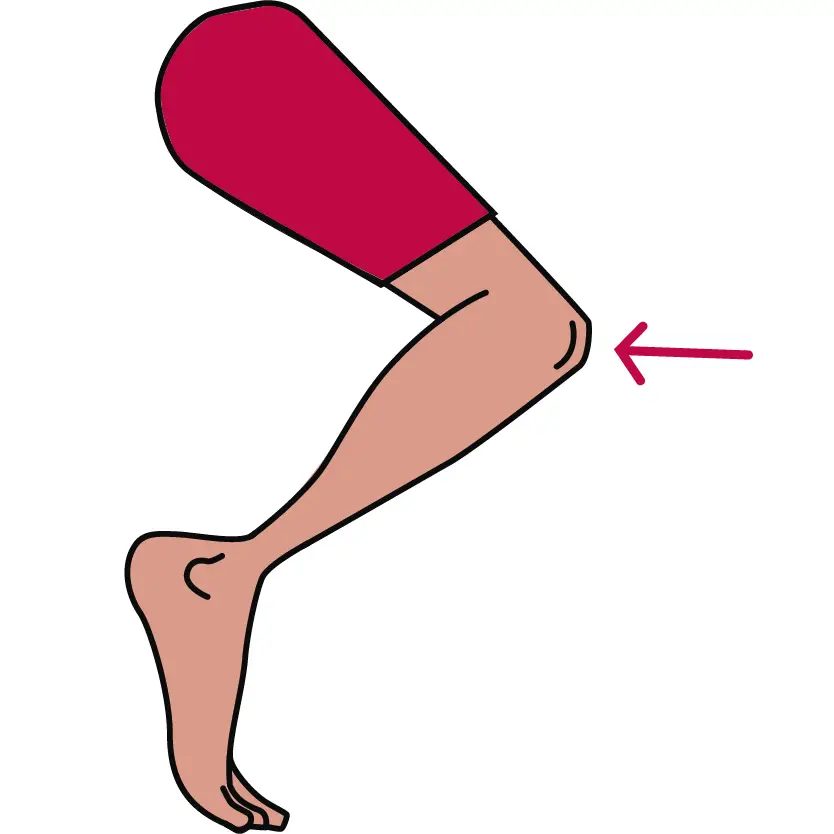
Calf
My calfs ached from walking.
Foot
I have two feet.
Knee
She has pointy knees.
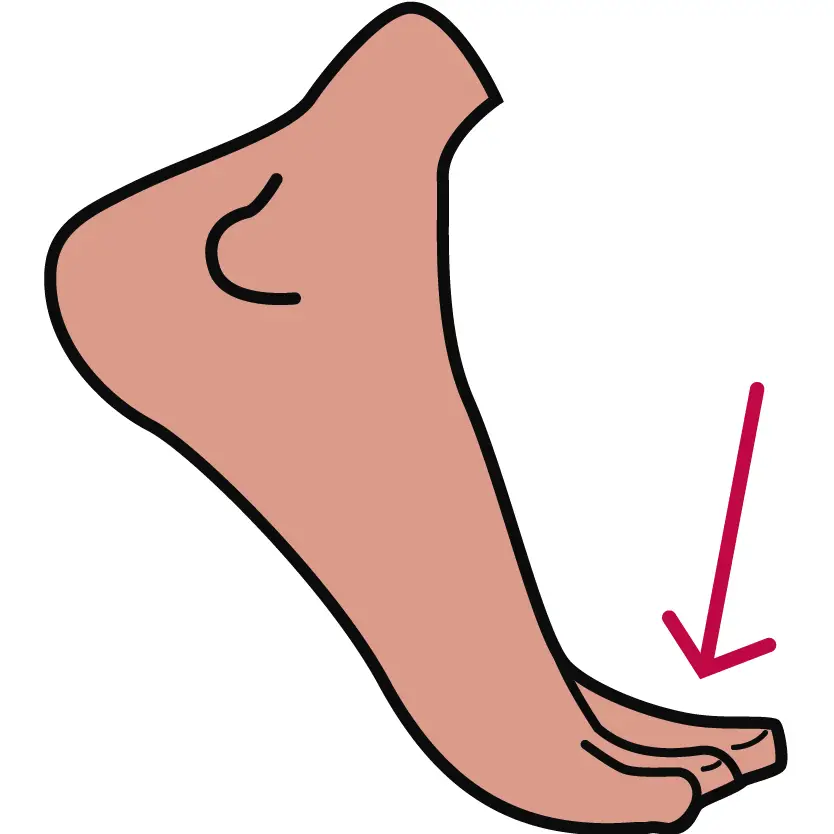
Heel
The heel is very hard.
Toe
I’m taller when I stand on my toes.
Body Parts: The Worksheets
Dictionary Poster
The Dictionary Poster lists all 32 names of the body parts. Print it and attach it to your classroom wall! – 2 pages
Poster Page 1
Poster Page 2
Printable Flashcards
Teach the body parts vocabulary with flashcards. – 32 flashcards
Printable Flashcards Page 1
Printable Flashcards Page 2
Worksheet: Missing Letters
Let your students fill in the missing letters to complete the names of the body parts and color in the illustrations. – 2 pages, colored and black & white to color in
Black & White Worksheet Page 1
Colored Worksheet Page 2
Worksheet: Assign the Items
Let your students assign the body parts to their names by drawing lines. – – 2 pages, colored and black & white to color in
Black & White Worksheet Page 1
Colored Worksheet Page 2
Certification of Achievement
Reward your students for their effort with a personal printable certification. – 1 page
Home-based online English tutoring jobs are a very convenient and profitable option to earn a side income or even make a living without leaving your home.
Online tutoring sites or marketplaces connect you with hundreds of thousands of potential students.
But the competition is quite high.
How do you market yourself, find students and fill your schedule?
Online Tutoring Jobs Are Accessible for Anyone
In recent times, the popularity of online English teaching and tutoring has grown by leaps and bounds. A younger generation of digital natives with access to high-speed internet connection has rapidly boosted the demand for online classes and lessons.
Many of your potential students likely reside in other countries; remote tutoring can thus be crucial in helping you to connect with the particular group of students who will benefit most from your expertise.
The hardware and software requirements needed are certainly accessible to most people.
With a working microphone and webcam, a quiet environment, free software like Skype, a high-speed Internet connection, and lesson plans and exercises that can be easily administered online, you are ready to embark on a fulfilling home-based online English tutoring career.
You also do not have to worry about transportation expenses or long travel times due to bad traffic.
Of course, you have to be comfortable teaching in front of a web camera – knowing how to use facial expressions and upper body gestures to better communicate with your tutees will be a major advantage.
The benefits of efficiency and convenience are clear, but how does a new English tutor find online tutoring assignments?
What Are Tutoring Marketplaces?
Tutoring marketplaces make offering online tutoring services a breeze. After creating your tutor’s profile and adding an option of how you want to get paid, like your Paypal account, potential students will be able to connect with you and book lessons.
With so many platforms, you can try out a few different ones to see which works best for you.
Tutoring marketplaces generally give you more flexibility and control than traditional online teaching companies do. The platform will probably set class lengths, but everything else is up to you, including the structure of your lessons.
You may also have to pass a test to qualify to list yourself as a tutor for a specific subject on whatever marketplace you use.
Some sites, like Verbalplanet, allow you to set your own rate, while others, like Cambly, have set rates.
Some platforms will require you to do lesson planning if you want to succeed, while others focus on facilitating conversations between language learners and native speakers – you just have to show up and talk!
Some, similarly to online teaching companies, require teachers to have bachelor’s degrees and be native speakers, while others let anyone create an account on their platform.
The Pros
Tutoring marketplaces give you complete control over your schedule, your students, and your lessons. You can decide what subject matter to cover and what ages and levels of students you’d like to teach.
The platform handles the payment and some user support.
Most tutoring marketplaces let you teach from your phone or tablet.
Tutoring marketplaces usually have a low barrier to entry, meaning non-native speakers or tutors without bachelor’s degrees may apply.
Some platforms provide teaching software and resources for lessons.
The Cons
Because almost anyone can teach through a marketplace, it may be hard to stand out from all the teachers on the site and build up a client base.
Due to the competition, some teachers also set very low rates, making it harder to earn money teaching for a fair wage.
Students may not sign up for repeat classes or may give you an unfair rating, hurting your reputation on the site.
How Much Can You Make as an Online English Tutor?
Tutor marketplaces like italki and Verbalplanet let teachers set their own rates. Standard rates tend to hover around $10-25 per hour, but you can browse around to see what other tutors like you are charging to help you settle on a reasonable and fair rate for lessons.
If you have a teaching certificate or have experience teaching for tests like the TOEFL or the SAT, you can charge a higher rate for your lessons.
Tutors specializing in Business English and test preparation can easily charge upwards of $50 an hour. Pearson and Varsity Tutors are among the companies that connect expert tutors with students worldwide.
If you charge $25 an hour and work for 10 hours a week through a marketplace, you’ll earn $1,000 a month teaching.
It’s important to remember that teachers in tutor marketplaces and independent teachers do more work than just time spent in the classroom. They’re responsible for their own lesson planning and marketing, which adds to their workload.
The Best Online Tutoring Marketplaces
Ziktalk hosts conversations and doesn’t require tutors to be native speakers or have any teaching certifications. The app works on your phone, and you set your own rate by the minute.
With Cambly, you’ll make 17 cents a minute ($10 an hour) conversing with language learners all around the world. You won’t pay the bills with it, but it is a good side gig. You don’t need to be a native speaker or have a bachelor’s degree to tutor with Cambly, as long as your English is good. Teachers can’t use Cambly on smartphones or tablets. This guide to working for Cambly has more information about what teaching on the platform is like.
NiceTalk hosts conversations between native English speakers and Chinese ESL learners who want to practice their conversational English. Teachers get paid per full minute spent talking, and most of the students are adults. The NiceTalk app is compatible with Android and iOS. Tutors get paid $10 an hour.
Verbalplanet lets tutors set their own schedules and rate. Lessons last 45 minutes, and tutors customize lessons to fit their students’ needs. It’s more involved than a conversation-based marketplace, but the pay is better and the hours are steadier. The site has lots of tools to help teachers manage their clients, as well.
italki lets tutors set their own rate and schedule, similar to Verbalplanet. The platform handles marketing and other client management tasks, so teachers can focus on delivering high-quality lessons to students. You don’t need to be a native speaker to teach on italki as long as your English is good, and you can teach from a phone or tablet.
Other marketplaces are:
tutor.com (offers tutoring for a variety of subjects as well as English)
preply.com (a fast-growing ESL platform that is attracting plenty of students)
tutorhub.com (UK-based platform, branches into other subjects and pays around £20-£40 p/h)
wyzant.com (US-based platform, variety of subjects and can cater to higher ed students)
learnpick.com (another US-based platform with plenty of subjects and students)
8+1 Steps on How to Start
Tutoring on an online marketplace is a little less structured than working for a company, but there are a few steps you need to follow to get your business off the ground.
Follow these steps to create a successful and profitable teaching business through an online tutoring marketplace.
1. Decide Whom and What You Want to Teach
Before you start looking for potential students based on the various avenues described above, you should clarify a few key issues:
Who is your target demographic: kids, high school students, business people, speakers of certain languages, etc.?
What exactly will you be teaching them: beginner vocabulary, conversational English, business English, test prep, etc.?
What’s the real value of your lessons for your students – compared to other tutors?
Once you have a clear idea of your unique selling point, it will be easy for you to connect with the students who are the best match for your services.
2. Decide Which Marketplace you Want to Use
First, do your research. Browse around a few different marketplaces and get a feel for what kind of work you want to be doing.
Do you want the freedom to set your own rate and schedule? Do you want to converse or prepare lesson plans? How much time are you willing to devote to the job? Where in the world do you want to be teaching? Which marketplace?
Consider that you’ll be working with students in a different time zone, so you may have to work weird hours depending on where you teach.
You can read testimonials from different teachers and do some comparisons before you decide on a marketplace.
3. Submit an Application
Next, you need to apply for the job.
In general, you will have to pass through a (more or less strict) screening and verification process before you can start to advertise your tutoring services on these platforms. Some marketplaces have an interview or require you to make a video introduction.
How long it will take the employer to get back to you varies based on the company and how many applications they get.
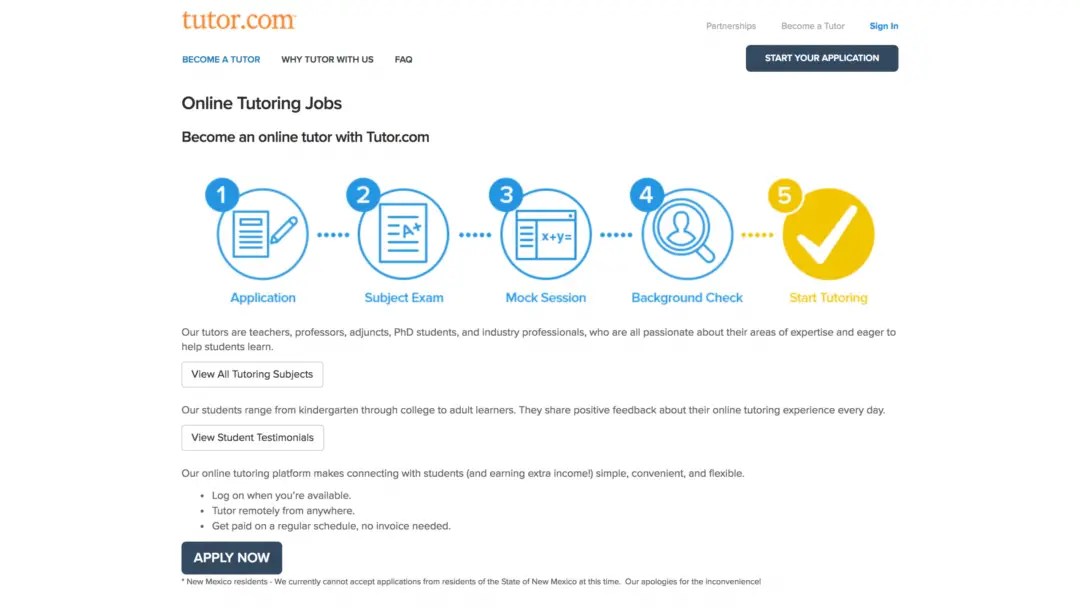
The tutor.com application website
4. Create a Professional Profile
Once you’ve gotten hired, you’ll need to fill out your teacher profile.
Provide some background information, highlighting any teaching experience, language skills, or certifications.
You’ll want to submit a professional-looking photo and an introduction video that features you looking friendly and speaking clear, native-sounding English.
Your profile is the first impression parents will get of you, so it’s important to really sell your skills and put your best face forward here.
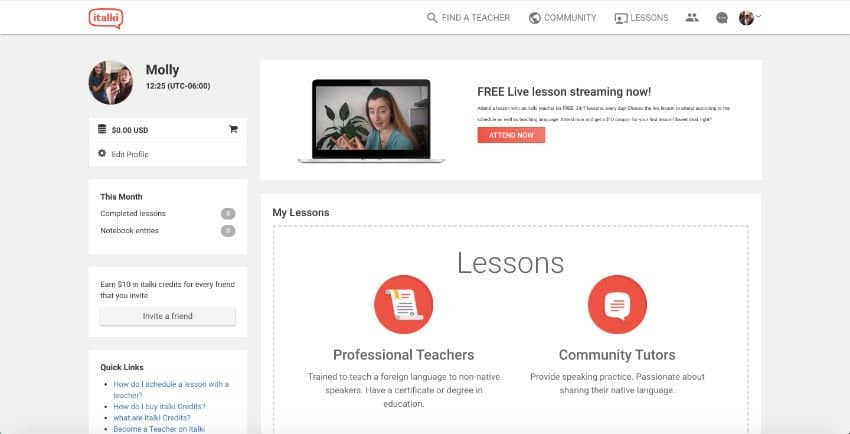
A tutor’s profile on italki
5. Figure out the Specifics of Your Teaching Practice
Finally, you’ll decide on your availability and, depending on the marketplace you choose, set your prices.
It’s a good idea to look at what other tutors like you are charging before you decide your rates, so you stay competitive.
6. Promote Your Teaching Business
When so many home-based online English tutors can be accessed with a few mouse clicks, it is often difficult to stand out from the crowd.
To help increase enrollment in your tutoring sessions, promote yourself using whatever tools are available to you on the platform, as well as on Facebook, your personal blog, online classifieds, and more.
You can spread the word about your services the old-fashioned way, by placing fliers around your area and telling people in your offline social network about your availability as an online English tutor.
You can also spend some money to advertise your services on social media or on local and international classified websites (e.g. Craigslist).
You can always invest in a personal website, some well-written articles, and even some free video lessons to showcase your personality, teaching style and expertise as a tutor.
Your articles and videos may gain significant traction on their own, thus ensuring that you catch the attention of a large number of potential tutees (and/or their parents).
7. Teach Great Lessons
Most importantly, you need to teach the lessons themselves. If you work for a platform that’s not just conversation-based you’ll spend time designing unique curriculums to fit your students’ needs.
To convince potential students to book lessons with you, you can demonstrate your aptitude by offering trial lessons and free downloads of quality learning materials.
If you do a good job, you’ll get positive feedback that will help spread your reputation as a good teacher and in turn increase your client base.
Lessons are the meat of your business, so constantly working to improve your lessons is the most important thing you can do as an online ESL teacher.
Payments vary by platform. Some allow teachers to get paid through the method of their choosing, while others require their tutors to use PayPal or another similar method of payment.
Whatever it is, you’ll want to be sure your payment information is connected to the system so you can get rewarded for your hard work.
Bonus: Network With Other Tutors
Be sure to socialize with your fellow teachers and tutors by participating actively via relevant Facebook pages (e.g. the British Council’s Teaching English Facebook page), Facebook groups, LinkedIn, or Twitter conversations.
Apart from sharing resources and expertise with your fellow tutors, you may also gain valuable referrals and tutoring opportunities.
A fellow tutor with too many potential tutees on his or her hands can redirect them to you if he or she is confident about your teaching abilities.
You can also make your lessons more exciting by collaborating with other online tutors.
When you want to teach English online, getting hired by a company seems to be the easiest way to start your career.
But after a while…
You might become tired of teaching the same beginner lessons over and over again.
Or maybe you’ll want to start looking for opportunities to make more than roughly $15-20 per hour.
Have you ever considered starting your own independent online teaching business – having the freedom to set up your own curriculum, schedule and price model?
In this post, you will learn what it takes and how to get started.
Should You Teach English Online Independently?
Running your own online teaching business is a lot of hard work, and it’s definitely not for everyone. However, if you do go down this path, you’ll find yourself with a sustainable career that gives you flexibility, creative control, and life skills, not to mention a sizable income.
If you have good credentials and can tutor in business English or help students prepare for the TOEFL, IELTS, SAT, or other tests, you can charge a lot of money and will undoubtedly get good business.
If you spend 20 hours a week tutoring in a specialized area at $50 per hour, you’ll make $4,000 a month!
But teaching English independently doesn’t just require good teaching and curriculum development skills.
It also requires you to be self-motivated and unafraid to put yourself out there, to have good entrepreneurship as well as be able to market yourself effectively, manage your finances and your schedule, and take care of nitty-gritty details like paying taxes, figuring out cancellation policies for students, and maintaining a website.
Teaching ESL independently is undoubtedly rewarding. It makes you your own boss, gives you the ultimate freedom and flexibility, and gives you the opportunity to design your curriculum independently.
Keep in mind, you can always teach English in more than one place. For example, you can schedule classes with a major ESL company and practice your teaching skills while you work on your own teaching business and build up a client base.
These are the relevant pros and cons to consider when deciding whether to follow this route:
The Pros
Running your own teaching business gives you control over every aspect of your teaching practice, so you’ll never be subject to the whims of a major company.
You can build up a good reputation and grow a loyal customer base.
Once you’ve become established, you can cooperate with other teachers, help new independent teachers start their own businesses, and even hire teachers to work for you.
The Cons
Running your own business is a LOT of work: administration, marketing, sales, payment, and troubleshooting are all up to you.
You’ll need to put a lot of effort in before you start seeing results.
You assume all the risk, financial and otherwise, for your company.
Most teaching companies have a section based in the country where their students are and have staff that communicates with them in their native language. As an independent teacher, you have no support, so all communication, including fielding complaints, is up to you. This may be challenging if your students’ English isn’t great and you can’t communicate with them in their native language.
7+1 Steps for Starting Your Own Online Teaching Business
Starting your own company can seem totally terrifying, and with good reason. It’s a lot of work, and the responsibility for all of it falls on your shoulders.
It’s important to make a plan and strategize so that your teaching company is stable and well-run.
Here are a few tips that will help you create a successful online teaching company.
1. Choose your Specialty
Before starting your independent business, you need to set clear goals for what you want it to look like. You should figure out what specifically you want to teach, who you want to cater to, and what teaching methods you want to use.
Do you want to teach IELTS prep classes to Chinese college students or do you want to teach conversational English to kids in South Africa? Will you give students material to study on their own before class and then review it with them? Find your niche and work to excel there.
Look at what other teachers with similar experience and specialties as you charge to help determine what a fair price point for your lessons looks like.
You may also want to consider whether you want to sell class bundles, have free trials, or offer promotions.
You’ll also need to write up a student contract that details pricing and your class cancellation policy.
3. Build your Class
Create a model for curriculums including long-term plans and individual lesson plans.
You’ll probably want to modify it to fit individual students once you get to know their language levels and learning styles, but you need to build off of a strong model. This is, after all, the meat of your business.
You should also collect teaching resources, including any materials or textbooks the students will need, props for your classroom, teaching backgrounds, and more.
You’ll need to set up your classroom space, including a headset, a high-speed internet connection, and a quiet, bright teaching environment.
Lastly, you should figure out which platform you want to teach through. Whether it’s Skype or something more sophisticated, it should be easy for both you and your students to use.
This is an absolute must for your teaching business.
It’s not hard to make a website: WordPress, Wix or SquareSpace all make web design easy for anyone to do, no technical skills required.
Your website should feature information about you and your teaching model, including an introduction video and, if possible, student testimonials. It should also include contact information and information about how to sign up for classes.
You can advertise free teaching resources and a free trial class on your website to generate business.
5. Promote Yourself on Social Media
Use social media sites, teaching forums, and YouTube to advertise your company and build a name for yourself. You can write blog posts and use SEO methods to make your company more visible.
6. Set up a Payment Process
You can use PayPal or another payment platform to collect money from students.
Because you’re teaching internationally, you’ll want to make sure it’s easy for students to transfer money to you from a different currency.
If you’re living in China, you may also consider conducting payments through WeChat Pay or Alipay.
7. Always Keep Pushing Yourself
You’re never done building your online English teaching company.
In order to keep your company ahead of the curve and attractive to customers, you should work to constantly improve your business by working on your lessons, marketing, and website.
Once you’ve established your online teaching business, you can profit off of it and benefit by selling video courses on how to teach, as well as model lesson plans, marketing strategies, and other resources to help other teachers.
Also, you can sell premade courses to ESL students.
Once you’ve made these resources for sale you don’t need to do anything besides a little advertising to make money from them.
Teaching abroad is a great idea: an enriching, rewarding and life-changing experience.
You’re given the unique platform to educate and impact young minds while becoming immersed in diverse cultures and worldviews. As a teacher, this is an excellent opportunity to combine your passion for the classroom with your desire to travel across the globe.
But depending on where you choose to teach abroad, the living expenses can often be higher than the cash-flow you generate each month.
From groceries and accommodations to entertainment and public transportation, maximizing your time spent overseas can be rough on the wallet.
Fortunately, there are various easy side jobs that teachers can take advantage of to supplement their income and subsidize their wanderlust.
Private Tutor
Average Pay
Salaries typically range from around $10 to $50 per hour, depending on a number of factors such as your teaching subject and experience level.
As this world becomes more globalized, being fluent in English is a sought-after skill you can segue into a profitable tutoring business.
Many students and often their family members could be eager to receive more intensive English training outside the classroom, so offer private sessions to help them expand their comprehension of your native language while boosting that paycheck at the same time.
You’ll be responsible for planning, preparing and delivering lessons to your students and making sure that they are improving their skills.
Another option is to increase your bandwidth outside academics and capitalize on other talents you might have too.
Whether it’s teaching the ukulele, hosting a pottery class or leading group fitness, advertise it on social media, a local community center, websites like Craigslist, and even hand out fliers.
If you put in the marketing legwork, then word of mouth is going to spread and make your side job a bountiful source of income.
When teaching online, you’ll have the option to either work as an individual freelance teacher, or you can try to find work with a company.
If working as an individual, you’ll be required to find your own students and build your client base, while those working for a company will likely be connected directly with students — but have to accept the company’s working conditions.
Content writers are either be paid per project, per hour, or per word depending on your client’s requirements. When you are starting out, you usually will make anywhere between $10 to $25 per hour.
Since you’re more than likely going to document the experience to keep family and friends back home updated on your adventures, you might as well get paid for the writing.
Even if you’ve never written anything besides a sporadic journal entry, numerous travel websites or blogs are interested in publishing original pieces from any globe-trotter with a fresh and dynamic perspective to share.
Reflect on the different cultural nuances you’ve encountered, the laughable communication barriers you’ve fumbled through, or the eye-opening lessons you’ve been exposed to, and brainstorm a creative angle from which to tell that story.
Next, familiarize yourself with travel-centric media outlets and which types of content they look for. Then find an email address for article submissions and pitch your idea to the editor.
You never know who might want to read about your life as a teacher in a foreign country or about your most effective methods in teaching and classroom management.
Besides that, you can always make quick cash by editing and writing students’ papers or doing other ghostwriting jobs.
There are virtually no limits on what you might end up writing about.
You can create news articles, press releases, business proposals, stories, sales emails or anything else that may be required by your client.
Being a content writer usually doesn’t require much experience, although most clients want to see that you have a solid understanding of the English language and are capable of producing high-quality copy, that is informative, well-written and free of errors.
Local Tour Guide
Once you know the regional customs, attractions, and scenery that make your area unique, share that knowledge with tourists.
You’re passionate about where you live and want visitors to feel that same energy, so register as an independent tour guide on websites like Show Around. They connect you to sightseers and eliminate the guesswork of building a client base on your own.
You might be required to complete an interview process, undergo a background check or obtain a license, but becoming a tour guide is a simple and interactive money-making option that also taps into your existing skills as a teacher.
You don’t have to be an expert on the country to provide educational and cultural enrichment for people.
Just introduce them to the festivals, traditions, architecture, cuisine, music, artwork and other points of interest that made you fall in love with this distinct corner of the world.
Affiliate Marketer
While it takes dedication, time and effort to carve out a niche for yourself in the affiliate marketing sector, once you’re established, it’s one of the most lucrative side jobs for teachers out there.
If you’re unfamiliar with the term, affiliate marketing is when you endorse another brand’s product and earn a commission if someone orders it through your promotion.
After becoming an affiliate, you’ll receive a customized link to share on your blog or social media accounts, so when people make a transaction using that link, a percentage of the sale is yours.
This is called generating passive income which means that if you work hard on the front-end, over time you could bring in a consistent revenue stream with minimal exertion.
Just be selective about which brands you choose to support — it goes without saying that if you don’t have firsthand experience with a product, you won’t come across as reliable or authentic.
Selling Lesson Plans
Instead of discarding last year’s teaching materials, turn them into an e-commerce business that benefits other teachers and serves as extra income for you.
Monetizing your lesson plans, student activities, worksheets and other forms of a curriculum is a resourceful way to earn back the money spent out-of-pocket for classroom supplies – and even turn a profit.
There are multiple websites that streamline the process of retailing these items and allow you to keep as much as 85% of the revenue. Teachers Pay Teachers certainly is the most popular marketplace.
You’ll receive the earnings through PayPal, making it simple and direct to cash out anytime, and you can choose between a free option or a premium subscription with nominal membership fees.
The one caveat is the lesson plans must be your intellectual property, giving you the right to sell them.
Online Translator
Average Pay
Entry-level translation jobs typically start at over $20 per hour.
If you can write and speak fluently in another language besides English, you could secure an online translator gig on a flexible and remote basis.
Whether you’re proficient in a mainstream language such as Chinese, Spanish, and French or a less common language such as Farsi, Urdu and Amharic, teachers who are bilingual have a competitive edge when it comes to finding work online.
So use this marketable skill to translate both oral and written materials for numerous industries.
You could also work as an intermediary to facilitate communication between two people who speak different languages.
Translation jobs are excellent for gaining experience working remotely, as well as improving your own language skills and technique.
From software and engineering to finance and medicine, you can offer a wide range of translation services which makes this job not only versatile but always in high demand.
To start locating companies that need to hire a translator, join websites like Verbalize It, Gengo or Translators Café that resource you with training tools and help match you with clients who require the particular language you’re fluent in.
Customer Service or Sales Representative
Average Pay
Salaries usually start between $12 to $15 per hour.
As long as you’re willing to learn about a company’s products and services, finding an entry-level job in customer service should be a relatively easy task.
These types of companies are usually only looking for people who are friendly to talk to, and patient enough to deal with any troublesome or irate customers.
Customer service jobs will require that you answer calls, emails or instant chat messages from customers to help solve their problems.
This often includes troubleshooting products or services, upselling and making inside sales, surveying customers, and even dealing with payment and billing issues.
Data Entry Clerk
Average Pay
Salaries usually start between $12 to $15 per hour.
Data entry can easily be done remotely and doesn’t require any previous experience in your employer’s industry.
You will need to be a detail-oriented person and should have a basic understanding of how to create documents and spreadsheets. Most data entry positions require nothing more than fast typing skills and a keen eye for detail.
Your daily job duties will include creating documents and filling in information as per your client’s requirements.
You may also be required to perform thorough research to collect data in order to transfer this information into a computer system or database to maintain accurate records for your employer.
Social Media Manager
Average Pay
Social media manager positions usually start out at about $15 per hour.
With social media being more popular than ever, more and more companies are looking for people to take care of their social media accounts in order to help maintain a positive image in the eyes of their customers.
As a social media manager, your job duties will include tasks such as replying to customer comments and messages on social media platforms such as Facebook, Twitter, and Instagram, performing online research, as well as scheduling interesting content posts to keep customers engaged with the company.
You’ll typically be required to complete tasks that are relatively simple, but usually somewhat tedious and time-consuming to perform.
Photographer
The competition is fierce as more people capitalize on the photography trend, but if you invest in a camera and hone the craft, this hobby could pay-off.
To become a serious photographer, take and edit as many pictures as you can, assemble a portfolio, then submit your work travel magazines, websites and tourism boards.
Some publications host photo contests with monetary prizes and other publications will compensate directly for each of your photos they’re interested in printing.
The more creative, original, distinctive and polished your photographs, the better chance you’ll have of standing out from the crowd and drawing the attention of editors.
So when you’re not in the classroom, grab that camera, roam the streets, and be on the lookout for eye-catching sights to capture on film.
Not to mention, the more pictures you take, the more visual reminders you’ll have of this experience abroad.
How to Find a Side Job for Teachers
Once you’ve decided to make extra income, the next step is to get out there and find yourself a side job. Besides the specialized online platforms mentioned in the sections above, in general, there are a few places to start your job search.
Online Job Boards
There are literally hundreds of remote job boards on the internet. Most platforms, such as Freelancer.com and Upwork.com, have job listings in a variety of different niches and industries.
In most cases, you’ll have to set up an account, create a profile, and then you’ll be free to apply to any of the jobs posted on their websites.
Personal Networking
Networking is always a great way to meet new people, and build connections that can help launch your career as a remote worker.
It’s also never a bad idea to contact your former employers and co-workers to ask if they’re able to help you out in any way.
Another good idea is to create an account on LinkedIn, which can be used as your own personal portfolio by displaying your past and current work, as well as allowing you to connect with all sorts of professionals in your industry.
Social Media Platforms
Facebook and Twitter are excellent places to search for potential jobs.
You can try joining groups where people talk about remote work to find out who is hiring. You can even try sending out tweets with hashtags related to the type of job you’re looking for.
Cold Calling or Emailing
This method requires a bit more effort on your part, but it can often be the best way to landing your dream job.
If you already know which company you want to work for, you can try picking up the phone and making an unsolicited call to their office.
Once you get them on the line, introduce yourself and ask a few simple questions such as whether or not they hire remote employees, or if they are currently looking for any.
Also, if you’re too shy to pick up the phone, you can also try getting in contact with a company by sending them an unsolicited e-mail. Just make sure to address your recipient personally and try to keep things short and professional.
Last Thoughts
The above mentioned are a few ways of getting a steady flow of side income to support your living abroad.
If you have a hard time deciding what to go for, try asking the fellow teachers from your community. They will point you to the most promising activity in your particular location and position.
Teaching abroad (and in your home country, too) is an amazing opportunity to embrace the global mindset and boost your life skills. Make sure to use your flexible hours to the most.
Not only these side jobs for teachers bring you money for the mundane expenses, but they also become a noteworthy line in your resume or a superb story to tell.
Teaching English abroad for a year or so can be a life-changing experience for everyone.
But the final day of your teaching contract will come more quickly than you could have imagined, and you will have to say adios and take your flight back home.
Will your overseas adventure advance or hurt your career in your home country?
What can or should you do after teaching abroad?
No matter, whether your teaching job is already about to end or you are just considering taking the plunge and move abroad, these are good questions to raise.
In this post, you’ll learn 6 possible job or career options that are especially available to you as a former ESL teacher abroad.
Possible Careers: What To Do After Teaching Abroad?
No matter how short the period, teaching English abroad will be one of the most memorable experiences in anyone’s life.
Undoubtedly, a quirky role-playing game with 5th graders one sunny afternoon will form a much more vivid memory than months on end of typing away at a cubicle in an office job.
Every moment, from the day you get notified of your employment as a teacher abroad to when you receive fan mail from past students years later, impacts you in a special way that only teaching abroad can.
Although teaching abroad can be one of the most rewarding experiences in life, not everyone aspires to be a lifelong ESL teacher — and that’s okay!
However, teaching abroad jobs typically come with an end date in the form of a six month, year-long, or two-year contract.
Working on a visa means that foreign national teachers must face a decision on whether to renew their employment or seek other opportunities.
No matter the end decision, teaching abroad influences more than just your personal development.
Teaching abroad can catapult your career into the education field or serve as a bridge into several other exciting career options that you may not have even realized existed.
Whether you’re wrapping up a teaching contract, just got back home, or are exploring how teaching abroad will benefit your career, there’s no singular path to take.
Here are a few ideas of where your teaching abroad experience can take you!
1. Elevate Your Education with a Master’s Degree
After completing a contract teaching abroad, you’re given the option to have a fresh start and begin a new chapter.
Depending on your educational background and work experience before teaching English abroad, there may be job opportunities in industries unrelated to teaching that you wish to get back into.
However, if you are looking to take your newly gained international insights and cultural awareness back into an old, familiar industry, it’s possible you may need to regain a competitive edge.
Enrolling in a Master’s program after a teaching abroad job is a great way to ensure you have the up-to-date skills employers are looking for when you return home. You can take current coursework and participate in internships to break into the industry.
If you’re not ready to walk away from the education industry and want to up your game, there are several other roles within the education field to branch into.
Dedicated teachers can benefit from a Master’s in Education to be eligible to teach at a higher education level and increase salary potential.
Having a great understanding of cultural differences, for example, is also a great asset for careers in school counseling to guide students in personal, social, and academic growth.
2. Teach Back Home
You had an incredibly rewarding teaching experience abroad, so why stop teaching now? It may go without saying that your international work experience is a direct bridge into a teaching career.
Whether you taught in early childhood education, elementary, secondary, or private language schools abroad, you can find the same opportunities to teach English as a foreign language at home.
For example, bilingual immersion programs, ESL classes at public schools, and teaching adults in language schools are all possibilities with a teaching background.
Additionally, depending on the demand in your home city, leading private tutoring sessions for professionals looking to brush up on their English is a great option.
Depending on your home country and education level, you may need additional credentials to teach in certain settings, but there’s no doubt teaching abroad will take you far!
Have you ever loved an experience so much that you want others to have the same opportunity? International education covers a wide range of job options in the administrative side of study abroad, teach abroad, and international volunteer organizations.
Having worked on the ground as an English teacher gives you an inside look at how a program organization works, the participant experience, and how the teaching component plays out.
If you want to help facilitate cultural exchange and teaching opportunities for other curious expats, look into a career in international education.
After gaining language proficiency teaching abroad, you may want to get involved in philanthropy using those skills in the same country or at home.
There are countless international non-profits around the world that work for a diverse set of causes that may interest you. Organizations around the globe always need talented individuals who are also familiar with local customs and issues.
After teaching abroad, you may find your new home in a non-profit educating local population on financial management, leading women’s health workshops, or securing funding for educational initiatives.
If you want to settle down back home, you can look into refugee resettlement or immigration services that still have an international focus. Working at a non-profit is a great transition into a government position.
5. Break Into the Tourism Industry
What other field has an international flair to appreciate your expat skills? Tourism!
Tourism is often referred to as the biggest industry in the world thanks to its diverse segments. Cultural awareness, flexibility, and excellent communication skills are all sought-after skills in the hospitality industry that anyone who has taught abroad can probably tell you come with the job.
Apart from interacting with international guests in hotels, you can work in travel administration and tour guide writing or freelancing.
6. Keep Teaching Abroad!
Who said you have to stop teaching abroad?
If teaching in a foreign land is your calling, then continue living your best life and enriching the lives of students.
If a specific school or location isn’t working as well as you’d like, you always have the option to find employment as an English teacher elsewhere, even in a new country.
There are always countless stories of those who intended to take a year of discovery as an English teacher but find themselves 10 years later teaching in the same city and loving every minute of it.
These veteran teachers go on to start their own language schools, work for the host country’s educational organizations, or continue to do what they love most in the classroom.
Tips to Find a New Job Back Home
To be honest, “restarting” your career after teaching English abroad probably won’t happen perfectly smooth.
You might need some time to figure out what you really want, and not every employer will instantly recognize the benefits of your
Here are some proven tips which will help you find jobs after teaching abroad quickly:
Identify which activities abroad you liked most and which tasks or responsibilities matched you best–it does not necessarily have to be the teaching part. These insights will help you to decide on a possible career and to successfully pass a job interview.
Connect with former ESL teachers who have already returned home and made the transition into a new career. Ask them about their experiences, maybe they let you tap into their network of contacts.
Even if your future career isn’t related to education, your teaching experience is a valuable asset: Definitely, include it in your resume!
Don’t forget, your international and intercultural experience make you stand out from the crowd.
Once you return, consider relocating to a bigger city or apply with larger, international companies. Your experiences will be more respected and sought after there.
The World is Your Oyster
While many see teaching abroad as a temporary gap year or an opportunity to leave monotony behind to travel, it can be an excellent springboard into a career as a professional educator or several other industries.
Regardless of what comes after teaching English abroad, if you know how to identify your gained strengths and skills, there are a number of perfectly suited opportunities to choose from!
Maybe you’ve already been teaching for a few years and want to make a transition from teaching children to adults. Perhaps you’re a newbie with specific teaching preferences. You may be a seasoned professional who knows exactly what they want, or a starry-eyed hopeful fresh to the shores of a foreign country you never thought you’d explore before.
Whatever the case may be, you clicked on this article because you’re interested in teaching English to adults. It’s a little harder, but not impossible, to sift through job opportunities looking for adult teachers, but is teaching adult learners right for you?
Teaching Adults: What it Takes
You will likely enjoy working with adults if you:
You value independent learning.
You value life experiences.
You prefer teaching via lecture.
You prefer teaching via discussion/debate.
You prefer structured teaching.
You prefer one-to-one classes.
The purpose of this article is to evaluate the different pros and cons of teaching adult learners so that you can make the best decision for yourself. Let’s start with the pros.
Pros of Teaching English to Adults
Less Focus on Discipline
Most of the adults who take English classes do so because they want to. Often, whatever they are learning has a direct impact on their pocket-book or an impact on their overall feelings of contentment. Adult learners don’t have to be told to sit nicely or asked why they didn’t get certain assignments done.
You Get to Work With Other Professionals
You never know who you might meet. You could very well meet someone who helps change your life for the better and vice versa. There are more opportunities to network when you are working with adults. Also, if the adults you’re teaching enjoy your classes, they could bring you more business.
Normally, adult learners who want to take English lessons have had some level of prior training, even if that training was largely remedial. However, there is also a good chance several of the adult students you may encounter have high language abilities. Students who have a good grasp of English will be able to engage in more debates, philosophical discussions, critical thinking activities, and ask more questions. All of those things help to build and maintain a great classroom environment.
They Want to Learn
Plenty of children remain in school because they are told they ought to or because it is required by law. Adult learners tend to go back to school or remain in school because they find value in learning. They are drawn to the classroom environment because it is what they consider valuable to them.
Smaller class sizes
Adult classes tend to be smaller in size than children’s classes. It is not unusual to have an adult class consisting of one-to-one lessons or group lessons of 4 to 6 students. You can give more personalized attention to the student when class sizes are smaller and go into more detail about subjects of interest to them.
Cons of Teaching English to Adults
Now that we’ve gone through the list of pros there are, unfortunately, some drawbacks to teaching English to adults. It may not be obvious until you’re in the situation or it may take you by surprise if you experience it organically (I sure was), but the list below will tell you what things to watch out for if you do decide on that adult teaching job.
They Have Higher Expectations
Many adult learners know exactly what they want to learn and expect the teacher to deliver. Sometimes, their expectations can be unrealistic- like expecting additional one-on-one tutoring from a teacher at inconvenient hours for no additional pay or expecting to be fluent after a few weeks of lessons.
While there’s nothing wrong with wanting to get one’s money worth, it’s important to tell adult learners what to expect and give them an accurate timeline of how long acquiring the knowledge they want to have might take.
Similarly, adult learners can be more critical of a lesson or delivery. In some Asian cultures, adult students may not complain about an aspect of a lesson or teacher to their face but may tell another employee or the teacher’s superior about the critique. That news usually makes its way back to the teacher in question and can be unpleasant to deal with.
Language is Harder to Learn the Older You Are
As people age, they develop more strengths and, at other times, new weaknesses. It is generally thought that the younger a person is, the more they are able to properly assimilate to a new language. The ability to pick up a new language with ease tends to wane around the age of ten.
Adult learners may have unique struggles and needs from the teacher regarding word pronunciations, accents, word choices, and sentence composition that may differ from young learners. It is important to be aware of that, to know how to navigate those situations.
They Are More Anxious
Adult learners tend to be practical in their pursuit of language knowledge. They want to get the information that they need and eliminate any additional “fluff,” so to speak. They usually know what they want out of the classroom, and for that reason, they tend to take their educational pursuits very seriously.
Sometimes, adults can be more self-conscious about making a mistake and may need to be coaxed into giving their thoughts or opinions about subjects. They are not only more self-aware but also more aware of the people around them and concerned about how others perceive them, whereas young children are free-spirited and uncaring about how others view them.
Students May Be Tired
Adult students are often married or dating seriously, in university, juggling a full-time or part-time job, or otherwise dealing with some variation of those things in their daily lives. While children seem to have abundant energy on a daily basis, adults tend to be more reserved and can even seem a little bit tired in the classroom.
It is important to understand that they may have other obligations and that while they enjoy learning, they may still be recovering from a hard day or week, and therefore, there may be inconsistency among adult learners regarding their participation levels in discussions and assignments.
So…. Should I Teach English to Adults?
Now that you know just what teaching English to adults involves, you have a major question to ask yourself: Should I go for it? No matter what you decide, going in with a clear head, having an idea of what makes a good ESL teacher, good teaching methods, and the pros and cons can only help you.
Universities, private businesses, online course providers, and individuals are willing to shell out top dollars for teachers with valid credentials, so be sure to look for those institutions when you’re sending out your CV. Whatever your choice, or if you change your mind, the perfect job is out there just waiting for you to snag it. Happy job hunting!

)