Category: Teacher’s Career

  • The TEFL Academy Review: 168-Hours Level 5 TEFL Certification

    The TEFL Academy Review: 168-Hours Level 5 TEFL Certification

    The TEFL Academy is one of the best TEFL course providers in the industry. If you are seeking a recognized TEFL certification at an affordable price, that will prepare and qualify you to teach English as a foreign language, The TEFL Academy is hard to beat. The TEFL Academy’s (Ofqual) Level 5 TEFL certification will satisfy most job requirements to teach English online or abroad.

    According to their own statement, The TEFL Academy is the most awarded TEFL provider! They have won the Go Overseas and GoAbroad Top TEFL Awards for five years (2019, 2020, 2021, 2022 & 2023) in a row!

    The TEFL Academy review we have performed here is based on an actual assessment of the Level 5 course.

    Pros

    • Accredited UK Ofqual Level 5 qualification
    • Accredited in the USA by DEAC
    • Includes 168 hours of online instruction (20 hours of online practicum can be purchased as a separate course)
    • Can be completed online through self-study or as a combined learning course
    • Each enrollee is assigned and given direct access to a qualified and experienced ESL Professional
    • Enrollees have 6 months to complete the online course

    Cons

    • Receiving assignment assessments from course instructors can sometimes take time – prepare ahead of any employment abroad and visa applications

    Acreddited TEFL Course

    The TEFL Academy (not to be confused with International TEFL Academy) was founded in 2012 in the UK, and while it is one of the newer TEFL certification providers on the scene, it enjoys a special place among the few providers currently offering Ofqual Level 5 TEFL certifications.

    What this means is that its TEFL certification courses are put through a rigorous audit to ensure they comply with Ofqual, a UK Government department which regulates qualifications, examinations and assessments.

    Here is what Ofqual states as its responsibilities:

    We’re responsible for making sure that:

    • regulated qualifications reliably indicate the knowledge, skills and understanding students have demonstrated
    • assessments and exams show what a student has achieved
    • people have confidence in the qualifications that we regulate
    • students and teachers have information on the full range of qualifications that we regulate

    As such, The TEFL Academy’s Level 5 TEFL certification is an officially recognized qualification, so anyone planning to embark on a career in TEFL can do no wrong by earning this certification. To put things into perspective, the Cambridge CELTA is a Level 5 qualification. So, in essence, The TEFL Academy’s TEFL certification is an equivalent to the CELTA in terms of its Level 5 qualification.

    The TEFL Academy has also taken the additional step of gaining accreditation by the Distance Education Accrediting Commission (DEAC), an accreditation body recognized by the US Department of Education.
    Courses Offered by The TEFL Academy

    What sets The TEFL Academy apart from its competitors is that it offers only two courses, which can be completed entirely online: a Level 3 (120 hours) and a Level 5 (168 hours) course. In this article, we focus on the Level 5 course.

    Many providers offer a wide range of courses, which can get confusing for prospective students who don’t know which course is right for them. The fact of the matter is that the ESL industry generally regards 120 hours as the minimum study hours for a valid TEFL certification. Most quality employers will be looking at this when examining your TEFL qualifications.

    Any course which can be completed in fewer than 100 hours is insufficient on its own, while courses which require more than 200 hours to complete are usually unnecessary. You should be well-equipped to teach English to ESL learners by completing a course within 200 hours.

    Level 5 TEFL qualifications include at least 150 hours of course study. While the number of study hours itself does not define the quality of a TEFL course, a course must have enough depth of content to adequately impart knowledge, skills, and understanding required for the qualification to have any true value.

    Therefore, the 168-hour Level 5 TEFL Certification course offered by The TEFL Academy is more than adequate for gaining qualifications to teach English to ESL learners.

    That said, when you enroll in the Level 5 TEFL Certification course, you will also receive one of The TEFL Academy’s top-up courses free of charge. Many other providers charge extra tuition for their extension courses, so this is a nice bonus for completing your TEFL certification with The TEFL Academy.

    Let’s take a look at the courses on offer: 

    Diploma/Certificate Courses

    Practicum

    Top-up Courses (free when enrolling in the Level 5 TEFL course)

    Diving Into The TEFL Academy Level 5 Online TEFL Certification

    The Dashboard

    The TEFL Academy has neatly organized its online certification course into 10 units, providing a complete set of skills designed to prepare you to get started as ESL teachers. Each unit focuses on specific aspects of teaching English to ESL learners.

    When you log in to the training portal, you are immediately taken to a dashboard where you have access to the course and a TEFL glossary for common lingo used in the industry.

    There is also a notification reminding you that submitted assignments will be assessed by a qualified tutor, usually within 5 business days. This gives you a sense of comfort and encouragement that you are not merely going through an automated online course, but that your enrollment in the course involves being assessed by a qualified ESL professional.

    Within your dashboard, you can navigate from one unit to the next as you go through the course. You can also navigate to other key sections of the course. For example, in the Competencies section, you can track your progress through the course and the competencies you have developed along the way. In the Grades section, you can see your unit test grades, assignment grades, and overall course grade.

    The Course

    Each unit has specific outcomes defining what you competencies you will have gained by the end of the unit. The content in the units are organized into “Steps”. You must complete Step 1 before gaining access to Step 2, and so on.

    This keeps you from getting distracted and wandering around the course while not ever completing it. Completing the course step-by-step makes it easy for you to stay focused on the task at hand.

    Towards the end of each unit, there is a Further Reading section where you can find additional references to enhance your understanding of the theme and concepts covered in the unit.

    Finally, before completing the unit, you will have to pass a test before you can proceed to the next unit.

    In-depth Content and Solid Delivery

    The course covers every core aspect of being a quality ESL teacher that both employers and students expect. Here’s a breakdown of the topics covered:

    • Lesson Planning
    • Teaching English Vocabulary
    • Teaching Pronunciation
    • Understanding English Grammar
    • Teaching Receptive Skills: Listening and Reading
    • Teaching Productive Skills: Speaking and Writing
    • Teaching English Grammar
    • Principles of Teaching English as a Foreign Language
    • Materials and Aids for Teaching English/Classroom Management Strategies
    • Using Resources Effectively when Teaching English as a Foreign Language
    • Case Study, CV and Cover Letter, Job Sites and Resources

    Actionable Information and Advice

    Enrollees are assigned to specific course tutors who will monitor their progress, grade their assignments, and provide constructive feedback and support as needed.

    In fact, The TEFL Academy has set up an Online Course Tutor Support website where you can submit support tickets and track every support request with a complete archive of the communication you’ve had with your assigned tutor.

    There are three assignments to complete during the course. The first one is assigned after you have finished the first five units. Detailed instructions and templates are provided for you to complete the assignments, and, as mentioned, students can seek help from their tutors via the support website.

    The assignments are not a cakewalk. That’s not actually a bad thing, as it’s proof positive that you must actually study and make the effort to successfully complete assignments to earn your TEFL qualification. After all, if you’re paying for a legitimate, government-regulated qualification, you would not expect to complete it without any difficulty.

    The assignments are designed to aid you in developing key skill sets needed for planning and delivering lessons, and supporting the development of your students.

    Naturally, we can’t reveal any information about assignments because they are intended only for students enrolled in the course. Spilling that information to the public would be a disservice to those who pay for the course and to The TEFL Academy itself.

    Examples of assignments you can expect: creating specific lesson plans for teaching various English language skills and in different contexts, and writing an essay, which will likely require you to conduct some research. 

    Anyone graduating from the 168-hour Level 5 TEFL course will gain valuable knowledge and a genuine appreciation for teaching English to ESL learners.

    The course itself can be completed within 4 – 5 weeks if you are committed, though you have up to 6 months to complete the course. This should be ample time to complete the course and gain your TEFL certification.

    Beyond the core course content, The TEFL Academy also includes a module for preparing a CV (résumé) and cover letter. This is invaluable for anyone who finds writing a resume or cover letter on their own difficult.

    What Can Be Improved?

    While there is always room for improvement, it’s really hard to find fault with this course. The TEFL Academy has arguably put together the most complete and well-structured TEFL certification course we have reviewed, and it’s no small compliment to say that the course has been designed to prepare ESL teachers for real-life teaching.

    A few course graduates have commented that the turnaround for assessing assignments is a bit slow. Any experienced ESL teacher will attest that assessing students’ assignments is not fast work, and it requires intense concentration and patience to review essays, lesson plans and other assignments.

    Having said that, people who have paid for the course may need to have a TEFL certificate in time for employment and work visas, and the time to wait could impact getting these sorted out in time.

    Still, this is not entirely the responsibility of The TEFL Academy. If you are planning on a career abroad as an ESL teacher, you really should be planning to earn your TEFL qualification. This is one of the key qualifications needed to secure a legitimate job and work visa in most countries.

    Why travel abroad without the qualifications in hand? As it is, many countries now require that your documents (including your TEFL certificate) be apostilled prior to granting you a visa.

    After all, the course can be completed within one month of committed study, and you have up to six months of access to complete the course.

    So, yes, perhaps The TEFL Academy could do better with their turnaround for grading and providing feedback for assignments, but they do provide fair warning to students to allow 5 business days for their tutors to assess assignments and provide feedback.

    Who Is This Course For?

    This course is ideal for practically anyone aspiring to become a qualified ESL teacher. As an Ofqual-regulated and accredited qualification, The TEFL Academy’s Level 5 TEFL Certification is a fantastic option for both online ESL teachers and anyone planning a career teaching English abroad.

    Considering that one top-up course is offered free of charge to enrollees in the Level 5 TEFL Certification course, you will acquire more than enough skills to back up your paper qualifications as an ESL teacher.

    Can Non-Native English Speakers Enroll in this Course?

    The short answer is YES. Non-native English speakers can enroll in the course; however, if you are a non-native English speaker, you should have at least a C1 (Advanced) level of English proficiency. According to The TEFL Academy, about 20% of their course enrollees are non-native English speakers.

    Top-up Courses

    The TEFL Academy offers top-up courses designed to help you specialize your teaching skills for:

    • Young learners
    • Business English
    • Online and 1-to-1 teaching

    If you successfully complete the Level 5 course, you will be eligible to enroll in one top-up course of your choice for free. Top-up courses are 30 hours, and completing the top-up course earns you a specialized TEFL certificate.

    While the top-up courses don’t carry much weight with employers, these courses will help you understand various aspects of how to teach English in a foreign country or online, whichever of these applies to your situation.

    The TEFL Academy also offers a 40-hour Teaching Practice Course, designed to help new TEFL teachers can practice teaching skills in a group session. Enrolling in this course involves group work and tasks, and enrollees will work together in smaller groups to plan and deliver mock lessons to each other.

    This is not equivalent to an onsite teaching practicum, in which TEFL teachers would gain practical experience with real ESL learners. But the Teaching Practice Course does cover various methods of lesson delivery and practical teaching material you can use once you complete the course.

    Job Placement Assistance

    The TEFL Academy review would not be complete without discussing job placement assistance. Typically, TEFL course providers have included at least basic assistance with job placement, ranging from resume planning and crafting to connecting graduates with partner schools and online ESL companies.

    As online teaching continues to grow, The TEFL Academy has chosen the path of helping their graduates find teaching jobs via their job board, and referring them to other popular job boards such as this site.

    Watch our interview with Sabrina Moris from The TEFL Academy

    The TEFL Academy Internships

    Like other TEFL course providers, The TEFL Academy offers internship programs. Most internship programs are in Asia, though some internship opportunities are available in Europe and Latin America.

    Pricing

    The 168-hour Level 5 Online TEFL Certification tuition fee is regularly priced at around $530. This is significantly less expensive than many other Level 5 TEFL qualifications.

    Bottom Line

    We hope our The TEFL Academy review has helped you decide if getting TEFL qualified with their Level 5 certification is for you.

    You’ll be hard-pressed to find a course provider as friendly, approachable, and transformative as The TEFL Academy. This is a legitimate TEFL certification, and completing the course should equip you with the skills and confidence to teach English.

    Enroll here for the course.

  • UAE Teacher Dress Code: What to Wear Teaching in the United Arab Emirates

    UAE Teacher Dress Code: What to Wear Teaching in the United Arab Emirates

    As a teacher in the United Arab Emirates (UAE), it’s essential to dress appropriately to show respect for local culture and Islamic values. Whether you’re teaching at a public school, private international school, or language center, understanding the dress code expectations is key to presenting yourself professionally and setting a good example for your students. In this post, we’ll cover everything you need to know about the UAE teacher dress code.

    General UAE Teacher Dress Code

    In general, teachers in the UAE are expected to dress in business professional to business casual attire, erring on the conservative side. Public schools tend to have stricter dress codes, while private international schools and language centers may allow a bit more flexibility. However, it’s always best to dress modestly and avoid anything too revealing or tight-fitting.

    For Women:

    • Cover your shoulders, cleavage, midriff, back, and upper arms
    • Wear skirts or dresses that fall below the knee and aren’t too tight
    • Avoid sheer or see-through fabrics
    • Ensure your clothing is not too form-fitting or revealing
    • Wear trousers or skirts that are loose-fitting and made from opaque fabrics
    • Choose tops with sleeves and avoid low necklines

    For Men:

    • Wear long trousers and collared shirts
    • Avoid shorts and sleeveless shirts
    • Keep facial hair tidy or be clean-shaven
    • Wear long-sleeved shirts, even in hot weather
    • Choose loose-fitting clothing made from lightweight fabrics
    • Avoid tight or revealing clothing

    Avoid:

    • Tight or revealing clothing
    • Political, religious, or profane imagery on clothing
    • Ripped jeans, even if fashionable
    • Flip flops or open-toed shoes
    • Sportswear or beachwear
    • Visible tattoos or multiple piercings

    Accommodating the Climate

    The UAE can get quite hot, so it’s important to choose lightweight, breathable fabrics for your work attire. However, be prepared for cold air-conditioned interiors by layering with a light sweater or jacket. When outdoors, protect yourself from the sun with hats, sunglasses, and sunscreen.

    Climate Info

    The pleasant season in the UAE is winter, starting in October and continuing through to April. The weather is milder, and the evenings are often cool. Rain is infrequent in the UAE, but you might experience light rain during the winter months.

    In summer, temperatures rise very high with a high amount of humidity. Even at night, the climate doesn’t change much. During the summer, most UAE residents remain indoors in air-conditioned buildings.

    Tattoos and Piercings

    If you have tattoos, keep them covered while teaching. Remove any piercings besides one pair of earrings for women.

    Grooming and Accessories

    In addition to dressing modestly, it’s important to maintain a neat and well-groomed appearance. Keep your hair styled neatly, and ensure your nails are clean and trimmed. For women, makeup and jewelry should be subtle. Avoid wearing strong perfumes or colognes, as some people may be sensitive to scents.

    Dressing for Specific Occasions

    There may be times when you need to dress up a bit more, such as for parent-teacher conferences, school performances, or ceremonies. In these cases, opt for more formal business attire. On the other hand, when participating in field trips or outdoor activities, dress appropriately for the setting while still maintaining a modest appearance.

    Dressing Outside of Work

    While the dress code expectations may be more relaxed outside of work, it’s still important to dress modestly in public spaces to respect local customs and laws. Cover your shoulders and knees, and avoid anything too revealing or tight-fitting.

    Conclusion

    With these guidelines in mind, you can express your personal style while still being appropriate for the classroom setting. Dressing in a way that commands respect and sets a good example for your students will contribute to a positive learning environment.

  • The ESL Industry and the Different Types of Employers

    The ESL Industry and the Different Types of Employers

    There are several different types of employers in the ESL industry. As a teacher, you may find yourself working at a private language school, university, public school or any of the many other types of schools and programs that teach English to non-native students.

    But, when hunting for a job, it can be a bit confusing understanding the difference between each type of school and program and knowing whether it will be the right job for you. So, I will go through each school type and list some characteristics of each, as well as providing some insight into who is a good candidate for each type of employer.

    The Best Employers to Teach ESL

    Why Is It Important to Know the Difference?

    You must understand the difference between each type of school for a few different reasons. At the top of that list is the fact that you don’t want to end up working at one type of school when you were beyond qualified to work at another type that would have paid much better.

    Private language schools, for example, are great places for new teachers to get their foot in the door but will not pay as well as universities which are looking for teachers with experience and higher levels of qualifications.

    If you have the level of experience the universities are looking for, you wouldn’t want to end up in a contract with a private language school for a year and potentially miss out on tens of thousands of dollars out of ignorance.

    A second reason for you to understand the different types of ESL employers in the industry is so that you can find one that is better suited to your lifestyle and your level of experience. Though private language schools may not pay as well, they are often great places for beginners to get some experience, as many will have a curriculum already developed that you will work from.

    This can help new ESL teachers who don’t have as much experience creating lessons and managing classes, as it will take some stress away. On the opposite side of that, private language schools often hold classes in the evenings, so if it is important for you to work during the daytime and have evenings off then this may not be the best option.

    Not all schools are created equal, just as not all teachers will be suited to teach equally at every school.

    What are the Different Types of ESL Employers?

    Let’s take a look at some different options available to you as an ESL teacher.

    Private Language Schools

    These are mostly privately owned schools that can be found throughout the world which cater to students who are looking for extra instruction outside of their normal schooling. These schools usually have a focus such as on conversation or grammar or test preparation and cater to an extremely wide range of students.

    Some schools, for example, will cater to adult professionals who are attempting to expand their level of business English for the boardroom. Others, however, may focus on high school students attempting to prepare for the IELTS to secure a place at a prestigious university.

    The focus of each of these schools will be extremely diverse, and the type of teacher they will want to hire and the requirements they will have of that teacher is going to vary greatly.

    Though private language schools can be found all over the world, they are especially prominent in East Asia including in Japan where they are known as Eikaiwa, South Korea where they are known as Hagwons, and China where they are referred to as enrichment schools. In the Middle East, primarily in Saudi Arabia and the United Arab Emirates, they are especially popular for working with foreign business professionals who are working in the country.

    The hours’ teachers will be required to work will vary greatly with these schools, depending on who the main clientele is. For students who are in regular school, classes will be primarily in the evening after the normal school hours and on the weekends. For business professionals, classes will be more on the weekends all throughout the day.

    It is important to understand that there can be less stability and security at these types of schools due to the fact they are private companies. There are several stories of companies such as NOVA (an Eikaiwa school in Japan) which shut down due to bankruptcy, leaving thousands of teachers with no job, no place to live, and no route for renewing their visas.

    There are also many stories coming out of China of recruiters for enrichment schools lying to teachers about the legality of working without a visa among other things and teachers getting into trouble with the law. While these are not the norm, you should always make sure you are informed about the visa laws and other laws governing working as a foreign employee in the country you are in.

    Pay at these types of schools will often be less than at a public school or at a university. This is one of the reasons that the requirements for working at these schools are often less than at others, and one of the reasons that competition for these positions is often less. This doesn’t imply that there aren’t private language schools that pay well, simply that universities and, in some countries, public schools will often pay better.

    Public Schools

    The governments of many countries around the world have instituted mandatory English classes in the public school systems, and therefore the demand for native English teachers is great. Countries throughout Latin America, Asia, and the Middle East have instituted policy attempting to make their population more competitive in the global marketplace.

    Working for the public school system in any country is going to provide more stability than working at a private language school. Since you will be working for the government, in essence, taking care of your visa and work permit will be a much simpler task oftentimes.

    Salaries at public schools will usually be greater than at a private language school, though this is not always true and will depend largely on the country. Many people find working at public schools to be preferable due to the stable hours (regular school hours) as well as the generous amount of time you receive off for winter and summer breaks in most countries.

    Benefits at public schools will usually be more generous than at private language schools and can include pay bonuses, flight reimbursement, provided housing or reimbursement, travel per diems, health insurance, and more. Benefits will depend on the country you are working in, with some countries such as the United Arab Emirates offering a wide range of benefits and others such as Thailand offering few if any.

    Requirements for working in the public school system will vary in each country, however, generally speaking, a bachelor’s degree and at least a year or two of experience will be required. Some countries, such as China and the United Arab Emirates, will require tutors to have a 120-hour TEFL certification (either blended learning or onsite). Some countries, such as the United Arab Emirates and Saudi Arabia, may also require public school teachers to have a teaching license and prior experience in the area they are being hired for.

    These kinds of positions are largely going to be more suitable for people looking to move abroad long-term, as contracts can sometimes range 2 to 3 years. If you are just looking to live in a place for a year and want to work a minimum number of hours, so you have more time to travel, then a public school job may not be the best option.

    Though it should be stated once more that because you will be on the public school schedule, you will usually receive generous time off for summer and winter breaks on top of any government holidays.

    Colleges and Universities

    Colleges and universities are a great place for teachers with prior teaching experience or professionals in various fields such as business, aeronautics, engineering, and more to find jobs. The need for university-level ESL teachers is high in many countries around the world as the demand in various fields for professionals with English-speaking abilities has risen.

    Universities tend to have the highest-paying jobs for foreign teachers, depending on the country. Because of this, the competition for many positions can be quite high.

    An added benefit of working for a university is that you will work significantly fewer hours, and unlike at a public school when you are not teaching a class you do not have to be at the university. Also, you will receive significant time off for summer and winter breaks on top of any public holidays.

    The benefits that are offered by universities in many countries also tend to be quite good when compared to private language schools. Depending on which country and which school you are working with, you may receive salary bonuses, flight reimbursement, housing allowances or provided accommodations, health insurance, and potentially more.

    Along with this, you will have a lot more freedom with the content and how it is presented than at a lower level public school or at a private language school, where the material will be more clearly defined.

    Universities will usually have much stricter requirements for whom they will hire. Teachers will generally need to have prior experience teaching and will need to have a 120-hour TEFL certification (either blended or onsite). Also, universities in many countries such as Japan may have requirements that teachers actively work to get published in journals and will even set aside one day off during the school week for teachers to conduct research and write.

    You will need to check the requirements to make sure you will be able to meet and keep up with what will be expected.

    Online English Companies

    These will be companies that hire native (and for some companies, non-native but fluent) English teachers to conduct 25-to-50-minute classes. There are hundreds of different companies, with the largest concentration of them being in China due to the massive number of students and the extreme demand for native English teachers.

    The barrier for entry into these online ESL companies is quite low for most, with a few who cater to adults or more prestigious schools having stricter requirements. Most companies will hire anyone who has a bachelor’s degree, and many will even hire current university students. Some may require a TEFL certification but very few.

    A typical class at one of these companies involves using pre-designed curriculum, usually set up in a course with various activities to engage the students. Though there are companies that work with adults in subjects such as business English, the vast majority of these online ESL companies work with students between the ages of 4 and 16.

    Payment at these online companies will be much lower when compared to many of the above-listed types of employers and typically, no benefits beyond incentive bonuses will be offered. These companies are good for people who are attempting to supplement their income or for current teachers that are looking for extra work.

    It may not be the option for providing your total income. Hours and classes may or may not be stable depending on the time of the year and the individual company. Larger companies with more students will usually be able to provide more stability to tutors than smaller and newer companies with fewer students.

    If you are interested in finding out more about teaching for an online ESL company, you can read this to find information about hiring practices and what online teaching is like.

    Some Extra Tips When Looking at Schools

    Regardless of which school you are looking at or how reputable they seem to be, the burden will always be on you to figure out if you meet the qualifications to work legally in the country you are interested in. Also, you should make sure that before you sign any contracts with any of these types of schools that you ensure everything that was promised to you is in writing and that a contract is legitimate.

    This may be difficult: depending on the country you are in, as the contract may be written in the native language of that country, so you will need to hire an independent translator to go through and tell you exactly what is stated.

    Remember that, while most recruiters and employers are legitimate and will not try to weasel out of paying benefits, there are many that will. The internet is full of stories from ESL teachers who were promised many things that weren’t delivered on.

    Look at each school type and the pros and cons to see if you are picking the right place for you. Again, private language schools are great for beginners trying to get their foot in the door. If you already have teaching experience, you may want to be on the lookout for public school or even university jobs that will pay much better and offer more stability and security.

    At the end of the day, there is a high demand around the world for native English speakers, especially in emerging markets, so you should have no trouble finding a job. Armed with the above knowledge of what the different types of schools are, finding the right job for you should be a bit easier.

  • How to Choose a Quality TEFL Course (and Avoid Fake Reviews)

    How to Choose a Quality TEFL Course (and Avoid Fake Reviews)

    Whether we want to buy socks, a new laptop or TEFL courses, we always look for customer reviews online before.

    For choosing a quality TEFL course, you rely on sources like:

    • “Trusted” review sites
    • Review sections on the providers’ website
    • Blogs (like this one) with review articles, obviously ;)
    • Reddit
    • YouTube

    Reviews can be a reliable source for making purchasing decisions, but you must also keep in mind that not all reviews can be trusted, and you should be equipped to distinguish between legitimate and fake reviews.

    In this post, we walk you through the various sources to identify and choose a great TEFL course and tell you what to consider.

    Which TEFL Reviews Can You Trust?

    TEFL Course Accreditation

    Accreditation is a form of review, whereby an independent accrediting body has audited the TEFL certification course and awarded an accreditation based on satisfying specific criteria.

    However, as mentioned earlier, there is no industry-wide accrediting body, and thus, a TEFL course does not need to be accredited to be offered. At the same time, any TEFL provider can gain accreditation via an agency that is willing to award one. This muddies the water supremely, making it difficult to choose a TEFL course to enroll in.

    You’ll notice that many TEFL providers are or claim to be accredited. However, having an accreditation alone is not a guarantee of the quality and legitimacy of a TEFL course. It’s essential to consider who is providing the accreditation, what credibility the accrediting body has, and if the accrediting body is, in fact, independent.

    Unfortunately, some TEFL providers have questionable accreditations. Some of these accrediting bodies have little to no history, nor are they government-recognized or regulated. Some are even owned by the same company that offers the TEFL certification, meaning they are hardly independent.

    Some TEFL providers apply the term accredited to their courses using very loose definitions. They state an affiliation or membership in an organization, and claim to adhere to that organization’s standards. However, membership in an organization does not necessarily mean the course is formally accredited.

    One of the first steps you should take when deciding on a TEFL certification is to determine the reputation and credibility of the accrediting body itself.

    In the absence of an industry-wide accreditation body, government recognition and regulation becomes an important factor. Having a government-regulated accreditation means the TEFL certification meets acceptable criteria for an academic qualification according to a government framework for qualifications.

    In the UK, The Office for Qualifications and Examinations Regulation (Ofqual) is an independent government agency that is responsible for regulating qualifications.

    CELTA is a UK Level 5 qualification and its accreditation is regulated by Ofqual. What this means is that CELTA must undergo continuous, rigorous audits to demonstrate that the qualification accurately reflects the knowledge and skills acquired by who have completed and earned the CELTA certification, according to the UK government’s qualifications framework.

    Presently, only a handful of TEFL providers offer Ofqual Level 5 certifications, which are equivalent to the CELTA, but offered at a much lower cost:

    Regardless of participant reviews about the quality of these TEFL certification courses, you can be certain each is accredited by an independent body that is regulated by the UK government, and meets the requirements for a Level 5 qualification.

    In the U.S., accredit bodies such as The Accrediting Council of Continuing Education and Training (ACCET) and the Commission on English Language Accreditation (CEA) are officially recognized by the U.S. Department of Education as reliable authorities. In other words, TEFL certifications that are ACCET or CEA accredited satisfy the requirements of a qualification as defined by the U.S. Department of Education.

    The following U.S. based TEFL certifications are ACCET accredited:

    • BridgeTEFL (whose courses are also recommended for undergraduate and graduate college credits)

    When selecting a TEFL certification, look beyond the accreditation. Investigate who is the accrediting body, and what makes this body a reliable and recognized authority. We only recommend UK Level 5 TEFL certifications and U.S. Department of Education recognized accreditations.

    Any of the above recommended TEFL course providers will provide you with a TEFL certification that is legitimized through a government-recognized and regulated accrediting body, and each of them will be able to offer proof of their accreditation. Don’t succumb to companies which plaster logos all over their websites. Ask for evidence of the accreditation.

    Consumer Review Sites

    The fundamental challenge with consumer review sites such as TrustPilot is that they are not as independent as they may appear to be Here’s why:

    1. They offer paid services to businesses to gain reviews and charge anywhere between $80 – $800 per month, or more.
    2. Because they rely on paid subscriptions from businesses, their services are designed to favor the success of their clients, rather than providing an objective platform for consumers to review a business.
    3. There is no clear and stated vetting process to ensure that publish reviews are indeed from real customers. Indeed, many review sites are plagued with fake consumer reviews.

    Can you see the problem here? If the business is not benefiting from the service, they will stop paying for the subscription. Additionally, it is not uncommon for businesses to pay for reviews (including TEFL reviews), or to incentivize their customers to leave positive reviews.

    Some companies also engage in campaigns to leave negative reviews for their competitors, making the entire consumer review site business a questionable one.

    That doesn’t mean consumer reviews are devoid of value. However, if you are using review sites to decide about a TEFL certification course (or any product or service for that matter), you need to strengthen your BS meter and separate the wheat from the chaff.

    Let’s look at two examples of actual reviews published for two different TEFL providers (names removed) on review sites, and decide which one you think is a meaningful review and which one isn’t:

    Example 1:

    ⭐️⭐️⭐️⭐️⭐️ (5/5) – [TEFL Provider] is great and offers quality qualifications. The experience was really great and I encourage anyone who’s looking for a good company to join and experience it for themselves.

    Happy Customer 1 (Unverified)

    Example 2:

    ⭐️⭐️⭐️⭐️ (4/5) – I really enjoyed the [TEFL Provider] 168 hour course. The content was thorough, well organised and included a multitude of interesting and suitably challenging assignments. [TEFL Provider] provided me with a depth of resources which I will use throughout the beginning stages (and maybe later) of my teaching career. I am thankful to the creators of the course and those individuals who provided extensive feedback on my assignments. *** were a joy to be taught by.

    Happy Customer (Verified)

    Which of these two reviews is actually meaningful to helping you decide if the TEFL certification course is worthwhile enrolling in? We think it’s pretty obvious.

    Unfortunately, many people overlook the sheer amount of meaningless (and potentially fake) reviews and just focus on the overall rating. In our experience, while a high rating is important, there’s more to the rating than meets the eye.

    Here’s what we recommend:

    • Look at both positive and negative reviews and determine if the review is actually meaningful, or if the reviewer is simply dropping pleasantries along with a five-star rating. Same thing with overly negative ratings – check to see if the negative feedback is actually relevant to the course. Some negative ratings have nothing to do with the course itself, and more to do with gripes or misunderstandings the enrollee had.
    • Pay attention to how the TEFL provider responds to negative reviews. Is the provider offering constructive explanations and solutions to address the reviewer’s concerns, or is it on the defensive?
    • People are more likely to leave reviews when they are not happy, than when they are. So, scrutinize positive reviews more than you would negative reviews.

    Coupon/Deal Sites

    Many accredited TEFL courses appear on coupon/deal sites, and are offered at rock-bottom prices, sometimes as low as $20. Now, think about this carefully for a moment. Do you honestly believe that for $20 – $50, you could learn the knowledge and skills needed to be an effective English teacher?

    Proper accreditation costs significant investment of time and money, so if the course is being offered at an unbelievably low price, then it’s probably too good to be true. Would you pay someone to teach you a language for $20? Probably not.

    Aside from lack of proper accreditation, TEFL courses offered on coupon/deal sites almost always won’t have a qualified and experienced ESL professional on-hand to evaluate assignments (and probably won’t have assignments to begin with). Why is this important?

    The whole point of even taking a course is to learn a skill. Because teaching English to ESL learners is a hands-on skill, you want someone with experience to provide you feedback that can help you start your career on the right track, to let you know what aspects of your teaching skills are strong and which ones you need to improve.

    In our experience, we’ve found the low-end TEFL courses you see on coupon/deal sites to be disingenuous about their pricing. Many of them sell their courses at $20 – $50, with a 60-day window to complete the course. Then they attempt to upsell you with offers to extend your time to complete the course for $99. If you go down this route, you will have paid up to $150 for a TEFL certification. Ultimately, this is not the $20 deal you thought you got.

    Can you get a job with a low end TEFL certification? Sure. Can you get one anywhere, particularly with high-paying employers? Unlikely.

    Affiliate Sites and Blog Reviews

    Many sites and blogs exist to earn commissions for products and services they promote, and one of the ways a site or blog can promote a product or service is by publishing a review. (We’re no exception here.)

    So the question begs: how can someone who earns a referral commission from a product or service write an unbiased review? To answer that question, let’s make two assumptions:

    • There is no such thing as an unbiased review.
    • The only reviews actually worth trusting are ones in which the blogger has actually trialed the product or service.

    Unfortunately, not everyone who publishes reviews online has tested the product or service they are reviewing. So, the real consideration you should be making is not whether the reviewer earns a commission for referring you to a product or service through a review; instead, whether the reviewer has actually used the product or service, and is recommending it because after trialing it, the blogger believes in it.

    There isn’t anything inherently wrong with recommending something you get paid to recommend. If you worked in an Apple Store and earn money recommending Apple products, that makes you biased towards Apple products, of course. But if you also use and like Apple products, is there something wrong with also recommending them and earning an income as well? We don’t think so.

    What we do think is wrong is people publishing bogus reviews for the sake of earning an income from a product or service they have never used, and will never purchase.

    Here at JimmyESL, we audited every TEFL certification ourselves before we recommend it. We are TEFL certified and experienced ESL teachers, so we feel we are more than adequately qualified to assess the quality of a TEFL course.

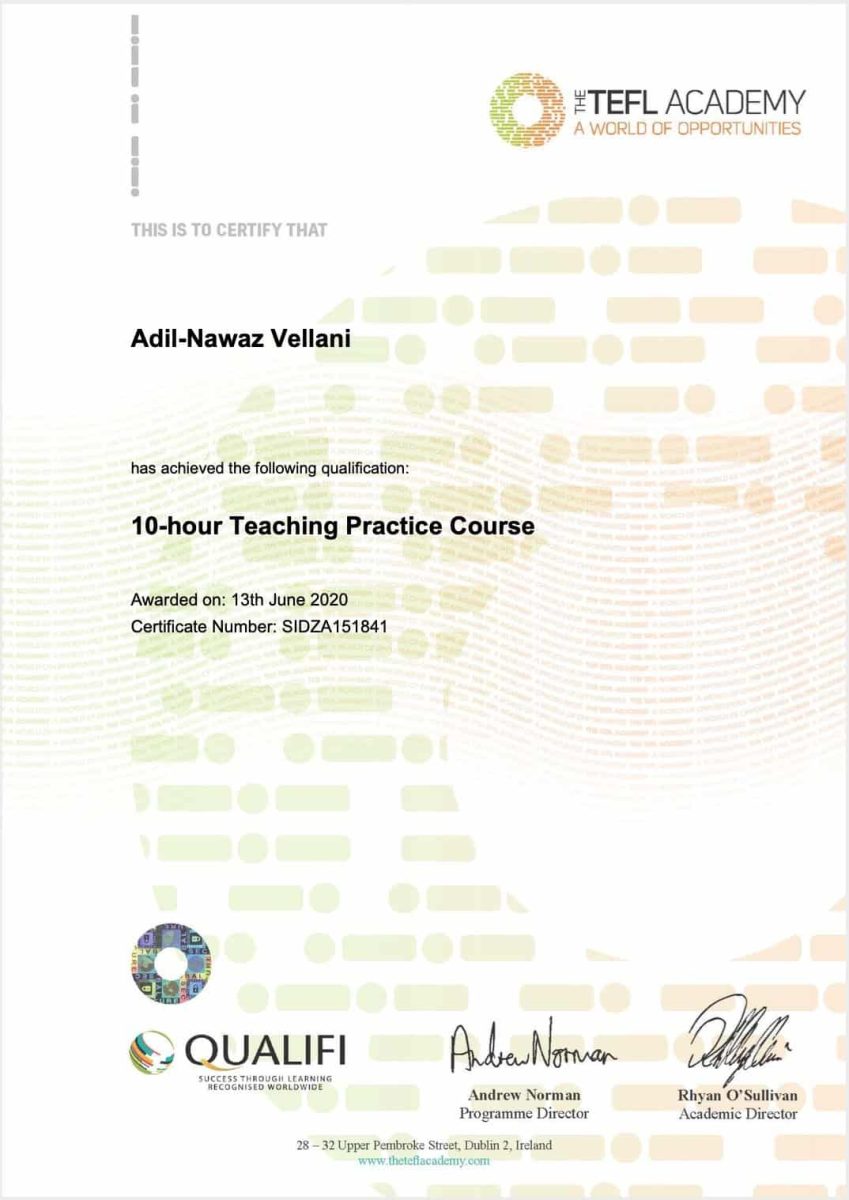
    TEFL Academy Certificate
    My Certificate of Completion for the TEFL Academy course.

    More importantly, our emphasis is and will always be on reviewing and recommending TEFL courses that have earned legitimacy through a government-regulated accreditation. As long as there is no industry-wide accrediting body for TEFL qualifications, we are only interested in reviewing and recommending accredited TEFL providers with government-regulated accreditations.

    So if you are searching for and checking TEFL course reviews on blogs, you should be skeptical of TEFL reviews (including ones we publish). Check that the reviewer has personally audited the TEFL course.

    Because you can’t be 100% sure someone who claims to have audited a course has actually done so, you can also request TEFL providers you are considering to give you restricted access to the course, or to speak to graduates about their experience.

    Wrapping Up: Beware Fake TEFL Reviews

    The world of e-commerce and online marketing is highly competitive, and online reviews are one of several ways companies try to gain an edge to earn credibility with consumers.

    This is true for TEFL certification courses, too. Unfortunately, there is no shortage of fake TEFL reviews online, so it is important to know how to separate the wheat from the chaff.

    Fortunately, we’ve already done the heavy lifting for you. We only recommend TEFL certification providers with UK and US government-regulated accreditations, whose courses we’ve actually reviewed and tested ourselves.

  • ESL Job Interview Questions & Answers: Top 6

    ESL Job Interview Questions & Answers: Top 6

    Applying for ESL teaching jobs abroad isn’t very difficult. In fact, due to the high demand for ESL teachers around the world, it’s relatively easy to apply for jobs to teach English abroad – and get hired. So, why even bother preparing for an ESL teaching job interview?

    Well, as with anything in life, the initial time and effort you put into researching schools or organizations you want to work for, and preparing well to present yourself in a professional light can make a huge difference in your results.

    In this industry, you will need to separate the wheat from the chaff, so to speak. Once you’ve done that, you’ll realize that getting hired into top schools that pay the best salaries and benefits in the industry is competitive. Do you want to be hired by a bottom of the barrel employer, or a highly rewarding one?

    If you answered wisely, then you’ve probably figured out that you need to ace the interview with a top employer. In this guide, we discuss the top 6 ESL job interview questions and answers and other factors to consider.

    ESL Job Interview: The Top Questions & Answers

    How to Meet the TEFL Employers’ Expectations in the Job Interview

    Hiring practices in the ESL industry vary from one country to the next. Firstly, there are the basic qualifications teachers must have to be considered by employers.

    Next, there are the more nuanced aspects of being selected, such as how well your résumé is crafted, and the impression you give to prospective employers during the job interview, which can be as much about cultural expectations as it will be about your professional demeanor.

    So, while thinking about the types of questions you’ll be asked during the interview, also take some time to consider what are the cultural norms of the specific country and culture where you’re applying to work, when presenting yourself as the ideal candidate. This will help you tailor your responses and mannerisms during the interview to the expectations of those interviewing you.

    The majority of organizations that hire ESL teachers from abroad now conduct online video interviews. What that means is you can sit right at home and complete the interview in your favorite chair.

    What that doesn’t mean is you should show up to your interview wearing pajamas. Please do shower, shave, groom, and dress appropriately. Most cultures view teachers as carrying a certain amount of social responsibility, and that’s the type of person organizations want to hire.

    As well, the opportunity to teach English abroad is likely to be one that fills your mind with excitement about a new life experience in a foreign country. The organizations interviewing you, however, will almost always have an entirely different priority to yours.

    When preparing for an ESL teaching job interview, consider the organization’s priorities and why a foreign teacher is required. Whether the organization profits from offering English language lessons, the priority will almost always be to hire teachers who conduct themselves professionally, diplomatically, and respectfully.

    Although submitting your résumé is the first point of contact, and thus the first impression hiring organizations will receive from you, much of their decision to hire you will be the result of how you perform in the job interview.

    It isn’t just important to say the right things about yourself. It’s even more important to help organizations see that their goals in hiring a foreign ESL teacher can be accomplished by selecting you.

    Top 5 Questions Asked in ESL Teacher Job Interviews (and How to Answer them)

    Of course, questions asked during job interviews can differ from one organization to another, depending on each organization’s unique goals, needs, and expectations. What we’re going to do here is get you primed for the most important questions to prepare for, and how to answer them like a professional. These questions will almost certainly be among the questions you’ll be asked, and how you respond can make or break your chances of getting hired. 

    1. “Why do you want to teach English abroad in [name of country]?”

    This question (and variations of it) is your opportunity to demonstrate that you have made the effort to learn some important aspects of the country and its culture.

    Your response should be focused on demonstrating a genuine interest and appreciation for the country and culture, rather than be from a point of showing off your knowledge. If you can drill this genuine interest down to the actual city where you will be working in, your efforts should pay off.

    Most citizens of any country are proud of their heritage, and deeply appreciate when others show an authentic interest and desire to partake in it. Now, perhaps you’ve chosen to teach in a particular country or city because of the climate, beautiful beaches, or awesome nightlife. Maybe you’re motivated to save money or pay off your student loans. Keep these aspirations on the side, and remember: this is a job interview. It’s a job which pays a salary for work performed.

    Instead, to answer this question effectively, focus on:

    • What inspires you most about this country and its culture.
    • Its recent achievements as well as its opportunities to lead or excel in specific areas.
    • Unique challenges faced by ESL learners in this country or city and why it’s important for you to be a part of their journey to becoming more proficient in English.

    2. “Tell us about your teaching qualifications and experience.”

    To answer this question well, you first need to think about why the interviewer is asking it. The question seems obvious and straightforward enough, but there will potentially be other underlying reasons the interviewer will be listening for. Let’s examine what the interviewer will be listening for:

    • Are you a new or experienced ESL teacher?
    • Do your qualifications and experience relate closely to the type of students you will be teaching (e.g., age level, proficiency level, type of school, and teaching methodologies adopted by the school)?
    • Do you have the necessary skills and experience to manage a class of ESL learners effectively?
    • Can you be legally employed as a foreign teacher in the country, based on your qualifications?
    • Is your verbal and body language consistent with your qualifications and experience?

    You might be thinking: ‘Why doesn’t the interviewer just look at my résumé?‘ Here’s why: ESL teaching is a soft skill. You might have excellent qualifications, and you might have several years of teaching experience under your belt, but the interviewer is more interested in seeing the goods (you) than the packaging (your résumé).

    There may be other factors as well. Unfortunately, the ESL industry has been rife with people holding fake degrees and qualifications. There are TEFL certification courses sold online for $20 that you simply cannot fail. Think about this for a moment.

    If you were an administrator at a top paying school, is this the type of person you would want to hire? If you were a parent, is the type of teacher you would want your child learning from?

    Indeed, interviewers ask this question because they’re aware that they cannot rely on a candidate’s résumé alone. They need to see that your demeanor matches your stated qualifications and experience.

    So, how do you respond to this question in a way that is convincing?

    First, know who you will be teaching:

    • What is the age range of the students?
    • What is the general English proficiency level among students at this particular school? In this city? In the country?
    • What are unique challenges ESL learners experience in this country?
    • What is the school’s philosophy on learning, and what methodologies does it expect teachers to use in the classroom?
    • Is the curriculum provided by the school, or are you expected to develop and deliver tailored lessons?
    • Will you be the sole ESL teacher for your students, or is there a local ESL teacher/teaching assistant who will be teaching the students with you?

    Having this prior knowledge will require some upfront work on your part, but if the reward is worth the effort, then the upfront effort is necessary. Having a clear idea and picture of the environment you will be expected to teach in will also help you formulate your responses to this question in a manner that matches the school’s expectations.

    If you are an experienced ESL teacher, you can talk about your qualifications and experience in very specific contexts to how they are relevant to the school and the role.

    Rather than talking about having 5 years of ESL teaching experience, you can talk about your 3 years of experience teaching secondary school ESL learners using inquiry-based learning to engage them in English through questions and expressing their points of view about themes relevant to their lives or to society.

    If your students will be preparing to study in university, and need to prepare to take IELTS, you can talk about your 5 years of experience teaching IELTS speaking and writing and how you’ve helped your students improve their fluency as well as accomplish their academic or career goals. 

    What if you’ve just completed your TEFL certification and have no actual ESL teaching experience abroad?

    If this is you, then firstly, you can look at ESL teaching positions where experience isn’t necessary. But why not leverage the knowledge you gained through your TEFL certification?

    If you have earned a legitimate TEFL certification, you know that the course was difficult because you learned how to teach English to ESL learners. You can draw on this knowledge to formulate your response. You can elaborate on how your TEFL qualification has prepared you to teach young learners using a range of methodologies, including ones espoused by the school. You can also talk about your teaching practicum and what you learned during these practice hours.

    Chances are, you live in a country where people you know speak English as a second language, and you can talk about your experience living, studying, or working in diverse environments.

    3. “How will you motivate your students to learn English?”

    This is a broad question aimed at assessing your personality as an ESL teacher, how you manage a class, and how you interact with students. In simple English, the interviewer wants to know if you are a good teacher, and a good fit for the school and the students.

    What is a good teacher? By most descriptions, a good teacher is someone who can encourage a high level of student interaction and enjoyment. Learning English should be fun, students should be productive, and the teacher should be able to facilitate discussion or elicit responses from students.

    Of course, this is going to also be relevant to the age group of the students you will be teaching. Different approaches to motivation will be required for preschool learners and university students.

    Schools hiring ESL teachers want to be confident that you will be able to create and maintain student motivation for learning English. This is especially the case for ESL teachers working abroad, where it’s easy for student motivation to drop and for students to slip back into the comfort zone of their native language.

    Schools have a strong desire to see teachers who find creative ways to motivate students with their English, and help them become more fluent and confident with it.

    So, how can you answer this question like a boss? There are two very effective ways to give a convincing response:

    Firstly, if you are an experienced teacher, you can give distinct examples of how you have been able to create a fun and exciting atmosphere for learning English. For example, you can talk about a particular student who achieved an academic or career goal in large part due to elevating their English communication skills.

    If you’re just starting out as an ESL teacher, you can explain how you would motivate your students using specific methodologies you’ve learned and practiced as part of your TEFL training. You can also talk about your awareness of specific challenges ESL learners experience in that specific country and how you would work with students to overcome them.

    As an ESL teacher with no experience teaching abroad, it’s important to realize that many countries and cultures place a high level of importance on creating a fun environment, and sometimes more on the fun aspect than on learning English itself.

    So, in this context, interviewers want to know if you’re a fun teacher. The last thing they want is for students to say is that learning English isn’t fun. Make sure you incorporate the fun element into your response to this question if it’s expected.

    4. “How would you handle students who misbehave or distract other students?”

    This question does not always have a straightforward answer. Culture, student age, and the type of school will all influence how you manage classroom discipline, and therefore, how you should respond to this question.

    Cultural norms can be a big factor in how you deal with misbehaving students. In some countries, a local teaching assistant is present to help the foreign ESL teacher with classroom management, whereas in others, foreign teachers have considerable autonomy to manage student behavior during class time.

    Answer this in the context of cultural norms and expectations, and considering what’s appropriate for disciplining students of different age groups. It’s vital that you learn about cultural sensitivities, and prepare your response to this question to align with them.

    We often look at a situation from our own cultural perspective and experience, and think that we can address situations in ways that are familiar to us. This has caused many ESL teachers abroad to struggle in their jobs.

    Thus, it’s not only important to study culturally appropriate methods of disciplining students, but to also make a genuine effort to accept these differences, even if they may cause you some discomfort.

    Perhaps the best general response to this question is to demonstrate that you are positive and have a high level of patience, and if you are unable to handle a misbehaving student after some attempts, you would request a local teacher to help defuse the situation. As well, you can assure the interviewer that you would familiarize yourself with the school’s policies and procedures.

    5. “What are your salary expectations?”

    Talking about money can get uncomfortable and awkward, and in some cultures, it can be considered inappropriate. However, salaries and benefits in the ESL industry tend to follow common trends in each job market.

    So, we recommend you arm yourself with the right knowledge about how much ESL teachers earn in the countries you are applying to work in, and work out your response to this question from a knowledgeable standpoint.

    Each job market has its nuances, but common factors that influence pay are:

    • Type of school
    • Reputation of school
    • Teaching qualifications
    • Years of teaching experience
    • Relevant teaching experience
    • Location and proximity to urban center (schools in larger cities tend to pay higher salaries)

    We also suggest that you avoid mentioning a salary amount you have in mind, and instead ask the interviewer about the salary range of their current teachers based on qualifications and experience:

    “Can you give me an indication of the salaries your current teachers are earning based on their qualifications and experience?“

    Framing the question in this manner should move the interviewer in the direction of talking about salary ranges. It’s also more comfortable for people to talk in ranges, and that gives you some room to negotiate at a later point in the hiring process.

    Keep in mind that not all schools pay ESL teachers based on qualifications and experience. Many schools pay an hourly rate based on the type of class or students being taught. This is common with Business English teaching jobs and with private language schools that often pay different rates for one-to-one and group lessons.

    When discussing salaries, also make sure you are aware of benefits that the school can offer based on trends in that specific job market. Be careful about being fixated on the salary alone. For example, salaries in capital cities and economic hubs are generally higher than in smaller or less important cities, but so is the cost of living.

    Outside of Tier 1 cities, schools are also better positioned to fully cover housing costs. So, it’s possible that you can save more money on a lower salary amount if you choose this path.

    6. “What do you do in your leisure time?”

    Teachers around the world are viewed as having an obligation to be responsible members of society, and this can be even more pronounced in more conservative societies. Many ESL teachers seem to forget that, while it’s fine to have a private and social life outside of work, the lines between one’s private and social life and work life can be blurry.

    Drinking and partying can be a lot of fun in another country, where you get to meet and mingle with both locals and expats. But think about the responsibility you have to the school you work for, and the students you teach.

    Then, think about this from the hiring school’s perspective. What type of ESL teacher do you think the school prefers to hire? One who parties hard, gets drunk, and shows up hungover the next morning – or worse, doesn’t show up at all? Or one who goes to the gym, reads books, and has a healthy relationship with students and colleagues?

    If an interviewer asks what you like to do outside of work, you can safely bet that the interviewer wants to know what type of person you are, and if you have a desirable characteristic.

    The fact of the matter is that the school’s reputation is on the line with parents and students when it makes a poor hiring decision. It not only reflects badly on the teacher who demonstrates undesirable habits, but more so on the school itself, as there can be a certain loss of face or humiliation on the school’s part.

    Answer this question intelligently, and be genuine. If you portray yourself as someone with a respectful private life, make sure that’s who you really are. If you mislead a prospective employer who later discovers aspects of your personal life considered to be unacceptable, the consequences can be hard for you, especially since you’ll be in a foreign country where your stay is permitted through employment with the school.

    Other Considerations for Acing the ESL Job Interview

    Let’s have a look at further factors during the interview which can land you a TEFL job abroad.

    Be Prepared – and Show It

    One common mistake ESL teachers make is that they assume schools need them, because of the massive gap between demand and supply for ESL teachers. Just because there is a high demand for ESL teachers and a supply that cannot meet this demand at present, that doesn’t mean employers have no expectations.

    Sure, there are schools that will hire any ESL teacher with a pulse. But ask yourself honestly – is that the kind of organization you really want to work for?

    Don’t be lazy. Be prepared to look, act, and speak like a professional. Take notes and ask good questions during the interview.

    What are good questions to ask? Ask about:

    • The school and classroom atmosphere
    • The current teachers on staff, their qualifications, experience, and how long they have been teaching there
    • The students, what are their greatest strengths and challenges
    • The school curricula, how it is designed, and how much flexibility teachers have in delivering their lessons
    • How the interviewer would describe the ideal candidate for this job
    • Ways the school administrators support teachers both in the workplace as well as in their private affairs while living in the country

    Don’t assume you’ll get hired just because the school is desperate for teachers. Regardless of the need for ESL teachers, reputable schools will pass on a candidate they think might not be a good fit. Any school worth its salt will want to hire the best possible candidate who will value the role and be dependable. 

    Pause and Reflect Before Responding to Questions

    It’s normal for people to be nervous during job interviews, but two of the most common mistakes candidates make are to respond too quickly with a clichéd response, or to freeze up altogether.

    Firstly, you should prepare well for any job interview, anticipating questions the interviewer might want to ask, and how you would respond to these questions. During the interview, though, we recommend taking a few seconds to absorb the question being asked and compose your thoughts before providing a response.

    The best way to do this is by asking for a moment to think about the question:

    “That’s a great question. Let me think of some examples from my teaching experience before responding to it.“

    “That’s an excellent question. Do you mind if I think about my response for a moment?“

    Now, rather than looking unprepared, you appear genuinely interested in the question itself, and formulating a genuine response.

    Don’t Badmouth Previous Employers or Colleagues

    We all have good and not-so-good experiences in our careers. However, one of the biggest mistakes ESL teachers can make during an interview is to talk negatively about a former employer or colleague.

    Even if your gripes are valid, listening to gripes about your previous experiences is not the reason you’re being interviewed, and making the interviewer do so makes you look bad.

    If you’re asked why you left your previous place of work, or how your relationship was with your previous supervisors, focus on the positives. Express your desire for new opportunities and challenges. Talk about shared successes between you and your previous employer while working there.

    On a broader note, constantly try to maintain a positive, professional relationship with organizations and people you work with so that you can use them as references when necessary. Don’t be that slash and burn character who no one wants to support.

    Finally, it’s good practice to obtain a reference letter from every employer you’ve worked for, if possible. This not only serves as a record of proof to validate your résumé details, but also can be helpful when applying to new jobs.

    To Sum Up: Be a Person that Others Want to Hire and Work With

    When preparing for a job interview to teach ESL abroad, don’t just think about the country you want to travel to, the type of school you want to work for, or the salary you want to earn.

    Also think about what makes you a desirable person to hire by considering the needs and expectations of the school you are applying to work with.

    The opportunities are there for people who bring as much to the table as they expect to receive.

  • How to Become an Outdoor Education Instructor Abroad

    How to Become an Outdoor Education Instructor Abroad

    For those of you who are wanderlust, teaching ESL learners has long been a viable way to see and experience the world. But teaching in a classroom environment isn’t everyone’s cup of tea.

    Some people loathe the mundane aspects of being a classroom or online teacher: preparing lesson plans, teaching grammar and pronunciation, reviewing and grading essays and tests – day in, day out – the list could go on.

    If you are seeking different experiences and genuine adventures, you should explore the field of outdoor education. In this post, I’ll explain what this is, what it takes to become an outdoor education instructor abroad, and I’ll introduce one of the most renowned global organizations in the field.

    How to Become an Outdoor Education Instructor Abroad

    What is Outdoor Education?

    Here is a description from Wikipedia:

    Outdoor education is often referred to as synonymous with outdoor learning, outdoor school, forest schools and wilderness education. Outdoor education often uses or draws upon related elements and/or informs related areas.

    The hallmark of outdoor education is its focus on the “outdoor” side of this education; whereas adventure education would focus on the adventure side and environmental education would focus on environmental. Expeditionary education involves expeditions into wilderness “where man is but a visitor.” All of these activities typically involve experiential education.

    If you have a penchant for the outdoors and wilderness, then outdoor education jobs abroad might be the perfect alternative to teaching English. Many people who have worked as outdoor educators declare that the experience was life-changing, and the friendships made have become rich, purposeful relationships.

    Experimental Outdoor Learning Programs of the JUMP! Foundation
    Experimental Outdoor Learning Programs of the JUMP! Foundation

    Where to Find Outdoor Instructor Jobs Abroad

    Outdoor Education jobs abroad will often be available in international schools and outdoor education providers that cater to them. Outdoor Education is not cheap. Camping trips, wilderness excursions, and extensive travel for both educators and participants means Outdoor Education can indeed be expensive and thus unreachable for the typical public school.

    Consequently, most outdoor education jobs abroad deal with engaging international school students, since international schools are equipped with both the financial means and willingness to integrate outdoor education into their curriculum.

    Not all programs happen in the wilderness. There are plenty of programs that take place in school gymnasiums and playgrounds, as well as programs where students get involved in local community work, and often there are programs offering a mixture of these experiences.

    Western Academy of Beijing (WAB), for example, has its own Outdoor Education Department. WAB is one of the most prestigious international schools in China. It is evident that WAB views Outdoor Education as critical to its students’ learning experience. Here is what WAB says on its website:

    In the wild, we challenge students to challenge themselves, and think and reflect on how they interact with the environment, heightening awareness of the global issues facing our planet. Our team structures programs unique to each grade level, gradually increasing in difficulty and steadily building independence. The goal is to meaningfully engage students, and to foster a love of nature and respect for our interconnectedness.

    The Requirements to Become an Outdoor Educator

    Before searching for Outdoor Education jobs abroad, it is important to know if this type of work is suited for you. Even if you are someone who loves the outdoors, that’s not enough. As you will often be dealing with adolescents and working in collaborative and culturally diverse environments, a positive mindset, team spirit, and cultural awareness are all crucial to making this a successful experience.

    Because Outdoor Educators need to be prepared for emergencies in the outdoors, most Outdoor Education jobs abroad will require you to have completed a Wilderness Advanced First Aid (WAFA) certification course.

    As well, there is often a lot of travel, and perhaps several days in the month when you will be away from home and cut off from the comforts of modern urban living. There may be times you will feel homesick, and times when relaxing for you means not being outdoors!

    While Outdoor Education jobs abroad often attract people of all age ranges, they are likely to appeal most to people in their late 20s to mid-30s. Many people at this age range tend to be in a transitional phase in life before settling down or pursuing other goals and interests, and have very few commitments and dependents, if any.

    Meet Steffen: An Outdoor Education Enthusiast Living Abroad

    Steffen Lohrmann is a Dutch-American expat who has lived and worked in Asia for several years. In fact, Steffen grew up and went to school in Asia. Steffen’s father was an expat who worked primarily in Asia’s hospitality industry, so Steffen and his brother have been living the expat life from a young age.

    Naturally, due to his father’s line of work, Steffen first found work in the hospitality industry. It wasn’t long after working in the corporate world, though, that Steffen realized his true calling as an outdoor educator. Steffen has been working as an outdoor educator since 2013, and has embraced it not merely as a career, but as a lifestyle choice.

    Steffen took some time to connect with us and share his wealth of experience in Outdoor Education. In this interview, he talks about outdoor education jobs abroad, and how international schools and companies have recognized the value of incorporating it into their culture. He also talks about topics such as how much outdoor educators can make living abroad, what type of person is suitable for this field, and where this career choice can take you.

    Because Steffen has been a long-time resident of China, he also shares his insight about how much ESL teachers can earn living in China.

    (Steffen was in a remote area of Chiang Mai, Thailand, during the interview, so his internet connection dropped off towards the end.)

    If you think Outdoor Education and Experiential Learning is something that resonates with you, the JUMP! Foundation should be at the top of your list.

    Getting to Know the JUMP! Foundation

    JUMP! Foundation is a leading provider of outdoor education and experiential learning programs, and it is a global leader in this field. JUMP! is also a social enterprise, in that it allocates a portion of its human, educational and financial resources towards leadership programs that target underserved communities around the world.

    The organization’s community outreach is undoubtedly what makes it a life-altering experience for its employees, local NGOs it partners with, and the communities it serves.

    JUMP! is all about equipping today’s youth with the skills needed to be leaders tomorrow. It designs and delivers a broad spectrum of impactful experiential education programs, and has, over several years, developed an extensive global network of partnerships in the field of education.

    JUMP! Foundation was founded in 2006 to accomplish three goals:

    • Inspire individuals through transformational experiences
    • Empower individuals with skills and resources to create positive impact
    • Engage individuals with local and global communities

    JUMP! was started by its founders responding to what they saw as a missing piece in the puzzle of a person’s educational development.

    Concepts such as global citizenship, leadership, engaging in local cultures, and developing creative solutions to challenges faced by local communities are some examples of how JUMP! has stepped into the arena of the traditional education model and helped evolve the model by integrating experiential learning.

    Since many of these learning experiences happen outside the classroom space, students who participate in JUMP! programs learn through hands-on experience rather than simply learning concepts and theories alone.  

    Currently, JUMP! maintains offices in Bangkok, Beijing, and Canada, and has satellite offices in other locations around the world.

    Interview

    Watch the 30-minute interview with Erick Van Til, Program Director, and Shannon Fox, Manager of the Facilitator Network of the JUMP! Foundation.

    JUMP! Programs

    The organization has on-site programs for educators, students and schools (JUMP! Schools), as well as off-site programs in various parts of the world (JUMP! Experiences). JUMP! also offers virtual programs (JUMP! Connected) to expand its reach and make its programs more accessible on a global scale.

    JUMP! delivers its experiential learning programs mainly for youth who are enrolled in prestigious international schools, and works with these schools to bring the programs in-house as part of the school’s wider education mandate.

    The purpose of these programs is to introduce learning opportunities through trips, nature excursions, community involvement, and engagement with local cultures.

    As a social enterprise, JUMP! is also deeply committed to making its resources and programs accessible to youth from all backgrounds. It provides support to underserved communities across the globe through its Impact programs, which we will discuss a bit later.

    Career Opportunities with JUMP!

    JUMP! has opportunities to work as a full-time member of staff, as well as a contract program facilitator. Full-time job openings occur throughout the year, and it is thus a good idea to follow JUMP! and look out for openings as they are advertised.

    Contract program facilitator opportunities are more fluid, meaning you could join JUMP! as a member of its global facilitator network, practically wherever you are located. Contract facilitators work on a per-project basis, so if you are looking for non-committal opportunities to work in outdoor education and experiential education, getting on board the JUMP! Facilitator team might be the right path for you.

    A team of program facilitators at the JUMP! Foundation

    Qualifications to Work with JUMP!

    Teachers, especially those who have genuine educational backgrounds and experience working within international school environments, can do well working with an organization like JUMP!

    Additionally, those who have a passion for outdoor activities such as camping, hiking, trekking, or rock climbing might find themselves at home working with JUMP! If you have a Wilderness Advanced First Aid (WAFA) or Wilderness First Responder (WFR) certification, this would be an added bonus.

    Anyone who has been involved with humanitarian assistance or relief efforts, such as UN peace corps, would be considered to be an asset to JUMP! in helping students learn these values and skill sets.

    The team at JUMP! works in an extremely collaborative way, so being a team player is essential to making a career at JUMP! successful. People who are good problem-solvers, are good at presenting and speaking to large audiences, able to motivate and inspire participants in group activities, and have a high level of empathy.

    How to Apply for an Outdoor Educator Job

    JUMP! regularly posts job openings on its site, and you can also get in touch with the JUMP! by email or phone to find out what’s down the pipeline.

    Also read: The best career opportunities after quitting teaching English abroad.

  • How to Develop Patience as a Teacher? 7 Practical Strategies

    How to Develop Patience as a Teacher? 7 Practical Strategies

    We are discussing and trying out various teaching tools all the time but fail to remember the most powerful tool that teachers have: patience.

    Pressured by the overwhelming day-to-day tasks and obligations, let alone disobedient students and demanding multitasking, did we lose this magic, yet almost endemic trait?

    Personally, I usually find it hard to stay patient at work while living in a world where “fast” means “effective”. 

    Sometimes I remember that progress takes time, but often I feel impatient and frustrated when I see that some students are lagging behind despite my efforts.

    So lately, I’ve implemented 7 techniques that helped me to develop my patience as a teacher and approach teaching from a different angle. Read on and try them yourself!

    How to Be a  Patient Teacher: 7 Strategies

    Why Is Patience Important In Teaching?

    Patience in teaching means dedicating the necessary time and effort to help students learn something, with the intention to explain, contextualize and build on their prior knowledge.

    Patience also refers to developing and maintaining trust in the student-teacher relationship. 

    Both the teacher and the student need to believe that their actions will eventually bear fruit, though they may face many obstacles on the way.

    Despite the common misconception, being patient as a teacher doesn’t simply mean “waiting for students to become better”. In fact, using patience as a tool reflects in all aspects of your work: like being patient with peers and their requests but also with yourself when you’re approaching the end of a term, and you have a pile of stuff to get done.

    Being patient when working with students requires higher emotional control and awareness on the side of the supportive teacher, allows learners to make mistakes but also encourages students to analyze them and create new solutions.

    This, on the other hand, turns students into critical thinkers instead of marathon runners for the “best” results — a very pragmatic quality for their future.

    In other words, neither teaching nor learning can be effective if there’s no patience which makes it fundamental in all educational processes.

    The college science professor and educational expert Leslie Schwab highlights patience as the top trait of any effective educator, along with concern for students, knowledge of the subject being taught and willingness to adapt.

    Schwab writes that patience is important as teachers cannot expect all students to progress at the same pace, so their task is to provide more extensive explanations in several times. According to her, the counter tactic, i.e., “go home and practice more” usually triggers anxiety and insecurity in students that would eventually reflect on the work of the teacher.

    Nevertheless, we can’t just put a blind eye on the fact that teachers are only humans, and they can simply lose patience and snap. Some of us are triggered by the noise, others by the scratching of chairs on the floor, or by the constant “forgetting” of homework…

    After all, research has shown that during their career, teachers have more stress and frustrations than workers in other fields, and show a bad temper.

    On the surface, patience may seem complicated to master, yet there are many small steps that you can make to see it grow within you and resonate in your working place.

    Also read: How to become a good and effective ESL teacher.

    7 Strategies for Teachers to Be More Patient 

    Follow these strategies to develop patience and stay calm in stressful environments or situations.

    1. Take Care of Yourself

    Yes, this is my number one, top tip as there’s no way to stay calm, focused and productive at work without providing basic personal care for your physical and mental health.

    Despite what mainstream culture of work preaches, burnouts are not a sign of professional success but of a low-quality life.

    Going to the spa once a week or weekend getaways in Tuscany sound fantastic, but I’ll stick to simple self-care strategies that any teacher can try on a daily level:

    Get enough sleep

    Make sure you sleep enough hours every night. Believe me when I say that NOTHING can soothe your nervous system better than regular slots of quality sleep. Make it a priority.

    Make routines and stick to them

    I already wrote about establishing routines as great stress-relievers when it comes to task management and feeling calm on a daily level.

    Wake up a bit earlier, start the day with a cup of coffee and NO extra stimulants like news, music, or Instagram stories.

    Relax, breathe and get ready for the new day. Then make a list and note down your tasks for the day and the day after — no need to plan further, just stick to this simple practice on a daily level to feel more organized and ready.

    Pull the breaks when needed

    You start working early in the morning and finish late in the afternoon, or sometimes even continue working at home — no wonder if you feel constant fatigue throughout the working week. I recommend 3-4 breaks in the day to balance this out.

    Just isolate yourself for 10-20 minutes, lean your body on the chair, take a few deep breaths, or do a short meditation to relax (link below). Occasionally, I need a short pick-me-up, so I go for a quick run and listen to my fav music or podcast.

    Mind your nutrition and caffeine intake

    Our mood is closely related to our nutrition patterns, meaning, what we eat when we’re busy can have a big impact on how sluggy or motivated we feel.

    Try to eat moderate, balanced meals and stick to 2-3 coffee cups maximum per day.

    Stay hydrated while in class, and always have some sugar booster at hand when your energy bars start going down. Personally, I run on pralines, dates or bananas, but you can also have dry fruits and nuts, protein bars etc.

    Make leisure time mandatory

    At a certain point of the day, you have to stop working if you want to continue working productively.

    Leave some time in the day for other activities like sport, reading, watching films, hanging out with friends… Whatever makes you feel happy and relaxed.

    Also read: The extensive stress management guide for teachers.

    2. Examine Your Impatience

    Analyze what causes your impatience while in class, and try to recall and identify situations when you lost your tolerance.

    Think about the consequences of losing your cool and project possible alternative reactions on your side.

    Once per week, I imagine a situation, like a student spilling water on my computer for example, and let myself think about 3 possible reactions, then I choose the most and the least appropriate and I write it down. 

    At the end of the month, I analyze all responses in my diary, check my progress, and see if I have implemented positive solutions in my classroom.

    If you know your triggers, you can choose how to react in similar situations in the future.

    3. Learn to listen to others

    Listening to others at work before reacting, may seem like an easy-peasy thing to do, but actually, it requires conscious effort and can clearly show how patient you are.

    Try practicing this at home or with your friends. Don’t interrupt them while speaking, nor when they make short breaks between sentences. Let them finish their thoughts, think about what they said, and THEN reply. 

    Do the same at work with your students and colleagues. You will notice that your responses become more clear and measured, as you get more time to understand the other person and think about what you’re going to say instead of bursting out in the very minute.

    4. Practice being the person you want your students to be

    Students mirror your energy and behavior. Or let me put it this way: when I had a bad day and I enter class feeling anxious, angry or sad, students can feel my uneasiness and respond by reacting in a disturbing manner.

    Try to count to ten before you open the door of your classroom and leave personal burdens behind. Remember that you are there to share time together and collaborate for a good cause.

    If you give instructions with a calm voice and approach them with kindness, they will identify this atmosphere with their behavior in class.

    Remember the good old “Show, not tell”?

    5. Be responsive, not reactive

    When you behave just reactively, it means you react immediately and without conscious thought, i.e., impatiently.

    Example: Students are texting under the desk, you expel them from class.

    You can practice replacing this behavior with responsiveness, a thoughtful action that considers the short and long-term consequences of the immediate situation.

    Example: Students are texting under the desk, you take their cell phones away and ask them to stay after class for a short talk.

    Here are some ways to help you achieve this:

    Take a deep breath — this is the fastest way to interrupt stress. Signal the mind and the body that you noticed the signal, and now you’re preparing to go from reactive to responsive.

    Pause — when you feel the trigger to snap, freeze and slow down. Think before speaking. It’s okay if students are waiting for your response. 

    Mark your triggers — most signs of reactive behavior include shallow breathing, muscle contraction in the chest, neck, belly, feeling to push or shut something down, lack of focus, anxiety, sudden wave of warmth in the head etc. Notice these signs, so you can recognize and learn how to deal with them.

    These 6 activities will help you to promote mental health of your students as well.

    Motivational Quotes about Patience for Teachers

    Need Some Motivational Patience Quotes for Your Board?

    I’ve Got You Covered!

    Patience is bitter, but its fruits are sweet.

    Aristotle

    I have only three things to teach: simplicity, patience, compassion. These are your greatest treasures.

    Lao Tze

    Patience is not the ability to wait, but the ability to keep a good attitude while waiting.

    Unknown

    You can learn many things from children. How much patience you have, for instance.

    Franklin P. Jones

    Time is the Best of critics, and patience the best of teachers.

    Frederic Chopin

    Conclusion

    There’s no magic wand that will help a teacher be more patient over night. However, you can practice these simple strategies and see what works best for you.

    Take it slow, trust yourself and most importantly, accept that you cannot control everything at all times and find joy in riding the storms in our noble work.

  • Can You Be a Teacher With A Criminal Record? (Felonies & Misdemeanors)

    Can You Be a Teacher With A Criminal Record? (Felonies & Misdemeanors)

    You have a criminal record. We aren’t here to judge.

    But, if you are interested in teaching domestically or abroad, you’ve probably figured out that your record may be a major obstacle. So, what you are probably wondering is if it is even possible for you to become a teacher.

    The short answer is that it depends.

    There are a few factors which must be taken into consideration before you completely discount the possibility. So, let’s take a look at what those factors are so that you can be better informed when it comes time to apply for teaching jobs having a criminal record.

    Becoming a Teacher With a Criminal Record: Is it posssible?

    Felonies: Crimes Which Disqualify You to Be a Teacher

    If your criminal record includes serious, violent crimes or crimes against children of any form, you will not find a job teaching, neither in your home country nor abroad.

    Any country where a criminal background check is a requirement for securing employment will not issue you a work visa. If a school requires a background check before being hired, this will be a major red flag and your application will certainly be denied.

    These crimes, in the US laws, are classified as felonies: “crimes punishable by a term of imprisonment of one year or more“. (Definition: britannica.com)

    These include (not limited to):

    • murder
    • rape, serious sexual assault
    • kidnapping, extortion
    • robbery with violence
    • dealing with class A drugs
    • domestic violence, violence against children or vulnerable person
    • and more

    Although the laws of each state and country or the hiring guidelines of schools vary, these crimes will definitely disqualify you from getting a teaching job anywhere.

    As a teacher, you have to take care of young ones – and with a serious criminal background, you won’t be considered qualified to take this kind of responsibility.

    Misdemeanors: Crimes Which Do Not Necessarily Disqualify You

    On the other hand, there are minor crimes, which aren’t an imperative elimination criterion when applying for a teacher job at a school.

    By the US law, these type of convictions are classified as misdemeanors: “offenses punishable only by fines or by short terms of imprisonment in local jails“. (Definition: britannica.com)

    These include (not limited to):

    • drug possession
    • minor burglary, car or store theft
    • affray
    • drunken driving

    The means not that these convictions or misdemeanors doesn’t matter at all. Whether you will be hired as a teacher with that kind of criminal record, is at the discretion of the hiring committee of a school or training center.

    They’ll have to decide whether you pose a threat to the students, colleagues, and school property, or not.

    For the decision, the history and circumstances of the conviction can matter a lot, as well as how long it is ago. If you hurt someone in an act of self-defense or did something idiotic in your youth, people might more easily “forgive“ you and ignore the incident.

    However, this will heavily depend on the specific location and institution where you want to teach, who decides on your application, and how you present yourself.

    When you want to teach abroad, whether you have a chance to land a teaching job with a criminal record, depends mainly on one question: Do you need to provide a background check for the visa application, or only with your job application?

    More on that later. Now, let’s analyze the steps you can take if you have a criminal record and want to become a teacher.

    This article only contains general information, not legal advice. Only a lawyer can advise you, depending on the local laws and your specific situation.

    Request a Background Check

    The first thing to get out of the way is to figure out what is on your criminal record. You might assume that anything you’ve done in your life for which you were arrested will show up. But, that isn’t always the case. 

    For example, if you were arrested for something but never charged or convicted, then there may not be a record. Or, there may be a record for an arrest but not a charge. (Usually, only based on arrests that did not lead to a conviction, employers cannot deny you a job.)

    If you have ever been arrested for anything, whether large or small, it is best to conduct a background check on yourself first so that you know what could potentially show up.

    Be aware, just because you do an online background check, doesn’t mean you are seeing the full story. To secure a visa in many countries or a job at a school, you will be required to submit a background check from the appropriate government authority, which is typically the national police bureau. 

    In the United States, for example, this will be the FBI. These checks will be much more thorough than an online background check. However, they may not include everything such as local misdemeanors. 

    It is a good idea to go right to the source instead of using an online check. Figure out which agency in your country you will be required to apply to for your background check, and go ahead and get a copy for yourself first.

    If nothing comes up, then obviously you are in the clear, as nothing will show on the copy you send to the immigration office or employer. However, if something does show up, you will have to look at your unique circumstances to see what can be done.

    Try to Get Your Record Expunged

    Don’t give up hope on teaching abroad just yet. Depending on what it is on your record, you may still have a number of options for clearing it and getting your criminal record cleaned up. 

    The first thing that you need to do is to talk to an attorney. Depending on what shows up on your criminal record, you may be eligible to have these records expunged. Only an attorney will be able to advise you on this matter so don’t just rely on online information. (That’s why I won’t go into details here.)

    Expungement is not an option in all countries, so you will need to first determine how local laws apply to your circumstances. If you are in the United States, or a country where it is possible to expunge your criminal record, make sure and consult an attorney who specializes in this process to improve your odds of success.

    You should know that this process will not be cheap. The total cost for expunging criminal charges can run multiple thousands of dollars per charge. So, if you have multiple charges, it can get costly. It is important you weigh these costs against your long-term plans and potential earnings.

    If, for example, you only want to go abroad for a year and your expected salary is only $800 per month, then this may not be worth it. However, if you are a skilled teacher, and you intend to make a long-term teaching career with expectations that you can earn a good salary, the time and expenses of expunging your record may be worth it. 

    Teaching in Your Home Country With a Criminal Record

    As being said, with minor convictions (misdemeanors) in your criminal record, you can still land a teaching job in a school.

    First, inform yourself about the laws applicable in your country or state, and the hiring guidelines and procedures of schools. Check the websites of the department/board of education or the responsible authorities of the local school district.

    For example, for the state of New York, USA, the BAR association writes the following in a brochure about employment rights:

    New York law makes it illegal for both public and private employers to deny you a job (or fire you from an existing job), […] based solely on your criminal record unless 1) there is a direct relationship between your past conviction(s) and the job you want; or 2) hiring you would involve an unreasonable risk to property or to the safety of others.

    BAR association, New York, USA

    In this case, a school will have to decide, whether a past conviction of yours is related to a job as a teacher and involves risk to your surrounding. So, if you have been charged for drunken driving once, years ago, there might be a good chance that this won’t lock you out from getting a teacher’s job.

    To keep this chance, be open about your past and never lie during the whole application and interview process. When the truth comes out later, you can and will be instantly fired for that reason.

    Teaching Abroad With a Criminal Record

    Same here: All hope isn’t lost yet, you can’t get your criminal record “cleaned”. Depending on what your charges are, you may still be able to find a job teaching English abroad in certain countries.

    Most likely, you will be required to submit a criminal background check at some point in the process of securing employment abroad. 

    The differences will be in who is looking at that criminal background check and what it’s for.

    If it is a background check to secure a visa, then there is likely to be very little leeway given by the government of that country if something shows up. To be clear: A criminal record will lock out from teaching abroad in all the higher-paying countries, no matter how minor the recorded convictions are.

    On the other hand, if it is a background check being requested only by the school, they may give more leniency depending on what the charge is.

    So, if you have a charge for drunken driving, and you are applying for a job in a country that does not require you to submit a criminal background check to secure a visa, you may be okay. The school may choose to overlook the charge and provide you with a job depending on how desperate they are to hire teachers. 

    It should be noted that countries that do not require a criminal background check to secure a work visa will usually be at the lower end of the pay scale for ESL teaching. These include, for example: Mexico, Costa Rica, Colombia, or Cambodia.

  • Japanese Teacher Dress Code: Outfit Dos & Don’ts

    Japanese Teacher Dress Code: Outfit Dos & Don’ts

    Clothes make the man, the saying goes. (And the women, of course.) That’s especially true when you are a teacher in a very formal and conservative country like Japan.

    Are you going to teach English (ESL) or another subject in a Japanese school and want to know what to wear? Do you need to dress in a full business suite (or even uniform)? And what about long hair or tattoos?

    In this post, I’ll explain the Japanese teacher dress code and touch upon the various Dos and Don’ts.

    Japanese Teacher Dress Code: Outfit, Hair, Tattoos?

    Dress Code for Teachers in Japan

    The dress code for ESL teachers in Japan is “business professional” to “business casual.”

    There are a few different options for where you can teach English in Japan. They are:

    • Public Schools
    • Private Language Schools
    • Corporate Training Schools

    In Japan, the expectations for a teacher’s attire is very conservative. The private language and corporate training schools have a business professional dress code, while public schools can range from business professional to business casual.

    Outfits for Female Teachers

    When there is some flexibility with other types of clothing, female teachers should avoid wearing sleeveless shirts or anything low cut that shows cleavage. Shirts that button high up at the neck are the best.

    Japanese culture requires that you bow, so showing even a hint of cleavage in these moments would not be culturally acceptable. The shoulders should be covered. Pants or knee-length or longer dresses are suitable, though jeans are not. Your clothes should not be tight-fitting. Blazers can be worn on top of your outfit to give you a professional appearance.

    All clothing should be in subtle tones without being too vibrant.

    Outfits for Male Teachers

    It is quite common that your school will require you to wear a suit and tie. Otherwise, men can wear trousers, button-up dress shirts or collared shirts, either short or long-sleeved.

    Examples of appropriate teacher outfits in Japan
    Examples of appropriate teacher outfits in Japan (Photos: Getty Images, RyanKing999 (left), LordHenriVoton (right)

    Prints on Clothes

    Be mindful of images and messages printed on your clothes, especially when it comes to politics, religion, profanity, and sex. You should be respectful of Japanese culture and norms as well as command respect from your students, parents, and school administrators.

    Shoes

    You will need a pair of indoor shoes or slippers to wear while you are at school, which should not be open-toed, sandals, or sneakers.

    Everyday Dresses vs. Special Occasions

    When thinking about what to wear, also think about your comfort. You will likely be animated when teaching, so you’ll want to wear clothing that allows you to move around comfortably.

    You will also want to have more formal attire for business luncheons or ceremonial functions.

    Clothes for the Different Seasons

    Japan’s weather and climate feature four distinct seasons:

    • Spring, from March to May, is pleasantly warm with little rain.
    • In summer, from June to August, there is heavy rainfall and extreme humidity. Northern regions tend to be a bit cooler.
    • Autumn, from September to November, is commonly fair.
    • Winter from December to February can be snowy and quite cold.

    Japan also experiences a typhoon season, which occurs from May to October, peaking in August and September. Typhoons bring strong winds, torrential rain, and hazardous winds.

    So, you should plan for the seasons when shopping for clothes.

    Hair

    Men’s hair should be nicely styled and cut short. Some schools may allow men to have long hair provided it is clean and tidy.

    For women, the length of hair isn’t an issue. You can have it long or short, worn up or down, although it should be clean and tidy no matter which style you choose.

    Dyed hair, other than your natural color, is not likely to be allowed.

    Facial hair

    Facial hair is acceptable in most schools in Japan; however, make sure you keep it neat and trimmed to maintain a professional look.

    Makeup

    It is generally not appropriate for women to wear makeup except for just the lightest mascara, lip gloss, or pale lipstick. Perfume and nail polish are not acceptable. Men should not wear makeup or perfume.

    Tattoos

    Tattoos are generally taboo at any Japanese school, and if visible, should be covered up at all times, either by clothing or makeup.

    Jewelry

    In general, earrings and piercings are acceptable in most schools; however, large or excessive jewelry may be considered inappropriate.

    Buying XXL clothing in Japan

    It may be hard to find extra-large sized clothing or footwear, so it’s best to carry some with you if you have difficulty finding these once you are there.

    Dress Conservatively at the Beginning

    Every workplace is different, so it’s best to dress conservatively during the first few days, paying attention to what other teachers are wearing and then adjusting accordingly. Maybe, it will be okay to “downgrade“ slowly over time.

    Read our dress code guide for teachers in Korea.

    Why Do Teachers Wear Tracksuits in Japan?

    After reading this article, this question might seem totally out of place.

    But yes, it’s true, especially in public primary schools you see teachers wearing full tracksuits. The reason is, that they have more physical work, taking care of the children, having outside activities or giving gym classes, for example.

    In her blog, a teacher reports that she even spotted a “terribly attractive combo of button-up shirt and tie with track pants on a vice-principal“. Many young students wear tracksuits, too.

    However, in any other type of school or training center in Japan (above primary), the teacher dress code is formal, like explained above.

  • Korean Teacher Dress Code: Outfit Dos & Don’ts

    Korean Teacher Dress Code: Outfit Dos & Don’ts

    When you are a teacher, you have to earn the respect of your students. Appropriate dressing therefore is crucial, especially when you teach ESL or another subject in a country with a very different culture, like Korea.

    You might already know, that the dress code for teachers in Korea is more formal than in the western countries. But, in concrete terms, what does an appropriate outfit look like? What about hair, make-up and tattoos?

    In this post, I’ll explain the Korean teacher dress code and touch upon the various Dos and Don’ts.

    Korean Teacher Dress Code: Outfit, Hair, Tattoos?

    Dress Code for Teachers in South Korea

    Teachers are highly regarded in South Korea and admired as authority figures. An ESL teacher (in Korean, 선생님 or Seon-sa-eng), should dress respectably and maturely.

    Every school will establish its dress code for teachers, based not solely on culture, but also on other aspects. You’ll need to adapt to your specific school’s dress requirements.

    There are different school types where ESL teachers work. These include:

    • Public Schools
    • Private English Schools (Hagwons)
    • Universities

    Public schools generally require a semi-professional look while hagwons and universities offer more flexibility.

    Outfits for Female Teachers

    For women, knee-length skirts or dresses, collared blouses, or sweaters with a pair of slacks are suitable. When teaching, it is not proper to reveal a lot of skin, so do avoid tank tops, sleeveless or low-cut tops and mini-skirts.

    Women can wear shorts as long as the material is trouser style and not denim.

    Outfits for Male Teachers

    Men should wear collared shirts, dress shirts, or sweaters with a neat pair of slacks. They are discouraged from wearing shorts due to adverse feelings about visible body hair.

    Examples of appropriate teacher outfits in Korea
    Examples of appropriate teacher outfits in Korea (Photos: Monkey Business Images (left); Getty Images, RyanKing999 (right)

    Prints on Clothes

    Be mindful of images and messages printed on your clothes, especially when it comes to politics, religion, profanity, and sex. While they may be acceptable in your country, it’s wise to be respectful of South Korean culture and norms. Besides showing respect, you also want your students, parents, and school administrators to respect you, too.

    Shoes

    When entering someone’s home in South Korea, you’ll be expected to remove your shoes. This practice applies to schools as well.

    You’ll put your outdoor shoes in cabinets when you enter the school building and wear slippers (in Korean, 실내화, or “sil-nae-hwa”). You can bring a pair of basic slippers with you from home.

    When you meet with the school administrators, they will advise you if the ones you have are acceptable and, if not, where you can purchase appropriate ones.

    Special Occassions

    When thinking about what to wear, also think about your comfort. As a teacher, you will likely be animated. You want to wear clothing that allows you to move around comfortably.

    There are times when teachers will be required to dress more formally, such as business luncheons or ceremonial functions. It’s a smart idea to have some formal attire handy for such occasions.

    Clothes for the Different Seasons

    There are four distinct seasons in South Korea, so you’ll need to bring suitable clothing to accommodate the weather changes. Additionally, you will need to bring work clothes that are acceptable to your school. Refer to your School Dress Code page for details.

    In winter, the climate of South Korea is cold but sunny. In summer, it’s hot and humid with abundant rain. The spring and autumn seasons are short but pleasant.

    South Korea can be affected by typhoons from July to early October and bring large amounts of rainfall and strong winds, most commonly on the south coast.

    For winter, bring warm clothes, such as a down jacket, gloves, a scarf, and a hat.

    Summer clothes should be light and made of natural fibers. A light raincoat or umbrella is recommended, as well as a light sweatshirt for air-conditioned places.

    Hair Dressing

    Your hair should be well-groomed and at an appropriate length. You can dye your hair, but be careful not to be too outrageous with your color choices.

    Excessive facial hair is usually considered unacceptable. It’s best to be clean-shaven, but if you do prefer facial hair, make sure it is well-groomed and trimmed.

    Jewelry and Accessories

    South Korea is conservative when it comes to jewelry on men. It’s almost certainly going to be the case that schools prefer men not to wear any earrings or piercings.

    Excessive jewelry and piercings are not appropriate for female teachers. To be safe, stick to modest jewelry.

    Head coverings, such as hats, should not be worn in the classroom. If you have religious needs to have a head covering, it is best to clarify this with the school where you will be teaching beforehand.

    Can You Teach in Korea with tattoos?

    South Korea, like nearby neighbors Japan and China, still frown upon tattoos. However, they are increasingly becoming de-stigmatized, especially in younger generations. Tattoos tend to be less of a concern in urban centers, such as Seoul, where people are more accustomed to seeing them.

    As you move out of urban areas, people tend to be more conservative, and tattoos still perceived negatively. Facial and neck tattoos will not be acceptable, and you may need to cover any tattoos on your arms.

    You may be asked if you have tattoos, especially visible ones, on your school application or during your interview, so make sure you are honest about it to avoid issues that may arise in the future.

    So, if you want to teach ESL in Korea, tattoos should not be an issue, as long as you can cover them, i.e., through long sleeves.

    Buying XXL clothing in Korea

    There is a saying in South Korea that “one size fits all, and that size is small.”

    The larger cities carry most sizes of clothing, though, in non-urban areas, they are generally small. It may be hard to find extra-large sized clothing or footwear, so it’s best to carry some with you if you have difficulty finding these once you are there.

    Dress a Little Better than You’re Expected

    You will have many comfortable clothing options when teaching in South Korea, but always keep in mind that looks and appearance are paramount in how you are perceived professionally by your school, your students, and their parents. It’s still best to keep yourself looking clean, well-groomed, and smart, even when you’re dressed casually.

    Dressing more conservatively may seem like an infringement on your style from back home, but it’s a small price to pay for a well-paid job and the chance to live overseas.

    Learn how to pass your teacher job interview in Korea here.

  • DELTA Certification: What’s the Price and Is It Worth It?

    DELTA Certification: What’s the Price and Is It Worth It?

    If you are looking to advance your qualifications as an ESL teacher, the DELTA Certification is one of many advanced level certifications for teachers that you have probably looked into.

    Along with the Masters of Arts in Teaching English to Speakers of Other Languages (Master TESOL), the DELTA Certification qualifies teachers to work at the higher levels of the ESL industry, including in administrative positions.

    However, is it worth the cost of the certification and the major time commitment which teachers can expect?

    Let’s answer this so that you can get a better understanding whether the DELTA Certification is right for you to advance your career.

    DELTA Certification Course: Prices & Infos

    What is the DELTA Certification?

    The Cambridge English Diploma in Teaching English to Speakers of Other Languages, or DELTA Certification, is an advanced level certification for teachers who have prior experience in teaching ESL.

    Typically, it qualifies teachers for senior roles in the education sector, such as senior teachers, academic coordinators, directors of studies or curriculum designers.

    The basic requirements to be admitted into a Delta Certification program are at least one year of prior teaching experience at any level (young learners, teenagers, or adults).

    At the bottom of this post, you’ll find a summary of the course curriculum.

    What Level is DELTA Certification?

    The UK Office of Qualifications and Examinations Regulation (Ofqual) has accredited and rated DELTA as Level 7 on the Regulated Qualifications Framework (RQF), it equals a 60-credit qualification.

    Is DELTA a Master’s degree?

    Yes, recognized Level 7 qualifications like DELTA are the same level as a Master’s degree.

    Screenshot: cambridgeenglish.org

    Who Is the DELTA Certification for?

    As mentioned above the minimum requirement for participating in the DELTA Certification program is at least one year of prior teaching experience.

    It is also highly recommended that people wishing to participate have a completed 120-hour TEFL certification. Much of the material which is presented in the DELTA Certification program is covered in most TEFL certification courses, only more in-depth in the Delta.

    This points to the DELTA being more appropriate for teachers who intend to teach for more than just a few years and wish to advance to higher levels of ESL teaching.

    The DELTA Certification will not be appropriate for anyone who is simply taking a year off after graduating from university, or who is teaching as a means to travel and explore another country. For most people, a TEFL Certification is going to be the most suitable and affordable qualification they will need.

    On the other hand, people with career ambitions in TEFL education will find the DELTA to be a meaningful qualification to add to their profile when applying to senior administrative, teacher training, or curriculum design positions.

    How Much Does the DELTA Certification Cost?

    Obtaining a DELTA Certification is quite pricey and can set a teacher back quite a bit. Costs for the certification can be as high as $3,000 or more. This is just for the course. Examination costs will be extra and run almost $500 for all three modules.

    That’s quite an upfront investment, and understandably more than many teachers are willing to pay. Advanced certifications such as the DELTA Certification are thus recommended for teachers looking to advance their careers in ESL and work in more lucrative positions and markets.

    Anyone interested in an advanced level certification should view the cost from a long-term perspective. This is an investment into your career that, if planned well, should pay itself back through high-paying opportunities in ESL.

    How Long Does a DELTA Course Take?

    This will largely depend on where you are taking the certification and how you are taking it. The DELTA Certification course can be completed both in a traditional classroom as well as through distance learning online.

    Courses can range from full-time two-month courses all the way to nine months or more part-time courses. Teachers may choose to take a month or two off from teaching to complete the certification quickly, or may have to complete the course more slowly.

    Where Can You Enroll in DELTA Courses?

    On the Cambridge English website, you can search for teaching qualification centers nearby you.

    These four institutes provide distance learning course online:

    Is getting a DELTA Certification Worth Getting?

    Now that you know about the DELTA Certification, the real question is whether you should even get it in the first place. In most cases, it is not worth completing.

    While the DELTA certainly looks nice on your resume, there are better options for teachers who want higher paid teaching jobs abroad or who are trying to get into management positions. Specifically, a better career choice will almost certainly be completing a Masters of Education Teaching English to Speakers of Other Languages (M.Ed TESOL)

    Employers in countries known for high-paying jobs will require at least a Bachelor’s in English and a teaching certification from your home country. Because jobs in these countries are highly paid and thus highly competitive, candidates who have completed an M.Ed TESOL are coveted.

    Completing the DELTA certification, on the other hand, might not yield you any better results than completing a TEFL Certification with a practical teaching component, and will cost you much more.

    Even though a Masters in TESOL is going to cost significantly more (potentially tens of thousands of dollars), the payoff will be greater.

    A teacher with a Masters in TESOL who lands a job in the United Arab Emirates, for example, can easily command a salary of $4,000 or more per month; plus housing, health insurance, flights and other perks paid for by the employer.

    Combined with a teaching certificate from your home country, the doors to top jobs at international schools and universities open up, and the investment you made in your career will pay itself off.

    Completing the DELTA isn’t necessarily a bad decision. Depending on other qualifications you already have on hand, and specific career goals you may have in mind, a DELTA may be something to consider.

    If your aim is to develop a career in curriculum design, then a DELTA Certification is one option. In most cases, however, completing a TEFL certification will suffice, and cost you less.

    The DELTA Course Curriculum: 3 Modules

    The program itself is broken up into three different modules.

    First Module

    The first module focuses on increasing a teacher’s understanding of language acquisition theories as well as different teaching methodologies. Topics include:

    • Theoretical perspectives of language acquisition
    • Different teaching approaches and methodologies
    • Language systems and learners linguistic problems
    • Language skills and learners problems
    • Knowledge of resources, materials and reference sources for language learning
    • Key assessment concepts and terminology

    Module One Assessment: Written Examination

    Second Module

    The second module of the Delta Certification focuses on expanding a teacher’s awareness of the principles and professional practices of teaching English in a wide variety of contexts. Topics include:

    • The language learner and the language learning context
    • Preparation for teaching English language learners
    • Evaluating, selecting and using resources and materials for teaching purposes
    • Managing and supporting learning
    • Evaluation of lesson preparation and teaching
    • Observe and evaluate other teachers’ lessons
    • Professionalism and opportunities for professional development

    Module Two Assessment: Portfolio of Coursework

    Third Module

    The third module is broken up into two separate specialties which are a focus on extending practice and English language specialism or English language teaching management. Candidates in the program have the option of which specialty they would like to go through. Topics include:

    Option One: Extending Practice and English Language Specialism

    • Research into specialist areas
    • Syllabus design: principles, influences on, methodological effects of, and major syllabus types as applied to the specific learning context
    • Designing syllabus and teaching programs to meet the needs of learners in the specific context of their selected specialism
    • Course design and development in the specific context of their selected specialism
    • The principles and practice of testing and assessment and application to the candidate’s specialist area
    • Monitoring and evaluating the effectiveness and quality of courses and programs of study

    Option Two: English Language Teaching Management

    • Research into specialist areas
    • Management: principles and applications
    • Principles and procedures of the specialism and their application in the LTO
    • Designing management initiative to meet the requirements of the specific context
    • Implementing the initiative in the LTO
    • Monitoring and evaluating the implementation of the initiative

    Module Three Assessment: Written Assignment

  • Teaching English to Different Age Groups: The Guide

    Teaching English to Different Age Groups: The Guide

    A common theme among ESL teachers is having a strong preference for teaching specific ESL age groups. This is really no different from licensed teachers who specialize in teaching subjects to specific student age groups or student levels.

    Much of this may be attributed to one’s personality type and the comfort level one feels with people of certain ages. Other factors, such as previous work or life experience, and the demands of the ESL job market, can also greatly influence ESL teachers’ career paths and the age groups they eventually gain most experience working with.

    In this article, you’ll learn anything you need to know to decide: Which Age Group Should You Teach?

    Teaching ESL to Different Age Groups: The Decision Guide

    Types of Teachers in the ESL Teaching Industry

    In nearly every major ESL job market, you will find teachers working in different capacities and contexts. Most of these correspond to specific ESL age groups:

    • Preschool/Kindergarten ESL Teachers
    • Elementary School Teachers
    • High School Teachers
    • University Teachers
    • Standardized Test Preparation Teachers (e.g., TOEFL, IELTS)
    • Business English Teachers
    • Conversation Teachers for Adults

    It’s often the case ESL teachers fit tightly into one of these capacities, though some teachers are more versatile in their ability to work across the spectrum.

    For example, most Business English Teachers find it difficult to work with toddlers because their personalities and life experience tend to lean more towards adult interactions. The reverse is also often true, where the Preschool ESL teacher has little interest or desire to teach Business English.

    If you’re relatively new to teaching, an important step in your decision-making process is understanding your personality type and preference of ESL age levels to teach. You should be clear about that before making any major commitments such as moving abroad and accepting a teaching you will not enjoy.

    Beware of falling into the trap of concentrating only on the salary without taking into consideration whether you will be able to withstand the job.

    ESL Job Market Demands

    Another factor you need to consider is the job market itself.

    In China, the highest demand for ESL teachers is among young learners. (However, due to the new legislation in China, called the “foreign teacher ban“, the demand isn’t nearly as big as before.) The same applies to other countries in south-east Asia and Latin America.

    This contrasts with markets like Japan or Russia, where there is a significant demand for ESL teachers to teach adult ESL learners, but where the earning potential may not be as lucrative.

    If you teach in regular schools in your home country, you will teach mainly kids and teens. For online teachers, opportunities to teach young and adult learners are available equally.

    The ESL job market, is more favorable, of course, to more adaptable ESL teachers who can switch gears and work with different age groups effectively. ESL teachers who can align themselves to the job market, rather than expecting the job market to align to them, will have better opportunities and earning potential.

    For the most part, ESL employers are blind towards a teacher’s preferences for teaching specific groups of age levels. Rather, employers are more concerned with the teacher’s credentials (native fluency, university degree, TEFL certification, teaching experience).

    Therefore, at present, the hiring practices of most schools and organizations in the ESL industry are not designed to effectively recruit and select teachers based on age group preferences and experiences.

    Understanding Different Age Groups and How to Teach Them

    Let’s look at the various ESL age groups, the typical characteristics of ESL learners in each group, and what methodologies are effective for working with each group.

    ESL Age GroupAge Range
    Preschool/Kindergarten ESL Learners​3 – 5 years
    Elementary School ESL Learners​6 – 12 years
    High School ESL Learners​13 – 17 years
    University ESL Learners​18 – 25 years
    Adult ESL Learners​18+ years

    Preschool/Kindergarten ESL Learners

    Many ESL teachers cringe at the thought of teaching preschool learners. It is often equated to babysitting, except there can be as many as 15 – 25 students in a preschool ESL class, and that is definitely not babysitting!

    Teaching preschool English classes is undoubtedly challenging, and you will need a high level of energy. Yet, preschool ESL classes can be extremely rewarding for teachers, both intrinsically and financially.

    If you have the right personality type and use effective teaching techniques, preschool lessons can be a lot of fun. What’s more because parents are invested in their children’s education, there is the potential to earn a higher income with preschool lessons.

    Characteristics of Preschool ESL Learners

    Preschool learners are particularly challenging because of their shorter attention spans, so teaching at this level requires patience as well as teaching techniques to hold the attention of the students.

    It goes without saying that formal training in early childhood education is a key factor in a teacher’s effectiveness with this group, as there are many unique aspects to teaching preschool learners.

    Unlike older learners, preschools learners do not generally learn in a compartmentalized manner. At this age, children are practically taking in everything, so their learning experience is more integrated, and requires a combination of visual, physical and aural activities. Much of their language learning experience at this stage is through repetition, and one-sided communication between teacher and student.

    Here is a video by Wattsenglish of an actual ESL class for preschool children in Czechia:

    Here is another example of Mark Kulek teaching a class of kindergarten ESL learners in Japan:

    Here is yet another example of Teacher Marco eliciting high engagement from this class of Japanese ESL preschool students:

    In each of these examples, it’s evident that the teachers engage very young learners by using a number of techniques:

    • Give clear and simple instructions to guide students throughout the lesson
    • Ask age-appropriate questions to capture interest and elicit responses
    • Engage students using Total Physical Response (TPR) to help aid understanding and internalization of English
    • Incorporate high-energy activities, songs, stories, games, and dance throughout the lesson
    • Have fun, and make it fun for the children
    • Set up the lesson for children to feel comfortable and safe with you
    • Use teaching aids like flash cards, balls, and other props
    • Use of encouragement

    Characteristics of ESL Teachers who Perform Well with Preschool ESL Learners

    Without a doubt, ESL teachers who thrive with very young learners are:

    • Adaptable
    • Communicative
    • Creative
    • Empathetic
    • Energetic
    • Observant
    • Patient
    • Playful

    To be an effective ESL teacher for this age group, you really do need all of the above traits. Formal training in Early Childhood Education would definitely be a valuable credential for teachers who want to work with Preschool/Kindergarten ESL learners. If you’re still undecided if this is the right age group for you, FutureLearn offers a course: English in Early Childhood: Language Learning and Development. The teaser version offers free access to the course for 8 weeks.

    Elementary School ESL Learners

    Because Elementary School ESL learners fit inside a group with a wider age range, anyone intending to teach this age group should have a high level of patience and be adaptable. As with Preschool learners, teaching English to kids can be extremely rewarding on a personal level, and be lucrative due to the high investment parents make in their children’s education.

    ESL teachers who teach this age group can earn decent incomes and supplement that income through private tutoring and online ESL teaching.

    Because of the wider age range of this group, there are going to be some major differences in the characteristics between younger and older Elementary ESL learners. Still, there are several commonalities. Elementary ESL students learn English:

    • As an independent subject or subjects
    • For contexts (greetings, introductions, expressing feelings and opinions, making descriptions, etc.)
    • With an emphasis on correct pronunciation and grammar use
    • With a focus on specific skill-building in listening, reading, speaking, and writing skills development

    In addition to these, Elementary ESL learners participate in a range of activities to evaluate and strengthen both general and specific English language proficiency. These can include participating in tests, speech or public speaking competitions, English clubs, English camps, and other school-organized projects and activities.

    One major theme for Elementary ESL learners is that during these formative years, they begin to develop two-way communication skills: they learn to express their feelings and opinions, describe people, places and objects, and apply critical thinking skills to solve problems.

    In essence, they gradually shed their dependency on the ESL teacher, and develop some independence using English to communicate and accomplish tasks.

    As their ability to listen, read, speak and write also improves, their exposure to English extends beyond what they learn in the classroom, through various media such as moves, and life experiences such as world travel.

    In the below lesson, you can see how Teacher Matthew Van Orden effectively teaches a Grade 5 ESL class in China.

     Key aspects of his methodology are:

    • Providing clear instructions and guidance throughout the lesson
    • Use TPR to encourage and reinforce language acquisition
    • Using a quick warm-up activity (games, songs, play) to set up the lesson and create a comfortable space for learners
    • Set classroom rules at the start of the lesson
    • Establish the lesson learning goals and stay on point
    • Engaging the whole class as well as individual students
    • Creating a safe and comfortable environment for students
    • Correct students and have them make the corrections
    • Give continuous positive feedback
    • Make it fun

    Characteristics of ESL Teachers who Perform Well with Elementary School ESL Learners

    Teaching Elementary ESL students requires a high level of energy, positivity, and patience. ESL teachers should be effective at guide and engaging students using a blend of activities, games, play, quizzes, stories, arts and crafts, and other techniques.

    For Lower Elementary ESL classes, many of the characteristics for teaching Preschool will carry over. ESL Teachers should be:

    • Adaptable
    • Communicative
    • Creative
    • Empathetic
    • Energetic
    • Observant
    • Patient
    • Playful

    Older Elementary ESL students have developed some abilities to communicate independently. Typically, they are able to describe objects and simple concepts, and express basic feelings and opinions. They can construct more cohesive sentences and use descriptors and modifiers, albeit with some imperfections, which ESL teachers should help them overcome.

    ESL teachers working with Upper Elementary students should develop and organize their lessons around encouraging more independent communication, where students not only interact with the teacher, but also with each other, in English, using both group activities and independent exercises.

    An emphasis should be made on encouraging improvement and use of complete sentences, correct pronunciation and intonations.

    High School ESL Learners

    High School ESL learners can be challenging, yet rewarding to teach if the teacher has the right skill set. As high school students transitioning into adolescents, many personal, social, and psychological aspects come into play, and teachers need to be equipped to work effectively with this age group.

    Aside from these, High School ESL learners have academic pressures as they prepare themselves for post-secondary education. Depending on the location and culture where your ESL classes are, academic pressures can be intense.

    For example, Chinese students have high stress levels due to the pressures placed on them, not only by the Chinese education system itself, but also from well-meaning but demanding parents, who want to ensure their children’s success. In fact, these pressures begin as early as primary school, but naturally intensify as students prepare for entrance into university.

    It’s important that ESL teachers are cognizant of these pressures, and create an open and positive dialog with their students. It’s also vital that ESL teachers don’t limit their lessons to pure teaching, but allow an outlet for students to enjoy learning through games.

    One great benefit of teaching this student age level is that they have typically developed a higher level of competency in English, coupled with analytical skills. This gives teachers a wider range of topics to cover, and opportunities for students to apply their critical thinking skills.

    Here is a class of High School ESL students in a demonstration lesson in Japan. Professor Shawn Clankie gives a brief self-introduction, confirms with the students that they can follow his pace of speech, then organizes the class into groups to complete a task: What is the best way to improve your English ability? 

    He employs a mixture of group work and class discussions throughout the lesson. He asks relevant questions to encourage student participation.

    Notice he is wearing a suit and tie, as this is a Japanese ESL class, and Japan is largely a formal culture. Therefore, he is well aware of the cultural expectations of a teacher and the respect that is attached to the role.

    Here is a small class of High School ESL students playing a vocabulary review activity. The students are highly engaged throughout the activity. Before the activity, the teacher organizes the class into teams, and sets up the activity by giving clear instructions about how to perform the activity.

    Rather than teaching via the typical word review, the ESL teacher has tasked the students to elicit the words from their team members. This increases their talk time, reduces the teacher’s talk time, and makes the learning experience more fun.

    Characteristics of ESL Teachers Who Perform Well with High School ESL Students

    Some ESL teachers prefer to teach High School ESL learners because the students typically have acquired a level of fluency that makes the lesson more discussion-oriented and allows for group activities. However, with this ESL age group comes some challenges mentioned, as well as possible behavioral issues with some students.

    To teach effectively at the High School ESL learner level, an ESL teacher should:

    • Be calm and composed
    • Provide clear instructions and guidance at the start of the lesson
    • Be effective at engaging students through questions and discussion topics
    • Have a range of activities that can be performed both individually and in groups
    • Be able to explain ideas, concepts, and language functions clearly and comprehensively, and to elicit student input and analysis with these
    • Manage and limit their talking time to allow more student interaction
    • Wear appropriate attire (aligned with cultural expectations) to command respect from students
    • Be aware and respectful of cultural norms and nuances

    University ESL Learners

    Teaching ESL classes to university students has a certain allure, because of the prestige that comes from being a university teacher or lecturer. However, gaining employment at a university often requires an ESL teacher to have some credentials, such as a postgraduate degree and some years of teaching experience.

    University ESL classes can also have very diverse goals and content. For instance, university ESL classes can be centered on developing academic writing skills, listening and speaking skills, presentation skills, and English literature. 

    University ESL learners often extend their education outside of the university’s official courses. Many University ESL learners enroll in courses for to prepare for taking IELTS, TOEFL, or TOEIC, which are often required for admission into a university, or to satisfy a job requirement.

    So, opportunities for teaching this ESL age group can be lucrative, but also require specific knowledge and experience in the aforementioned subject areas.

    One of the most distinguishing aspects of teaching University ESL classes is that by this stage of their lives, students have generally developed strong critical thinking skills and opinions. On the other hand, one of the challenges with this group is that they have often not developed the ability to express themselves fluidly in English.

    This is sometimes due to cultural factors, such as cultures where expressing one’s opinions about certain topics is often perceived inappropriate or taboo. It can also be a consequence of having endured ESL education heavily focused on the mechanics of the language, rigorous test taking, and a lack of consistent exposure to English outside the classroom.

    In the below video, Professor Roberto Guzman talks about ESL classes he has taught at the University of Puerto Rico. In this TEDx Talk, he discusses how his early lessons were heavily designed around English language mechanics, and how he came to the conclusion that these lessons were disempowering his students for life after studies.

    As a result, his students were ill-prepared for careers in which applied critical thinking skills in English are necessary. He changed up his mode of teaching, no longer focusing on grammar and parts of speech, and formulated his lessons around encouraging students to develop and utilize their critical thinking skills in English.

    Characteristics of ESL Teachers Who Perform Well with University ESL Students

    ESL teachers who perform well with University ESL learners tend to have a preference for interactions with adults. Aside from their credentials, teachers who enjoy working with this ESL age group are effective at engaging learners with topics that require a high degree of maturity and critical thinking.

    Though it is possible to make lessons fun through games, most students are focused on improving their English proficiency to attain a high score on tests such as IELTS, TOEFL, or TOEIC. They may even be required to attain a minimum score on local standardized tests in order to graduate.

    ESL teachers should be capable of creating opportunities for interaction through an array of topics and themes centered around historical as well as current events, predictions about the future, and concepts about society, morality, and ethics.

    At the same time, anyone considering teaching ESL abroad at the university level should have a level of composure and cultural sensitivity, to avoid topics or themes that can offend or violate local laws.

    Adult ESL Learners

    Although technically, university students are adult ESL learners, there is usually a distinction in priorities between university students who learn English and adults who are in the workforce, and adult ESL learners often have diverse reasons for learning English.

    While many adult ESL learners enroll in English conversation classes at a private language school, it is also common for them to hire an ESL teacher and take private lessons with them. In either of these cases, adult ESL learners are learning English out of their desire or need to become proficient.

    Others may be learning English because the company they work for has arranged ESL lessons for them. While in these cases, many classes are focused on conversational English, a large proportion of the Business English courses are focused on developing soft skills, such as presenting, meeting, negotiating, and writing business documents in English.

    There are a number of ESL teachers who only want to teach adults. They feel more inclined to interact with students closer to their age, who can relate and discuss topics and concepts that they may share common views, or focus on themes which are relevant to their generation.

    Not every teacher can relate well with younger ESL learners, particularly due to generational gaps, but can relate very well with mature learners.

    Many ESL teachers also view teaching this ESL age group as a way to establish a local network. It is not uncommon to see ESL teachers teaching Business English and developing relationships with their students and client companies, to open doors to bigger opportunities in the local market.

    Many ESL teachers have moved on from teaching to working in sales, human resources management, training and development, and other fields due to having their start with adult ESL learners. 

    Even though it may seem like a selfish move on the teacher’s part, it is often the case that grown-up learners also have other motivations for learning English with a foreign teacher.

    Despite the benefits of teaching adults, there are some challenges as well. Adult ESL learners usually have other priorities besides their studies. Unlike younger students, they have work and family obligations that may take priority over their language lessons. As a result, there are often classes cancellations, postponements, and a higher student dropout rate.

    Another challenge with adult learners is that many intend to learn English, enroll in a course, and then give up after a while. Learning English might be a New Year’s resolutions or a bucket list item, but as time goes on, it is common for adults to lose their motivation or to decide that learning English is too hard.

    Also, because most adults are working during the day time on weekdays, and have family commitments during weekends, most Adult ESL learners study in the mornings or evenings. This means ESL teachers for this group have early morning lessons, followed by significant downtime, before resuming lessons in the evening. Late nights and early mornings is not everyone’s cup of tea.

    Business English classes arranged by companies for their staff typically expect the classes to be in-house. Companies often have good meeting facilities, which helps with creating a suitable learning environment. However, it also means that staff are not removed from their workplace, and thus can arrive late or skip out of the lesson to carry on with work.

    Most importantly, though, it means that Business English teachers can expect to include significant travel time into the daily schedule, commuting from one client company to another. This can be a drain on one’s energy, and some people may just not feel it is worth the effort.

    The upside of teaching Business English in-company is that the hourly rate is often higher than the typical going rate for ESL lessons, and employers often include a travel allowance for commuting.

    Finally, perhaps the biggest challenge teaching adult ESL learners is the range of English proficiency from one learner to another. For various reasons, the learners have different levels of fluency in English, and while ideally students would be grouped into classes by their level, this does not always happen. It can be a challenge accomplishing the learning goals when students have different levels of fluency.

    The following videos by Chris Westergaard show how lessons with Adult ESL learners are performed at different levels.

    Beginner adult ESL learners

    Intermediate adult ESL learners

    Characteristics of ESL Teachers Who Perform Well with Adult ESL Students

    ESL teachers for this ESL age group should be versatile in their teaching and communication styles. They should be able to adapt to different personality types, fluency levels, and learning targets.

    Adults are arguably the most diverse group because they have different experiences and exposure to English from childhood through to adulthood. Additionally, there are cultural sensitivities to consider. Though cultural sensitivity is important for all age levels, adult ESL learners have approached an age where they may take more serious offense to any form of cultural insensitivity, and process it much differently as younger learners.

    Many adult ESL teachers also have prior work experience outside the ESL industry. This gives them a perspective about their students’ needs as far as communicating in English in various contexts.

    Final Thoughts

    When embarking on a career in ESL teaching, many people focus primarily on where they want to teach English. However, it is just as important to evaluate yourself and determine which of the different age groups you want to teach, based on your personality, life experience, and personal goals.

    Are you more comfortable teaching ESL to young learners or adults? To beginners or advanced learners?

    It’s also vital to think about the demand for learning English in the country or city where you intend to work, and how the ESL job market impacts your decision.

  • How to Become an IELTS Examiner: The 5 Steps

    How to Become an IELTS Examiner: The 5 Steps

    Though many ESL teachers we have encountered have an avid passion for studying and imparting knowledge on the English language, some ESL teachers seek advancement opportunities in ESL beyond the classroom. We often hear of teachers becoming managers, sales consultants, recruiters, and private tutors.

    But one avenue that is often overlooked is becoming an IELTS Examiner. This is not only a great way to gain career experience, but also to earn an additional income that can be well-paid, and sometimes more than the income earned in a regular teaching job.

    What’s more, many former IELTS Examiners have gone on to become successful IELTS preparation trainers, making full-time careers helping people accomplish their academic and professional goals by achieving the desired IELTS score.

    There’s a world of opportunity to those who meet the qualifications and have a strong work ethic. Read this post to discover what it takes to become an IELTS Examiner and whether it’s a good fit for you​.

    How to Become an IELTS Examiner: 5 Steps

    What Does an IELTS Examiner Do?​

    International English Language Testing System (IELTS) is a standardized test developed and administered by British Council, IDP Australia, and Cambridge Assessment English. The test has been designed to assess an individual’s English language proficiency. For those intending to study, work or immigrate to an English-speaking country, IELTS is an accepted (and often required) proof of one’s English language proficiency.

    According to British Council  more than 5 million people across 140 countries take the IELTS each year. The cost to take the IELTS ranges between $215 – $250.

    IELTS is comprised of the following tests:

    • Listening
    • Reading (Academic or General)
    • Writing (Academic or General)
    • Speaking

    IELTS Examiners are responsible for administering and scoring the writing and speaking tests.

    A happy student showing his IELTS test results.
    A happy student showing his IELTS test results.

    What Qualifications Do You Need to Become an IELTS Examiner?

    To become an IELTS Examiner, you must have:

    • An undergraduate degree or higher, or demonstrated equivalent qualification(s)
    • A TEFL/TESOL qualification from a recognized institution
    • Substantial relevant teaching experience, the majority of which must relate to adult students (16 years and over)
    • Two references to include with your application
    • Original education degrees and certificates to present at the interview

    Aside from these qualifications, IELTS Examiners are required to demonstrate consistency in how they evaluate tests in accordance with very stringent standards. For example, one of the prerequisites an IELTS Examiner must meet is to consistently score a specific number of written tests with accuracy. Thus, IELTS Examiners need to be consistent, objective, and attentive to detail.

    Evaluating and scoring tests can also be tedious, and people who are a good fit for the role of IELTS Examiner have a high level of comfort assessing many tests and ensuring their assessments adhere to standards.

    It’s also important that IELTS Examiners have the ability to set candidates at ease during the Speaking Test, as they will undoubtedly feel nervous before and during the test. IELTS Examiners should be particularly effective at getting candidates to relax and setting up an atmosphere that encourages them to speak comfortably and naturally.

    IELTS Examiners often work between 2 and 7 hours during each testing session. Punctuality, diligence, and accountability are vital traits to being successful in this role.

    The upside is that IELTS Examiners are well-paid. According to PaySa the average pay for IELTS Examiners is $50,000 per year, with top earners pulling in over $66,000 per year.

    What Steps Do You Need to Take?

    If you meet the minimum qualifications to be an IELTS Examiner and feel you would be a good fit for the role, you can begin the process as follows:

    1. Apply at an IELTS test center

    IELTS test centers are located across the world, and each test center is responsible for recruiting and training its pool of IELTS Examiners. Depending on openings, applications are reviewed, and candidates are shortlisted for an interview.

    2. Complete the induction

    Shortlisted candidates who have successfully completed the interview will be required to complete an induction process.

    3. Complete a 4-Day training

    Upon completing the induction process, the shortlisted candidate must complete the IELTS Examiner training, which is facilitated by an experienced IELTS Trainer. The training is conducted over four days.

    4. Complete the certification process

    Applicants must then complete a certification set to demonstrate that they can apply the assessment criteria accurately and reliably. If successful, they become certificated as examiners.

    5. Undergo regular monitoring

    IELTS Examiners are monitored up to four times in a year, and at least once in two years. During your first year as an examiner, you will be monitored at least three times. The purpose of monitoring is to ensure examiners score IELTS speaking and writing tests consistently and reliably, and implement the corrective actions as provided to them in written feedback.

    Is it Difficult to become an IELTS Examiner?

    If you are an experienced ESL teacher with the required qualifications, you can apply for an IELTS Examiner position at an IELTS Test Center. You will first want to check that the IELTS Test Center is hiring new people to join their pool of examiners.

    The induction, training and certification processes are both intensive and rigorous, so you need to be committed to go through that process with a strong intention of learning and developing the skills needed to be an effective examiner.

    You will also need to be open to receiving feedback, particularly during your first year, as the purpose of the monitoring processes is to ensure examiners are not only consistent with their test scoring, but implementing improvements to their performance. To maintain your IELTS Examiner status, you will need to re-certify every two years.

    Finally, as long as you are an active IELTS Examiner, you are not allowed to reveal this to anyone, and not permitted to give IELTS band scores outside the exam itself. So, beyond the qualifications, skills and personality traits required to be successful as an IELTS Examiner, you will be bound to a strict confidentiality agreement.

    Wrapping Up

    We hope this quick introduction to becoming an IELTS Examiner has helped you take a step forward. Becoming an IELTS Examiner is one of the most overlooked, yet highly rewarding opportunities for advancement for ESL teachers looking to take their careers to the next level.

  • The Extensive Guide to Stress Management for Teachers

    The Extensive Guide to Stress Management for Teachers

    Let’s face it- teaching is an amazing amazingly stressful job. Working as a teacher for many years, I always feel torn between days when I feel like “Yes, this is my dream job!” and days when I hear a voice inside me saying, “That’s it! I quit!”. Sounds familiar?

    When discussing stress that teachers experience in their careers, it is important to recognize the factors and to highlight various approaches and strategies that can be used as effective tools in stress management for teachers.

    Managing stress means controlling yourself when situations, people, and events you encounter are too demanding.

    Read on and learn about tips and strategies that can help teachers cope with stress.

    Stress management for teachers tips and strategies

    Factors Leading to Stress

    Stressors in teaching is a broad category that requires layered examination. To clarify for your understanding: According to psychology, a stressor is anything that causes the release of stress hormones, so stressors can be either physical or psychological. All these below listed reasons undoubtedly carry the potential to result into a burnout. Therefore, pay attention to whether the following points apply to you.

    Here are the main psychological stressors that can endanger the mental health and the working environment for teachers:

    Overworking 

    Unfortunately, working past working hours or during the weekends became normalized in most jobs, including teaching. Apart from the classes on the weekly schedule, teachers also spend a great deal of time in preparations, grading, checking homework, etc. These additional tasks often double the official working hours and significantly reduce the leisure time of teachers.

    Multitasking

    Teacher’s daily work requires countless things to consider and perform, and the lessons for the day sometimes may seem like the simplest thing of them all. Teachers need to follow up on students’ attendance and progress, communicate with parents, prepare a variety of activities for the present and the following day and keep up the amiable atmosphere in the classroom, including handling misbehavior and unpredictable events that are imperative in this job.

    Lack of Administrative Support

    Frustration and stress can also arise when individuals feel they have no one to rely on when times get hard. My colleague teachers often complain about the lack of support by their administration that fails to provide them with resources that meet the learning needs of their students. 

    Additionally, education administrators should consider free mental health support as one of their top priorities when it comes to supporting education professionals.

    Inattention and Lack of Effort in Class

    This is a serious, yet extremely common issue that teachers face when it comes to students’ misbehavior in the classroom. Keeping the attention of students can be quite a challenge that requires a lot of patience, dedication, and behavior management, so it can often feel demanding and tiring. 

    Using some interactive learning methods and digital tools might help you to improve attention span of your students.

    Hostility Towards the Teacher and Other Students

    Hostile-aggressive students are encountered by every teacher. These are the students who are labeled as “problem students” as they usually show intimidation and irrational or even explosive behavior towards the teacher and other students in the class. 

    Some of these students have emotional or behavioral disorders or suffer from ADHD and often show poor performance in class. The behavior of these students is anxiety-inducing and requires the development of additional coping strategies for better communication.

    Disregard of School Rules

    Every teacher has rules and expects these rules to be respected by their students. But how simple is this in practice, really? Teaching requires simultaneous strictness and flexibility, and this can often feel like mission impossible to teachers. In other words, the rules are the same for every student. But not every student is the same, so it takes a bit of creativity to remain on friendly terms with your students and still keep the bar of discipline high enough.

    Challenging Interactions with Parents

    The parents of some students can be really difficult to handle and add to teaching stress. Teachers need to be ready to face all kinds of situations with parents, including manipulative and abusive behavior. Also, too many teachers complain that they feel a tone of disregard and distrust from parents, which further burdens their mutual communication.

    Lack of Regular Training Opportunities

    Another major stumbling block for teachers on their career path is the discrepancy between their continuous need to upgrade their teaching skills by learning and implementing new innovative education methods and technologies and the lack of resources and opportunities for them to do so. Stress levels increase when teachers face a lack of knowledge or resources for their work.

    Insufficient Work-Life Balance

    Most of the time, teachers have to bring their work home to finish it, and this leaves them with hardly any time for friends and family or enjoying free time in any way. The lack of proper balance between work and private life negatively affects teachers’ mental health and well-being.

    The Impact of COVID-19 

    When discussing stressors, we have to distinguish the latest global stress factor that amplified and exacerbated stress for everyone, including teachers whose mental health issues have been reported to be on the rise while facing the challenges of the pandemic.

    One of the latest surveys from the Yale Center for Emotional Intelligence and the Collaborative for Social, Emotional, and Academic Learning showed that what teachers mostly feel every day at work since COVID-19 started is worrying, sadness, fear but most of all, anxiety.

    Understandably, anxiety is on the rise as teachers, a great deal of them now working from home, are forced to restructure their professional and private lives and find new ways to cope with working full time, taking care of their families and personal needs, and learning to use new technology.

    Symptoms of Stress

    Recognizing and detecting symptoms of stress is a crucial step toward finding solutions to it. 

    Let’s look at the most common stress symptoms experienced by teachers:

    • feeling irritated or exhausted when thinking about work
    • experiencing constant episodes of headache, insomnia, or physical fatigue
    • withdrawing from colleagues at work and avoiding socializing at work
    • facing difficulty to concentrate while working
    • finding excuses to be absent from work and miss classes

    Tips and Strategies for Stress Management

    Like for any stress-triggering job, there are effective and proven ways to tackle stress when it comes to teaching. The first, crucial step is your willingness to “turn over the page” and approach the issues from a different angle. 

    Personally, this was the hardest part for me, and I’m sure that many other teachers out there know what I mean when I say that, at first glance, this may seem like an extra stressor.

    The basic pattern in the stress management scenario is:

    Recognize- understand causes and consequences- label and express- regulate.

    So, once you recognize what causes you to feel stressed, the next step is to understand how it affects you and then decide to act upon it until you finally feel relieved or try practicing a different approach.

    Have a look at the following tips and stress management strategies that I use during stressful times at work.

    Make a Schedule & Stick To It

    Organize, organize, organize, no matter how banal and tedious it sounds. Creating a proper schedule and sticking to it reduces an enormous deal of stress (and this tip comes from a naturally messy person, so you can trust my word!). 

    Yes, at the beginning it will be hard, and you might even think you’re “just too creative and find balance in chaos, so calendars and charts just don’t work for you…”. Trust me, you’re not.

    Get a notepad, get a calendar, write down those dates and start slow. Choose 3 days in the week when you get up earlier or stay later at work, finish the tasks and then stop working. Make the last task of the day a free-time activity.

    Create Routines

    You maybe can’t control the mood swings of students in class nor parents’ behavior at meetings, but you can certainly create moments in the day when you do something nice for yourself and relax. Even waking up and having your coffee in 30 minutes of silence (or your favorite playlist) can make a difference when it comes to providing a minimum of self-care. 

    Routines will help you tune into yourself, feel calm and grounded, and ready to face daily challenges. Try short intervals of stretching, a cup or glass of your favorite drink at the beginning or at the end of the day, or simply sit down, close your eyes and try to relax your body for 15-30 minutes.

    Check Your Rules Chart

    I’m sure that, just as any teacher, you also have a list of rules in class that students need to follow. But how well does it really work lately? 

    If you have noticed changes in students behavior that affect the overall discipline and atmosphere in the classroom environment, you might want to reconsider the consistency of your rule patterns or simply track down the reasons for the latest “disruptions” that are causing you stress or anxiety when working and try to redirect the course of your coping mechanisms.

    Regardless of whether you’re teaching in the classroom or online, make sure your rules are supported by simple directions and routines that are easy for students to follow.

    With these activities, you can help your students to stay mentally healthy, too.

    Do Something Completely Different 

    Finding a hobby or activity you enjoy doing regularly can help you reduce stress. What made an actual difference for me was choosing an activity that was completely the opposite of everything that teaching involved. 

    For a long time, I was convinced that reading or studying foreign languages is what I should do when I have some time off, as these are my greatest passion. However, what I found to really “rewire” my mood in times of stress was actually baking. 

    I was surprised how good it made me feel, and soon I realized why- I used my hands while working instead of my head, I was alone in the kitchen, I focused on a single task at a time and I would finish feeling physically, instead of mentally tired.

    Plus, I got a treat with my afternoon coffee. Baking is my thing and who knows, maybe yours is knitting, repairing, gardening or even welding.

    Try Belly Breathing

    Yoga practice can help you a lot. I’m sure you’ve heard this many times before, so I will not suggest anything complicated but two simple relaxing poses that you can do almost anywhere, at any time.

    1: Sit comfortably in a chair or on the ground, as you like. Close your eyes, relax the body as much as you can, then take a deep inhale through your nose followed by an exhalation through your mouth. Repeat as many times as you feel you need to.

    2: Lie on your back, put a pillow under your head, then elevate your legs on a wall opposite you. Breathe all the way down to your belly and feel how it rises and falls with each breath. Repeat it several times and feel how anxiety slowly goes away.

    Move Your Body & Do Sports

    Running, hiking, swimming, brisk walking, jogging, cycling… There are numerous physical activities you can choose from and any of them is stress relief. I find 30 minutes of cardio training as most effective in elevating my mood or “squeezing out” daily portions of anxiety and stress. 

    Sometimes I do it every day, other times 4 days per week. However, what keeps me motivated in the long term is the post-stress relief effect. If you’re up for low-impact activity, that’s fine too. Just find a slot in the day when you’re moving instead of overthinking.

    Meet Your Friends and Family & Talk

    Regardless of how cheerful someone may look from the outside, the truth is that every person feels stress when working. Also, everyone feels better when they know they’re not alone in their battle. 

    Maintaining regular communication and socializing with friends and family can reduce stress, as you can share your feelings and exchange experiences with people you trust and feel close to. Remember to share good and happy times too.

    Be Patient!

    Managing stress takes effort and diligence, so keep on trying, but don’t be too hard on yourself. Teaching is a job related to many stressors that often cannot be avoided but, fortunately, can be tackled through a creative combination of strategies and self-care as the main stress relief for teachers.

    Find our full list of teaching tips here.

  • Combating Teacher Burnout: How to Fight Back When The Classroom Blues Hits

    Combating Teacher Burnout: How to Fight Back When The Classroom Blues Hits

    Do you have days — or weeks — when you feel like you’ve just hit a wall?

    Students you usually think are delightful turn into little demons, every little thing makes you irritated, and you’re just plain overwhelmed with work.

    It may not be in the DSM yet, but teacher burnout is real.

    So how do you know when you have it, and what can you do to fix it?

    Read on to learn the symptoms of teacher burnout as well as 6 mechanisms for coping with it when it hits.

    And — real talk — we’re getting into what to do when you’ve really, really had enough.

    How to Combat Teacher Burnout. Tips & Resources

    Signs of Teacher Burnout

    Teacher burnout is no joke.

    It can manifest itself in ways as subtle as increased annoyance or exhaustion, or as drastically as depression or decreased appetite. It’s important to know the signs of teacher burnout so you can recognize them in yourself and remedy the problem before it becomes bigger than you.

    Here are a few symptoms of teacher burnout:

    Anger

    Do you find yourself snapping at every little thing — at work or at home? Being annoyed when people talk to you while you’re working, finding yourself wanting to raise your voice at unruly students, feeling enraged when anything veers from the plan even slightly?

    If you find yourself becoming more irritated and angry, you may very well be suffering from teacher burnout. We get it — teaching is no walk in the park.

    Exhaustion

    Exhaustion can manifest in many forms: not just yawning and feeling tired, but also feeling foggy-brained or unable to concentrate, or feeling physically and emotionally drained. If you’re consistently struggling to focus or stay awake while lesson planning (or while doing other things), your body may be telling you it’s had enough.

    Teaching is a lot of work, and it’s important to listen when your body tells you that it’s worn out.

    Negative Thought Loops

    Do you keep telling yourself that you’re a bad teacher, that it’s not worth it, that there’s no point? It’s easy to get into this kind of thought cycle when you’re under a lot of pressure and you’re jumping through hoop after hoop with no end in sight.

    These negative thought loops will feed on themselves and eventually eat you right up, so it’s important to recognize when your brain is being mean to you.

    Changes in Appetite

    When you’re stressed out or depressed it can affect your appetite. Everyone reacts differently to stress, meaning it looks different ways in different bodies. If you find yourself stress eating all the time, or if you struggle to make yourself eat because you’re just never hungry, you may have teacher burnout-induced stress.

    Pay attention to the signals your body gives you, and make sure to nourish yourself — especially when it’s hard.

    Physical Symptoms

    Stomach aches, headaches, illness, and insomnia can all result from teacher burnout. This is because stress, depression, and exhaustion can make you physically ill.

    The psychosomatic effects of our mental states have been documented and discussed, and they’re important to pay attention to.

    If you’re constantly feeling ill or unwell, take time off and allow yourself the time and energy you need to heal.

    You should also see a doctor or go to a clinic if you’re having mental or physical problems.

    6 Effective Ways to Fight Teacher Burnout

    Graphic of the ways to fight burnout: calming exercises, make time for yourself, exercise, ask for help, change up lessons, remind yourself why it’s worth it

    If you’re suffering from teacher burnout, don’t worry: there are steps you can take to give yourself peace of mind and stop the suffering.

    These 6 coping mechanisms will help you build a healthier life in and out of the classroom, and they’ll help you deal with the bad feelings when they inevitably come.

    1. Do Calming Exercises

    A great way to combat teacher burnout is to amass an arsenal of calming exercises that you can pull out when you’re under pressure in the classroom and in your daily life as preventative measures.

    Calming exercises will help you reassess your emotional response to situations, and they’ll help you be more serene in the classroom and in your daily life.

    Here are three calming exercises that are simple enough to be used in the classroom or as part of your daily routine:

    Tapping

    Graphic of points on the body for tapping — see picture in Trello board for example

    Have you ever heard of EFT tapping? It’s a super easy technique used to reduce anxiety, and it’s just as simple as it sounds: basically, all you do is tap on specific points of your body rhythmically. You can recite a mantra while you tap if you want, or just tap tap tap away.

    Tapping exercises are used widely to reduce anxiety — in schools, on battlefields, and everywhere in between. You can do tapping exercises anywhere, even in class!

    Tapping is great for kids, too. Try leading a tapping exercise with your whole class — it’ll make you feel better, and it’ll give your students a tool they can use to reduce their own stress as well.

    If you’re in class and under duress, try just tapping on the karate chop point (it’s on the edge of your hand, about halfway between your wrist and your pinky knuckle). It’s a subtle enough movement that you can really do it in any situation.

    This video is a great tutorial on how to tap to reduce stress and anxiety.

    Yoga

    Yoga has long been touted for its calming and centering effects, and studies have shown that people feel radically less stressed out once they start a yoga practice.

    If you’re self-conscious or are unable to access yoga classes in your area, don’t worry. The internet is full of beginner yoga tutorials like this one that you can do right in your bedroom (or maybe in your classroom during naptime? We won’t tell.)

    Breathing Exercises

    Breathing exercises are really fantastic because you can do them anywhere, anytime, and you can adapt them to fit you.

    Do you have time for 10 minutes of deep breathing in the morning? Fantastic! Only have time to squeeze 3 deep breaths in? That’s fine!

    Even a very short breathing exercise will calm you down when you just need something to help you find your center.

    This Harvard Medical School article has some good ideas for how to start your own deep breathing practice, and it also talks a little more about the benefits of breathing exercises.

    2. Make Time For Yourself

    Making time for yourself is incredibly important — and it’s incredibly easy to neglect. Whether you’re hanging out with your friends, going to an art gallery, or just watching TV on the couch, you need time to unwind, recuperate, and just be.

    Take the time you carve out for yourself as seriously as you take any other commitments: schedule it on your calendar, get excited about it, don’t make excuses for why you just don’t have time.

    It’s not lazy or frivolous to spend time doing things just for fun; in fact, it’s essential to your very well-being. And besides, this is your one precious life. Shouldn’t you enjoy it?

    3. Move Your Body

    Exercise is seriously important for your overall well-being, and study after study shows that it improves your mental health, mood, stress level, and sleep, to name a few.

    Whether you’re lifting weights at the gym, swimming laps, or just walking around the block, make sure that you’re making exercise part of your day. Your body, mind, and spirit will thank you.

    4. Ask For Help When You Need It

    You aren’t alone: your teaching staff, fellow foreign teachers, and school are all there to help you and be there when you need a shoulder to lean on.

    Don’t be afraid to borrow lesson plans or teaching tools from other teachers if you’re feeling completely overwhelmed with work — they understand what stress is like, too.

    Likewise, if you need to step out of the classroom for a moment when things are getting to your head, don’t be afraid to ask your co-teacher to take the reins for a minute. They’ll be happy to help you get recentered, and who knows? One day they might even ask you to return the favor.

    It’s also vital to build a community with your fellow teachers. They’re in the same boat as you, and having an outlet where you all can talk about the ways in which you’re stressed out and overwhelmed will make you feel less alone. You all might even be able to brainstorm some ways to help each other out and make everyone’s situation a little better.

    5. Buck the Norm! Add Some Fun To Your Classroom

    If you just can’t stand the doldrums of teaching in the classroom day in, day out, change things up! Hold a class outside, take your class to visit another classroom in the school, or have a day where you halt regular lessons and just do silly activities and watch a movie.

    Giving your students a break from the daily grind isn’t robbing them of education — it’s giving yourself and them a chance to reset, so everyone can return to the classroom energized and ready to learn.

    6. Remind Yourself Why It’s Worth It

    You probably became a teacher for a reason: because you love kids, because you want to help people learn, because you want to spread knowledge and make the world better.

    Teaching is a noble and admirable career, but it can be easy to lose sight of all the good you’re doing when you’re stuck in the mire of all the work that surrounds you day-to-day.

    That’s why it’s important to remind yourself of how awesome teaching is, and how much joy the classroom can hold.

    Here are a couple of ideas for things you can do to remind yourself of why teaching is such a worthwhile thing to do, and why you love it:

    Keep a Teaching Scrapbook

    Keep a scrapbook of cute memories, gifts, and mementos from students. You can look back on all your happy memories and adorable kids when you’re at the end of your rope and be reminded of how much your students love and appreciate you.

    Start A Gratitude Journal

    Every night, write down three things you’re grateful for. They don’t have to be teaching-related, just anything you feel truly thankful for. You’ll start realizing how much there is to feel joyous about, and you’ll probably be surprised at how much of your joy and gratitude emanates from your own classroom.

    Best of all, when you start gratitude journaling you’ll start thinking about gratitude more, and you won’t be able to help going through life noting down the things that are great, rather than the things you’re annoyed about.

    The Greater Good Science Center has some useful tips for how to gratitude journal in a way that’s easy, impactful, and meaningful.

    Remember Your Options

    If you’re truly at the end of your rope, it’s important to recognize that. If you have day after day of unfulfilled misery, if you are just plain unhappy and exhausted, there is nothing wrong with changing schools — or even changing jobs.

    It’s easy for teachers to stay in terrible situations for too long because they feel they owe it to their students, but remember that your livelihood is your top priority. You can’t help any students if you’re not in the mood to teach, and at the end of the day you only have one life — don’t spend it unhappy.

    Your students will be sad to see you go, but students at all schools need good teachers, and finding the school that’s the right fit for you — that allows you to be the best teacher you can be — is the best for everyone.

    And if you feel that you really hate teaching, that’s okay, too.

    It’s a hard job and it’s not for anyone, and quitting in no way makes you a failure. In fact, recognizing your true self and having the strength and courage to say no to something that’s not working is gutsy and downright brave.

    The most important thing is for you to find a life that makes you happy and allows you to contribute to the world in a way that’s fulfilling and good.

    There are many more ways to fight stress in our extensive stress management guide for teachers.

    Resources to Help You

    If you’re feeling depressed or out of control, remember that you’re not alone. No matter where you are or what your situation is, there is help to be found.

    Reach out to a doctor or therapist in your insurance network. If that’s not possible, talk to someone on a free online forum.  

    If you’re in immediate crisis, call 911 or the police in the country where you’re living.

    You can also refer to these resources for immediate help:

    For US Residents:

    National Suicide Hotline:

    Phone: 1-800-273-8255

    Online: http://suicidepreventionlifeline.org

    SAMHSA (Substance Abuse and Mental Health Services Administration) Hotline:

    Phone: 1-800-662-HELP (4357)

    Online: https://www.samhsa.gov/find-help/national-helpline

    List of international hotlines:

    https://blog.opencounseling.com/suicide-hotlines

  • 13 Rules: How to Be a Good ESL Teacher

    13 Rules: How to Be a Good ESL Teacher

    The demand for ESL teachers throughout the world increases each year and teaching ESL – online or in a classroom – has become a popular career among English speakers.

    The good news is: It’s not difficult to become an ESL teacher.

    However, being a great ESL teacher certainly is.

    How do you know that YOU are a great teacher – and make your students wanting to never stop learning?

    In this post, you’ll learn the 13 rules which help you to teach ESL effectively, together with info on how to become an ESL teacher in no time.

    How to be a Good ESL Teacher 13 Rules

    Teaching Is Not Just a Job!

    Learning English empowers people from all over the world to pursue a successful career and to connect with other people and cultures internationally.

    That’s why teaching ESL is such an attractive job: As a native English speaker, you can find employment nearly anywhere, travel the world, finance yourself and make a difference in other peoples’ lives.

    Teaching ESL is not just a job. It’s not about you, it’s about your students.

    Once you decided to become an ESL teacher, you should strive for constant improvement and not settle for anything less than providing great ESL classes to your students.

    Besides mastering the language and teaching techniques, what really makes a good ESL teacher?

    Before we dive into the 13 rules on how to be a good ESL teacher, let’s talk about what teaching ESL is and what the basic requirements to become an ESL teacher are.

    What is Teaching ESL?

    Teaching ESL (TESL) means “Teaching English as a second language”. Others use the term “Teaching English as a foreign language” (TEFL).

    Both terms are more or less interchangeably.

    ESL teachers teach English to people whose mother tongue is any other than English.

    The highest demand exists in China and the rest of East and Southeast Asia, the Middle East and Latin America. You can teach ESL to immigrants in native English countries like the US or Canada as well.

    Due to the recent travel restrictions, many teachers and student moved online and conduct their lessons through video, instead of meeting in person.

    The majority of jobs are to teach English to children and teens in Kindergartens,  private or public schools. If you want to teach adults, language training centers, community schools or business classes are the options to find teaching jobs.

    On online teaching platforms, you can find any type of jobs, from teaching little students to professional business people who want to hone their negotiation skills.

    Teaching ESL is different than teaching English. It is more than merely teaching grammar, writing, or vocabulary.

    First of all, English language learners want to get the possibility to talk with a native, learn to imitate their way of pronunciation and accent and learn about the culture in Western countries, too.

    That’s why conversation and speaking practice are the most important parts of ESL classes by far.

    How to Become an ESL Teacher?

    Teaching ESL is a responsible profession, so you should be well-prepared and -educated before you teach your first ESL class.

    But worry not, the requirements to become an ESL teacher are not too high.

    Teach ESL in Your Home Country

    If you want to become an ESL teacher domestically, inform yourself about the requirements of the country or state you live in.

    Most likely, they don’t differ too much from the requirements set forth for teaching other subjects in schools.

    You may have to acquire certain degrees and get certified by the responsible authority.

    Of course, you can freelance and offer private ESL lessons without teacher certification, too.

    Teach ESL Abroad

    To teach abroad, the requirements heavily depend on the country you want to teach in.

    However, the requirements you must meet are quite similar anywhere in the “hotspots” in Asia or Latin America.

    To get an ESL teaching job abroad a candidate must:

    • Have a passport from a native English-speaking country
    • Have a bachelor’s degree in any subject
    • Have a TEFL certification
    • Complete and pass a (criminal) background check

    Teach ESL Online

    If you teach ESL online on your own and find your own students, everything is up to you.

    If you want to teach via an online tutoring platform or a become a contractor of an online ESL teaching company, have a look at their requirements; they vary.

    Here’s more advice on how to start teaching ESL online.

    13 Rules on How to Be a Good and Effective ESL Teacher

    Enough of the introduction now – the reason you came here is that you wanted to know what qualities actually make a good ESL teacher.

    Or, in other words, how you can become an effective ESL teacher, wow your students during your ESL classes and help them to achieve a proficient English level quickly.

    Here are the 13 rules on how to be a great ESL teacher:

    1. Don’t Be a Dictator When Teaching ESL

    As a teacher, the classroom is never about you, but only the students. This is not to imply that you should let students walk over you or that they shouldn’t conduct themselves respectfully.

    What it means is that you should create a classroom environment where the students feel comfortable to speak, ask questions, be creative and engage not only with you but with their fellow classmates.

    It is not your job to get up there and lecture and talk down to the students. If you are a person with control issues, then you ought not to be teaching ESL or any subject for that matter.

    If you are teaching adults, remember that your students are adults and never treat them like children. Just because they speak English at a low-level doesn’t mean they aren’t well-educated and dignified in their own language.

    If you are teaching adults at a private language school, the reality is that if they can afford to take your course, then they are probably a hell of a lot more successful in life then you are, so give them their respect.

    2. Maximize Your Students’ Talk Time

    This one is somewhat related to the first tip. If you are a dictator in the classroom, then your students aren’t talking enough.

    Whether it’s English, Spanish, Chinese or any language, class time is for the students to talk as much as possible and not for you to carry on about some nonsense.

    Remember that if you are teaching at a private institute, the students are also paying customers who are eager to practice the language. If the language learners aren’t talking, then they should demand a full refund or complain to management.

    Get 15 tips on how to limit teacher talk time and get your students speaking.

    I’ve walked by many classrooms where the students sat in complete boredom as the teacher kept droning on about some minute grammar point.

    Obviously, a good instructor has to have a firm understanding of grammar and writing structure, but the bottom line is that the ESL students have to speak during the class.

    In an ESL class or any language class for that matter, the students should be talking at least 60% of the time and the best teachers get their students to speak 75% of the time. In other words, if the class is sixty minutes, the teacher roughly speaks for twenty minutes and the students speak for forty minutes.

    Learn to Be Quiet and Let the Students Do the Work

    So how does a teacher get his or her students to talk for the majority duration of the class?

    The first thing that teachers should remember is to learn to be quiet and stop talking! If you are new to teaching or just a teacher that talks too much, learn to talk less and listen more.

    If you are teaching grammar, show them a few examples on the board, check their understanding and then have them engage with each other in pairs or find other activities.

    Every opportunity to speak in the classroom should be afforded to the students. If someone asks a question about vocabulary, ask a more advanced student to explain the answer.

    Don’t read directions of an assignment, but have a student do it.

    In other words, make the students do as much work as possible, which ultimately will make your job easier and provide them with more opportunities to speak.

    By the time the class finishes, they should feel slightly exhausted from speaking so much in another language.

    Find fun ideas for ESL speaking activities in this great post.

    3. Be a Coach and Provide Feedback

    Teaching English as a second language or any language is not really about being an instructor in the traditional sense.

    You should never be lecturing or have a regimented structure for your class. Instead, your class should be fluid, creative, innovative and open.

    While doing so, you have to learn to be a coach. Each student and class has different needs, strong points, and weak points. It is up to you to identify needs and proceed from there.

    The mentality in your classroom should not be that they will master English in 60 minutes, but rather that you as the teacher-coach introduce a grammar point, vocabulary or pronunciation patterns and it is up to the students to practice outside of the classroom.

    As a coach, you should provide feedback on a weekly or biweekly basis.

    Point out positive things that they are doing and remind your students of their weak points. While reminding them of their weak points, do so in a constructive way and offer advice on how to rectify them.

    Finally, as a coach, it is your job to motivate and reward the students and give them a reason for being there.

    4. Use Humor in the Classroom

    I feel that this is one key component of teaching English that is ignored too often.

    There are some Westerners who feel that they must be uptight and on some kind of power trip when instructing a class. But being too serious in the classroom is the worst thing you can do when teaching ESL and such an attitude will antagonize a lot of students.

    In reality, teaching ESL is half teaching and half entertaining. This is not to say that you have to be a clown and you should never be a clown. There is a qualitative difference between being a clown and being humorous and funny.

    It’s perfectly fine to make jokes, tease students and allow the students to act in a humorous way with each other. One way of creating a class full of humor is to use a lot of activities.

    If you are teaching adults, have some interesting, yet funny discussion questions and implement some creative group exercises into the mix. If you are teaching kids, make sure to have plenty of fun ESL games and never be too serious with them.

    From my experience, the most successful ESL teachers have always been the ones that are good at injecting tasteful humor into the class.

    Most importantly, a good laugh here and there will allow your students to relax, stimulate the creative parts of their brains and feel more comfortable speaking up in front of the class.

    A note: Never let your personal problems show in the classroom.

    This can be quite difficult at times since teaching does not afford the opportunity to zone out as you can working in an office.

    There are days when you don’t want to speak to anyone and don’t feel like joking, yet it is your job to be active and to engage with your students for hours at a time.

    It is difficult to keep a smile on your face and to be cheerful when dealing with a personal issue.

    However, you will lose credibility quickly with your students if you appear to be irritable, upset or aloof. Sometimes you just need to power through.

    5. Be a Creative ESL Teacher and Make Lessons Fun

    I have honestly met some teachers who believe that learning should be hard. I’ve also met teachers that believe it should be fun, but don’t always show the evidence of that in class.

    Think back to a few boring classes you had in high school or university. Can you remember a class or two where the instructor was painstakingly dry, mundane and seemed to drone on and on for eternity? I’ve taken a few Spanish and Japanese courses in which I felt I was being held hostage for 60 minutes.

    Never let your students feel in this way. Your ESL classroom should never resemble this scenario in no shape or form.

    Learning should be made fun where possible.

    As stated before, you should never be lecturing up there even when teaching grammar. The ESL classroom has to be fluid, fast-paced, engaging and active.

    A good time in class is likely to keep students coming back, although naturally, it is equally important that the good time was achieved while some learning was going on.

    Traditional teaching methods do not work when it comes to language instruction.

    It is your job as the ESL teacher to construct a classroom setting around creative activities, exercises, and discussion questions.

    Admittedly some things are inherently less fun than others – English language learners often moan at the mention of writing, and exam classes can feel incredibly dry. Even still, it’s not hard to ensure that at least some moments in the class are fun.

    Teaching grammar is no exception. It’s ok to show them a few examples on the board and explain it, but do it quickly and efficiently.

    Find creative ways to allow them to practice the language during class time, so they can effectively use it outside of school.

    It would be impossible to make every moment the best – peaks and troughs are natural and to be expected – but make sure your lesson isn’t a two-hour trough!

    At the beginning of your lessons, use these 8 icebreaker activities to get your students talking.

    6. Keep Students Busy

    The devil makes work for idle thumbs, so they say.

    It’s absolutely true in a young learner class and a sure-fire way to have kids misbehaving. Even in adult classes, the students might tolerate it, but only for a while.

    Ensure that students always have something to keep them occupied: whether it’s an extra question, coloring (for kids, I hope that was obvious!) or finding difficult words in a text.

    Keep ’em busy.

    Equally, don’t allow the strongest students to dominate any whole-class activities. This means that some students are not being involved as much and again these students could cause problems for you.

    If students are being quiet, try to include them in the conversation. If their level is low, look for opportunities to build their confidence by asking them questions to which you know they have the right answer.

    Get tips on how to give great ESL conversation lessons here.

    7. Try Out New Things

    For new teachers, this isn’t usually a problem as it’s all new!

    But teachers do face a danger of slipping into always doing things the same way.

    When this happens they become less willing to adapt and perhaps start to get frustrated as they notice the problems in their teaching but simultaneously refuse to change.

    There are no perfect teachers, no perfect lessons, students, techniques, approaches or activities. If we’re lucky, something might occasionally work so well it feels perfect, but it’s unrealistic that this will happen all the time.

    However, the more we tweak our methods, our lessons, and our set of ESL resources, the more frequently we can enjoy these moments where we seemed to get everything completely spot on. Experimentation is key.

    8. Reflect and Seek Feedback

    As with the previous point, good teachers reflect on their lessons.

    Even after good lessons, it is important (and more pleasant) to reflect on what worked and what didn’t and the reasons why that was. Teaching is a never-ending cycle of improvement, so long as we keep the wheel turning by reflecting.

    Reflecting can take many forms. It can be sitting on the bus or metro thinking to yourself, it could be keeping a journal, meditation or recording your thoughts with a digital recorder.

    To help with reflection, good teachers seek out feedback from their ESL students and other professionals.

    Mediocre and bad teachers are afraid to be told how mediocre and bad they are. Good teachers are not afraid because they will generally be told they are good, or they will turn it into good feedback next time.

    There are many ways to collect feedback besides the standard evaluation forms.

    Many can be incorporated into classroom routines. Collecting feedback from colleagues and bosses generally tends to involve observations, but could equally come from discussion, sharing resources and lesson plans or perhaps even demonstrating techniques to each other.

    9. Look Presentable as an ESL Teacher

    This might seem like a no-brainer, but you would be amazed by some of the things I’ve seen over the years.

    How you look in the eyes of the student has a significant impact on how they perform in the classroom. If you make an effort to look presentable, the students will be more inclined to work hard.

    Think about it. Would you want to take a language class from an instructor with wrinkled clothes, messy hair, who is unshaven and wearing tennis shoes?

    I am not saying that you have to dress in business attire. In fact, I am quite opposed to wearing a suit while teaching a language since language teaching requires a fair amount of movement and activity on the part of the teacher.

    I actually wear jeans on some days. This is partly because I prefer to work in more casual institutes. However, while I may wear jeans, I wear a nice shirt or sweater and attempt to dress at least with some sense of fashion.

    Need shoes for a long day in the classroom? Here are stylish yet comfortable options.

    In the morning, I am clean-shaven, fresh, showered and smelling good. Yes, this is another issue with many teachers. That being hygiene.

    If you were going out on a date, you would certainly be expected by the other person to arrive smelling good and looking sharp.

    There is no exception to this when teaching.

    Don’t enter the class with messy hair, sand in your eyes as if you haven’t showered or even washed your face and smell of mildew or alcohol. I’ve caught both male and female teachers that have been guilty of this.

    In fact, take a page out of your students’ book as people from non-Western countries tend to make more of an effort in looking presentable for work or school.

    10. Don’t Be Sensitive and Uptight

    One of the great contradictions of the English-speaking West is that although we champion our individualism, we tend to be quite uptight, bound by political correctness and entirely too sensitive about what others say.

    The reality is that Western individualism is often pretentious and most of us are terrified sheep that are desperate to fit in with the crowd.

    If you going to teach ESL either abroad or in your home country, then you need to develop a thick skin and realize that political correctness is not widely accepted in other countries.

    There also isn’t this underlying friction between the sexes in other cultures as there is in say the United States or the UK. For the most part, people throughout Latin America and Asia are quite flirtatious, playful and enjoy teasing each other.

    Nobody wants some uptight Westerner telling them how to think and behave. Although we think we are saving the world via our crusade of political correctness, aren’t we in reality merely espousing our ethnocentric views?

    My point is that people of Asia, Latin America, Africa, and even parts of Europe simply do not think like us, and we shouldn’t want them to change.

    They are wonderful the way they are. They often say what is on their minds and you have to respect them for that.

    Remember that the ESL classroom is not a platform for you to get on your high horse and preach your worldview.

    Of course, you can share your opinions and your students will value your views, but you need to accept their perspectives as well.

    11. Don’t Be a Racist

    This one might seem obvious, but I’ve come across quite a few teachers both in the United States and abroad that seemed a bit racist and xenophobic.

    If you are going to spend a significant portion of your day around people of other cultures and colors, then you need to be open-minded and receptive to these differences.

    If your only interest to teach English abroad is to save money, then you should reconsider. Sure, saving money is a worthwhile goal, but teaching abroad is also about the experience of living in another country.

    If you think that because you are white, people will love you everywhere you go, think again. The world has become hip to reality and knowledgeable on matters of race and culture compared to even twenty years ago.

    This rule also applies to how you treat other teachers.

    If you are planning on teaching in Asia, you are going to be working with teachers of other colors as the demographics these days of who actually teaches abroad is changing rapidly.

    When living abroad, you will be in the same boat as every other foreigner, so learn to get along and put preconceptions about people on the back-burner.

    12. Be Knowledgeable of Other Cultures and Countries

    This one goes a long way when teaching ESL and it will gain the respect of your students. Whether you are teaching domestically or in a particular country, be knowledgeable about your students’ countries and cultures.

    I am not saying that you need a master’s degree in East Asian studies or Latin American politics, but having a general grasp of the history and cultural nuances will make your life a lot easier.

    Being well versed in geography, historical cities, ancient capitals and so on will also draw the admiration of your students.

    Basically, you don’t want to be the socially awkward, red-faced English teacher, but rather the open-minded one that can have fluid discussions with his or her students about such matters.

    Don’t be afraid to use class time as an opportunity to learn about the culture of your students as most students will be eager to share during periods of classroom discussion.

    Personally, I encourage all of my adult students to bring in food to the classroom.

    A potluck dinner, for example, is a great way to get to know another culture. I also like to do this because I love to eat and have fun during my classes.

    13. Forget a Bad Day at the Office

    The first piece of advice I got given as a teacher was that it’s not surgery. If we give a bad lesson, no-one is going to die (or it would have to be a very bad lesson!).

    When you realize that the worst thing you have done after a bad lesson is waste some peoples’ money and time, it makes it a bit easier to get over it.

    Okay so that’s still not great, and it’s a horrible feeling, and one you will hopefully not want to repeat.

    However, before you forget the bad lesson, try to reflect on what was bad about it.

    What could you change if you did this lesson again?

    Then take the learning points and forget the lesson – you can’t change it!

    And go into the next lesson as confidently as you can and give the best lesson you know how.

    As Samuel Beckett once said,

    “Try again, fail again, fail better.”

    Conclusion

    Teaching can often be a rewarding experience and a chance to make genuine connections with others.

    However, different approaches in the classroom are needed according to the subject that is being taught.

    Instructing an ESL class needs to be taught in a certain way, since the way in which we learn a language may be quite different than other applications.

    In my opinion, being creative, engaging, open, active and encouraging students to speak as much as possible is the best way to teach ESL.

    Every teacher is a student at the same time and should never stop learning and improving.

    Now that you know how to be a good ESL teacher, it’s up to you to put things into practice.

  • 10 Easy Side Jobs for Teachers to Make Extra Income

    10 Easy Side Jobs for Teachers to Make Extra Income

    Teaching abroad is a great idea: an enriching, rewarding and life-changing experience.

    You’re given the unique platform to educate and impact young minds while becoming immersed in diverse cultures and worldviews. As a teacher, this is an excellent opportunity to combine your passion for the classroom with your desire to travel across the globe.

    But depending on where you choose to teach abroad, the living expenses can often be higher than the cash-flow you generate each month.

    From groceries and accommodations to entertainment and public transportation, maximizing your time spent overseas can be rough on the wallet.

    Fortunately, there are various easy side jobs that teachers can take advantage of to supplement their income and subsidize their wanderlust.

    10 Easy Side Jobs for Teachers - Make Extra Income

    Private Tutor

    Average Pay

    Salaries typically range from around $10 to $50 per hour, depending on a number of factors such as your teaching subject and experience level.

    As this world becomes more globalized, being fluent in English is a sought-after skill you can segue into a profitable tutoring business.

    Many students and often their family members could be eager to receive more intensive English training outside the classroom, so offer private sessions to help them expand their comprehension of your native language while boosting that paycheck at the same time.

    You’ll be responsible for planning, preparing and delivering lessons to your students and making sure that they are improving their skills.

    Teaching English online usually consists of speaking with your students via online chat such as Skype, where you’ll be free to communicate and deliver your lessons according to their needs.

    You can also think beyond just English lessons and tutor in other subjects that you have an aptitude for such as algebra, history or science.

    Becoming an IELTS Examiner is also a practicable option for English teachers.

    Another option is to increase your bandwidth outside academics and capitalize on other talents you might have too.

    Whether it’s teaching the ukulele, hosting a pottery class or leading group fitness, advertise it on social media, a local community center, websites like Craigslist, and even hand out fliers.

    If you put in the marketing legwork, then word of mouth is going to spread and make your side job a bountiful source of income.

    When teaching online, you’ll have the option to either work as an individual freelance teacher, or you can try to find work with a company.

    If working as an individual, you’ll be required to find your own students and build your client base, while those working for a company will likely be connected directly with students — but have to accept the company’s working conditions.

    Read our huge starter guide on teaching English online or find the best companies to teach ESL to Chinese students online.

    Other websites specializing in online tutoring:

    Content Writer

    Average Pay

    Content writers are either be paid per project, per hour, or per word depending on your client’s requirements. When you are starting out, you usually will make anywhere between $10 to $25 per hour.

    Since you’re more than likely going to document the experience to keep family and friends back home updated on your adventures, you might as well get paid for the writing.

    Even if you’ve never written anything besides a sporadic journal entry, numerous travel websites or blogs are interested in publishing original pieces from any globe-trotter with a fresh and dynamic perspective to share.

    Reflect on the different cultural nuances you’ve encountered, the laughable communication barriers you’ve fumbled through, or the eye-opening lessons you’ve been exposed to, and brainstorm a creative angle from which to tell that story.

    Next, familiarize yourself with travel-centric media outlets and which types of content they look for. Then find an email address for article submissions and pitch your idea to the editor.

    You never know who might want to read about your life as a teacher in a foreign country or about your most effective methods in teaching and classroom management.

    Besides that, you can always make quick cash by editing and writing students’ papers or doing other ghostwriting jobs.

    There are virtually no limits on what you might end up writing about.

    You can create news articles, press releases, business proposals, stories, sales emails or anything else that may be required by your client.

    Being a content writer usually doesn’t require much experience, although most clients want to see that you have a solid understanding of the English language and are capable of producing high-quality copy, that is informative, well-written and free of errors.

    Local Tour Guide

    Once you know the regional customs, attractions, and scenery that make your area unique, share that knowledge with tourists.

    You’re passionate about where you live and want visitors to feel that same energy, so register as an independent tour guide on websites like Show Around. They connect you to sightseers and eliminate the guesswork of building a client base on your own.

    You might be required to complete an interview process, undergo a background check or obtain a license, but becoming a tour guide is a simple and interactive money-making option that also taps into your existing skills as a teacher.

    You don’t have to be an expert on the country to provide educational and cultural enrichment for people.

    Just introduce them to the festivals, traditions, architecture, cuisine, music, artwork and other points of interest that made you fall in love with this distinct corner of the world.

    Affiliate Marketer

    While it takes dedication, time and effort to carve out a niche for yourself in the affiliate marketing sector, once you’re established, it’s one of the most lucrative side jobs for teachers out there.

    If you’re unfamiliar with the term, affiliate marketing is when you endorse another brand’s product and earn a commission if someone orders it through your promotion.

    After becoming an affiliate, you’ll receive a customized link to share on your blog or social media accounts, so when people make a transaction using that link, a percentage of the sale is yours.

    This is called generating passive income which means that if you work hard on the front-end, over time you could bring in a consistent revenue stream with minimal exertion.

    Just be selective about which brands you choose to support — it goes without saying that if you don’t have firsthand experience with a product, you won’t come across as reliable or authentic.

    Selling Lesson Plans

    Instead of discarding last year’s teaching materials, turn them into an e-commerce business that benefits other teachers and serves as extra income for you. 

    Monetizing your lesson plans, student activities, worksheets and other forms of a curriculum is a resourceful way to earn back the money spent out-of-pocket for classroom supplies – and even turn a profit.

    There are multiple websites that streamline the process of retailing these items and allow you to keep as much as 85% of the revenue. Teachers Pay Teachers certainly is the most popular marketplace.

    You’ll receive the earnings through PayPal, making it simple and direct to cash out anytime, and you can choose between a free option or a premium subscription with nominal membership fees.

    The one caveat is the lesson plans must be your intellectual property, giving you the right to sell them.

    Online Translator

    Average Pay

    Entry-level translation jobs typically start at over $20 per hour.

    If you can write and speak fluently in another language besides English, you could secure an online translator gig on a flexible and remote basis.

    Whether you’re proficient in a mainstream language such as Chinese, Spanish, and French or a less common language such as Farsi, Urdu and Amharic, teachers who are bilingual have a competitive edge when it comes to finding work online.

    So use this marketable skill to translate both oral and written materials for numerous industries.

    You could also work as an intermediary to facilitate communication between two people who speak different languages.

    Translation jobs are excellent for gaining experience working remotely, as well as improving your own language skills and technique.

    From software and engineering to finance and medicine, you can offer a wide range of translation services which makes this job not only versatile but always in high demand.

    To start locating companies that need to hire a translator, join websites like Verbalize It, Gengo or Translators Café that resource you with training tools and help match you with clients who require the particular language you’re fluent in.

    Customer Service or Sales Representative

    Average Pay

    Salaries usually start between $12 to $15 per hour.

    As long as you’re willing to learn about a company’s products and services, finding an entry-level job in customer service should be a relatively easy task.

    These types of companies are usually only looking for people who are friendly to talk to, and patient enough to deal with any troublesome or irate customers.

    Customer service jobs will require that you answer calls, emails or instant chat messages from customers to help solve their problems.

    This often includes troubleshooting products or services, upselling and making inside sales, surveying customers, and even dealing with payment and billing issues.

    Data Entry Clerk

    Average Pay

    Salaries usually start between $12 to $15 per hour.

    Data entry can easily be done remotely and doesn’t require any previous experience in your employer’s industry.

    You will need to be a detail-oriented person and should have a basic understanding of how to create documents and spreadsheets. Most data entry positions require nothing more than fast typing skills and a keen eye for detail.

    Your daily job duties will include creating documents and filling in information as per your client’s requirements.

    You may also be required to perform thorough research to collect data in order to transfer this information into a computer system or database to maintain accurate records for your employer.

    Social Media Manager

    Average Pay

    Social media manager positions usually start out at about $15 per hour.

    With social media being more popular than ever, more and more companies are looking for people to take care of their social media accounts in order to help maintain a positive image in the eyes of their customers.

    As a social media manager, your job duties will include tasks such as replying to customer comments and messages on social media platforms such as Facebook, Twitter, and Instagram, performing online research, as well as scheduling interesting content posts to keep customers engaged with the company.

    You’ll typically be required to complete tasks that are relatively simple, but usually somewhat tedious and time-consuming to perform.

    Photographer

    The competition is fierce as more people capitalize on the photography trend, but if you invest in a camera and hone the craft, this hobby could pay-off.

    To become a serious photographer, take and edit as many pictures as you can, assemble a portfolio, then submit your work travel magazines, websites and tourism boards.

    Some publications host photo contests with monetary prizes and other publications will compensate directly for each of your photos they’re interested in printing.

    The more creative, original, distinctive and polished your photographs, the better chance you’ll have of standing out from the crowd and drawing the attention of editors.

    So when you’re not in the classroom, grab that camera, roam the streets, and be on the lookout for eye-catching sights to capture on film.

    Not to mention, the more pictures you take, the more visual reminders you’ll have of this experience abroad.

    How to Find a Side Job for Teachers

    Once you’ve decided to make extra income, the next step is to get out there and find yourself a side job. Besides the specialized online platforms mentioned in the sections above, in general, there are a few places to start your job search.

    Online Job Boards

    There are literally hundreds of remote job boards on the internet. Most platforms, such as Freelancer.com and Upwork.com, have job listings in a variety of different niches and industries.

    In most cases, you’ll have to set up an account, create a profile, and then you’ll be free to apply to any of the jobs posted on their websites.

    Personal Networking

    Networking is always a great way to meet new people, and build connections that can help launch your career as a remote worker.

    It’s also never a bad idea to contact your former employers and co-workers to ask if they’re able to help you out in any way.

    Another good idea is to create an account on LinkedIn, which can be used as your own personal portfolio by displaying your past and current work, as well as allowing you to connect with all sorts of professionals in your industry.

    Social Media Platforms

    Facebook and Twitter are excellent places to search for potential jobs.

    You can try joining groups where people talk about remote work to find out who is hiring. You can even try sending out tweets with hashtags related to the type of job you’re looking for.

    Cold Calling or Emailing

    This method requires a bit more effort on your part, but it can often be the best way to landing your dream job.

    If you already know which company you want to work for, you can try picking up the phone and making an unsolicited call to their office.

    Once you get them on the line, introduce yourself and ask a few simple questions such as whether or not they hire remote employees, or if they are currently looking for any.

    Also, if you’re too shy to pick up the phone, you can also try getting in contact with a company by sending them an unsolicited e-mail. Just make sure to address your recipient personally and try to keep things short and professional.

    Last Thoughts

    The above mentioned are a few ways of getting a steady flow of side income to support your living abroad.

    If you have a hard time deciding what to go for, try asking the fellow teachers from your community. They will point you to the most promising activity in your particular location and position.

    Teaching abroad (and in your home country, too) is an amazing opportunity to embrace the global mindset and boost your life skills. Make sure to use your flexible hours to the most.

    Not only these side jobs for teachers bring you money for the mundane expenses, but they also become a noteworthy line in your resume or a superb story to tell.

  • 6 Possible Jobs After Teaching Abroad

    Teaching English abroad for a year or so can be a life-changing experience for everyone.

    But the final day of your teaching contract will come more quickly than you could have imagined, and you will have to say adios and take your flight back home.

    Will your overseas adventure advance or hurt your career in your home country?

    What can or should you do after teaching abroad?

    No matter, whether your teaching job is already about to end or you are just considering taking the plunge and move abroad, these are good questions to raise.

    In this post, you’ll learn 6 possible job or career options that are especially available to you as a former ESL teacher abroad.

    Possible Careers: What To Do After Teaching Abroad?

    No matter how short the period, teaching English abroad will be one of the most memorable experiences in anyone’s life.

    Undoubtedly, a quirky role-playing game with 5th graders one sunny afternoon will form a much more vivid memory than months on end of typing away at a cubicle in an office job.

    Every moment, from the day you get notified of your employment as a teacher abroad to when you receive fan mail from past students years later, impacts you in a special way that only teaching abroad can.

    Although teaching abroad can be one of the most rewarding experiences in life, not everyone aspires to be a lifelong ESL teacher — and that’s okay!

    However, teaching abroad jobs typically come with an end date in the form of a six month, year-long, or two-year contract.

    Working on a visa means that foreign national teachers must face a decision on whether to renew their employment or seek other opportunities.

    No matter the end decision, teaching abroad influences more than just your personal development.

    Teaching abroad can catapult your career into the education field or serve as a bridge into several other exciting career options that you may not have even realized existed.

    Whether you’re wrapping up a teaching contract, just got back home, or are exploring how teaching abroad will benefit your career, there’s no singular path to take.

    Here are a few ideas of where your teaching abroad experience can take you!

    1. Elevate Your Education with a Master’s Degree

    After completing a contract teaching abroad, you’re given the option to have a fresh start and begin a new chapter.

    Depending on your educational background and work experience before teaching English abroad, there may be job opportunities in industries unrelated to teaching that you wish to get back into.

    However, if you are looking to take your newly gained international insights and cultural awareness back into an old, familiar industry, it’s possible you may need to regain a competitive edge.

    Enrolling in a Master’s program after a teaching abroad job is a great way to ensure you have the up-to-date skills employers are looking for when you return home. You can take current coursework and participate in internships to break into the industry.

    If you’re not ready to walk away from the education industry and want to up your game, there are several other roles within the education field to branch into.

    Dedicated teachers can benefit from a Master’s in Education to be eligible to teach at a higher education level and increase salary potential.

    Having a great understanding of cultural differences, for example, is also a great asset for careers in school counseling to guide students in personal, social, and academic growth.

    2. Teach Back Home

    You had an incredibly rewarding teaching experience abroad, so why stop teaching now? It may go without saying that your international work experience is a direct bridge into a teaching career.

    Whether you taught in early childhood education, elementary, secondary, or private language schools abroad, you can find the same opportunities to teach English as a foreign language at home.

    For example, bilingual immersion programs, ESL classes at public schools, and teaching adults in language schools are all possibilities with a teaching background.

    Additionally, depending on the demand in your home city, leading private tutoring sessions for professionals looking to brush up on their English is a great option.

    Depending on your home country and education level, you may need additional credentials to teach in certain settings, but there’s no doubt teaching abroad will take you far!

    Read our super-comprehensive guide on starting a career teaching ESL online.

    3. Start a Career in International Education

    Have you ever loved an experience so much that you want others to have the same opportunity? International education covers a wide range of job options in the administrative side of study abroad, teach abroad, and international volunteer organizations.

    Having worked on the ground as an English teacher gives you an inside look at how a program organization works, the participant experience, and how the teaching component plays out.

    If you want to help facilitate cultural exchange and teaching opportunities for other curious expats, look into a career in international education.

    Read our guide on becoming an outdoor education instructor.

    4.  Work at a Multinational Non-Profit

    After gaining language proficiency teaching abroad, you may want to get involved in philanthropy using those skills in the same country or at home.

    There are countless international non-profits around the world that work for a diverse set of causes that may interest you. Organizations around the globe always need talented individuals who are also familiar with local customs and issues.

    After teaching abroad, you may find your new home in a non-profit educating local population on financial management, leading women’s health workshops, or securing funding for educational initiatives.

    If you want to settle down back home, you can look into refugee resettlement or immigration services that still have an international focus. Working at a non-profit is a great transition into a government position.

    5.  Break Into the Tourism Industry

    What other field has an international flair to appreciate your expat skills? Tourism! 

    Tourism is often referred to as the biggest industry in the world thanks to its diverse segments. Cultural awareness, flexibility, and excellent communication skills are all sought-after skills in the hospitality industry that anyone who has taught abroad can probably tell you come with the job.

    Apart from interacting with international guests in hotels, you can work in travel administration and tour guide writing or freelancing.

    6.  Keep Teaching Abroad!

    Who said you have to stop teaching abroad?

    If teaching in a foreign land is your calling, then continue living your best life and enriching the lives of students.

    If a specific school or location isn’t working as well as you’d like, you always have the option to find employment as an English teacher elsewhere, even in a new country.

    There are always countless stories of those who intended to take a year of discovery as an English teacher but find themselves 10 years later teaching in the same city and loving every minute of it.

    These veteran teachers go on to start their own language schools, work for the host country’s educational organizations, or continue to do what they love most in the classroom.

    Tips to Find a New Job Back Home

    To be honest, “restarting” your career after teaching English abroad probably won’t happen perfectly smooth.

    You might need some time to figure out what you really want, and not every employer will instantly recognize the benefits of your

    Here are some proven tips which will help you find jobs after teaching abroad quickly:

    • Identify which activities abroad you liked most and which tasks or responsibilities matched you best–it does not necessarily have to be the teaching part. These insights will help you to decide on a possible career and to successfully pass a job interview.
    • Connect with former ESL teachers who have already returned home and made the transition into a new career. Ask them about their experiences, maybe they let you tap into their network of contacts.
    • Even if your future career isn’t related to education, your teaching experience is a valuable asset: Definitely, include it in your resume!
    • Don’t forget, your international and intercultural experience make you stand out from the crowd.
    • Once you return, consider relocating to a bigger city or apply with larger, international companies. Your experiences will be more respected and sought after there.

    The World is Your Oyster

    While many see teaching abroad as a temporary gap year or an opportunity to leave monotony behind to travel, it can be an excellent springboard into a career as a professional educator or several other industries.

    Regardless of what comes after teaching English abroad, if you know how to identify your gained strengths and skills, there are a number of perfectly suited opportunities to choose from!