Do you ever run out of ideas to keep your students speaking in English? These ESL conversation starters and ESL conversation questions will help you inspire fun, natural, and engaging discussions in class—no matter your students’ level.
This list of 180 English conversation topics covers everything from everyday situations to creative “what if” questions, so you’ll always have something interesting to talk about. Use them as warm-ups, group activities, or full lessons to build fluency, confidence, and real-world communication skills.
Whether you teach beginners or advanced learners, these speaking prompts will make your lessons more interactive and enjoyable—for both you and your students.
Adults and teens usually know more about advanced topics than children (politics, religion, etc.) That being said, knowing more on these topics doesn’t necessarily translate to being able to speak about these things easily so don’t assume they can do everything. Be aware of your student’s level and be prepared to reframe a question if they are struggling to understand.
Work
Where do you work?
Do you enjoy your job?
Do you use English for your job?
Tell me about your last job.
What do you think is the most difficult job in the world?
What do you think is the easiest job in the world?
Where would you work if you could pick any job?
Would you still work if you won the lottery?
Do you think robots will replace all the jobs in the future?
To engage a child in conversation, you have to enter their world. What is fun for them? What do they like to do? Using words/phrases like “wow”, “That sounds tasty”, “Awesome” can show you are listening to them and make things more fun which will get them saying more!
Pets
Do you have a pet?
What do you think pets do in the day?
What do pets eat?
Are cats better or dogs?
What is the best name for a pet?
Would you like a pet spider?
Would you like to be an animal? Which one?
Why do we have pets?
Do you prefer cute or fun pets?
What is the best present for a pet?
School
Do you like school?
What is your favorite subject?
What is your least favorite subject?
Who is your favorite teacher?
Why do people have to go to school?
Do you like homework?
What would you do if you were the headteacher?
How could schools be more fun?
How long are the summer holidays?
Can you learn and have fun at the same time?
Movies
What is your favorite movie?
Who is your favorite character?
Who is your least favorite character?
Do you like Disney movies?
What was the last movie you saw at the cinema?
How often do you watch movies?
Do you wish you could live in a movie?
Why do you watch movies?
Do you prefer reading books or movies?
Do you watch any movies in English?
Conversation Topics for Beginners
Keeping the topics simple for beginners is a must at the start. Talking about their hobbies and family can help, as these are areas they may have already experience in talking about. If a student is really struggling, then giving them phrases to use such as “I like …” can help get the ball rolling.
Food
What is your favorite food? Why do you like it?
Do you like to cook? What dishes can you make?
What foods are popular in your country?
Do you prefer eating at home or at restaurants? Why?
What is a typical breakfast in your home?
Have you ever tried food from another country? Did you like it?
Do you like spicy food? What spicy dishes have you tried?
What foods do you dislike? Why don’t you like them?
What is a traditional holiday food in your culture?
If you could only eat one food for the rest of your life, what would it be?
Hobbies
What do you like to do?
Do you do any sports?
What types of movie do you like?
Do you play video games?
What do you usually do with friends?
Is learning English a hobby or work?
Do you have any unusual hobbies?
Do you have enough time for your hobbies?
What is a common hobby?
What do you think is a boring hobby?
Family
Do you live with your family?
How many people are in your family?
Are you close with your family?
How often do you see your family?
What do you do with your family when you see them?
Is your family important to you?
Which is more important, friends or family?
Who is the weirdest person in your family?
Are families less important nowadays than in the past?
Nobody wants to speak about the same mundane topics, especially if they’re an advanced student. Being able to mix it up is a great attribute to have as a teacher. Not only will you have memorable lessons with these conversation starters, but it will really test the ability of the students to think about topics they aren’t used to (instead of rolling off easy answers about familiar topics.)
Fails
What’s the most epic fail you’ve ever witnessed in person?
Have you ever had a funny cooking fail? What happened, and how did it turn out?
What’s the most hilarious fashion fail you’ve ever seen or experienced?
Have you ever had a technology fail at the worst possible moment? What was the situation, and how did you handle it?
What’s the funniest sports fail you’ve ever seen, either in person or online?
Have you ever had a humorous translation fail when trying to communicate in a foreign language? What did you say, and what did you mean to say?
What’s the most amusing autocorrect fail you’ve ever experienced or seen?
Have you ever had a funny fail while trying to impress someone you liked? What happened, and how did they react?
What’s the most comical pet fail you’ve ever witnessed or heard about?
Have you ever had a hilarious DIY or home improvement fail? What went wrong, and how did you fix it?
Zombie Apocalypse Plan
What is your zombie apocalypse plan?
Who would you take with you?
What would be your weapon of choice?
What would you do if a friend got bitten by a zombie?
What would you do if you got bitten by a zombie?
What food would you take with you?
Do you think governments should have a zombie apocalypse plan?
Do you think everyone should have a zombie apocalypse plan?
Is a zombie outbreak a likely scenario?
Why do you think there are so many movies and TV series based on zombies?
Superpowers
If you could have a superpower, what would it be?
What do you think is the weirdest superpower in comic books?
Are some superpowers too powerful?
Would you like a superpower where you could turn things into gold by touching them?
What is the weakest superpower in a comic book?
Have we already seen every kind of superpower possible in a comic book?
Are there some people in the real world that have superpowers? (doctors etc)
Would you like a superpower where you could turn things into chocolate?
Would it be better to be super strong or super smart?
Would you like the power to travel through time?
Magic Lamp
If you were granted 3 wishes, what would they be?
Is wishing for more wishes cheating?
Should there be any other rules for people granted wishes?
Have you seen any movies with a magic lamp?
Do you think there is a better object that could house a genie?
Why are we interested in stories of people having wishes?
Have any of your wishes come true in real life?
Do you make a wish when you blow out the candles on a cake?
Is it bad luck to tell someone what your wish is when blowing out the candles?
What other ways do people make wishes?
Controversial Conversations Topics
These are topics that you need to be careful with and use your judgement based on the student’s background. You need to wait until you know a student to find out what material is appropriate for them. That being said, If used correctly, then these can be really interesting and get the student thinking about “real issues”.
Technology and Society
Do you think social media has had a positive or negative impact on society? Why?
Should governments have the right to monitor citizens’ online activities for security purposes?
Is technology making people less social or more connected?
Do you believe that artificial intelligence will eventually take over many human jobs?
Should parents limit their children’s screen time and use of technology?
Is online privacy a fundamental human right, or should people accept less privacy in the digital age?
Do you think technology is making people smarter or more dependent on devices?
Should schools incorporate more technology in the classroom, or focus on traditional teaching methods?
Is the rise of fake news and misinformation on the internet a serious threat to democracy?
Do the benefits of technological advancement outweigh the potential negative consequences for society?
If you want to improve your student’s speaking ability, you need to master the art of conversation. You have to know how to get your students speaking, move the conversation forward, provide feedback and make it all feel natural. You also need engaging topics, and that is where this guide comes in.
One of the problems that can face a teacher is knowing what to talk about. What do you do when you’ve finished talking about work, the weather and then realize that only 5 minutes have passed!
This guide has everything you need to make sure you never run out of topics and most importantly, you always have something interesting to say.
It is a good idea to pick a particular topic for a class (or even have your student pick if you want more engagement from them). Once you have that topic, then move through the questions, trying to get as much from each one as possible.
Here are some additional tips to make sure your students are getting the most out of their conversation lessons and will be excited about coming back for more. Some of these will take time to internalize and get right but be aware of them and experiment to get them just right.
Don’t feel like you have to stick rigidly to the list of conversation starters. If a question takes you down a different conversational thread then go with it. The important thing is that the student is talking, you can always return to “the script” later.
Correcting a student immediately can often be useful, but in conversation, it can really kill the flow as well as a student’s confidence if done too often. A good idea is to make notes of any major problems and then mention them after a particular section instead. On top of this, try not to interrupt a student once they are speaking. For each answer, try to milk everything out of them that you can before you have “your turn to speak”.
As well as the frequency of correction, consider the amount being corrected. Don’t feel like you have to correct EVERYTHING. Especially if a student is starting out and is a bit nervous. Pick a few problems areas and focus on that, if you mention too many things at once it can be overwhelming and can really lower a student’s confidence.
Be strict when a student gives you short answers. If a student gives you an answer like “yes” then force more out of them with “yes… because” or “no… but”. The idea is to get them using the language more.
Try to inject some personality when using these ESL conversation topics. It should feel more like a conversation rather than a robot giving an interview.
Some students will struggle with certain subjects as they just don’t know enough about the topic. If it’s a bit of a challenge then push through but if they can’t even talk about a topic in their native language then it may be an idea to move on to another subject.
Allowing a student to pick a topic can be a great way of engaging them more. This also has the added benefit of helping a younger student (such as a teenager) feel more empowered as they can make their own decisions.
All you need to make sure you never run out of things to say. Get these printed out as your go-to cheat sheets and bookmark this page so you can easily come back to them for future classes.
Hopefully, these ESL conversation starters and questions will spark your own ideas for topics you can use in class. If you are teaching one-to-one, you could even write niche topics especially for that student’s interests (e.g skateboarding, knitting or chess).
Remember, match the topics to the student’s level, keep it fun and once they start talking don’t get in the way!
“We’re in this together!” is a phrase we all like and need to hear. Not only that it says that we’re supported and can rely on other people, but it also makes us feel understood, safe, accepted, and thus, empowered to contribute to the relationships with our “supporters”.
A community classroom is precisely that – a place where students feel accepted, loved and connected to their peers and teacher, so they feel motivated to change, grow and learn.
According to experts, community building is the foundation of a happy classroom. For students to be productive learners, they need a sense of belonging, as their emotional and social development is deeply connected to their learning. When young students enter the classroom for the first time, they actually enter a new community away from their family, so it is essential for them to feel both empowered and invested. Or in other words, a great deal of students’ energy for learning comes from their social connectedness.
As a teacher, you can try different community building activities and strategies that will help you create a belonging classroom for your students. Understandably, these may be conditioned by students’ age group, i.e. grade, however, they all focus on facilitating both students’ and teachers’ skills that are crucial for problem-solving, interaction, and teamwork.
Community Building Activities for Elementary Students
When it comes to young students in elementary school, it is utterly important for teachers to get to know each child and set the foundations of trust and familiarity. You can play games or do projects that focus on the development of these aspects, but you can also make discussions where children can express their opinions and demonstrate who they are to their peers.
These community building activities will encourage students to work together, communicate, listen and think creatively.
Storytelling Round Robin
For this, community building activity, you’ll need a story of your preference. Have students seated at their desks and then start the game by reading the first line of the story. Then stop and tell each student to add a new line to the story, one by one, as they’d imagine the story continues.
For example:
Teacher: Once upon a time…
Student A: …there was a squirrel…
Student B: …its name was Pirri…
Student C: …and she loved peanut butter cookies…
Keep doing this until every student gets a turn.
Additional idea: Write the story down and save it. Repeat the activity a few times throughout the year and create a printed storybook that you can give to your students at the end of the school year.
Co-Created Rules Chart
Bring materials for creating a fun and colorful chart poster for the classroom and gather your students for this team activity. Discuss what makes them feel nice and happy in the classroom, and then explain why following rules is important for everyone.
Guide your students in creating a chart of classroom rules together with you. Give each child a turn to suggest a rule. Write down the rules and leave a replaceable blank line under each rule (you can use an adhesive write-on strap).
Explain to students that each time a rule is broken you’ll draw a frowned face under it. Change the tape every week and save it to count the frowned faces at the end of the month. Reward students if there are no more than 5 frowned symbols per month.
Birthday Line Up
This is a fun and energetic activity. To prepare students for this activity, make sure they know the order of months and their birthday. The goal is to line up the students in order of their birthdays, starting from January to December. Tell them to go around and ask each other about their birthdays to figure out the order they need to make. Add an extra challenge by telling them to do it with pantomime instead of talking.
Kind Mondays
This activity will teach students about the importance of encouraging and lifting their peers up. Start every school week by sitting with your students in a circle with their legs straight. Tell your students to compliment the classmate opposite them, say why they are good friends or what they like most about them.
Each time a student receives a compliment, they cross their legs. Make sure you change students’ positions and pair students that are not very close as friends to make them more interested in one another positively.
Creative Solutions
Choose four random items and think of fun, challenging scenarios that you will later read to your students. Split your students into teams and present the scenario that each team will have to solve only with those four items.
Community Building Activities for Middle School Students
The quality of the social and academic achievements of middle school children becomes better when they feel that they belong. Considering that middle school is a transitional period and the very beginning of puberty, it is important that teachers incorporate activities that will help students of this age feel accepted and active in their learning environment and thus cultivate their sense of belonging.
Step into My Shoes
Learning about diversity can be fun and very helpful for students to learn how to interact and relate with people who are different from themselves.
Prepare a reading sheet with scrambled letters (free download below) and hand out a copy to each student. Ask for students to read the sheet aloud. After students have struggled reading, read the full text from the answer sheet. Ask students how it felt to read this and explain that this is how people with learning disabilities usually feel despite their intelligence (dyslexia, dyscalculia).
Ask students if people with learning disabilities can make important contributions to society (give examples- Walt Disney, Albert Einstein, Tom Cruise). Conclude that people with learning disabilities have similar feelings to the ones they’ve experienced.
Walk Apart-Walk Together
With this activity, you will help students recognize differences among peers and the similarities they share. Ask two volunteers to come forward and stand back to back. Ask other students to call out things that are different about the two volunteers.
For each difference, the volunteers take one step away from each other. When they finally reach the end of the walking space, tell them to turn and face each other. Next, tell students to call out similarities of the two volunteers. The volunteers take a step toward each other as each similarity is listed. Talk about the differences that are easy to see and mention but also the similarities that are sometimes not visible (interests, goals, preferences).
Anti-Bullying Campaign
Ask students to give examples of bullying behavior and then inform them about the possible consequences, like low grades, health issues, depression, etc. Tell students that you’re going to create an anti-bullying campaign together and present it to other classes in the school.
Divide students into 3 groups and tell them to think of things that demonstrate kindness as opposite to bullying behavior. Write them on the board.
Then give them the following tasks: creating an anti-bullying poster with messages that encourage nonviolent behavior, a song or YouTube video with a message against bullying, writing anti-bullying and pro-kindness tear-off messages, and creating anti-bullying memes and hashtags. Present these in front of other classes and spread the campaign in your school.
Paper Tweets
Create a bulletin board modeled according to a social media profile (e.g. Facebook or Twitter). Each student creates a profile and includes at least three followers- a close friend and two other classmates they don’t interact with much. The student writes their current mood, a problem or news and their followers respond.
After-School Hangouts
Make sure you schedule a monthly informal after-school gathering where you’d invite both parents and students. If the weather is nice, you can do this in the schoolyard or even have a picnic in the park, for example.
Tell students that they can bring food or drinks if they want and share them. Bring a portable speaker and play some relaxing music while chit-chatting together. This type of activity allows teachers, students, and parents to interact on a different level and build deeper connections.
Community Building Activities for College School Students
Building a community in the college environment can be challenging and require creative thinking. Most college students are commuters or have jobs, so college instructors ought to focus on activities that will build community among students and within the classroom.
Two Truths and A Lie (Icebreaker Activity)
Students write down two truths about themselves and one lie. Then they present the three “facts” to the rest of the group, who tries to guess which one is the lie.
Weekly Class Meetings
Meeting and talking for 15 to 30 minutes with your students at the beginning of each week is one of the simplest but effective ways to build classroom community. And it doesn’t need to be complex or specific, just ask how everyone is doing, what are their goals for the week, and what they’re doing to meet those goals. This also works via Zoom in times of COVID-19.
Gratitude Journal
Thinking about and expressing gratitude is a fun and mindful community building activity for older students. Ask your students to create a gratitude journal and write 5 things they feel grateful for at the beginning or end of the class. Ask students to share what’s on their list.
I Wish My Teacher Knew…
Though college students are adults, they might not always feel encouraged enough to speak out in the classroom and share their opinion about things. This activity will give them a voice and value their perspective.
Create printable comment cards that read, I wish my teacher knew… with a blank line for students to fill out. Hand out the cards to students who can return them anonymously, and then you can read them aloud.
Compliments Ritual
Students like to hear that they’re doing well or that someone believes in their potential. Create a ritual at the beginning or at the end of the class where students would stand in a circle and give compliments to each other to recognize their work and positive traits.
Community classrooms can effectively impact students’ personal development and provide stronger motivation to learn. Studies have shown that community classroom students more often state that at school they feel at home or that they care about their classmates. And that, to conclude, results in greater social competence, higher educational expectations, and stronger problem-solving skills.
Warm-ups aren’t filler — they’re your lesson’s ignition. Ten focused minutes can double participation for the next forty.
Whether you teach online or in-person, adults or children, beginners or advanced learners, the warm-up activities below will help you start every class on the right foot.
Warm-ups aren’t just filler — they’re the foundation of an effective lesson.
Here’s what a good 5–10-minute warm-up accomplishes:
Switches students’ brains into “English mode”
Reduces anxiety and builds speaking confidence
Reviews previous material naturally
Creates a positive, energetic classroom atmosphere
Helps late arrivals join without disrupting the flow
The difference between a class that starts cold and one that begins with an engaging warm-up is dramatic. Students who warm up speak more freely, participate more actively, and retain more throughout the lesson.
How to Choose the Right Warm-Up Activity
Student Level: Beginners need simpler vocabulary and structures. Advanced students need challenges that push their fluency.
Class Size: Some activities work better one-on-one, others shine with large groups.
Energy Level: Morning classes might need energizing activities. Evening classes with tired students might need something gentler.
Lesson Connection: The best warm-ups naturally lead into your main lesson topic.
Time Available: Have 5-minute and 10-minute options ready.
Activity Quick Reference
Activity
Level
Class Size
Time
Materials
Two Truths and a Lie
Int–Adv
Any
5–10 min
—
Twenty Questions
All
Any
5–8 min
—
Word Association
Beg–Int
3+
3–5 min
—
Categories
All
Any/Teams
8–10 min
Timer, list
I Spy
Beg–Int
Any
5–7 min
—
Hot Seat
Int–Adv
4+
5–8 min
Board
Alphabet Game
Beg–Int
Any
5–7 min
—
Word Morph
Int–Adv
Any
5–8 min
Board
Would You Rather
All
Any
5–10 min
Prompt list
Snowman
Beg–Int
Any
5–7 min
Board
Story Chain
Int–Adv
3+
8–10 min
—
Find Someone Who
All
5+
8–10 min
Worksheet
Last Letter Game
Beg–Int
Any
5–7 min
—
Sentence Building
Beg–Int
Any
5–8 min
—
Pictionary
All
Any
8–10 min
Board
Fortunately/Unfortunately
Int–Adv
Any
5–8 min
—
Taboo
Int–Adv
Any
8–10 min
Cards
Desert Island
Int–Adv
Any
8–10 min
—
Describe and Draw
All
Pairs
5–8 min
Paper
Compliment Circle
All
3+
5–7 min
—
20 Proven ESL Warm-Up Activities
1. Two Truths and a Lie
Level: Intermediate to Advanced · Class Size: Any · Time: 5–10 minutes · Materials: —
Each student prepares three statements about themselves — two true, one false.
Students share their statements with the class.
Classmates discuss and vote on which statement is the lie.
The student reveals the answer.
Why it works Students practice past tenses, present perfect, and descriptive language while learning about each other.
Pro tip Go first to model. Use believable but surprising statements.
Example: “I have visited 12 countries. I can speak three languages. I once met a famous actor.”
2. Twenty Questions
Level: All levels · Class Size: Any · Time: 5–8 minutes · Materials: —
One person thinks of an object, person, or place.
Others ask up to 20 yes/no questions to identify it.
Optional first question: “Is it animal, vegetable, or mineral?”
First correct guess chooses the next item.
Why it works Correct question formation + careful listening; natural review of question structures.
Pro tip For beginners, keep to concrete items; for advanced students, allow abstract concepts like “democracy”.
3. Word Association Circle
Level: Beginner to Intermediate · Class Size: 3+ · Time: 3–5 minutes · Materials: —
Students stand (or sit) in a circle.
Teacher says a starting word (e.g., “summer”).
Each student quickly says a related word in turn.
Hesitation or repetition = out (optional rule).
Why it works Rapid vocabulary activation; speed prevents overthinking.
Variation Theme it: only adjectives / only verbs / only unit vocabulary.
Example chain: Apple → Red → Fire → Hot → Summer → Beach → Sand
4. Categories (Scattergories Style)
Level: All levels · Class Size: Any/Teams · Time: 8–10 minutes · Materials: Timer, category list
Choose 5–6 categories and write them on the board.
Pick a random letter (generator).
Set 2 minutes; students write words for each category starting with that letter.
Share answers; cross out duplicates; count points.
Why it works Time pressure boosts recall; light competition increases engagement.
Pro tip Avoid Q/X/Z for beginners. Beginner categories: animals, colors, food… Advanced: airport items, adjectives for people, irregular verbs.
Keep them short. Five to ten minutes is ideal. Stop while the energy is high.
Match the energy you want. Choose active or calming tasks accordingly.
Rotate activities. Prevents boredom; keep a favorites list and cycle.
Connect to your lesson. Bridge into your topic when possible.
Read the room. If it flops, cut it and move on.
Prepare backups. Have no-materials options ready (esp. online).
Common Warm-Up Mistakes to Avoid
Too complex. If rules take 5 minutes to explain, it’s not a warm-up.
Calling only volunteers. Use randomization to include shy students.
Letting it drag on. Set timers (60 seconds per turn is great).
Skipping when rushed. Skipping costs participation later.
Wrong difficulty. Too easy bores; too hard discourages.
Adapting Warm-Ups for Different Contexts
One-on-One Classes. Teacher joins as player. Great picks: Word Association, Would You Rather, Sentence Building.
Large Classes (15+). Use teams/small groups. Good: Categories, Find Someone Who, Pictionary.
Online Classes. Breakout rooms, whiteboards, screen sharing. I Spy works great with visible backgrounds. Snowman/Pictionary adapt easily.
Mixed-Level Classes. Pair stronger with weaker; choose tasks where success isn’t level-dependent (Pictionary, Two Truths and a Lie).
Frequently Asked Questions
How long should an ESL warm-up last?
Five to ten minutes. Shorter rarely settles students; longer eats core lesson time.
Should warm-ups connect to the lesson topic?
Ideally yes — bridging improves flow and retention. But general speaking warm-ups also have value.
What if students don’t want to participate?
Start with low-stakes games, normalize mistakes, and model enthusiasm. Reluctant students follow once they see peers enjoying it.
Can I use the same warm-up every class?
Keep variety, but one or two “anchor” warm-ups add comfort and routine, especially for young/beginner groups.
What’s best for absolute beginners?
I Spy and the Alphabet Game — simple vocab/structures, visual scaffolding.
How do I manage time?
Announce time upfront and stick to it. Stop at time — completion isn’t required for the warm-up to have worked.
Final Thoughts
Effective warm-ups transform your ESL classroom. They get students speaking immediately, reduce anxiety, and generate the positive energy that makes learning possible.
Start with a few that match your style and student level, master those, then expand your repertoire. Your students will arrive eager, ready to speak, and confident — that’s the power of a great warm-up.
What are your favorite ESL warm-up activities? Share them in the comments to help other teachers.
Every language teacher knows that speaking is a core skill to teach and practice, but sometimes it can be challenging coming up with creative or engaging ESL speaking activities and games. You can use them to improve the community feeling inside the classroom, too.
Let’s dive into nine quick, easy, and fun ESL speaking activities for teenagers and adults you can integrate into your lessons or use in speaking clubs.
They are designed to be high-quality and enjoyable – and mostly suitable for online lessons, too.
They don’t need much preparation, but will get your students talking and help them to hone their conversational skills without even thinking about it.
Student level: Pre-Intermediate to Advanced Type of Lesson: Group or Individual
This is a great one for students to have fun and be creative. Put students in pairs, or you could also carry this one out in a one-one lesson.
Students choose one person they want to interview. It can be anybody of their choice, and the person doesn’t necessarily have to be alive still.
I tell students to choose someone they know a lot about or who they admire because then they’ll have more material to talk about when the speaking part of the activity comes around.
Give each student a list of ten to fifteen verbs. (Can be the same list or different) See the example:
Decide
Hate
Love
Offer
Prefer
Move
Win
Continue
Buy
Wait
Consider
Change
Each student has to choose five verbs from their list.
They make a different question using one of their five verbs in each question; these questions are made for the person they want to interview.
Each question will have a different verb.
For example, let’s say a student chooses Barack Obama. They have to make five interview questions for Barack Obama, each question using a different verb from their list.
Here are some examples:
How did you decide you want to become president?
Did you want to continue being president after your term finished?
What did you love about being the president?
What would you change about the USA?
What do you consider to be your greatest accomplishment as president?
While I usually just come up with the verbs myself, you can also find some verb lists online, along with a list of people for your students to choose from.
While the students are making their questions, go through the class and help students fix the grammatical mistakes.
This is a great activity if you are practicing question formation as a grammar topic with your students.
The students then give their partner the questions that they wrote and then assume the role of the person they wanted to interview, while their partner asks them the questions they just made.
So this means that each student answers the questions from the perspective of the person they wanted to interview, as their partner asks them the questions.
Go around and listen for mistakes.
You could also then have students report to the class the person their partner chose and how they responded to the questions.
2. Word Racing
Student level: Pre-Intermediate to Advanced Type of Lesson: Group
A very interactive and high-energy ESL speaking activity. Many students get so into it and excited that they won’t even notice they are speaking in a foreign language and won’t even have time to think about making mistakes.
All you need to prepare for the game is to write down 15-20 vocabulary terms you want to practice with your students, each term is written on a different small slip of paper. Give a stack of these slips to each group.
You can also let the students write down the vocabulary (for example on the last topic they’ve learned) but then some words might be double and they also might not think of the words you want them to practice.
Divide your students into groups of three or four and explain the rules of the game.
One player from the first group starts. This student then has one minute to explain or define as many words written on their slips to their own group as they can, without saying the word they have on the card.
They want their group to guess as many words as possible in one minute.
Each time the members of the group guess a word, they put the card down, which gets them a point, and then they take a new card and repeat the same thing.
Once the minute is over, the next group takes their turn.
After the minute is up, each group counts their points and the group with the most points wins that round.
If you have time to play more rounds, after all, words are guessed, put them back in the basket and let them play again, although this time they can only use one word to explain the word on the card, for example, a synonym or a word they associate with the word on the card.
An example might be that if the word on the card is ‘handcuff’ then they say the word ‘police’ and the other students have to guess the word ‘handcuff’.
Students only get one guess. Once a student guesses, the student must move on to the next card, whether the word was guessed correctly or not.
In the last round, they act out or pantomime the words on their cards.
While there are many other good vocabulary-charades type games that can be done with both younger and older students, this one has been my favorite.
3. Guess Who or What I Am
Student level: Pre-Intermediate to Upper-Intermediate Type of Lesson: Group
This is a very simple but effective activity with no preparation needed and can be played in two versions.
It’s usually more suitable for lower-level students but can also be used in intermediate or upper-intermediate students, especially for the other variation of the activity described below.
In version one, one student thinks of a person – it could be someone in the class or a famous person, someone that everyone is likely to know – and the rest of the class asks them yes or no questions about the person until they can guess who it is.
The student who guesses the person with the least amount of questions wins.
In version two, one student goes in front of the door, while the rest of the class decides on a person. Then the student comes back in and has to ask the class yes or no questions until they can guess who the person is.
Another variation of this game is to put students in groups and describe themselves from the perspective of an object, and the other students must guess what that object is in the quickest time possible.
Each student in the group writes down an object and then speaks from the perspective of that object as if they were actually that object.
For example, if one student chooses ‘handcuffs’ they would say something like:
“The police put me around somebody’s wrists when they break the law.”
“I have two round rings with chains connected them.”
“I am on a person on their way to prison.”
Students shouldn’t do any gesturing or acting on this one because that will give it away. The student who is able to guess the most objects correctly wins.
The reason I like this one more is that the students have to get a little bit more creative about expressing their ideas and they also tend to have more fun with this one.
4. Would you rather…
Student level: Intermediate to Advanced Type of Lesson: Group or Individual
This is a great way to practice ‘would’ in the conditional form.
There’s a lot of different ways you can organize this one. One of the easiest ways is to just come up with some of your own ideas (5-10 should be enough), type them out, and cut them up into cards.
Go around the class and have a student draw a card, read it aloud, and then call on another student to answer it.
The goal is to make the “Would you rather” questions funny, crazy, interesting, or controversial. Think about what kind of questions you think would be fun to discuss if you were learning a foreign language.
Would you rather give up your mobile phone or your pet?
Would you rather have $50,000 that is legal or $150,000 that is illegal?
Would you rather be the funniest person in the room or the most intelligent?
Would you rather have your first child when you are 19 years old or when you are 45?
As stated before, you can make up your own. If you are doing a specific topic for your lesson, then you can try to make them as closely related to the topic as possible.
For example, if the topic for your lesson is Meet the World’s Oldest Ice Hockey Player, then you might want to prepare some ‘would you rather’ questions about age or about hockey:
Would you rather stop aging at 17 or 35?
Would you rather date someone ten years older or ten younger?
Would you rather be a famous football player or a famous hockey player?
Give each group or pair of students the same card and have each of them state their opinion about the topic on the card.
You can give them a few minutes to take notes on their opinion and what they want to say before starting. Then students go around and say their opinion and support their argument.
This is one is sure to bring some good conversations and even laughs in your class.
You can also teach phrases on how to express opinions, such as:
“In my opinion…”
“I believe that…”
“In my eyes…”
“From my point of view…”
In addition to this, you could also assign students to make their own “Would you rather…” topics for the class or other groups. Make sure they keep them appropriate!
Help facilitate the conversations and ask follow-up questions while students are speaking.
5. How-to Presentation
Student level: Pre-Intermediate to Advanced Type of Lesson: Group or Individual
This activity is great for a number of reasons: it’s simple to assign and explain, effective for students to develop speaking, and fun because it’s on a topic they’re interested in.
It’s also practical because they’re teaching the class how to do something or how something works.
Basically, all you need to do for ESL speaking activities like this one is have students choose some topic. It can be any appropriate topic according to their wishes.
Then they give a five-minute presentation on that How-to topic.
In order to get students cooperating together, you could also put them in pairs and have them decide on and organize the speech together.
Here are some of the ones my students have done before and they turned out to be great:
How to cook [a food]
How to play [a sport]
How to travel cheap
How to do a magic trick
How to live healthily
There are some great tips you can share with your students on giving a presentation in a foreign language.
Have students prepare the speech at home or during the lesson, and then have them present their topic during the next lesson.
You could take notes on their speaking or pronunciation mistakes while they present and go over them after the presentation.
6. Living Memory
Student level: Pre-Intermediate Type of Lesson: Group
This is a game based on the classic board game “memory” designed for lower-level students.
Two students go out of the room (Student A and Student B). The rest of the class gets together in pairs.
If you have an uneven number of students, one group can be in three.
Each pair chooses a word according to the learning objective.
For example, if your students are learning about food, then in pairs they will mutually agree on a meal or a food they both like. Then the two students come back into the classroom and these two students play against each other to gain points.
To gain points, Student A starts off and asks any student in the class “What do you like eating?” and that student answers “I like eating…”, and then Student A asks another student what they like to eat.
If the second student likes the same thing, then Student A gets one point. Then Student B goes and tries to match the pairs based on the food they mutually chose together.
This is a fun game to practice vocabulary and simple phrases.
You can make the game more interactive if students make gestures and movement demonstrating the type of food. For example, they gesture peeling a banana if the food they chose is ‘banana’.
Other good questions are:
What is your favorite subject?
What do you like doing in your free time?
What time is it?
7. Video Talk
Student level: Pre-Intermediate to Advanced Type of Lesson: Group or Individual
Find a YouTube video topic that you think would be interesting for your students. I would choose a relatively short video (two to five minutes), or something like a TedTalk.
Make some preview discussion questions about the topic presented in the video, go through them with students before watching, and then watch the video together.
You can then have some questions prepared based on the video content and some post-discussion activities while going through some of the important vocabulary terms from the video.
Students tend to love working with videos and there are so many good ones out there nowadays.
Using video is effective because it brings the outside world to your students, and they can generate some great discussions in class, inspiring students to speak their mind and share their opinions and ideas.
Student level: Beginner to Intermediate Type of Lesson: Group
This activity is a better choice if your students are happy talking but maybe are a bit nervous speaking in front of a class:
Split the class into pairs.
Students need to discuss their weekend with their partner.
Use only English!
You need to be observant with this type of activity. Keep an eye on each student’s talk time.
If you are finding some students are much more talkative than their partners, maybe set a time limit for how long each student can talk for before switching. This ensures that everyone gets a fair chance to practise.
Student level: Pre-Intermediate to Advanced Type of Lesson: Group or Individual
This is another simple yet great activity for building confidence in speaking!
Give the student a topic card, for instance, “Talk about your favorite place.” or “What’s your favorite band or artist?”
The student has a certain amount of time to prepare some ideas for what they will say.
The student then has to talk about that topic for a chosen amount of time.
When starting out with this activity, make sure to give more time for preparation and less time for the presentation. 5 minutes of preparation time and 1 minute of the presentation should be plenty.
With time, you can reduce the preparation time or increase the presentation time.
10. Debating Club
Student level: Intermediate to Advanced Type of Lesson: Group or Individual
Prepare a list of controversial topics, and two opposing views about each topic.
Split your students into pairs or small groups (each with an even number of students). Split each groups into two parties. Assign a topic to each group: each party has to hold an opposite view.
Give them some time to prepare arguments for their standpoint. 5 to 10 Minutes should be enough.
Then let each group debate their topic in front of the class. One party starts voicing their first argument, then the other answers.
Each statement shouldn’t exceed 30 seconds – use a stopwatch with a countdown, so students know when they have to stop.
The debate is over after a set time – for example 5 minutes – or when the parties stated all their arguments.
After each debate, the whole class votes which party was more convincing and won the debate.
If it’s an individual lesson, you and the student play the opposite parties – no final vote then.
Make sure to prepare topics according to the fluency level of your students. The topics can be rather serious and controversial, or fun and weird.
Here are a couple of examples:
Current and serious topics:
Classroom instruction vs. Homeschooling
Self-driving cars: smart or dangerous
Buy local vs. buy online
Death sentence: yes or no
iOS vs. Android
Fun and weird topics:
Vanilla vs. chocolate ice-cream
Get up early vs. go to bed late
Have no kids vs. have 5 kids
Travel to Mars vs. to the earth’s core
Sommer vs. Winter
11. Taboo Words
Student level: Beginner to Intermediate Type of Lesson: Group
Finally, and absolute classic activity. Split your students into groups, each with at least 3 three students.
Prepare a list of words. For each word, think about 3-5 words which can be used to describe the original word. These can be synonyms, adjectives or any kind of related terms.
Example:
Weather – rain, cloud, sun, forecast, outside
hungry – food, stomach, eat, restaurant, thirsty
to run – fast, quick, walk, race, legs
Write the words on cards.
Now, one student has to take one card and explain the word to the other in their group. Here’s the catch: He must not use one of the words on the card (also, no parts or variations of the words.). He must not use gestures, facial expressions or voices. He has to circumscribe the word using other verbal expressions.
The rest of the group have to guess the word. Set a time for each round, like one minute. One group has to guess as many words as possible within that time; each guess is one point.
When the explaining student uses one of the taboo words (or other taboo means), he has to skip the current word and continue with the next card.
Count the points after each round. Then, the next group has its turn. The game is over, when each student in each group had their turn to explain words. Sum up the points; the group with the most wins.
Other possible game modes: Let the groups guess one word alternating, and set a 30 seconds time limit for each guess. Or let a student explain a word to the whole class, and who guesses it first, gets a point.
12. Story Chain
Student level: Intermediate to Advanced Type of Lesson: Group
This activity does not only help students develop their speaking and listening skills, it also fosters critical thinking skills, creativity, and imagination.
Here’s how it works:
Divide the group into small teams of 3–4 people each.
Give each team a starting sentence, such as “Once upon a time, in a land far, far away.”
Set a time limit, such as 5 minutes.
Each team must take turns adding one sentence to the story, building from the previous sentence.
The team that completes the most coherent story within the time limit wins.
To make it more challenging, you can also include a specific vocabulary theme for the story, such as “animals” or “travel”, or you can include a twist, such as “the story must be a horror story”.
After the activity, teams present their story to the class.
Encourage the class to ask questions about the story to the teams.
While these can certainly be effective, they can be a quick way to lose your student’s attention if you spend too much time on them in a class.
So what can you do then? The answer?
Play some fun ESL vocabulary games with them!
In this huge listicle, you’ll find 17 great ESL vocabulary game ideas (suitable for adults, teens, and kids) with detailed instructions to include in your lessons.
ESL Vocabulary Games for Kids… AND Adults, too?
Games are a great way to get your students to engage and use the language without fighting for their attention every few minutes.
Well, that’s great for children I hear you saying, but what about adults?
Well, as surprising as it may sound… Adults enjoy having fun too!
In fact, a number of the games here are what adults often play while socializing with friends or family anyway so they may already be familiar with them in the native language.
That being said, while some of these vocabulary games can be great for adults, this isn’t the case for all of them.
Some games on this list can be a little silly and adult students would most likely feel more than a little patronized if they were to play them. The same could be said for some games which may be too “boring” for children.
For that reason, this list also has information about the appropriate target student. It mentions:
student level (from beginner to advanced)
type of lesson (group and/or one-to-one)
student type (children and/or adults)
Make sure to read each game carefully before trying it in your class. Make a note of any realia/resources you may need and if possible practise how you will run the class so there aren’t any surprises in the classroom! Let’s get started.
1. Whispers
Student level: Pre-Intermediate to Advanced
Type of lesson: Group
Student type: Children & Adults
The idea of “whispers” is to get a message from one end of a line of people to the other. To start: –
Person 1 needs to whisper a message to person 2 (without anyone else hearing)
Person 2 then needs to whisper the message to person 3 etc until we reach the end of the line.
This game can get difficult because some mistakes creep into the message which can lead to a message which is vastly different at the end than it is at the start.
Once the message reaches the end, the final person reveals what they think it is. This often results in hilarity!
This game trains the students to be able to understand messages in situations that aren’t so clear. It also trains them to try to understand a sentence using context. As long as the students can form sentences then they will be ok with this game.
2. Describe It
Student level: Intermediate to Advanced
Type of lesson: Group or Individual
Student type: Adults
With “describe it” the idea is to give a student a word. This can be anything you want really but nouns and verbs are going to be easier than things like adverbs and prepositions. Once the student has their word, they then have to describe it without using the word itself!
Whoever manages to guess this correctly then gets to go next and you can keep going until everyone in the class has had a turn.
The benefit of this game is that it forces students to use synonyms/antonyms that they might not use usually. It also helps them to develop the skill of using the language to try to express something even if they don’t have that particular word in their vocabulary.
This game is a little more difficult than the others and is better suited to intermediate to advanced learners. Coupled with the fact that you may lose some attention from children, this is better aimed at adults.
In case you don’t already know what they are; A tongue twister is a sentence (or several) that is very difficult to say (usually due to a sequence of similar sounds).
An example of this would be “she sells seashells by the seashore”.
These are both great fun and extremely useful as they can be used to train pronunciation for new vocabulary. They are effective with adult students but due to their silliness, it’s no surprise that kids love them!
While there are already plenty of tongue twisters out there, you will likely have to create your own, specific to the vocabulary you are learning. (hint – don’t try to cram all of the TL into one sentence, pick one new word for each tongue twister.)
To add a more competitive element to it, (besides just saying the sentence without mistakes) you can time the students and get them to try to go faster and faster each time!
4. I went to the supermarket…
Student level: Beginner to Advanced
Type of lesson: Group
Student type: Children & Adults
This game is a great one to flex those memory muscles! It goes something like this:
Create a circle of students.
Student 1 starts by saying “I went to the supermarket and I bought [some bread].” (this [ ] can be anything they choose.)
Student 2 then says “I went to the supermarket and I bought some bread and [an apple].” (They have to say what the previous student said but then they choose a new object for themselves.)
Student 3 then says “I went to the supermarket and I bought some bread, an apple and [some cheese].”
You then continue around the circle with the students adding more and more items until somebody isn’t able to remember all of the list.
You can choose to either reset the game once the list can’t be remembered or… for a more competitive element you can choose to reset the list minus the student who couldn’t remember. You can then repeat this until there is a “definite winner”.
As this game is more to do with memory and doesn’t necessarily involve complex vocabulary, it is suitable for students of all ages and levels.
“I spy with my little eye…” If you didn’t play this as a child then you missed out! But fear not, you have a chance to catch up with this fun game now.
Student 1 first picks an object in the room (without saying what it is). For example, maybe they see a “clock”.
They then have to say the phrase “I spy with my little eye, something beginning with…” and say the first letter of the word [c].
The other students have to guess what it is and whoever is correct becomes the next person to play.
Keep going until everyone has had a turn to play. This game can be fairly simple if there are common words such as “pen”, “book” etc.
However, if you really want to bring more of a challenge, then bring some props with you or load up an image on a projector with many items.
This game is good when learning basic vocabulary and is better suited to beginners and more specifically children.
6. Word Association
Student level: Pre-Intermediate to Advanced Type of lesson: Group or Individual Student type: Children & Adults
This one is great to stimulate some creativity. It is also a very simple idea.
Student 1 says a word. It can be anything but for this example, we will say “green”
Student 2 says a word that is related to Student 1’s word. “Grass”.
You can then continue around the chain with each student adding a related word to what the previous person has said.
The rules are simple. You have to be able to explain why a word is related. You also can’t repeat a word that has already been said! To make this one harder you can also include a timer.
7. A-Z Categories
Student level: Pre-Intermediate to Advanced Type of lesson: Group or Individual Student type: Children & Adults
In this game, the teacher picks a category such as (fruit, countries, languages, etc). The idea is then for the students to think of something for each letter of the alphabet.
So if we picked the category “countries” then it would go like this:
Student 1: “America”
Student 2: “Belgium”
Student 3: “China”
You can then continue until all of the letters have been completed. Some beginners will be fine with something like “food” but some categories can be more difficult so bear this in mind when picking a topic.
You may also want to consider cultural backgrounds. “Countries” is a good topic because although they have different names in different languages, they are known by everyone. However, a topic like “bands” can become more difficult as students may want to pick their local favourites which might not be known by others.
8. Match
Student level: Beginner to Pre-Intermediate Type of lesson: Group or Individual Student type: Children
For this game, you need two sets of cards. The first set of cards will have pictures of various things (e.g ball, house, etc), the second set will have the vocabulary on. As you probably have guessed by now, the student’s aim is to match the pictures up with the vocabulary.
You can vary this one a bit depending on how many are playing.
With just one student playing you can simply time how long it takes them to match them all and then get them to try and beat that record the second time around.
With more students, you can divide them into two teams. Whichever team gets the most pairs wins. (You may prefer to have the teams have one student up at a time to make sure things don’t get too crazy!)
This one is for children. It works especially well with complete beginners because the explanation needed is minimal, demo the game to them and they will take to it like ducks to water!
9. Word Grab Race
Student level: Beginner to Intermediate Type of lesson: Group Student type: Children
To set this game up you again need a collection of cards with the vocabulary on. Mix all the cards up (while still being able to see them all.) Next, divide your students into two teams. A student from each group will have their turn first.
When the teacher says the word, the chosen student from each team has to run to the front and find the correct card with the word on from the pile. Once they have brought it back to the group both teams will then switch the active player.
This is repeated until all of the cards have been captured. The team with the most at the end wins.
To make this harder, instead of the teacher saying the word you could show a picture (on a screen) or hold up an object. This forces the students to use the vocabulary and understand what it means.
10. Hangman
Student level: Pre-Intermediate to Advanced Type of lesson: Group or Individual Student type: Children & Adults
Hangman takes a little bit of explaining but… once your students understand it then they will love it!
The basic point of hangman is for the students to guess a word (picked by the teacher).
They take turns guessing a letter each. If the guess is correct (the letter is in the word) then the teacher will write the letter on the board, if the guess is wrong then a part of “the hangman” is drawn.
There are 8 parts to the drawing:
Draw the post (an upside-down “L”).
Draw the head (a circle) underneath the horizontal part of the post.
Draw the body (a vertical line under the head).
Draw arm 1 (a stick from the body).
Draw arm 2 (another stick from the other side of the body).
Draw leg 1 (a stick at the bottom of the body).
Draw leg 2 (a stick on the other side at the bottom of the body).
Draw the noose (a line joining the head to the post).
The students need to guess what this word is before the picture of the hangman is complete. If they guess it correctly before the hangman is complete then they win, if not then they lose.
If you want to include the students further then whoever wins the round can have a turn at drawing the hangman in the next round.
This game is fun regardless of age, group size or ability (as difficulty can be altered by using harder or easier vocabulary).
11. Stand up / Sit Down
Student level: Beginner to Intermediate Type of lesson: Group Student type: Children
For this game, you will need either a board and projector or some realia. First of all, make a line of chairs with the students sat down (facing the teacher).
You will then show either an image or hold up an object.
Next, you say either the correct vocabulary or a different word.
If what you say and what is shown is correct then the children stand up, if not then they stay sat down.
To add a competitive angle to this you can have the ones who get it wrong lose the game and leave the round, repeat this until there is a winner. Alternatively, if everyone is very good then you could do the last student to stand up / sit down lose that round.
This game is ideal for children, they love getting involved and moving around. It is a great way to win pre-schoolers back if you find you have lost their attention part way through a class.
12. Spelling Throw
Student level: Beginner to Intermediate Type of lesson: Group Student type: Children
The idea of this game is to get the students to spell a word out one letter at a time, each student takes it in turns saying each letter though which is what makes it difficult.
To begin, you first need to arrange the students in a circle (either seated or standing). You will also need a ball. For this example let’s say the chosen word is “tiger”.
Student 1 – “t” *throws the ball to student 5
Student 5 – “i” *throws the ball to student 3
Student 3 – “g” etc
This continues until the word is complete. Again, like with the other games you could do a knockout rule where if a student gets the wrong letter then they are out of that round (repeat until there is a clear winner).
If this game is slightly too easy for the students then you can introduce a timer system where they will only get a few seconds to answer, if they don’t answer in time then they are also out.
This game is best suited to children, they will enjoy using a ball to interact with. It is also more suited to beginner levels (especially when learning how to spell.) Keep this one away from adults or advanced students unless you want to hear some patronized groans!
13. Draw It
Student level: Beginner to Intermediate Type of lesson: Group or Individual Student type: Children & Adults
Great fun with children and adults alike. Similar to “describe it”, the idea is for the student to express a chosen word without saying it. The difference here is that we are now drawing instead of describing.
Obviously we will need something to draw with for this. Pen and paper would work fine if we are struggling for resources but it would be better to use something bigger so it’s easier for the students to see, so try to grab a whiteboard!
Once you have a chosen student, tell them the chosen word (without anyone else hearing), they then have to draw it. The other students have to guess and the first one to get it right can then have their turn. Keep going until everyone has played at least once.
The advantage of this game over “describe it” is it can be a lot easier for beginner students to draw something than to try to think of a way to describe it in English. That being said if your students are advanced, they may benefit more from the added difficulty of “describe it”.
14. Word Search
Student level: Beginner to Advanced Type of lesson: Individual Student type: Children & Adults
These take a little longer to prepare but when it comes to actually playing, they are as easy as they come.
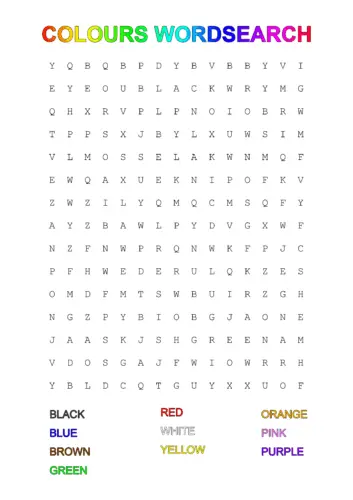
For anyone that doesn’t know what a word search is, you basically have a grid of squares. Inside each square is a letter. At first glance, it will appear as if you are staring at a giant mess of random letters. However, there are words hidden inside this mess that must be found.
Although this game could, in theory, be done in groups, it is one that is better suited towards individual students. It can be hard for some students to wait for their turn without shouting out that they’ve found one (especially true with children!).
The great thing about a word search is that they are very easy to play. Even if you use advanced vocabulary, the ability to look for a word is still the same so this game is suitable for students of all levels.
Student level: Intermediate to Advanced Type of lesson: Group or Individual Student type: Adults
With synonyms, the point is to give a student a word, and they have to give you a synonym for that word in return. (E.g. teacher says scalding, student says hot). For this, you will need to do some research and make sure you know some synonyms for the TL of that lesson.
A very basic idea, but we have a lot of room to work with this. Here are some things we can change:
Add a time limit (e.g the student has 3 seconds to reply)
Time limit for the whole group (e.g how many can the group get in 3 minutes)
In a group, the student (who just answered) could ask the next student
Use antonyms as well
Have the students ask the teacher
This game is dependant on the students having at least a medium-size vocabulary so I would advise sticking to medium to advanced level students. Also, while this game is fun to an extent, it is more so for adults. Some children may lose concentration with this one so only play with them if you know you can hold their focus.
16. Shiritori
Student level: Intermediate to Advanced Type of lesson: Group or Individual Student type: Adults
The classic Japanese game – Shiritori! You need very little to play this game, which makes it ideal as a backup activity as well.
Simply set up the chairs in the classroom so that everyone can see and hear each other clearly. A circle arrangement is a great choice as it allows everyone to hear each other and there’s an obvious order to whose go it is.
Choose a student or go first yourself
The first person (A) says a word. This can be something that was taught in the class if you want to reinforce that. Or, if this is a backup activity then it can be any word.
The next person to the left (B) will then say a word that starts with the last letter of A’s word. So if A said “boat” then B could say “three”.
The game carries on around the circle until you reach the original student again.
At this point you can either end the game there or carry on if you have time.
A very basic idea but we have a lot of room to work with this. Here are some things we can change:
Add a time limit (e.g the student has 3 seconds to reply)
Time limit for the whole group (e.g how many can the group get in 3 minutes)
In a group, the student (who just answered) could ask the next student
Use antonyms as well
Have the students ask the teacher
This game is dependent on the students having at least a medium-size vocabulary, so I would advise sticking to medium to advanced level students. Also, while this game is fun to an extent, it is more so for adults. Some children may lose concentration with this one so only play with them if you know you can hold their focus.
17. Charades
Student level: Beginner to Intermediate Type of lesson: Group Student type: Children & Adults
In case you haven’t played charades before, this is how to play:
Select a student to be “a word”, e.g. red, an apple
Without speaking, this student has to get the other students to guess the word.
They can elicit the answer by using body movements, pointing to things in the room etc. Basically anything, as long as they do not speak.
Whoever guesses the answer first gets to be “it” in the next round.
This is a great game for beginners as it works better with beginner vocabulary (run, sit, 4 etc.)
Beware, you may struggle with more complex vocabulary… (try acting out the word situational!)
18. Vocab Bingo
Student level: Beginner to Intermediate Type of lesson: Group Student type: Children & Adults
Prepare Bingo sheets with grids and add one word to each square. Select the grid size (from 3×3 to 6×6) and the words according to the level of English of your students and the expected duration of the game.
Write all words you’ve added to the sheets on a list; maybe add some more. Call out the words in random order, and have the students mark the words when they hear it.
They can use a pen, or better: put little items on the squares. This is more fun, and you can reuse the sheets.
The first person to mark each word on his sheets wins.
You can make this ESL vocab game a bit harder: Don’t call out the exact words in the squares, but synonyms, or opposites, or any kind of related words (for example when you call “rain”, they have to mark “umbrella”).
Conclusion
So, there we have it, 18 games for you to try in your classes.
Make sure to pay attention to the suitability for each game and most importantly practise these before you get in the classroom.
Hopefully, these will also have sparked your creative juices so you will be able to think up some of your own.
Remember to keep it fun, educational and engaging!
For Business English students, it’s important that ESL lessons are based on the needs of their day-to-day work.
They want to practice situations taken from their professional environment, and discuss real-life Business English topics.
Some are: making phone calls, being able to hold and carry on conversations, speaking with colleagues, preparing and giving presentations, or negotiations.
The Business English activities in this post will save you time and effort in making quality content for your lessons.
About the Business English Topics And Activities
Lessons including well-designed activities will prepare your students for their professional lives and give them the necessary skills and vocabulary needed to communicate effectively in English.
The 20 activity suggestions you’ll find in this post relate to the topics of business travel, commuting to work, big business, artificial intelligence, technology, and music.
Below are some examples of activities from these lessons that can help your Business English students improve their communication skills.
Topic: AirBnB Business Travel
Airbnb has been expanding their services to open up the market for business travelers.
They are simplifying the process of booking and launched some tools which automatically organize your business trip expenses. This new business travel program is coming out strong.
Activities
Phone Calling
Writing Accommodation Descriptions
Leaving Reviews
Mobile App Concepts
Debate With Hotel Owner
Comparing and Contrasting
This topic works especially great with Business English lessons in the real estate, hospitality, or mobile app industries, but also in general for any businessmen or women who have to travel for their jobs.
This is an especially engaging Business English topic for a few reasons: it’s controversial (hotel owners aren’t happy about AirBnB) and it’s a hot topic (more and more people are choosing Airbnb over hotels).
Airbnb is a relatively new global powerhouse, revolutionizing the hospitality industry the same way that Uber revolutionized the taxi industry.
Activity: Phone Calling
Put students in pairs or a group. Assign each student a different role from the roles below, or they can choose one.
Students have to imagine that they are Airbnb hosts who just hosted:
A small group of middle-aged business travelers
A small group of young adult party travelers
A small family of 4 with young children
An individual traveler who came with his dog
Students then ‘call’ their ‘friends’ (another student in the class) to either leave a voicemail or talk about the experience (or complain about the experience!).
They should describe how the experience was as the host for these types of travelers:
What was different about hosting each of their stays?
Was it positive or negative and why?
Did anything good, bad, surprising, or unusual happen during their stay?
You could even have them imagine what could be a positive and negative experience for hosting these types of travelers.
You could even get a bit more creative with this one by assigning a pair of students a role from the list above, and they have to call the ‘host’ (their partner) and ask them questions or make special requests about their stay, e.g:
Am I allowed to bring my dog to your property?
Is there a nice cafe in the area where I can bring my laptop to do work?
We have a baby who cries a lot during the night. Will this bother you?
Even though with Airbnb, you would probably just message the host online, but in this case, you can make it a phone call to practice speaking.
Activity: Writing Accommodation or Property Descriptions & Reviews
Students work with a partner or group and imagine they are Airbnb hosts offering a special, exotic, or unique type of accommodation rental.
They should discuss and agree on the type of home rental they have to offer, where in the world it is, and create their own online listing for this rental on Airbnb.
In the listing, they should explain what type of rental it is, the location, the check-in and check-out procedure, a description and special features of the accommodation, and other housing details and rules.
Make students offer something different or special about their property – something they wouldn’t get somewhere else. Remember, they want to sell the experience!
Students then present their accommodation profile description to the other students in the class and then give their listing to another student or group.
The other student or group then makes a detailed review for that listing, imagining they actually stayed there.
Activity: Creating Mobile App Concepts in the Sharing Economy
Put students in pairs and give them a list of other mobile apps in the sharing economy.
Examples:
DogVacay
HomeDine
BlaBla Car
Neighborgoods
JustPark
Based on the name of the app, students have to discuss and explain what they imagine the concept of the app to be and how it works.
After students work together for a couple of minutes, go around the class and ask them to report their answers. If they’re not able to imagine what it might be, you can just tell them.
Ask them questions like:
Would this type of app be useful for you? Why or why not?
Which app from this list would help you the most?
Try to create an in-depth class discussion about all of these apps.
For the apps listed above specifically, you can discuss things like:
If parking is a problem for your students (JustPark)
What they do with their dog when they go on a trip (DogVacay)
If they would be interested to drive with a stranger for many hours (BlaBla Car)
If they’ve ever eaten at someone’s home, from another country or culture (HomeDine)
Then, students can either work with the same or different partners to create their own concept for a mobile app in the sharing economy.
They should focus on things like:
The special features of the app
What problem it solves / Why it’s a good idea
How it works
What problems could happen when people use your app
An alternative to this one is I’ve also had students imagine that they were the founders of Airbnb, and they have to come up with their own detailed story behind the establishment of the company, which turned out to be a fun activity.
Activity: Debate Between AirBnB Representative and Hotel Owner
Put students in pairs or two small groups and they prepare for a debate.
One student or group takes the position of an AirBnB company representative and the other takes the position of a Hotel Owner.
Each side must prepare, defend, and present their positions to the other groups, presenting information about…
Why they believe their accommodation service is better (at least 3 advantages of your service) Students must talk about the top reasons to stay in a hotel over Airbnb, or vice versa.
If you think Airbnb should be legal or illegal and why (obviously the AirBnB rep will say it should be legal and the hotel owner will say it should be illegal)
The positive impact your service has on society and the economy
What actual people and guests have said about your accommodation services
Your role as the teacher will be the moderator during the debate – generating follow-up questions for the students or groups when they present their sides. Keep the debate clean and flowing smoothly.
Activity: Comparing and Contrasting (Hotels vs. AirBnB or Uber vs. Taxi)
If for any reason you don’t want to make this an official ‘debate,’ another thing you could do is just make it a general, in-depth class discussion, conversation, or compare & contrast about the advantages and disadvantages of staying in Airbnb in comparison with hotels.
Make sure students talk about their own experiences.
Transition the discussion to the conflict between Uber and Taxi, because they are facing a similar conflict for similar reasons.
Many businessmen and women in the modern world have to commute for hours and hours per week to their jobs or for work purposes. Sitting in the car or public transit like this can really have a negative impact on one’s overall lifestyle.
Activities
Telling a Story
Commenting on YouTube
Expressing Frustrations or Complaining
Talking About Lifestyle & Daily Routines
The reason this topic works so well in Business ESL lessons is that it reaches such a wide spectrum of people.
Everyone who has a job as an employee in a company, a school, a factory, etc has a unique situation. All Business English students usually have a lot to say about their experience commuting (or home office if they have that privilege!).
Activity: Telling a Story
Students work in pairs.
Student A: This student imagines that he/she spends a lot of time commuting and is very pessimistic about the situation.
This student believes that they have the worst commute in the world. Describe the situation in detail. The student should complain about it as much as possible and why they hate it so much.
They should take notes on:
Where you live
Your daily routine
Where you go to work
What’s so bad about the commute / What are the conditions of the commute
How commuting makes you feel
The student then has to tell one negative story that they have had during their commute.
Student B: This student imagines that they spend a lot of time commuting but is very optimistic about the situation.
This student loves the situation that they have. They should discuss and explain in detail why they have the best commute in the world, talk about it as much as possible and why they enjoy it.
Also, they take notes on:
Where you live
Your daily routine
Where you go to work
What’s so bad about the commute / What are the conditions of the commute
How commuting makes you feel
They tell one positive story that they’ve had during your commute.
After the students write notes for their roles (give them a few minutes), have them describe their situations to their partner.
They should listen to their partner’s situation carefully because they should then report the details of their partner’s situation back to the class!
Activity: Commenting on YouTube
At the beginning of the video, the reporter complains about her long daily routine and commute, and then she says to the audience:
“Before you go and post that comment telling me to ‘move closer’, you need to see that I’m not the only person doing this.”
In pairs, students should come up with a response that the following type of people would write or say to the reporter in the YouTube comments section, e.g:
What could be a rude response to that statement in the comment section of the video?
What could be an empathetic response to that statement in the comment section of the video?
What could be a funny response to that statement in the comment section of the video?
Another activity you could do is give students some imaginary comments to that video, and then the students have to write responses to these imaginary comments. You can make it a speaking or writing activity.
For example, here are a few possible comments to that video:
Comment #1:
“Americans are completely crazy and lazy. You drive these huge cars to work and in reality, you don’t need to. Look at the Netherlands and Denmark – they have very efficient bicycle transport systems and bicycles are much more environmental. It’s stupid to drive everywhere.”
Comment #2:
“The best solution to this problem is self-driving cars. Our tax money should go more to support the production of self-driving cars. That way when people commute they can do productive things. The solution to public transit is getting better wifi connections on the subways and buses.”
You can instruct one student to write a response which agrees with each comment, and the other student to write a response which disagrees with each comment, something along those lines.
Activity: Expressing Frustrations & Complaining
Put students in pairs, or in two groups. You’ll distribute to each student pair or group two cards which read:
A: Riding on public transport
B: Driving in a car
Students must work together to come up with a list of all the things that frustrate them, annoy them, stress them out, or make them angry while (1) riding on public transport and (2) driving a car.
The group which comes up with the most things in the time limit (3 minutes should be good) wins.
This activity usually works really well because everyone gets angry, stressed, frustrated, etc. at some point while driving a car or riding public transportation.
A lot of good vocabulary can also come out of this one. You can even teach a couple of fun phrasal verbs related to driving when you talk about this topic:
Cut (someone) off – “I hate when I’m driving and someone cuts me off and then I have to slam on my brakes.”
Pull (someone) over – “I hate when I’m driving only a little bit above the speed limit and a police officer pulls me over.”
Freak out – “I hate driving with my father. He always drives aggressively and freaks out about small things.”
Run over – “I hate when I run over a nail or a sharp object and my tire goes flat.”
Hold (someone) up – “I hate when traffic holds me up and makes me late for work.”
You can use this activity for teaching students other terminology that is useful for expressing complaints or frustrations:
I get frustrated when…
I get all stressed out when…
It gets me so worked up when…
It pisses me off when…
I totally freak out when…
I lose my mind when…
It drives me nuts when…
Have students then use these expressions to talk about their frustrations commuting or about their job in general.
Activity: Talking About Lifestyle, Commuting, and Employment Situations
Spending hours commuting and then hours at the office has become so integrated into the modern working world that it can have quite a profound impact on our quality of life and lifestyle, which is why it’s good to talk about in a language lesson.
Here’s an activity you can do that will give your students a good opportunity to talk about their lifestyle, commute, and employment situation.
It’s also simple, easy to prepare, and generates quality conversation.
Print a number of statements on cards and give them to the students or write them on the whiteboard in class.
Put students in pairs or groups. Have them discuss if they think the following statements are generally true or false and why:
People are generally happier if they travel to work by car instead of public transportation.
In the USA, people generally commute to work or school by train or bus.
10 days of paid vacation per year is fair from an employer.
Regular exercise helps people deal with stress from work.
People are more productive if they have a 4-day working week instead of 5.
Put students in pairs or groups. Have them discuss if the following statements are true or false for them personally and have them explain why:
There is a positive working atmosphere at my job.
I am satisfied with my work-life balance.
Every day I eat a balanced and healthy breakfast before work.
When I commute to work I try to be productive on the way.
I prefer working from home rather than going to an office.
I spend too much time at work socializing with my colleagues.
Speaking about daily routines is also a great activity if you’d like to focus on the present simple as a grammar point for your lesson.
Topic: Big Business (Amazon, Coca-Cola, Netflix, etc.)
Using big companies and corporations as a topic in your Business English lessons is practical for obvious reasons and you can make it fun too for your students.
It’s especially great to use big business as a topic if you actually have adult students who work in big companies, but they’re also applicable topics for students who have their own business or who work in smaller companies.
Activities
History & Fun Facts
Developing a Product
Making Slogans
Analyzing the Impact of Technology on Jobs
Activity: History & Fun Facts About Big Companies
As a lead-in or warm-up exercise to a lesson about big business, you can search and find some fun or interesting facts or history about the companies.
One quick activity you could do to lead to a topic is a simple fill-in-the-blank that looks something like this:
Amazon
Below are 5 interesting facts about Amazon. Let the students fill in the blanks with words that they think fit.
The founder Jeff Bazos wanted to name the company Amazon which has products from ‘A to Z’ symbolizing a large size, just like the Amazon ________________________ .
Amazon.com started as a bookstore in Jeff Bazos’ ________________________ .
The combined ________________________ of Amazon’s warehouses is enough to hold more water than 10,000 Olympic pools.
Today Amazon has more than 350,000 ________________________ .
One of Amazon’s first offices had a ________________________ which employees would ring every time a sale was made.
Coca-Cola
Below are 5 interesting facts about Coca-Cola. Fill in the blanks with words that you think fit.
The Coca-Cola ________________________ is recognized by 94% of the world’s population.
The word “cola” is derived from the kola ________________________ , which contains caffeine and can have medicinal value.
Coca-Cola can be a good ________________________ for insect bites on your skin.
Coca-Cola spends more money on ________________________ than Microsoft and Apple combined.
A few people once tried to sell the Coca-Cola ________________________ to Pepsi, but they were reported to the FBI.
A fun activity you can follow up with this one is instruct students to research any big business they have in mind and search for some fun facts about that company or the story behind how it started.
Have them give a few-minute presentation in the following lesson about the start or history of the company and a few fun facts about it. This is also good for developing presentation skills for adults in English.
They can use the questions below to help them give their presentation:
Who started the company and when? How did the idea originate?
What were some important moments in the company’s history?
What are some of the company’s most successful products or services? Describe them in detail.
What’s special or different about this company compared to the competitors?
What are some fun facts about your company?
Activity: Developing a Product
Amazon launched a prototype store called ‘Amazon Go’ in December of 2017 – it’s a type of grocery store where you can go shopping and add things to your virtual cart so that you don’t have to wait in line or check out.
You add the products to your shopping cart and you can just leave the store, and Amazon will automatically charge your account.
They have developed other types of products and services over the years that have been successful, such as the Amazon Kindle (E-Reader) and Amazon Echo (voice-controlled smart speaker/personal assistant).
In this activity, what you do is have students work together on product development for Amazon or for another big company.
Students work with a partner or group. They imagine to be product developers for Amazon and create two of their own products, or services provided and sold by Amazon.
They should discuss and create names for the products or services, which industry the products or services are in, and then write a description for each explaining how it works, what problem it solves, what’s so special about it, as well as what problems they have experienced in the development.
It can be a special kind of mobile app, tech gadget, clothing item, or something else.
Of course, it doesn’t necessarily have to be from Amazon. You can have students choose another company.
One way you could get your students to come up with a good idea is instruct them to think of some brands that they generally buy, and then brainstorm what products they think would be cool to have from those brands.
Or you can have them think of some problems or frustrations they have in their daily life and what product or service would solve those problems for them. In the case of Amazon Go, the problem was that people hate waiting in lines at supermarkets.
Remind students that it doesn’t have to be realistic, it can be something imaginary.
Most of your students who will do this activity probably haven’t developed a product before. Keep it basic, simple, and fun, and it should go ok.
You just want students to be creative and work together to make something special.
One time I had a group who made a personal assistant who did all of his presentations for him because he hated public speaking, which I thought was pretty funny.
Students should then present their new product to the other students or groups.
Activity: Making Slogans
This is a straightforward activity and easy to assign and it works great with any student who is in marketing. Students also tend to have fun with it.
Basically, all you need to do is assign students to make a slogan for whatever company or brand you’re discussing.
One thing I’ve done to make it interesting and add a little twist to it is to have students make a list of good and bad slogans for one company.
That one has definitely brought a couple laughs to the lesson, especially for the bad slogans.
Here are a few examples I’ve gotten from students for bad company slogans for Coca-Cola:
“Feed your sugar addiction.”
“Put on the big pounds.”
“Teeth are overrated.”
Anyway, give them some examples of some real slogans that have already existed for the brand before they make their own.
A few actual ones for Coca-Cola are:
“Open Happiness”
“Life Tastes Good.”
“Taste the Feeling.”
The advantage of having students make their own slogan or quote is that it lets student use creativity. When students have to think creatively, they’re forced to use important vocabulary terms and language structures in a special kind of way.
In any case, have your students share and present their slogans and quotes to the other students in the class.
Activity: Analyzing the Impact of Technology on Jobs
Another great theme and activity that comes from a discussion about companies like Amazon, is analyzing the impact of technology on jobs.
That’s one big criticism of concepts like Amazon Go that I’ve discussed with my students. The more jobs that robots do for us, the more jobs they take away from humans (Amazon Go takes jobs away from cashiers).
One activity you could do on this is to have students brainstorm and come up with two more jobs, companies, or businesses that have been taken over or lost to technological advances.
Students should specify the name or type of the technology, which industry it is in, and three general impacts of this technology (can be positive or negative impacts).
Two examples I remember hearing from students was about VHS and video rental stores being lost to online streaming services like Netflix, and driving jobs being lost to self-driving cars.
Technology: Online streaming
Industry: Entertainment
Impacts:
It put VHS video rental stores out of business
It makes people lazier because they don’t go to the video store anymore
Illegal online pirating of films and TV becomes easier
Technology: Self-driving cars
Industry: Automotive
Impacts:
Less need for delivery drivers, truckers, and taxis
Fewer accidents on the road because machines are more precise than humans
People can focus on other things in the car if they don’t have to concentrate on driving
You can give these examples to your students if they don’t think of them.
You can also give students the task of coming up with two jobs where it could be very difficult for technology to take over. Which jobs do you think technology couldn’t do in the future? Students should specify why it would be difficult to take over these jobs using this technology.
Topic: Artificial Intelligence and Future Technology
Doing an ESL lesson activity about the impact of technology on jobs leads us to the next point: Artificial intelligence and future technology, which has its feet in many industries and certainly draws interest from Business English students.
Activities
Interview With a Humanoid Robot
Making a Sci-Fi Film Plot
Forming Opinions
This topic works especially great with Business English lessons in the IT or programming industry, but also in general for any businessmen or women who use technology regularly for their jobs.
This is an especially engaging Business English topic for a few reasons – it can get a little dark (a humanoid robot which can communicate freaks people out a bit!) and it’s also relevant – artificial intelligence and machine learning is making its way into a lot of industries, products, and software these days.
It’s interesting when the stuff that used to be sci-fi stuff turns into reality, and that’s what you want to focus on in your Business English lessons.
Activity: Interview With a Humanoid Robot
Watch the video about Sophia the robot with your students.
Basically, what students do is make an interview with her.
Sophia the robot makes for a great English lesson, period. Students are usually quite intrigued by “her” and there are so many different directions you can take this lesson.
After watching the video, instruct each student to create and write five extra questions that they would want to ask Sophia. (Questions which are not in the video interview).
After they are finished making their questions, they ask their partner the questions they made. Students then answer their partner’s questions from the perspective of Sophia the robot.
Here are some words or topics students could either use in their questions or use just as general topics to help them make their questions:
Humanity
Evolution
The Future
Technology
Ethics
After a student answers each question, their partner should try to ask a follow-up question or two – a question you ask on the spot based on the answer you get.
Explain the concept of a follow-up question to your students and show them examples:
Original question: “What emotions do you feel?”
Answer: “I feel curious.”
Follow-up question: “Why do you feel curious?”
Answer: “I feel curious because I want to know why I was created and why I’m different than normal humans.”
Follow up question: “Can you imagine why you were created?”
Having students ask follow-up questions is great practice for developing interview and conversational skills because they have to think on their feet without time to prepare.
Activity: Making a Sci-Fi Film Plot
Watch the sci-fi short film about ‘Sight Systems’ which forecasts the evolution of ‘Google Glasses’ and Virtual Reality (which are also great topics to discuss in your Business English lessons).
After you watch the video with your students, a fun activity you could have your students do is to imagine that they are directors creating the next scenes to the short film they just watched about Sight Systems.
They should work in pairs and discuss and write what the next five scenes will be. Have them describe the scenes in detail and explain what happens in each scene.
Students then share what they came up with the other students in the class.
After this, put the students back together and they should come up with a short plot for a similar type of short film that they saw.
The plot must focus on the dangers of future technology. Alternatively, you could give them the option of creating a movie plot focusing on the bright sides of technology.
Activity: Forming Opinions and Interview Quotes
This activity can actually be applied to a range of different topics.
Put the students in pairs and have them imagine to be speaking from the perspective of the following companies or people.
Students have to make an opinion from the standpoint of each company or person.
Companies
Gas Company
Electric Car Company
Solar Panel Company
People
Environmental Activist
Auto Technician
Politician
Economist
Car Consumer
For the people above, you could have students imagine they were interviewed about their thoughts on electric charging highways.
What do they think about electric highways? Do they support or oppose them? Let them explain their opinion.
Then they have to agree on what would be the most important quote or statement from that interview.
Give students some useful phrases for expressing opinions to help them make their opinions or quotes, which are at least three sentences long and they explain their opinion.
You could give students an ideal example quote from an interview with an Environmental Activist:
“In the long-term, electric charging highways will be a great solution for decreasing pollution because it promotes the consumption and usage of electric vehicles, which are much better for the environment than gas-powered vehicles. However, in the short-term, electric charging highways could produce a negative impact on the environment because of the intense construction work that will be needed to create these highways all across the country. Therefore, I see a positive long-term effect and a negative short-term effect.”
You want your students to form something similar for each of the roles, then students should present the opinions or quotes they made together to the rest of the class.
Topic: Music
Doing ESL lesson activities about music is fun and there’s a lot of different directions you can take this topic in a lesson.
Music is also a big business with all of the jobs in music production, sound technology, festivals, online streaming services like Spotify, and these days even vinyl is making a comeback.
Activities
Organizing an Event
Making a Business Plan
Giving a Presentation
This topic works especially great with Business English lessons in the music industry, but also in general for any businessmen or women who use are interested in music.
This is an especially engaging Business English topic for a few reasons – people love music and it’s a big part of life for many people.
Activity: Organizing an Event
Have students work with a partner. They should imagine they are event organizers and are planning a festival concept for next summer.
They want to make it even better than the Belgian festival “Tomorrowland” and the most luxurious festival in the world.
What luxuries will there be? What special things can be added, implemented, planned, organized, or done in order to create a better festival experience for the guests?
Students should discuss these points together. They can use the discussion questions below to help them:
What special luxuries, things, offers, products, facilities, and features you will provide?
What will be different about the campsite? How will you make it better than Dreamville?
Describe the atmosphere. What’s unique about the stages and performances?
Describe the security concept. How will you make the event safe and what are the policies?
Students should then give a presentation about their festival concept to the other groups and describe in as much detail as possible what the festival will be like.
After hearing from the other groups, students can discuss which festival concept was the best and why and give advice about what might help their festival to be better.
Activity: Making a Business Plan
Students work together with a partner or group. They imagine that they are opening a vinyl store in their town. They must make a business plan and a to-do list.
They can answer these questions in their business plan:
What is the name of your vinyl shop?
Other than vinyls, what will you need to get started?
How will your vinyl shop stand out from the competition?
Describe what kind of theme or atmosphere the shop would have. How would you decorate the shop/front window?
Describe your ideal kind of customer or target market.
Describe your ideal kind of employee or shop assistant.
What could be some clever ways to advertise your shop?
What will be the biggest challenges of opening the shop?
Students can then present their business plan to the other students in the class.
Activity: Giving a Presentation
Students work with a partner or group. They imagine they are giving a presentation to a group of vinyl fanatics.
They should choose from one of the topics below they’d like to do a presentation about, or they can also make their own topic.
They should prepare and give a one-minute presentation to the other groups on their chosen topic.
Even if they don’t know much about the topic, you can just instruct them to be as creative as possible and come up with some interesting things to talk about.
Here are the topics they can choose from:
How to create a sustainable future for vinyl
The guide to shopping for and listening to vinyl like a pro
The future of music
Why the age of vinyl in the 70s beats today’s digital age
The steps to starting up a successful vinyl shop
You can have students do research on the internet if they have access.
You can also give students the choice to also come up with their own idea for a presentation, anything in the music sector. It doesn’t have to be specifically related to vinyls.
The most important thing is that students have a structure for their presentation, have researched important information about it, and teach the class something interesting.
You can also have students include one of each of the following things in their presentation:
A problem (Music has become too digital in modern ages.)
A statistic or fact (Over 7.6 million vinyls were sold in the US in 2018.)
An opinion (We believe that vinyls will continue to be popular for years.)
A quote (Zdenek Pelc said, “If people like something, they need something touchable.”)
Bonus Activity
This one last bonus activity you could do will help your students develop the skills they need for business and professional reasons.
Have them give a “show and tell” presentation or just simply talk about three gadgets, tools, products, services, etc they’ve bought in the recent past related to one of their personal interests.
Have the students teach the class either how to use this product or service, how it works, why they bought it, what the features are, what problem it solves for them, etc.
Here are some actual examples from my students, which you can show your students to give them an idea of what you’re looking for:
A new running watch
A subscription to Netflix
A Nintendo NES Classic Edition
A new bicycle helmet
A portable speaker
Conclusion
All of these activities referenced are meant to be engaging for your adult students in Business English lessons, but the most effective way to do them is with the full lesson plans via the links above.
Watching the videos with your students should generate extra discussion and give you extra content to work with.