Category: Lesson Plans

  • The Impact of Wildfires on the Environment (ESL Lesson Plan, Intermediate, ~B1/B2)

    The Impact of Wildfires on the Environment (ESL Lesson Plan, Intermediate, ~B1/B2)

    The Impact of Wildfires on the Environment
    ESL Lesson Plan (Intermediate, B1–B2)

    How to use this lesson plan: The lesson includes a YouTube video and a reading text providing context for the topic. After, you will find listening, reading, grammar, vocabulary, writing, and speaking activities, for upper-intermediate-students. To accommodate different learning needs and styles, alternative exercises are provided for each area, allowing you to customize the lesson by skipping or assigning different exercises to different students. To save time, you can also download the full lesson plan as a ready-to-use PDF, including the answer key and all activities.

    Download the Complete Lesson Plan (Free PDF)

    Download the complete “Impact of Wildfires on the Environment” lesson plan for intermediate (B1–B2) learners — including teacher notes, answer key, and ready-to-use activities.


    Warm-up Activity

    Divide the class into two teams. Explain that you will give them a word related to wildfires, and each team must take turns saying a word that is associated with the given word. The catch is that they cannot repeat a word that has already been said. If a team cannot think of a new word within 5 seconds, the other team scores a point. The team with the most points at the end of the game wins.

    Example:

    • Teacher: The word is “fire.”
    • Team A: Hot
    • Team B: Flames
    • Team A: Smoke
    • Team B: Burn
    • …

    Listening Activity (Video)

    Watch this video:

    Title: Wildfires 101 | National Geographic
    Description: This video by National Geographic explains what wildfires are, how they spread, and their impact on the environment.

    Reading Activity

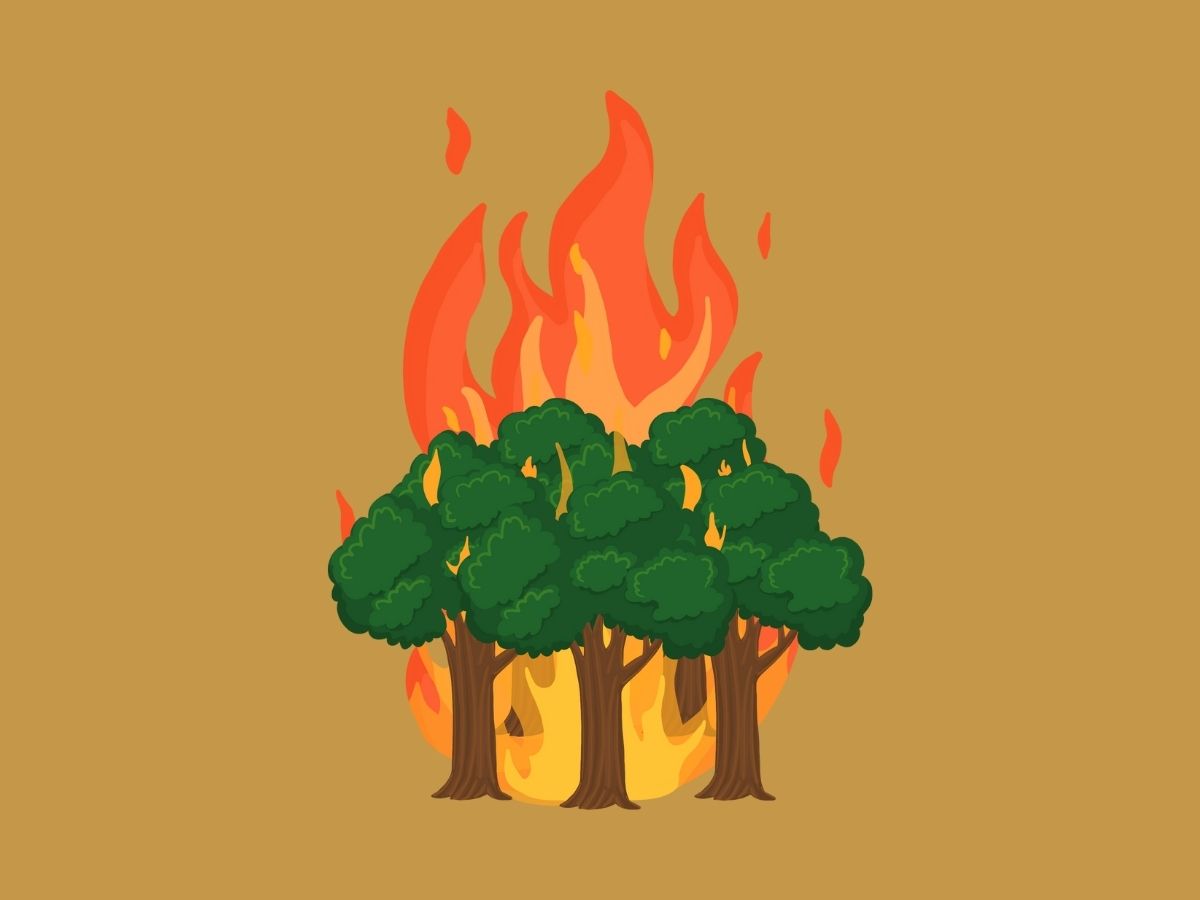
    Wildfires are uncontrolled fires that burn in natural areas like forests, grasslands, or prairies. They can be caused by human activities, such as campfires or discarded cigarettes, or by natural events like lightning strikes. In recent years, the frequency and intensity of wildfires have increased due to factors such as climate change, drought, and human encroachment on wildlands.

    Wildfires can have significant impacts on the environment. They can destroy habitats and ecosystems, leading to the loss of biodiversity. Many plants and animals may struggle to recover, especially if the fires occur too frequently. Wildfires also release large amounts of carbon dioxide and other greenhouse gases into the atmosphere, contributing to global warming.

    However, not all effects of wildfires are negative. Some ecosystems, such as those found in Australia and the western United States, have adapted to periodic fires and may even require them for seed germination and growth. These controlled burns, when managed properly, can help maintain the health of these ecosystems.

    To minimize the negative impacts of wildfires, it is essential to practice fire safety, such as properly extinguishing campfires and avoiding activities that can cause sparks in dry conditions. Additionally, land management practices like controlled burns and creating fire breaks can help reduce the severity and spread of wildfires when they do occur.


    Comprehension Exercises

    Exercise 1: True or False

    1. Wildfires only occur naturally and cannot be caused by human activities.
    2. The frequency and intensity of wildfires have decreased in recent years.
    3. Wildfires can contribute to the loss of biodiversity by destroying habitats.
    4. All ecosystems are negatively affected by wildfires.

    Exercise 2: Short Answer

    1. What are two potential causes of wildfires?
    2. How can wildfires contribute to global warming?
    3. In what ways can controlled burns be beneficial for some ecosystems?
    4. Mention two ways in which we can minimize the negative impacts of wildfires.

    Grammar Exercises

    Exercise 3: Passive Voice

    Rewrite the following sentences using the passive voice:

    1. Human activities can cause wildfires.
    2. Climate change has increased the frequency and intensity of wildfires.
    3. Wildfires destroy habitats and ecosystems.
    4. Land management practices can reduce the severity of wildfires.

    Exercise 4: Conditionals

    Complete the following sentences using the correct conditional form:

    1. If campfires (not/extinguish) properly, they (can/cause) wildfires.
    2. If we (practice) fire safety, we (minimize) the risk of wildfires.
    3. Ecosystems (recover) more quickly if wildfires (not/occur) too frequently.
    4. If land managers (use) controlled burns, the severity of wildfires (reduce).

    Vocabulary Exercises

    Exercise 5: Matching

    Match the words with their definitions:

    1. encroachment
    2. germination
    3. biodiversity
    4. drought
    5. controlled burn

    Definitions:

    1. the variety of life in a particular habitat or ecosystem
    2. a prolonged period of abnormally low rainfall, leading to a shortage of water
    3. the process by which seeds grow and develop into plants
    4. a fire set intentionally for purposes of forest management, farming, or prairie restoration
    5. intrusion into a territory or domain

    Exercise 6: Fill-in-the-blank

    Complete the sentences with the appropriate word from the list below:

    (intensity, ecosystems, greenhouse gases, frequency, habitats)

    1. Wildfires can destroy animal _____, leading to a loss of biodiversity.
    2. The _____ of wildfires refers to how often they occur over a period of time.
    3. Some _____ have adapted to periodic fires and may benefit from controlled burns.
    4. Wildfires release _____ into the atmosphere, contributing to global warming.
    5. The _____ of a wildfire refers to its severity and the amount of damage it causes.

    Conversation Prompts

    Exercise 7: Debate

    Divide the class into two teams. One team will argue in favor of using controlled burns to manage wildfires, while the other team will argue against this practice. Each team should present their arguments and counterarguments, and the class will vote on the most convincing team.

    Exercise 8: Group Discussion

    In groups of four, imagine you are a team of scientists tasked with developing a new technology to prevent or control wildfires. Discuss potential ideas, considering factors such as effectiveness, environmental impact, and feasibility. Present your best idea to the class and explain why you think it would be successful.

    Writing Prompts

    Exercise 9: Opinion Essay

    In your opinion, what is the most effective way to prevent and manage wildfires? Support your opinion with examples and evidence from the lesson or your own knowledge.

    Exercise 10: Narrative Essay

    Imagine you are a tree in a forest that has just experienced a wildfire. Write a story from the tree’s perspective, describing the events before, during, and after the fire, and how the tree and its ecosystem recover over time.

    Optional Homework Task

    Exercise 11: Research and Presentation

    Research a specific wildfire that has occurred in recent years and its impact on the local environment and communities. Prepare a short presentation (3-5 minutes) to share your findings with the class in the next lesson.


    Vocabulary List

    1. Wildfire (n): A large, uncontrolled fire that burns in a natural area like a forest or grassland.
    2. Encroachment (n): The act of slowly taking over or intruding on something, such as wildlife moving into human areas or humans moving into wild areas.
    3. Frequency (n): How often something happens over a period of time.
    4. Intensity (n): The strength, power, or severity of something.
    5. Biodiversity (n): The variety of living things in a particular area or ecosystem.
    6. Habitat (n): The natural home or environment where a plant or animal usually lives.
    7. Ecosystem (n): A community of living things (plants and animals) and their non-living environment, all interacting together.
    8. Germination (n): The process by which a seed begins to grow and develop into a new plant.
    9. Controlled burn (n): A fire set on purpose under carefully monitored conditions to help manage a forest or other wild area.
    10. Greenhouse gas (n): A gas in the Earth’s atmosphere, such as carbon dioxide, that traps heat and contributes to global warming.
    11. Drought (n): A long period of time with little or no rain, leading to a shortage of water.
    12. Adapt (v): To change or adjust to new conditions or situations.
    13. Extinguish (v): To put out a fire completely.
    14. Minimize (v): To reduce something to the smallest possible amount or degree.
    15. Severity (n): The seriousness or intensity of something undesirable, such as damage or hardship.

    Download the Complete Lesson Plan (Free PDF)

    Bring the topic “The Impact of Wildfires on the Environment” to life with this ready-to-teach ESL lesson plan for intermediate (B1–B2) students.

    This 10-page printable PDF includes:

    • A complete lesson plan with clear teacher instructions
    • Answer key for all exercises
    • Activities covering reading, listening, vocabulary, grammar, speaking, and writing
    • Editable and flexible tasks to suit different classroom needs

    Help your students expand their environmental vocabulary while improving key English skills — all in one engaging, classroom-tested lesson.

    📘 Click below to download your free ESL lesson plan now!
  • ESL Lesson Plan: Nature & Environment (Intermediate)

    ESL Lesson Plan: Nature & Environment (Intermediate)

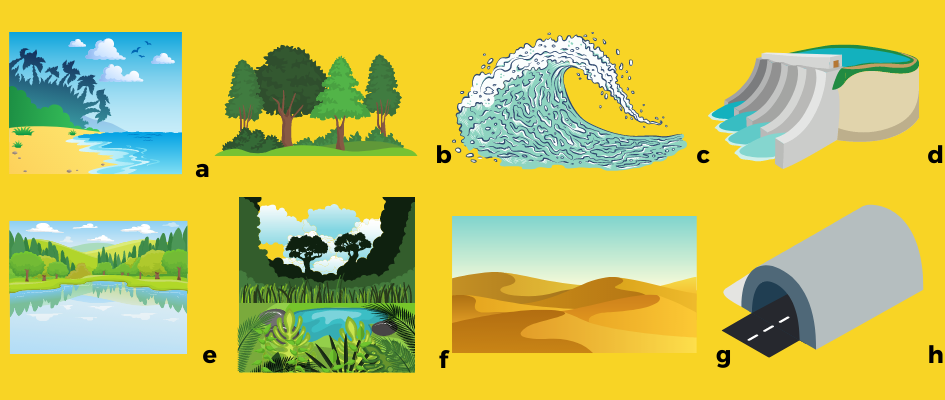
    In this ESL nature worksheet, you will learn and expand the vocabulary of nature and environment. Exercise A contains a vocabulary of landscapes in nature. Exercise B contains a vocabulary of environment and climate change.

    Read the questions before answering to make sure you understand them. 


    A. Exercise: Vocabulary (Landscapes)

    1. Match the pictures (a-f) with the correct words (1-6) and fill in the blanks.
    1. desert ___
    2. ocean  ___
    3. rainforest ___
    4. coast ___
    5. forest ___
    6. lake ___
    7. dam ___
    8. tunnel ___

    2.  Read the sentences and fill in the blanks with the correct words from Exercise 1. Please mind that some words need to be written in their plural form.

    a) The Caspian Sea is the biggest ___________ in the world.

    b) Antarctica is the largest polar  ___________ on Earth.

    c) There is always light at the end of the  ___________.

    d) The  ___________ (plural) absorbs CO2 and releases oxygen that humans need to survive.

    e)  ___________ (plural) are important because they provide energy and water for drinking, cooking, bathing, washing, and garden watering.

    f) The Amalfi  ___________ in Italy looks amazing!

    g) Bears, deer and wolves are  ___________ animals.

    h) Every day, people throw 8 million pieces of plastic in our  ___________ (plural).


    B. Exercise: Reading & Translation (Environment) 

    Read the text carefully, then rewrite the underlined words in the “ENG” column in the table below. Translate each word in your language and write the translation in the second column.

    Our planet is in great danger, and we need to protect it because our world is our home, and we must save it! The greatest threats on planet Earth today are climate change, air pollution, water pollution the cutting down of trees, and the extinction of animals and plants. Some zoologists work with animals that are endangered species. These animals are animals that are disappearing from our planet because of climate change, hunting, poaching, and the destruction of their habitat. Many animal species are extinct and this means that they no longer exist, like the male white rhino or the Chinese dolphin. Don’t forget that we are all responsible for the future of our planet, so here are some things that we can do to preserve the natural world: 

    • recycle
    • reuse
    • say no to plastic bags, cups, and bottles
    • travel with trains instead of airplanes
    • eat less meat
    • shop from eco-conscious brands
      ENG (translation) 


    C. Exercise: Questions & Answers 

    Watch the video of the popular climate activist Greta Thunberg. Do you know Greta? Have you heard of her initiative “Fridays for Future?” 

    Talk briefly together with your class and teacher about why is she important, then mark questions 1-6 as True (T) or False (F).

    1. Students protest to save the environment. ____
    2. Greta thinks that we can’t fix climate change. ____
    3. We need to stop burning fossil fuels. ____
    4. Trees and coral reefs can’t help us to repair our broken climate.____
    5. Up to 200 species are going extinct every single day. ____
    6. Nature can’t regenerate. ____

    D. Activity: Memo Game

    Review the landscape and the environment vocabulary. Then put this worksheet away and play the game in teams. The winner is the team who will answer most questions in record time.

    Download this worksheet in Word and PDF doc format (zipped)

  • ESL Lesson Plan: Animals (Beginner Exercises)

    ESL Lesson Plan: Animals (Beginner Exercises)

    This comprehensive animal worksheet is designed for beginner ESL students (A1-A2 level). Students will learn essential animal vocabulary, practice reading comprehension with an informative text about seals, and engage in interactive activities including gap-fill exercises and a fun drawing dictation game.

    Perfect for: Young learners and elementary students discovering English animal names
    Recommended for: Ages 6-12, CEFR Level A1-A2
    Time needed: 45-60 minutes
    Skills practiced: Vocabulary, reading, listening, speaking

    A. Vocabulary 

    1. Match pictures (A-F) with the correct words (1-6).

    1. horse ____   
    2. lion ____ 
    3. fish ____ 
    4. cow ____ 
    5. dog   ____ 
    6. elephant ____ 

    2. Sort the animals in the picture. Add 2 more animals in each column.

    FARM (farm animals)HOUSE (pets)WILD (wild animals)

    B. Reading Comprehension 

    Read the text, then answer the questions in exercises 1 and 2.

    Seals 

    Seals live in the Arctic and in Antarctica.

    They are mammals just like people, whales, and bats!

    Seals are very good swimmers and they swim with four flippers.

    Seals eat a lot of meat, fish, shellfish, squid, and sea birds.

    They have whiskers that help them find food.

    Seals have fur coats so they can glide through the water and swim fast.

    They have blubber under their skin. Blubber is the fat that keeps them warm when the weather is cold. Seals can sleep underwater.

    1. Complete the sentence

    1. Seals live in Antartica and in the _____________________________.
    2. Bats and whales are _____________________________.
    3. Seals find food with their _____________________________.
    4. The fat under their skin is called _____________________________.
    5. Seals can sleep _____________________________.
    6. Seals swim with their _____________________________.

    2. Answer the questions

    1. What is seals’ favorite food? 

    ________________________________________________________________

    1. Are seals good swimmers?

    ________________________________________________________________

    1. Is your teacher a mammal?

    ________________________________________________________________

    1. What have seals got to glide through water?

    ________________________________________________________________

    1. Can seals find food with their whiskers?

    ________________________________________________________________

    1. What keeps them warm when the weather is cold?

    ________________________________________________________________

    C. Gap Text

    Put the correct word from the table in the gaps (1-6) 

    homekind
    dogs or catsTarantula spiders
    timesnakes

    Pets are animals that live in people’s (1) ____________________. There are many kinds of pets. People usually have (2) ____________________ as pets, but some people keep wild animals like (3) _________ or (4) ___________!  Many people don’t have a pet because they don’t have (5) ____________ to take care of them. Pets have need and emotions, just like people, so you have to be (6) ____________ to them and treat them like friends.

    D. Drawing dictation (Guess the Arctic animal)

    Listen to your teacher’s dictation and draw the Arctic animal. Then pick an Artic animal and dictate it to your class (describe it with the sentences below but keep it secret). The winner is the one who will guess the animal before they finish the drawing.

    • It has got four flippers…
    • It has got a big head and fur…
    • It can’t swim…
    • It can fly…
    ARCTIC ANIMALS
    polar bear
    walrus
    reindeer
    penguin
    Arctic hare
    seal
    Arctic fox

    Download the Complete Lesson Plan

    Includes answer key and printable activities (4-page PDF)

  • ESL Lesson Plan: Summer Activities (Intermediate) (PDF)

    ESL Lesson Plan: Summer Activities (Intermediate) (PDF)

    A lesson plan about summer to practice reading, writing, and vocabulary for intermediate ESL students. (Free download available in PDF and Word format.)

    Lesson Activities & Exercises: It’s Summertime!

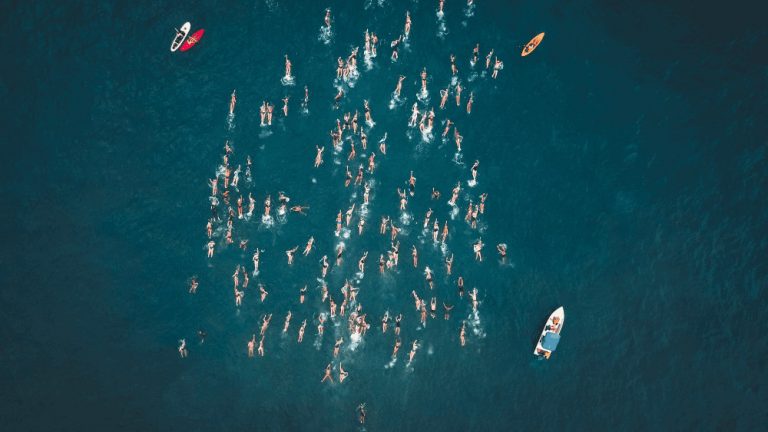
    Look at the photo. Can you recognize the activities you see in the picture? What is your favorite summer activity? Discuss briefly with your class, then answer activities A, B and C.

    A. Activity: Vocabulary

    1.   Assign Words

    Put each word in the correct section (a, b, c, d)

    trip – snorkeling – cruise – windsurfing – climbing – hiking – sightseeing – quiet- camping kayak – sleeping bag – backpacking – sandcastle- journey – expensive – flip flops – sunbathing  bathing suit – voyage – sunblock – deck chair – excursion – crowded- surfboard – exciting  luggage – scuba diving – goggles – flippers – campfire – tour – noisy – tent – cycling – canoeing 

    a) Things to Do

    _______________________________________________________________

    _______________________________________________________________

    b) What It Is Like

    _______________________________________________________________

    _______________________________________________________________

    c) Things to Pack

    _______________________________________________________________

    _______________________________________________________________

    d) Types of Travel

    _______________________________________________________________

    _______________________________________________________________

    2.   Match words

    Match the words from exercise 1 to their meanings.

    1. a long journey by the sea or in space _________________
    2. visiting places like museums, bridges or monuments _________________
    3. a chair you can fold and carry _________________
    4. glasses that protect the eyes from dust or water _________________
    5. a place full of people _________________
    6. paddling a small boat _________________
    7. it protects your skin _________________
    8. bags that people carry when traveling _________________
    9. a journey to a place organized for a group _________________
    10. swimming deep into the sea _________________
    11. travel or hike wearing only a backpack _________________
    12. sitting or lying in the sun _________________

    B. Activity: Reading Comprehension

    Read Cloe’s email.

    Dear Marcus,

    Thank you for your email. It was nice to hear from you again! 
    I am always happy to read and know more about your life and your family in Belgium. You asked me to tell you about summer plans, so I will tell you what I’m going to do after school is finally over.

    First of all, I will spend more time outdoors with my friends, Katty, Tom, Garry, and Etta. We are planning to ride our bicycles during the day or have a picnic in the park near our school. Tom has a dog called Chip, so he will take it, and we’ll play with it. This year, I will also make movie nights at my place in the evenings. Each movie night, I or one of my friends will choose a film to watch, and the others bring snacks. I’m planning to play “Jumanji”. It’s a really cool adventure movie. Have you watched it?

    Also, my family and I are planning a vacation in Italy in August. My mother told me that we will go to a place called Costa Verde in Sardinia. I googled it and it looks absolutely beautiful. The beaches are sandy and long and the sea is clear and perfect for snorkeling and swimming. Snorkeling is one of my favorite beach activities because I collect shells from every beach that I visit. I have 105 pieces in my collection!

    Tell me about your summer plans and what do you like to do when you’re on holiday. Hope to hear from you soon! 

    Best,
    Chloe

    True or False?

    Are these sentences true or false? Write “T” for true, or “F” for false next to each sentence.

    1. Chloe is planning to walk Chip. ____
    2. Chloe’s family will go to Italy.  ____
    3. Marcus lives in Bejing.  ____
    4. Chloe’s summer plans start when school is finished. ____
    5. Chloe’s favorite beach sport is scuba diving.  ____
    6. Katty, Tom, Garry and Etta will bring snacks to Chloe’s.  ____
    7. “Jumanji” is a horror movie. ____
    8. Chloe’s a collector.  ____

    C. Activity: Writing

    Imagine that you are Marcus and you are writing a short email to reply Chloe. Tell her about your summer plans. (120-150 words)

    Download this worksheet in Word and PDF format (zipped).